Zezhou

Things to do in Zezhou

Search attractions or local attractions & tours
Search

Explore top experiences

Top 10 attractions in Zezhou
View all Attractions
Yuhuang Temple Painted Sculpture and Mural Museum
No. 6 of Best Things to Do in Jincheng

Yuhuang Temple Painted Sculpture and Mural Museum

5.2
4.9/5
32 reviews

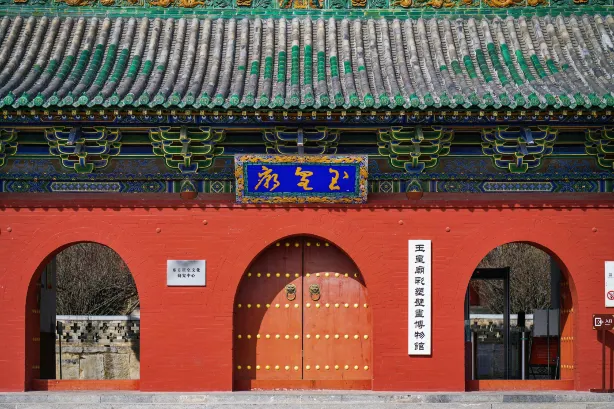
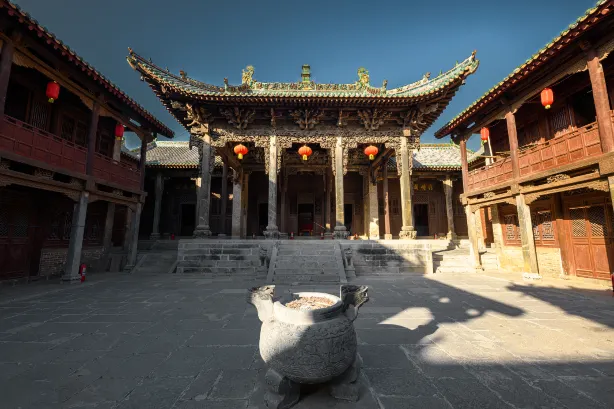
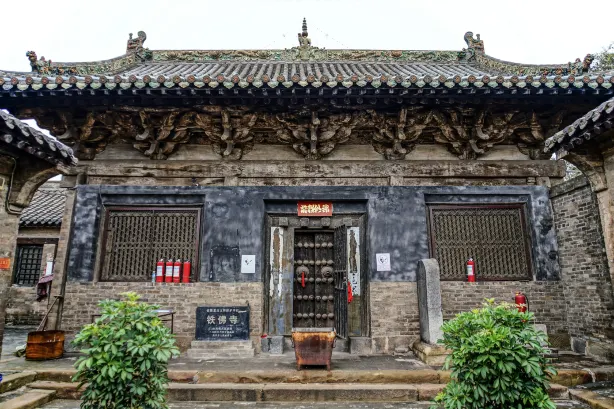
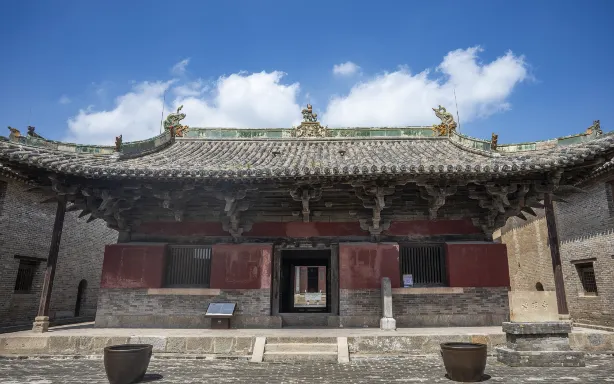
The Jade Emperor Temple is located in Fucheng Village, Zezhou County. It was a large-scale and influential Taoist temple in ancient Zezhou. It is unknown when the temple was founded. It was rebuilt on the original site in the ninth year of Xining in the Northern Song Dynasty (1076), and was titled "Jade Emperor's Palace". The main existing buildings are the Jade Emperor Hall built in Song Dynasty, Tang Emperor Hall built in Jin Dynasty, the left and right Duo Hall in the backyard and the east and west side buildings were built in Yuan Dynasty, and the rest were built in Ming and Qing Dynasties. The temple faces south, the building layout is a three-entry courtyard, and the plane layout is rectangular. On the central axis from south to north, there are Toudao Mountain Gate, Yimen, Chengtang Hall, Xianting Pavilion, Jade Emperor Hall, and East and West Side Halls; Liangyu Twenty-eight Sus Halls, Twelve Chen Halls, Thirteen Yaoxing Halls, and Guandi Halls. , Silkworm Temple and wing rooms, the second floor of the bell and drum. The shape of the mountain gate is a single eaves hanging on the top of the mountain, decorated with colored glaze, and the glazed peacock orchid components on the top of the Bell and Drum Tower are very bright. The Temple of the Gods is located in the middle of the middle courtyard. It is a wooden pavilion, three rooms wide, six rafters deep, and a single eaves overhanging the top of the mountain. It is quaint and simple, with a soup image. There are statues of Dongyue and the Three Kings in the east and west side halls. On the east and west sides are Yaowang Hall, Wudao Hall, and Gaomou Temple. The south hall, the Ksitigarbha Bodhisattva Hall in the west, has the Ten Halls of Lord Yan; the east is the Hall of Six Plagues, and the statues of the gods of six plagues are in the east. The main hall in the backyard is the Jade Emperor Hall, with a single eaves on the top of the mountain, three rooms in width, six rafters in depth, and straight mullioned windows. The painted sculptures of the Song, Jin and Yuan periods collected in the Jade Emperor Temple have extraordinary ornamental value and cultural relic value. The glazed components, murals and wood carvings in the temple are all outstanding; its twenty-eight constellation painted sculptures are even more unique in the world.

Zezhou · 1 km from downtown
Free attraction
Qinglian Temple
No. 7 of Fall Viewing Attractions in Shanxi

Qinglian Temple

5
4.0/5
42 reviews

Qinglian Temple-Qinglian Temple is a thousand-year-old temple hidden on the hillside of Xiashi Mountain, southeast of Jincheng. It was founded by the eminent monk Huiyuan during the Tianbao era of the Northern Qi Dynasty and was originally named Xiashi Temple. It was renamed Qinglian Temple after receiving an imperial plaque in the eighth year of the Xiantong era of the Tang Dynasty, and the Upper Temple was granted the name "Fuyan Zen Temple" during the Song Dynasty. The temple is surrounded by mountains on three sides, faces the Dan River to the south, and shares the same valley as the twin peaks of Mt. Jue. The entire temple is divided into Upper and Lower Temples, separated by several hundred m and connected by a stone mountain path. The Lower Temple is commonly known as the ancient Qinglian Temple. A set of Tang Dynasty colored sculptures in the Maitreya Hall is a highlight not to be missed: the Maitreya Buddha sits in the center with legs dangling, a posture that is unique among existing Tang Dynasty colored sculptures, while Ananda, Samantabhadra, Kasyapa, Manjushri, and the offering bodhisattvas are arranged around it, characterized by full figures, elegant features, and a serene, graceful demeanor. The Tang Dynasty stele "Record of the Relics of Master Huiyuan of the Sui Dynasty at Xiashi Temple" inside the temple features a line engraving of Maitreya preaching on the stele head, vividly depicting the layout of the Tang Dynasty temple on stone. The Upper Temple is built in tiers along the mountain terrain; the Sakyamuni Hall and the Sutra Library mostly retain their Song Dynasty wooden structures, and the colored sculptures inside are also original works from the Song Dynasty. The sixteen Arhat statues on the Arhat Pavilion have distinct expressions, and the Northern Song Dynasty stele embedded below is inscribed with the names of five hundred Arhats, serving as precious historical material for studying Arhat worship. In the back courtyard of the temple, there is an ancient "Child Embracing Mother" cypress, where a new cypress grows wrapped around a withered trunk, as well as a pair of male and female ginkgo trees. The Pen-Throwing Terrace on the east side is said to be the place where Master Huiyuan threw his pen after annotating Buddhist scriptures. Every Mid-Autumn Festival, standing in the Kuan Yue Pavilion in the temple, you can see a full moon rising from between the twin peaks of Mt. Jue, which is the "Moon Rising over Mt. Jue," one of the four famous scenic spots in Jincheng, and a renowned moon-viewing location passed down through generations. When visiting, be sure to walk to both the Upper and Lower Temples; do not miss the Tang Dynasty colored sculptures at the lower temple just because the mountain path is a bit long.

Zezhou · 10.2 km from downtown
Free attraction
Jincheng Erxian Temple

Jincheng Erxian Temple

4.5
5.0/5
6 reviews

Jincheng Erxian Temple was founded during the Northern Song Dynasty. According to inscriptions within the temple, it was built in the 4th year of the Shaosheng reign (1097) and is a temple dedicated to the two Le sisters of the Tang Dynasty. The temple faces south and features a two-courtyard layout. Along the central axis are the mountain gate, the entrance hall, the offering hall, and the main hall, with corridor rooms and side halls arranged on both sides. Except for the main hall, the other buildings were mostly constructed during the Ming and Qing dynasties. The main hall is the primary hall of the temple. It is three bays wide and four rafters deep, featuring a post-and-lintel wooden framework and a single-eave hip-and-gable roof. The column grid utilizes the "column reduction" technique to create a more spacious interior, and the surrounding eave bracket sets feature zither-surface style true ang, which serve both as decoration and to support the beam framework, retaining typical Song Dynasty architectural characteristics. The most famous feature inside the hall is the "Hengshan Jiutian Palace pavilion" small-scale wooden niche—assembled from miniature wooden components such as columns, beams, bracket sets, railings, roofs, and rainbow bridges. The overall structure is "concave" in shape, with side pavilions connected by verandas and rainbow bridges, creating the visual effect of a celestial palace within the hall. It is a relatively well-preserved example of Song Dynasty small-scale woodwork in Shanxi. The main niche at the rear houses colored sculptures of the Le sisters, surrounded by standing attendant figures dressed in Song Dynasty attire with varied hairstyles. Their facial expressions are vivid and natural, making them masterpieces of Song Dynasty colored sculpture. Song Dynasty stone inscriptions are also preserved on the east and west sides of the hall, recording the construction history of the temple.

Zezhou · 5.1 km from downtown
Molten Iron Fireworks(The Town of Situ Branch)

Molten Iron Fireworks(The Town of Situ Branch)

4.4
4.9/5
16 reviews

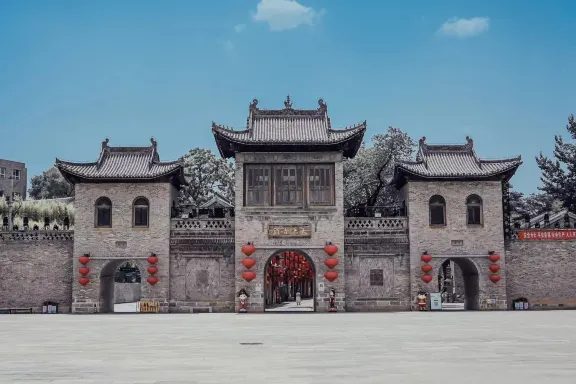
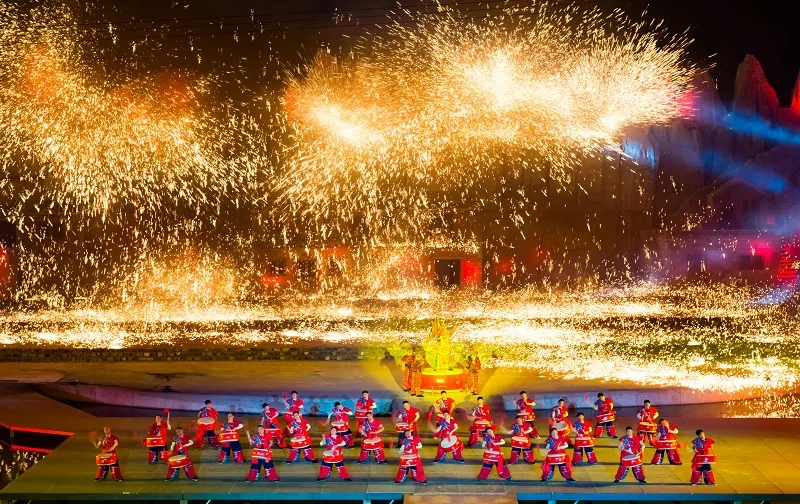
Molten Iron Fireworks(The Town of Situ Branch) (The Town of Situ Branch) is the signature live-action performance at Situ Town. This craft is said to have originated in the Northern Song Dynasty and flourished during the Ming and Qing Dynasties. It began as a ritual for craftsmen to pray for good fortune when starting work during the New Year, symbolizing prosperity with the saying "the more iron flowers are struck, the more prosperous one becomes." The Jincheng area has a long history of iron smelting, and the tradition of iron flower performances has been passed down here for over a thousand years. During the performance, furnaces are stoked with charcoal and fanned by blowers in an open area, melting pig iron into molten iron at temperatures of over 1,000 degrees. Performers use wooden paddles to strike the molten iron into the night sky, causing golden sparks to burst forth like a shower of stars. Strike after strike, the display is both dense and thrilling. Today, this folk custom has been developed by the town into a regular large-scale live-action show called "Thousand-Year Iron Soul." With the coordination of lighting, music, and performers, the iron flower performance has been upgraded from a simple display of skill into a complete nighttime theatrical experience. Sparks fly when the iron flowers bloom, so it is best not to stand too close while watching. The show is popular, so it is recommended to arrive early to secure a good viewing spot.

Jincheng · 5.5 km from Zezhou
Zhijiao Sanjiao Temple

Zhijiao Sanjiao Temple

4.1
4.0/5
2 reviews

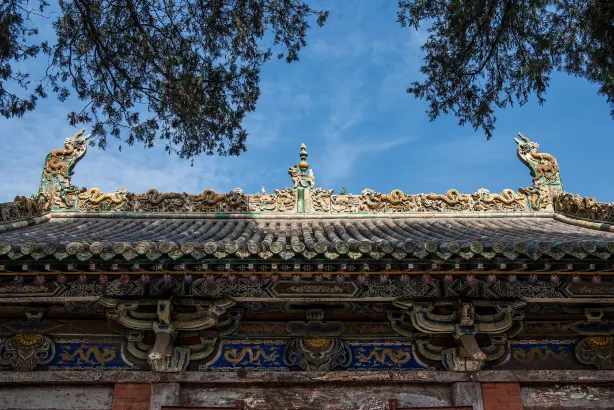
Zhijiao Sanjiao Templewas first built in the 5th year of the Jiajing reign of the Ming Dynasty, expanded twice during the 48th year of the Kangxi reign and the 19th year of the Qianlong reign of the Qing Dynasty, and underwent a large-scale renovation during the Daoguang reign. The temple is a single-courtyard complex with a total of 68 rooms. At the southern end of the central axis are a stage and a dance pavilion, while the northern end features an offering pavilion and the Hall of Three Sages. Flanking the sides are wing rooms, viewing towers, and side halls, with six side halls built on each of the east and west wings. The temple gate faces east. The overall layout is rational, and the architectural structure is rigorous, fully embodying the unique style of ancient architectural art. The screen wall in front of the temple gate is exquisitely built, with particularly superb brick carving craftsmanship. The wall is inlaid with beautiful glazed ornaments depicting themes such as "two dragons playing with a pearl" and various character stories. The wooden structure of the offering pavilion is particularly exquisite. Its components, such as the dougong (bracket sets), primarily feature dragon and phoenix motifs, with fine carving craftsmanship that brings the dragons and phoenixes to life. The pavilion utilizes various carving techniques, including relief, shallow relief, openwork, and piercing, showcasing delicate knife work and rich layering that can be described as masterful. The temple's exquisite brick, wood, and stone carvings, along with its glazed decorations, not only fully demonstrate the unique charm of ancient Chinese architectural art but also embody the diligence, wisdom, and creative spirit of the ancient working people, holding significant historical, artistic, and cultural value.

Zezhou · 32 km from downtown
Free attraction

Experiences you can't miss in Zezhou

Featured Culture & history in Zezhou

View all Culture & history
White Horse Temple + Longmen Grottoes + Han-Wei [8/15 person small group · warm winter tour · in-depth attraction commentary]
󱌍
4.9/5
· 352 reviews· 2.5k booked
Duration: 10.1 hrs
English
Free cancellation
Instant confirmation
Book now for tomorrow
33 consecutive positive reviews
FromBRL 936.32
[2-8 person VIP small group] Longmen Grottoes • White Horse Temple • Han-Wei Museum pure sightseeing tour
Trip.Select
󱌍
4.9/5
· 225 reviews· 1.6k booked
Duration: 8.6 hrs
English
Free cancellation
Instant confirmation
Book now for tomorrow
100 consecutive positive reviews
FromBRL 936.32
White Horse Temple, Longmen Grottoes, Guanlin Private Day Tour with Hotel Transfer
󱌍
5.0/5
· 1 review
Duration: 9 hrs
English
Free cancellation
Instant confirmation
FromBRL 567.91
Luoyang White Horse Temple + TRACING LUOSHEN FU Day Tour [Luoyang Dahehui Attraction]
󱌍
FromBRL 635.12
Longmen Grottoes + White Horse Temple + Han-Wei Museum one-day group tour
󱌍
Duration: 7 hrs
English
Free cancellation
Instant confirmation
Book now for tomorrow
FromBRL 196.22
Zezhou Today's weatherClear 0-10℃
Zezhou weather for the next 2 days11/28: 0-12℃, 11/29: 1-13℃

Free things to do in Zezhou

What travelers say about Zezhou

user-avatar
M42***80November 15, 2026
5.0
In Situ Town, enjoy free food, play games to earn silver coins, and use these coins to ride horses and boats. Watch the "Old Shanxi Again" performance to learn about Shanxi's history and culture, including the Jin merchant culture. Finally, witness the Situ Town's iron-smelting flower performance. This unique performance, unlike any other in China, encompasses a variety of acts including fire pot performances, fire tiger performances, fire-breathing (equipment and human intervention), flame trees, fire wheels, fire sticks, light shows, water shows, drone performances, kung fu performances, and dramatic storytelling – a comprehensive display of various forms of fire-smelting art.

Situ Town

user-avatar
把剑长歌October 16, 2026
5.0
The Jade Emperor Temple Painted Sculpture and Mural Museum refers to the Jade Emperor Temple itself, specifically the Jade Emperor Temple in Zezhou, Jincheng, which is a national protected site (third batch). I always like to compare it to the Yongle Palace; both are national protected sites (third batch), equally impressive, and truly amazing! 👍 I live nearby and went twice, but I still couldn't get enough!

Yuhuang Temple Painted Sculpture and Mural Museum

user-avatar
行走毛毛January 7, 2026
5.0
If you ask me when Qinglian Temple is most beautiful in all four seasons, I would definitely say autumn. That is because the ginkgo leaves turn yellow in autumn, and the entire temple is also exceptionally cool in autumn. Even if you walk up, you won't feel too hot.

Qinglian Temple

user-avatar
Devil May SmileNovember 24, 2024
5.0
The interior of the scenic spot is very quiet and you can take photos at will. People who like ancient buildings will be very interested. A trip like this, away from the hustle and bustle of the city and back to nature, can cleanse the increasingly impetuous mind.

Dayang Ancient Town
user-avatar
鱼游天下333May 20, 2025
5.0
I think the highlight of Jincheng Museum is not the number of cultural relics in its collection, nor the profound historical culture and the superior geographical location in ancient times. What impressed me most in Jincheng Museum were the volunteer tour guides. Although they spoke in dialect, they spared no effort in explaining. Especially the elderly people over 50 years old, they paid attention to interaction and listening. While explaining the historical anecdotes of the cultural relics, they also explained that the cultural relics in the museum specifically corresponded to the current geographical location of Jincheng, the traffic conditions, and how to get there as soon as possible. They mobilized the emotions and learning desire of us tourists very well. In many museums, I appreciate them by myself, and when I encounter tour guides, I cover myself for fear of being heard by others. This is the first time I have encountered such an open explanation like Jincheng, with interaction and discussion. It is great!

Jincheng Museum

user-avatar
听爵士的流氓兔April 29, 2023
5.0
There are 6 statues in Erxian Temple, including 4 maids besides Erxian. The statues in the hall are the only statues of Erxian of Le family in southeastern Shanxi, and they are contemporary works of the main hall. The figures are dignified, with beautiful eyebrows and eyes, and they are excellent works of Song Dynasty sculpture. The palace pavilion in the hall consists of three single buildings and a single arch bridge. The brackets, columns, railings, doors and windows, ridges and kiss beasts are all made of wood, which is an extremely delicate Song Dynasty architectural model.

Jincheng Erxian Temple
user-avatar
建 🌟April 16, 2025
5.0
Shocking visual effects When making iron flowers, craftsmen hit the molten iron into the sky with force, and the molten iron instantly blooms into gorgeous sparks, as dazzling as flowers scattered by fairies, forming huge golden flower clusters, which complement the stars in the night sky, bringing a strong visual impact to the audience, which is breathtaking. Profound cultural connotations It carries rich historical and cultural connotations. It originated from the sacrificial activities of folk craftsmen. It is the crystallization of wisdom created by the working people in their long-term production and life. It reflects people's love for life and yearning for a better future. It also reflects the folk customs and cultural traditions of a specific historical period. Unique artistic value Iron flowers perfectly combine folk handicrafts with performing arts. The artist's flower-beating movements are like dancing, vigorous and rhythmic. The forms of iron flowers blooming in the air are ever-changing, with unique artistic beauty. It is a unique folk art form. Significant inheritance significance As an ancient traditional skill, the inheritance of iron flowers is of great significance to the protection and promotion of folk culture. It is not only a kind of skill inheritance, but also a kind of spiritual continuation, which allows future generations to understand and feel the wisdom and creativity of their ancestors and enhance their sense of identity and pride in national culture. However, iron flower making also faces some challenges, such as the difficulty of skill inheritance, high performance costs, and greater safety risks. It requires joint efforts from all sectors of society to strengthen the protection and support of this traditional skill, so that iron flower making, a folk art treasure, can continue to shine.

Molten Iron Fireworks(The Town of Situ Branch)

user-avatar
吃猫的冰棍1June 23, 2025
5.0
The essence of the Jade Emperor Temple in Jincheng, Shanxi, lies in its Yuan Dynasty colored sculptures! Especially the statues in the Twenty-Eight Mansions Hall, which are unique in China. These masterpieces of the Yuan Dynasty personify the gods of the stars, with distinct personalities, vivid postures, flowing clothes, and lifelike, and have extremely high artistic value. The entire temple has a rigorous layout, and the Song, Jin, and Yuan Dynasty architecture and exquisite colored sculptures complement each other. It is a treasure house for studying ancient sculptures, architecture, and Taoist art. Although it is not the largest in scale, this group of peerless colored sculptures alone is absolutely not to be missed. It can be called a pearl in the history of ancient Chinese sculpture!

Jade Emperor Temple
user-avatar
山在穷游December 24, 2024
5.0
When you come to Shanxi, you will find that there is a Guandi Temple in every city or county, and the Guandi Temple located in Jincheng Prefecture is a well-known Guandi Temple in the process. It is also an important national treasure. The most worth seeing is its stone carvings.

Fucheng Guandi Temple

user-avatar
233***15May 20, 2026
4.0
This attraction is definitely worth visiting, but the transportation is inconvenient. We drove ourselves; I'm not sure about public transportation, as it's not convenient.

Zhijiao Sanjiao Temple

Trip Moments in Zezhou

Popular cities near Zezhou

Frequently asked questions

How can I contact Trip.com customer support?

Get help anytime, anywhere within 30 secondsContact customer support

Change and cancellation policies vary by attractions and tours. Please check the product details page for more information.

Ticket prices may vary between weekdays and weekends, as well as during peak and off-peak seasons. When booking with Trip.com, you can also use Trip Coins to get extra savings. For more tips on booking discounted tickets, please visit Trip.com for the latest information.