Zhao County

Things to do in Zhao County

Search attractions or local attractions & tours
Search

Explore top experiences

Top 10 attractions in Zhao County

View all Attractions
Zhaozhou Bridge
No. 5 of Best Things to Do in Shijiazhuang

Zhaozhou Bridge

6.4
4.1/5
1.8k reviews
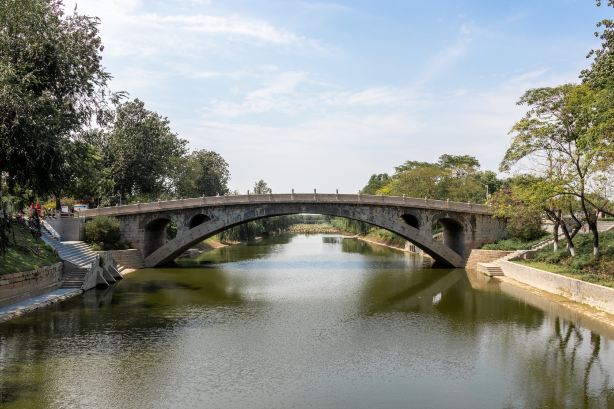
Zhaozhou Bridge, also known as Anji Bridge, is locally called the Great Stone Bridge. Built between the late Kaihuang period and early Daye period of the Sui Dynasty (595–605 AD), it has a history of over 1,400 years. Designed and constructed by Sui Dynasty craftsman Li Chun, it was bestowed the name "Anji" by Emperor Zhezong during his northern inspection tour in the Northern Song Dynasty. The Zhaozhou Bridge is a large single-span open-spandrel stone arch bridge with a segmental arch. The main arch consists of 28 parallel arch rings arranged longitudinally. The bridge has a total length of 64.4m, a deck width of 9m, and a width of 9.6m at the springing lines on both sides. The main arch, constructed with 28 parallel arch rings, has a clear span of 37.02m and a rise (vertical distance from the crown to the springing line) of 7.23m. The two smaller arches near the abutments at each end of the main arch have clear spans of 3.81m, while the two smaller arches closer to the center of the bridge have spans of 2.85m. Zhaozhou Bridge is an ancient stone arch bridge renowned for its exceptional scientific sophistication and artistic beauty. It holds a significant position in the history of world architecture and has been celebrated since ancient times as a "marvel of the world." In 1961, it was designated by the State Council as one of China's first batch of major national cultural heritage sites. In September 1991, the American Society of Civil Engineers selected it as the 12th "International Historic Civil Engineering Landmark," commemorating the honor with a plaque and monument.Zhao County · 3.8 km from downtown
Hebei Museum
No. 5 of Family-friendly Attractions in Hebei

Hebei Museum

7.3
4.8/5
1.5k reviews
Hebei Museum, formerly known as Hebei Provincial Museum, was established in 1953. It serves as a comprehensive provincial museum, a national patriotic education demonstration base, and a key museum jointly supported by central and local governments. The museum consists of three sections: the main campus, Jianhua campus, and Yucai campus. The main campus is located at Shijiazhuang Cultural Square, divided into north and south zones. The north zone was built in 1968 while the south zone is a newly expanded area, with both zones featuring harmonious and magnificent architecture that stands as a landmark cultural view of Shijiazhuang. The Jianhua and Yucai campuses serve as artifact storage facilities, housing a total collection of 310,000 items. Hebei Museum leverages the strengths of its provincial cultural and museum collections, drawing from the brilliant chapters of Hebei's history to present 10 permanent exhibitions: "Hebei in the Stone Age," "Shang Dynasty Civilization in Hebei," "Heroic Ballads – Stories of Yan and Zhao," "Power of the Warring States – Ancient Zhongshan State," "The Grand Finale of the Han Dynasty – Han Tombs at Mancheng," "Quyang Stone Carvings," "Northern Dynasties Murals," "Famous Kilns and Porcelain," "Flames of War Against Japan – Heroic Hebei," and " 'Enjoy Hebei' Intangible Cultural Heritage Living Room – Exhibition of Hebei Province's Intangible Cultural Heritage Protection Achievements." Through over 5,000 exquisite artifacts and modern display methods, these exhibitions chronicle 2 million years of continuous human development in Hebei. Hebei Museum also hosts numerous temporary exhibitions each year covering history, art, nature, science and technology, current affairs, and folklore, greatly enriching people's spiritual and cultural lives. Over the years, Hebei Museum has made significant contributions to the collection, preservation, research, exhibition, public education, and international exchanges of cultural relics. In 2015, it was honored as a "National Civilized Unit," and in 2018, it earned the title of "National Innovative Museum." With its profound historical and cultural heritage, modern exhibitions, and clean, comfortable environment, Hebei Museum warmly welcomes visitors from all over the world.Shijiazhuang · 38.7 km from Zhao County
The Palace Museum
2026 Global 100 - Best Things to Do

The Palace Museum

10
4.9/5
204.1k reviews
The Forbidden City, also known as the Imperial Palace, was the imperial palace of the Ming and Qing dynasties, and is also the symbol of ancient China. When you are in the majestic and orderly high walls and deep courtyards, you can truly feel its former glory. ▲The long history has left behind large-scale precious buildings and countless cultural relics, which have also become the main attraction of visiting the Forbidden City today. ▲Classic attractions: The Forbidden City Corner Tower is a polygonal building with a convex plane on all four sides. It is located in Dongcheng District, Beijing. The roof has three layers. The upper layer is a hip roof with vertical and horizontal intersections. It is composed of a gable roof with flowing water on two slopes and a hip roof with four slopes. Because there are nine main ridges on this roof, it is called the Nine-ridge Hall. ▲Sundials are divided into two types according to their installation principle: equatorial and horizontal. The sundial installed using the equatorial principle is called an equatorial sundial. The key points of its production are that it must have a time plate, a latitude arc and a gnomon. When operating, the time plate must be parallel to the equatorial plane of the earth, the gnomon must be in the same direction as the earth's axis, and the shadow cast by the gnomon on the gnomon is the desired time. ▲The Treasure House is located in the Ningshou Palace area. It has a rich collection of treasures, including Buddhist supplies, ornaments, daily utensils, and treasures for appreciation. Among them, the red coral lion about 14 cm high, the Dongzhu court beads about 130 cm long, and the gold "Fengtianzhibao" seal are all rare treasures. ▲The Clock and Watch Museum is located in the Fengxian Hall in the palace. Most of the clocks on display are British products, but there are also clocks from other countries such as France and Switzerland. In addition to the timing function, these clocks are decorated with figures, birds, beasts, flowers, etc., which can also make various different movements. They are very delicately made. Among them, the copper-plated gilded writing clock, the copper-plated gilded enamel gourd-top fishing and woodcutting farming clock, and the copper-plated gilded rotating flower running man rhinoceros carrying clock are very rare.China · Beijing
Universal Beijing Resort
2026 Global 100 - Best Things to Do

Universal Beijing Resort

10
4.6/5
80.9k reviews
Beijing Universal Studios is a highly anticipated theme park destination, including Universal Theme Park, Beijing Universal CityWalk, and two resort hotels. It features brand new selected Attraction and includes popular entertainment facilities and attractions from Universal Theme Parks around the world. ▲Universal Studios Beijing: Blending Chinese cultural elements to create a unique experience, it has seven theme Attraction, 37 rides and entertainment facilities and landmark attractions, 24 performances, 80 Dining and 30 retail stores.  ▲Minion Land: It is a colorful world full of joy! At this moment, these naughty Minions are walking around the streets, ports and city centers, having fun all over the world without restraint! At the same time, Gru is also recruiting soldiers for the Minions Army, so hurry up and sign up at Gru's house! ▲The Wizarding World of Harry Potter™: Here you can leave the ordinary world behind and experience the wonderful rides and endless magical adventures, which will lead you step by step into a thrilling and interesting magical world! ▲Transformers Metrobase: This is a Cybertron-style base, which is transformed by Transformers the size of a city. If you are ready to become an agent, then accept Optimus Prime's recruitment, join the Beijing Nest Force, fight side by side with the Autobots, and fight against the Decepticons to protect the earth! ▲Kung Fu Panda Land of Awesomeness: This is an ancient place like a paradise, and also a legendary place that combines the beauty of nature and craftsmanship. Come here to explore your own Kung Fu! There's also Jurassic World Isla Nublar, Hollywood, and Waterworld waiting for you to explore! ▲The Universal Studios Grand Hotel The Universal Studios Grand Hotel is located at the entrance of Universal Studios Beijing and offers Hollywood-themed accommodation and the privilege of Early Park Admission via the Universal Studios Beijing VIP Experience entrance; NUO Resort Hotel is a 5-minute walk from the entrance. Guests can enjoy a well-equipped fitness center, indoor swimming pool, and spa center (NUO SPA). Guests can also enjoy Early Park Admission via the Universal Studios Beijing VIP Experience entrance. Both hotels combine themed features with high-end facilities to create an immersive vacation experience.China · Beijing
Zhengding Ancient City
No. 2 of Night Attractions in Hebei

Zhengding Ancient City

7.6
4.7/5
590 reviews
Zhengding Ancient City is located 15 km north of Shijiazhuang, the capital of Hebei Province. Built according to traditional Chinese planning concepts and architectural styles, it embodies China's historical and cultural characteristics from the 5th to 19th centuries, showcasing the wisdom and perseverance of ancient laborers. Historically known as one of the "Three Northern Strongholds" alongside Baoding and Beijing, its southern gate still bears a stone inscription reading "Stronghold of Three Passes." Zhengding is also the hometown of Zhao Zilong, a renowned general from the Three Kingdoms period. The long and rich history has endowed Zhengding Ancient City with magnificent and uniquely styled cultural relics and historic sites, renowned for its "Three Invisible Mountains, Nine Non-Flowing Bridges, Nine Towers, Four Pagodas, and Eight Great Temples, along with Twenty-Four Exquisite Memorial Archways." "Three Invisible Mountains" refers to the fact that Zhengding was historically the administrative center of the Zhongshan State, Hengshan Commandery, and Changshan Commandery, yet the area itself has no mountains. "Nine Non-Flowing Bridges" describes a single-arched three-path stone bridge in front of the Longxing Temple, as well as the pan bridges (ancient pan bridges typically featured three parallel bridges) in front of the Prefectural Confucian Temple and the Zhengding County Confucian Temple—none of which have flowing water. "Nine Towers, Four Pagodas, and Eight Great Temples" refers to the original four gate towers, four corner towers, and the Yanghe Tower within the city; the four pagodas are the Tianning Temple Pagoda, Huata Pagoda of Guanghui Temple, Xumi Pagoda, and Chengling Pagoda of Linji Temple; the eight great temples include Longxing Temple, Guanghui Temple, Linji Temple, Kaiyuan Temple in Zhengding Ancient City, Tianning Temple, Hongji Temple, Sheli Temple, and Chongyin Temple—the latter three of which have been destroyed. Zhengding once boasted 24 magnificent memorial archways, including the Xu Family Archway, Liang Family Archway, Ancient Changshan County, Supreme Virtue Reaching Heaven, Virtue Matching Heaven and Earth, and Wooden Bell for All Affairs. However, due to historical changes, weathering, and especially the destruction during the decade-long Cultural Revolution, many precious cultural relics were damaged. Yet with 9 nationally protected relics, 6 provincially protected relics, and over 10 county-level protected relics, Zhengding still retains the grandeur of a renowned historical and cultural city. The ancient city of Zhengding was designated as a provincial-level historical and cultural city in 1990 and recognized as a national historical and cultural city in 1994. Zhengding's tourism features a unique blend of "modern and ancient," "elegant and folk" characteristics. Among its historical sites, the Longxing Temple, originally built in 586 AD during the Sui Dynasty and expanded under the decree of Emperor Zhao Kuangyin, the founding emperor of the Song Dynasty, stands majestic and well-preserved. It enjoys high acclaim both domestically and internationally, praised by renowned architect Liang Sicheng as "the foremost temple beyond the capital." The temple's "Reclining Guanyin" mural sculpture was hailed by Lu Xun as "the Goddess of Eastern Beauty."Revolving Sutra LibraryDubbed by physicists as a prime example of Newton's laws in action, along with China's scripture cabinets. The Sui Dynasty Longzang Temple Stele is one of the country's renowned ancient stone inscriptions, showcasing the evolution from Han clerical script to Tang regular script, praised by Kang Youwei as "the finest Sui stele." Standing 22 meters tall, the grand Buddha statue is among China's earliest and tallest surviving bronze standing Buddhas. The cross-shaped Mani Hall exemplifies classic Song Dynasty architectural techniques. Zhengding's vicinity also boasts four famous pagodas, including Huagong Pagoda at Guanghui Temple—a brilliant fusion of diamond throne and floral pagoda styles. Tianning Temple's...Lingxiao PagodaIt is the foremost wooden pavilion tower in China. The symmetrical arrangement of the Tang Dynasty bell tower and ancient pagoda at Kaiyuan Temple in Zhengding Ancient City exemplifies the transition in Chinese Buddhist temple architecture from pagoda-centered to hall-centered layouts. The Chengling Pagoda at Linji Temple serves as the reliquary pagoda for Master Yixuan, founder of the Linji school of Buddhism, and has become a symbol of Sino-Japanese friendship. Located within Zhengding, the Zhengding Rongguo Mansion was meticulously designed and constructed according to descriptions in Cao Xueqin's literary masterpiece "Dream of the Red Chamber" while strictly adhering to China's "Great Qing Code", making it the country's first architectural complex replicating Ming-Qing architectural styles. Most scenes from the TV series adaptation of "Dream of the Red Chamber" were filmed here. The Qing Dynasty-style Ningrong Street by Rongguo Mansion's west gate stretches over 200 meters, where pivotal scenes like "Imperial Consort Yuan's Homecoming" and "Qin Keqing's Funeral" were shot. With over 1,600 years of history, Zhengding Ancient City's walls were originally earthen fortifications during the Eastern Jin Dynasty, rebuilt in stone during the Northern Zhou Dynasty, expanded into earthen walls during the Tang Dynasty, and finally reconstructed as 24-li (approximately 12 km) brick walls during the Ming Dynasty. The surviving 8,106-meter Ming-era walls feature four magnificent gates: Yingxu (later renamed Huancui) to the east, Changle to the south, Zhenyuan to the west, and Yong'an to the north. While time has eroded the western and northern gates, the eastern gate was entirely buried under 1960s military fortifications. In 2001, the southern gate tower and 50-meter flanking walls were restored through public donations of original bricks and a CNY 3.99 million investment.Zhengding · 46.6 km from Zhao County
National Museum of China
2026 Asia 100 - Best Things to Do

National Museum of China

9.5
4.8/5
14.1k reviews
The National Museum of China is an institution representing the country in collecting, researching, exhibiting, and interpreting representative physical evidence that fully reflects China's fine traditional culture and advanced socialist culture. It is a national palace of history, culture, and art, and a cultural living room. The museum currently has a collection of over 1.43 million items, covering ancient artifacts, modern and contemporary artifacts, rare books and ancient texts, artworks, and many other categories. Among them, there are 815,000 ancient artifact items (sets), 340,000 modern and contemporary artifact items (sets), and over 240,000 rare books and ancient texts (volumes), with nearly 6,000 first-class cultural relics (sets) in total. In recent years, especially since the 19th National Congress of the Communist Party of China, the museum has intensified its efforts to collect representative material evidence reflecting contemporary advanced culture, openly soliciting artifact collections from society, acquiring an average of about 50 ancient artifact items (sets) and over 1,000 modern and contemporary artifacts, physical objects, and artworks (sets) each year. Museum exhibitions include three major series: permanent exhibitions, thematic exhibitions, and temporary exhibitions, forming a three-dimensional exhibition system that encompasses themed exhibitions, permanent exhibitions, thematic exhibitions, and temporary exhibitions. Among them, "Ancient China," "The Road to Rejuvenation," and "The Road to Rejuvenation: New Era" are the museum's permanent exhibitions and serve as important platforms for promoting traditional Chinese culture and advanced socialist culture, and for cultivating and practicing core socialist values. Thematic exhibitions are mainly based on the museum's collection, including more than ten thematic exhibitions such as ancient Chinese bronzes, Buddhist statues, jade ware, porcelain, modern classic fine art works, and African wood carvings. Temporary exhibitions include two major categories: independently curated exhibitions and introduced exchange exhibitions, covering multiple aspects such as history and culture, fine cultural relics, archaeological discoveries, classic fine art works, regional culture, and international exchanges, with an average of more than 40 exhibitions held annually. It boasts abundant research resources, a solid research foundation, and strong research capabilities, making it a leading institution in the development of the museum industry in China. Since 2018, the museum has followed the principle of "not seeking to possess, but seeking to exhibit; openness and cooperation for mutual benefit," establishing strategic partnerships with numerous cultural and museum institutions, research institutes, and universities at home and abroad. Together, they have conducted academic research, held exhibitions of fine cultural relics, convened seminars, launched a postdoctoral research workstation, and led the establishment of the BRICS Museums Alliance andSilk road museumAlliance of two international organizations, striving to play a greater role and make greater contributions in promoting the core socialist values, enhancing cultural confidence, facilitating exchanges and mutual learning between Chinese and foreign civilizations, and building a socialist cultural power.China · Beijing
Longxing Temple
No. 11 of Best Things to Do in Hebei

Longxing Temple

7.1
4.8/5
4.4k reviews
Longxing Temple, also known as the Great Buddha Temple, is one of China's most historically significant Buddhist monasteries with extensive architectural scale and remarkable preservation. This ancient architectural complex holds outstanding historical and cultural value as a monumental religious site. Longxing Temple traces its origins back to 586 AD during the Sui Dynasty, initially named Longcang Temple before being renamed during the Tang Dynasty. In 971 AD under Emperor Taizu of the Northern Song Dynasty, an imperial decree commissioned the casting of a magnificent 42-arm bronze statue of the Thousand-Hand Guanyin Bodhisattva within the temple, accompanied by the construction of the Great Mercy Pavilion. Subsequent expansions formed a Song Dynasty architectural complex centered around this pavilion. The temple underwent repairs and additions during the Jin, Yuan, and Ming Dynasties. Major renovations ordered during the reigns of Kangxi and Qianlong in the Qing Dynasty established its final layout: monastic living quarters in the east, Buddhist ceremonial spaces in the center, and imperial lodging in the west. In 1710, Emperor Kangxi personally inscribed the "Longxing Temple" plaque as a mark of reverence. From the late Qing through the Republic era, social upheaval and warfare led to the temple's decline. After the founding of New China, systematic restoration and preservation efforts by the government gradually restored the temple to its former grandeur. Longxing Temple boasts an expansive scale and diverse architectural styles, stretching approximately 600 meters from north to south and 200 meters from east to west. Its main structures are symmetrically arranged along a central axis, featuring key buildings such as the Heavenly King Hall, Mani Hall, Ordination Platform, Great Mercy Pavilion, Amitabha Hall, Vairocana Hall, and Dragon Soaring Garden from south to north. Visitors can explore along the central axis, with a complete tour typically taking 2–3 hrs. The temple is also known as the "Great Buddha Temple," a name derived from its enshrined 21.3-meter-tall Thousand-Armed and Thousand-Eyed Guanyin statue in the Great Mercy Pavilion. This majestic bronze statue, commissioned by Emperor Zhao Kuangyin during the Northern Song Dynasty, stands as one of China's most monumental ancient copper-cast Buddhist sculptures, earning the temple its nickname and making it a must-see attraction. The Mani Hall is another must-see highlight, featuring a vividly colored seated Avalokitesvara statue on its northern wall. This unique statue combines lifelike realism with divine beauty in its posture and vibrant hues. Lu Xun once praised it as "personifying divinity," earning it the title "Goddess of Eastern Beauty." The hall itself boasts distinct Song Dynasty architecture, with its original structure preserved. Its particularly special bracket set design was hailed by renowned architect Liang Sicheng as a "singular example" of Song-era construction, making it an architectural masterpiece of immense artistic and research value. Beyond these two main attractions, the temple houses other equally precious artifacts and structures. These include the Longxing Temple Ordination Platform in the Ordination Hall, the Northern Song Dynasty revolving sutra cabinet in the Revolving Sutra Cabinet Hall, the 7.4-meter-tall Northern Song wooden Maitreya statue in the Cishi Pavilion, imperial stele inscriptions by Emperors Kangxi and Qianlong in the Imperial Stele Pavilion, and the Sui Dynasty Longcang Temple Stele revered as the "origin of regular script"—all rare historical treasures worth admiring in detail. Additionally, the Dajue Liushi Hall ruins and Longteng Garden offer unique experiences, making them highly recommended stops for visitors.Zhengding · 46.4 km from Zhao County

Experiences you can't miss in Zhao County

Featured Culture & history in Zhao County

View all Culture & history
One-day tour of Zhengding Ancient City + Longxing Temple + Rongguo Mansion + Zhaozhou Bridge in Shijiazhuang, Hebei: Chartered car + admission
󱌍
FromNZD 68.65
[Premium private tour] Shijiazhuang day trip to Zhengding Ancient City + Zhaozhou Bridge + Berlin Zen Temple
󱌍
Duration: 3.5 hrs
English
Free cancellation
Instant confirmation
Book now for tomorrow
FromNZD 207.26
One-day private tour of Zhengding Ancient City + Longxing Temple + Rongguo Mansion + Zhaozhou Bridge in Shijiazhuang, Hebei
󱌍
Duration: 3.8 hrs
English
Free cancellation
Instant confirmation
Book now for tomorrow
FromNZD 126.87
[Premium private tour] Shijiazhuang day trip to Zhaozhou Bridge + Xibaipo - Experience two cultural landscapes
󱌍
Duration: 4 hrs
English
Free cancellation
Instant confirmation
Book now for tomorrow
FromNZD 266.47
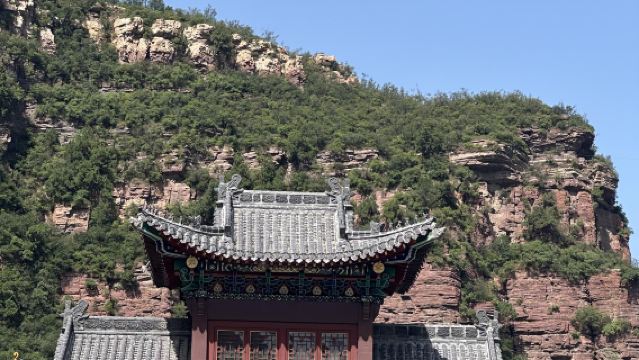
1-day private charter tour to Zhaozhou Bridge and Cypress Chan Monastery in Shijiazhuang, Hebei with English service available
󱌍
5% off
Limited-time sale
FromNZD 275.15NZD 289.64
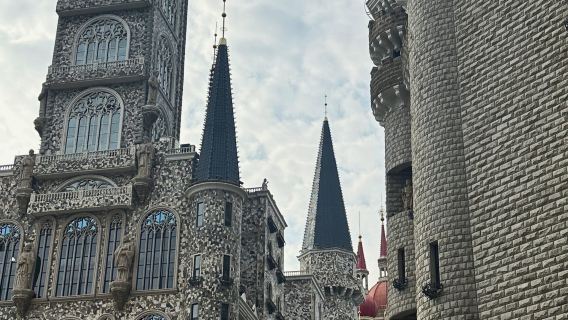
1-day tour to Hebei Academy of Fine Arts, Berlin Zen Temple and Zhaozhou Bridge in Shijiazhuang with Chinese and English services
󱌍
5% off
Limited-time sale
FromNZD 330.19NZD 347.57
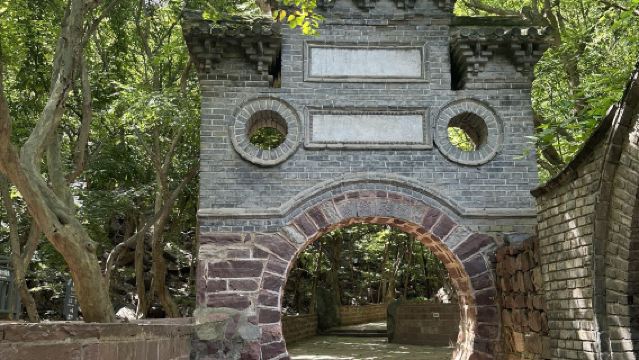
Zhao County Today's weatherClear 7-14℃
Zhao County weather for the next 2 days11/1: 2-18℃, 11/2: 3-20℃

Free things to do in Zhao County

What travelers say about Zhao County

user-avatar
难 得糊 涂September 19, 2026
5.0
The Zhaozhou Bridge Scenic Area, also known as Anji Bridge, was built over 1400 years ago under the supervision of the Sui Dynasty craftsman Li Chun. It is the world's oldest and best-preserved open-spandrel stone arch bridge, often referred to as the "Number One Bridge Under Heaven." It is a 4A-level scenic area and a national key cultural relics protection unit. The Zhaozhou Bridge itself spans the Xiao River, featuring a single-arch design with four smaller arches added to the shoulders—a groundbreaking innovation in bridge construction. This not only reduced the bridge's weight but also helped divert floodwaters during the rainy season. The bridge's bluestone railings are carved with lifelike dragons and mythical beasts. Currently, climbing the bridge is prohibited, but visitors can admire and photograph it up close from the banks. The Ancient Bridge Exhibition Hall introduces the bridge's construction principles and historical evolution, showcasing old photographs and models to help visitors understand the engineering wisdom of the ancients. The Li Chun Statue stands at the entrance of the scenic area, commemorating the designer of this famous bridge. The riverside gardens along the Xiao River offer excellent views of the bridge's reflection in the water.

Zhaozhou Bridge

user-avatar
吹你一脸灰October 10, 2025
4.0
Berlin Zen Temple is located at No. 23, Shita East Road, Zhaozhou Town, Zhao County, Shijiazhuang City, Hebei Province. It was first built during the Jian'an period of the Eastern Han Dynasty (196-220 AD). It was called "Guanyin Temple" in ancient times, "Yong'an Temple" in the Southern Song Dynasty, "Berlin Zen Temple" in the Jin Dynasty, and "Berlin Zen Temple" since the Yuan Dynasty. The existing temple buildings (except the Berlin Temple Pagoda) were built in 1992, covering an area of ​​more than 90 acres. It is an important ancestral temple in the history of Chinese Zen Buddhism [2].

Bailin Temple

user-avatar
望雁October 18, 2026
5.0
The Hebei Provincial Museum is definitely worth a visit. It boasts a rich and diverse collection of exhibits, arranged scientifically and logically. It also offers a wide variety of cultural and creative products and activities. It's not only suitable for teenagers but also for children.

Hebei Museum

user-avatar
yjw2000February 6, 2023
5.0
The Ancient Bridge Exhibition Hall of Zhaozhou Bridge Scenic Area is located in Zhaozhou Bridge Scenic Area, Zhaozhou Town, Zhao County, Shijiazhuang City. The Ancient Bridge Exhibition Hall is located on the bank of the world-famous Zhaozhou Bridge, close to the scenic area parking lot, and is an important part of the Zhaozhou Bridge Scenic Area. The Ancient Bridge Exhibition Hall is a popular science place that introduces bridge cultural knowledge. It traces the roots of the ancient bridges of thousands of years, explores the historical trajectory of the evolution and development of bridges, and reveals the mystery of bridges to social development. It integrates the knowledge, history, and sociality of bridges, and is inclusive and enjoyable. The Chinese Ancient Bridge Hall of the Ancient Bridge Exhibition Hall of Zhaozhou Bridge Scenic Area displays all more than 60 bridges of the seven batches of national key cultural relics protection units in the form of pictures and texts, allowing you to appreciate the style of Chinese ancient bridges of different ages, styles, and beautiful shapes. The reliefs of the top ten ancient bridges in China, carved from precious wood, fully display the ancient style of the ancient bridges in a three-dimensional form, showing the long history and splendid culture of the Chinese nation for 5,000 years.

Zhaozhouqiao Jingqu Guqiao Exhibition hall

user-avatar
135***89October 30, 2026
5.0
I was fortunate to meet Guide Yue from Imperial City Stories on this Forbidden City tour. His professional, witty, and humorous commentary throughout, coupled with a well-planned route and a perfect pace, made the entire tour engaging and entertaining. From the imperial court to the inner palace, he brought history to life in a vivid and engaging way. Enthusiastic, professional, and entertaining – a truly excellent experience! Five stars! Highly recommended!

The Palace Museum

user-avatar
男孩旅行October 30, 2026
4.0
Service: 3 stars. I bought the U-Pass pass, but when I entered one attraction, I thought it was the U-Pass lane, but it was actually a regular lane. They didn't give me any directions; I only realized I was in the wrong place after asking the person behind me. Secondly, at the Cybertronian Knights restaurant, when ordering, I don't know if it was to save costs or what, but when I went to pick up my food, I asked for a disposable glove, but they said the other tray they gave me was... Their attitude was particularly bad, even though the view was quite nice. I have to say...

Universal Beijing Resort

user-avatar
Anonymous userOctober 5, 2026
5.0
This is a Buddhist holy site well worth visiting. The Thousand-Handed and Thousand-Eyed Buddha and the mural of the Reclining Guanyin are historical and artistic treasures that have been preserved intact for future generations to appreciate and understand history! An even greater gain was visiting the memorial hall of Mr. Liang Sicheng, where I learned about the contributions he and Lin Huiyin made to the preservation of historical sites in my country and their transmission in education, so that we, the later generations, can appreciate these historical sites!

Zhengding Ancient City

user-avatar
E43***44October 13, 2026
5.0
张洋导游讲解的非常好!All visitors should book the national Museum of China trip. It is not easy to book on your own, book through Trip.com and have a guide to share the history with you..

National Museum of China

user-avatar
把剑长歌September 18, 2025
5.0
The Zhaozhou Dharani Sutra Pillar is the tallest extant pagoda in China, standing over 16 meters tall. It is a relic of the Kaiyuan Temple from the Northern Song Dynasty. The pagoda's base features images of opening doors on the east, west, and south sides. It supports a two-story octagonal Sumeru pedestal. Each side of the waist is carved with a Bodhisattva seated on a lotus, a three-bay hall, and above it, a coiled dragon and Mount Sumeru. Mount Sumeru supports a three-story pagoda separated by a canopy and upturned lotuses. Dharani sutras are engraved on it, purporting to achieve the merit of "covering dust and shadows" and eliminating karma. Further up, a shorter, two-story pagoda features carvings of doors, windows, and stories from the Buddha's life. The apex is crowned by an octagonal pavilion and a pagoda.

Dharani Sutra Pillar

user-avatar
Milky-wayOctober 24, 2026
5.0
The tour guide's two-hour lecture vividly and engagingly recounted the six wonders of Longxing Temple interwoven with historical stories, filling this trip to Zhengding Ancient City with reverence for cultural relics and historical sites. In particular, the ancient wooden architecture, which embodies the wisdom of the Chinese working people, sparked my keen interest in mortise and tenon joints.

Longxing Temple

Trip Moments in Zhao County

Popular cities near Zhao County

Frequently asked questions

How can I contact Trip.com customer support?

Get help anytime, anywhere within 30 secondsContact customer support

Change and cancellation policies vary by attractions and tours. Please check the product details page for more information.

Ticket prices may vary between weekdays and weekends, as well as during peak and off-peak seasons. When booking with Trip.com, you can also use Trip Coins to get extra savings. For more tips on booking discounted tickets, please visit Trip.com for the latest information.