Zuoquan

Things to do in Zuoquan

Search attractions or local attractions & tours
Search

Explore top experiences

Top 10 attractions in Zuoquan

View all Attractions
Huangyadong Scenic Area
No. 1 of Family-friendly Attractions in Changzhi

Huangyadong Scenic Area

6.5
4.8/5
669 reviews

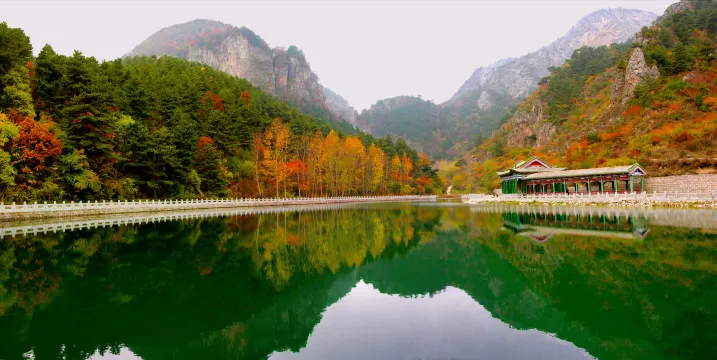
Huangyadong Cultural Tourism Area is located in the hinterland of the Central Taihang Mountains, Licheng County, Changzhi City, Shanxi Province, with a total area of ​​6.7 square kilometers. It consists of the Huangyadong Red Classic Area, Tianwaitian Leisure Experience Area and the Entrance Service Area. During the Anti-Japanese War, this was an ordnance base behind enemy lines in North China. The earliest arsenal established by the Eighth Route Army was born here, and it was known as the "Cradle of People's Military Industry". In November 1941, the Huangyadong Defense War that shocked China and the world took place. Our army defeated the enemy with fewer troops and the weak with stronger ones, creating an unprecedented record of 6:1 enemy and our casualties in the Sino-Japanese war. Huangyadong (material warehouse), the former site of the arsenal, the martyrs' cemetery, the carved fort group and other sites and relics are scattered throughout. It is a relatively well-preserved red anti-Japanese war site and is known as the "anti-Japanese war museum without walls". It integrates the magnificent scenery of Taihang Mountains, the geological wonders of Zhangshiyan, the red military industry culture, and the historical sites of the War of Resistance Against Japanese Aggression. It is a cultural tourism area with the main functions of resource protection, cultural promotion, party and government training, study and team building, sightseeing and vacation, summer health care, and outdoor expansion.

Licheng · 32 km from Zuoquan
Longmen Grottoes
2026 Asia 100 - Best Things to Do

Longmen Grottoes

8.9
4.7/5
62.4k reviews

Longmen Grottoes are located in the southern suburbs of Luoyang, Henan Province, on the cliffs along both banks of the Yi River. As one of China's three major grotto art treasures, they were inscribed on the World Cultural Heritage list in 2000. The grottoes were first carved when Emperor Xiaowen of Northern Wei moved the capital to Luoyang, and construction continued through the Eastern Wei, Western Wei, Northern Qi, Sui, and Tang dynasties, with the vast majority of niches and statues left from the Northern Wei and Tang periods. Today, more than 2,000 niches and over 100,000 statues remain, along with a large number of inscriptions and steles, making the site an important representative of Chinese stone carving art. The attraction is divided by the Yi River into two parts: West Hill and East Hill. The West Hill Grottoes are the essence of the site, carved from the Northern Dynasties through the Sui and Tang periods. Famous caves include Guyang Cave, Binyang Cave, Lotus Cave, Wanfo Cave, and Fengxian Temple. The Lushena Buddha at Fengxian Temple stands about 17 m tall, making it one of the larger Buddha statues at Longmen Grottoes. Its face is dignified and serene, with a faint smile, and legend holds that it was modeled on the appearance of Wu Zetian, earning it the name "Oriental Mona Lisa." The inner walls of Wanfo Cave are densely covered with about 15,000 small Buddha statues, each only a few cm tall, neatly arranged and finely crafted. Guyang Cave is the earliest cave carved at Longmen, and its inscription calligraphy is exquisite; the selected "Twenty Masterpieces of Longmen" are representative works of Wei stele calligraphy. Binyang Cave consists of the South, Middle, and North caves and took more than twenty years to complete. Its original reliefs depicting emperors and empresses worshipping the Buddha were looted and lost overseas in the 1930s. In Binyang North Cave, a Buddha statue has a distinctive hand gesture, with the right index and middle fingers raised in a shape resembling the modern "scissors hand," though it is actually a Buddhist mudra, and it once sparked heated discussion online. The East Hill Grottoes are mostly Tang dynasty works and are smaller in scale than those on West Hill, but from the opposite bank visitors can enjoy panoramic views of West Hill from different angles, especially distant views of the Lushena Buddha. The attraction also includes Xiangshan Temple and Bai Juyi Memorial Park (Bai Garden). The Tang dynasty poet Bai Juyi lived in Luoyang in his later years and once praised it, saying, "Of the scenic splendors of Luoyang's surrounding mountains and waters, Longmen ranks first." When visiting, simply follow the route West Hill—East Hill—Xiangshan Temple—Bai Garden, proceeding in one direction without backtracking. The West Hill Grottoes are densely packed with content, so it is advisable to set aside ample time for a closer look; East Hill is quieter and more secluded, suitable for a brief visit and gazing across the river when energy is limited.

China · Luoyang
Jinci Temple Museum
2026 Asia 100 - Family-friendly Attractions

Jinci Temple Museum

8.7
4.8/5
21k reviews

Jinci Temple Museum is located at the foot of Xuanweng Mountain by the banks of the Jin River. It is an ancestral temple built to commemorate Tang Shuyu, the founding feudal lord of the State of Jin, and is also one of the earlier surviving royal sacrificial gardens in China. There is a saying that "you have not truly visited Taiyuan until you have visited Jinci." The ancient buildings in the museum are arranged in sequence along the central axis, among which the Xian Hall, the Flying Bridge over the Fish Pond, and the Hall of the Holy Mother are known as the "three treasures," while the Zhou Cypress, the Never-Aging Spring, and the Song dynasty attendant statues are known as the "three wonders"—these are the core highlights of any visit. The "Three Treasures" are located on the central axis and can be visited together. Xian Hall is the place where sacrificial offerings are placed. The hall is surrounded by railings instead of walls, making it well-ventilated and bright, and its beam structure is simple and lightweight. The Flying Bridge Across Fish Pond is on the west side of Xian Hall. It is a cross-shaped ancient bridge built over a square pond, resembling a modern overpass in form, and this type of bridge structure is extremely rare among surviving ancient buildings. The west end of the bridge connects to Shengmu Hall, the oldest surviving building in the museum. Wooden carved dragons coil around the porch columns in front of the hall, making them relatively early surviving examples of wooden coiled dragons. The hall interior was built using the reduced-column method, creating a rather spacious interior. It houses dozens of Song Dynasty colored sculptures, with the main statue of Shengmu seated in the shrine and the remaining attendants arranged on both sides with varied expressions. One attendant statue is half joyful and half sorrowful, vividly lifelike and moving. With Shengmu Hall as the center, you can also seek out the "Three Wonders." The Zhou Cypress is located on the north side of Shengmu Hall. It is said to have been planted in the Western Zhou Dynasty, and its trunk leans south like a reclining dragon, full of ancient majesty. The Never-Aging Spring is located on the south side of Shengmu Hall and is the main source of the Jin River. The museum also houses the Stele of the Inscription and Preface to Jinci, composed and handwritten by Emperor Taizong of Tang, Li Shimin, whose running-script calligraphy is vigorous and forceful. In the southern part is the Shifang Fengsheng Zen Temple, said to have originally been the villa of the Tang Dynasty general Yuchi Gong. In the Futu Courtyard, the Sarira ShengSheng Pagoda can be climbed for a distant view. The Jinci temple fair has been passed down to the present day and has been included in the national-level intangible cultural heritage list. The Water Mirror Stage, an ancient theater stage in the museum, is an important venue for activities during the temple fair.

China · Taiyuan
Millennium City Park
2026 Asia 100 - Night Attractions

Millennium City Park

8.8
4.6/5
29.1k reviews

Millennium City Park is located by the shores of Longting Lake in Kaifeng. It is a large-scale historical and cultural theme park of the Song Dynasty, recreated one-to-one based on the famous painting Along the River During the Qingming Festival by Song Dynasty painter Zhang Zeduan. The park is divided into two sections by the Shuangting Bridge: the South Garden recreates the bustling street life of the Bianjing city, with taverns, eateries, teahouses, and pharmacies lined up along the streets; the North Garden is an imperial garden, with waterside halls, the Sifang Courtyard, and other palace buildings standing by the lake. Performers and street vendors in the park mostly wear Song Dynasty costumes, with ancient music lingering and bells and drums sounding, so that after a few steps visitors can easily fall under the illusion of "stepping into a painting in one morning, dreaming back a thousand years in one day." Architecture is the intuitive and tangible highlight here: the Rainbow Bridge spanning the Bian River is a replica of the famous bridge in the painting, shaped like a long rainbow, and standing on the bridge watching the grain boats pass by feels much like being inside the painting; the Fuyun Pavilion towers above all the other pavilions in the garden, with its tiered red towers and golden tiles on all four eaves, inviting one to climb from afar; the Shangshan Gate is rebuilt after the Northern Song dynasty Dongjing city gate, tall and majestic with brilliant painted decorations, making it the most imposing gate tower in the garden; and the Shuixin Xie, Shuangting Bridge, Jiulong Bridge, and other pavilions and waterside structures are scattered among the blue waves. The main attraction of the day is the immersive performances staged throughout the park: "Bao Zheng Inspects the Bian River Grain Transport" unfolds on the water on both sides of the Rainbow Bridge; "Squire Wang Seeks a Son-in-Law" features a decorated tower erected in front of Squire Wang's house where a silk ball is tossed to choose a groom; "Yue Fei Challenges Prince Xiao Liang" raises dust on the Song dynasty parade ground as horses gallop; and folk performances such as cockfighting, stilt walking, and pan drumming are interspersed throughout. To step into the action yourself, head to the Four Directions Courtyard to don traditional costumes and enter the examination cells for a hands-on Song dynasty imperial exam experience; families with children can enjoy carousel rides, roller coasters, and other amusement facilities wrapped in Song dynasty storytelling at the Song Dynasty·Royal Pleasure Ground; and in the entertainment quarters, face-changing, qigong fire-breathing, ancient magic, and other Song dynasty variety acts take turns on stage, with intangible cultural heritage feats ready to break out at any moment right beside you. After nightfall, the park takes on a different face: red lanterns light up one after another, the market streets are brightly illuminated, and it feels like a completely different park from the daytime. The large-scale water-based live performance "The Great Song Dynasty's Eastern Capital: A Dream of Splendor" is staged on the surface of Jinglong Lake. The entire show is woven together from eight classic Song ci poems and the painting Along the River During the Qingming Festival, drawing the audience back to the Northern Song dynasty's Eastern Capital a thousand years ago. The performance runs about 70 minutes, and many visitors deliberately plan their itinerary to stay until the evening to catch this show. Dining in the park is also convenient: the snack street at Dongjing Food Court brings together Kaifeng snacks such as fried liangfen, tongzi chicken, and almond tea, perfect for eating while strolling; if you want to sit down for a proper meal, you can visit the reconstructed Sun Yang Zheng Dian in the park, which was originally one of the seventy-two official restaurants of Bianjing in the Northern Song Dynasty, where you can taste traditional Henan dishes such as soup dumplings and carp with baked noodles.

China · Kaifeng
Wansuishan Martial Arts City
No. 1 of Family-friendly Attractions in Henan

Wansuishan Martial Arts City

8.6
4.6/5
16.7k reviews

Wansuishan Martial Arts City is located in the northwest of Kaifeng's urban areaWansuishan Martial Arts City, it is a large-scale attraction built with Song Dynasty culture and wuxia culture as its backdrop. Within the attraction, there are quaint and charming Song Dynasty garden streets and alleys, year-round exciting wuxia and period costume performances, as well as a wealth of entertainment facilities, making it a great place for relaxation and entertainment in Kaifeng, Zhengzhou, and surrounding areas. When visiting Wansuishan Martial Arts City, the first thing you will notice is the beautiful scenery of the attraction. Wansuishan Martial Arts City as a whole creates an atmosphere of the Song Dynasty, among which many views are very eye-catching, such as Wansui Temple, which recreates the splendor of a thousand-year-old ancient temple from the Song Dynasty, the Dragon Altar, which embodies the spirit of Buddhism, Confucianism, and Taoism, the relatively well-preserved ancient city wall of Kaifeng in China, and the "Nine Dragons Waterfall," one of the large man-made stream and waterfall groups in China. What is rare is that the attraction also has a very large area of forest and green space, with a quiet environment, and flowers bloom in season, making it very suitable for photography. Afterward, visitors will notice the unique wuxia features within the attraction. Year-round, multiple wuxia-themed performances are staged here, with several themed shows such as "Cross Slope," "Wu Song Drunkenly Beats Jiang the Gatekeeper," and "Wild Boar Forest" being quite spectacular—definitely not to be missed when visiting. Interactive performances like the "Wuxia Film and Television Experience Hall," "Martial Arts Champion," and "Li Kui Judges a Case" also allow visitors to participate in wuxia stories, offering plenty of fun. In the architectural design of the attraction, there are also many wuxia elements: the Wuxia Road built with large-scale weapons such as the "Heaven-Reliant Sword" and "Overlord Blade," the "Gallant Heroes Portrait" at the Great Song Martial Arts Hall, the "Sword Altar" at Cross Slope, Juxian Manor, and the Martial Arts Arena—all are uniquely distinctive. Additionally, every year during the Spring Festival periodWansuishanLarge-scale temple fairs are held, featuring grand performances, a rich variety of specialty snacks, a dazzling array of handicrafts, and highly distinctive entertainment activities, creating a lively atmosphere. It has now become one of the most popular temple fairs in the Central Plains region.

China · Kaifeng
Song Du Huangcheng Cultural Tourism Resort

Song Du Huangcheng Cultural Tourism Resort

8.6
4.6/5
179 reviews

Song Du Huangcheng Cultural Tourism Resort is located in the northern part of the old city of Kaifeng, precisely on the site of the imperial palace of the Northern Song Dynasty's Dongjing city. The millennium-old central axis of Kaifeng runs through this area, making it the core zone of the royal culture of the Song Dynasty. Here, you can find the Song-style imperial architecture of the Longting attraction, the tales of the Yang Family Generals at Tianbo Yang's residence, and the calligraphic steles of Han Yuan Stele Forest. The Shuanglong Lane historical and cultural block, 960 Cultural and Creative Park, and Qisheng Corner have transformed old streets and courtyards into Song-style blocks perfect for leisurely exploration. The resort also connects a series of Song culture attractions: Wansui Mountain Great Song Martial Arts City stages year-round martial arts live shows and intangible cultural heritage iron fireworks, while historic sites like the Iron Pagoda, Kaifeng city wall, Zhouqiao and Bian River ruins, Shanshangan Guild Hall, Yanqing Taoist Temple, and Fan Pagoda are scattered across the old city, along with niche spots like the underground wartime grain storage. These places are hard to cover in one day, so we recommend focusing on two or three key sites. After dark, a different experience awaits as the attractions light up in unison. Boarding a painted pleasure boat on the Great Song Imperial River to watch the illuminated pavilions and towers sway with the rippling water is a popular nightlife option here.

China · Kaifeng
Yingxian Wooden Pagoda
No. 3 of Best Things to Do in Shanxi

Yingxian Wooden Pagoda

8.6
4.8/5
25.8k reviews

Yingxian Wooden Pagoda is centered on the Sakyamuni Pagoda of Fogong Temple. This pure wooden pavilion-style pagoda was first built in the second year of Qingning of the Liao Dynasty (1056) and later expanded and completed during the Mingchang period of the Jin Dynasty. It is the oldest surviving wooden pagoda in China. The pagoda has five visible stories, with concealed stories inserted between them, making nine stories in total, and stands about 67 m tall. Apart from the stone platform base on the first story, the main body of the pagoda is built entirely of wood, connected using traditional mortise-and-tenon craftsmanship, and the whole pagoda uses more than 50 types of bracket sets, demonstrating exquisite structural design. For more than nine hundred years, the pagoda has withstood many major earthquakes and modern artillery bombardment and still stands today. Due to the need for cultural relic protection, visitors may only visit the first floor inside the pagoda. There is a door on each of the north and south sides of the first floor. In the center of the inner chamber is a seated statue of Shakyamuni about 10 m tall, with a dignified face and a solemn expression. Looking up, you can see the exquisite coffered ceiling at the top. On the walls of the inner chamber are painted six Buddha images of Tathagata, and on the walls on both sides of the doorway are painted Liao Dynasty-style murals featuring Vajra, disciples, and offering figures, with bright colors and lifelike figures. Multiple plaques from various dynasties hang under the eaves of each story of the wooden pagoda, two of which were written by Ming emperors and are particularly striking. Under the south eaves of the fifth story hangs the plaque "Supreme Divine Craftsmanship," written by Zhu Di, Emperor Chengzu of Ming, when he climbed the pagoda during a northern military campaign in the Yongle era; under the south eaves of the fourth story hangs the plaque "Wonder of the World," written by Zhu Houzhao, Emperor Wuzong of Ming, when he ascended the pagoda to feast and reward his ministers after the Yingzhou victory in the Zhengde era. These plaques are not only calligraphic treasures but also record the intersection of the wooden pagoda with historical figures, together with the architecture itself forming a distinctive cultural view of the attraction.

China · Ying County
Pingyao Ancient City
2026 Asia 100 - Night Attractions

Pingyao Ancient City

8.4
4.6/5
27.3k reviews

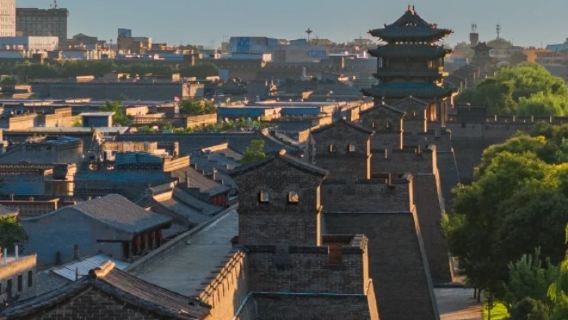
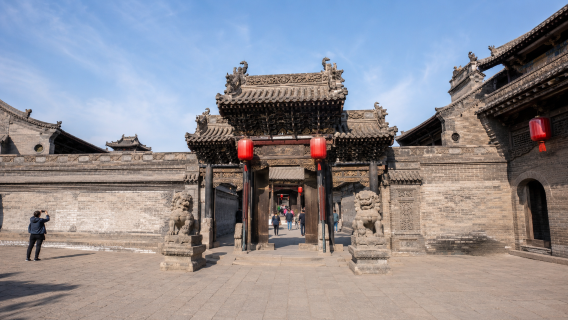
Pingyao Ancient City is one of the best-preserved ancient cities in China and, along with Lijiang Ancient City, is one of the two ancient cities in China to have successfully been designated as a World Cultural Heritage site in its entirety. Pingyao was once the financial center of China during the late Qing dynasty. Walking into this once-prosperous ancient city, you can feel the atmosphere of Shanxi merchant culture everywhere. The streets, shops, and residences within the ancient city still maintain their traditional layout and appearance. The overall street pattern is in the shape of the Chinese character 'tu', consisting of four main streets, eight small streets, and seventy-two lanes. The ancient city has six city gates in total, and the areas around the south gate and west gate are where visitors are concentrated. When touring, you usually enter the city through the lower west gate and walk along West Street to Rishengchang Exchange Shop, where you can learn about the development history of ancient banking and experience the legend of Shanxi merchants conducting business across the world. South Street, which runs north-south through the city, is the central axis of the ancient city. During the Ming and Qing dynasties, South Street gathered more than half of the country's financial institutions and was known as the "Wall Street of China" at the time. Today this street is called the Ming and Qing Ancient Street, and most of the ancient city's attractions are concentrated here. Centered on the landmark Market Tower, attractions such as Xietongqing Exchange Shop, Weitaihou Exchange Shop Museum, and the Chinese Escort Agency Museum are distributed around it, and a large number of shop buildings from the Ming and Qing periods are preserved along the street. At the Pingyao County Government Office in the south of the ancient city, you can see a large number of ancient documents and instruments of torture, and there is a daily performance of the county magistrate holding court; the City God Temple and the Confucian Temple in the east of the city have grand and refined architecture. The ancient city wall is very well preserved, and climbing the wall offers a panoramic view of the ancient city. The gate tower of Yingxun Gate at the south gate is especially exquisite, and watching the sunset from the city wall in the evening is a magnificent sight. In addition to the ancient city itself, the Zhenguo Temple and Shuanglin Temple outside the city are also part of the World Cultural Heritage. The Ten Thousand Buddha Hall of Zhenguo Temple is entirely made of wood, assembled with mortise and tenon joints without a single nail; Shuanglin Temple preserves painted sculptures from the Yuan to Ming dynasties, which are exquisite in form and renowned as a "treasure house of Eastern painted sculpture art."

China · Pingyao County

Experiences you can't miss in Zuoquan

Featured Culture & history in Zuoquan

View all Culture & history
[Premium Private Tour] Handan Day Trip to Xiangtangshan Caves + Northern Dynasties + Yecheng Archaeological Museum
󱌍
Duration: 4 hrs
English
Free cancellation
Instant confirmation
Book now for tomorrow
FromMXN2,160.5
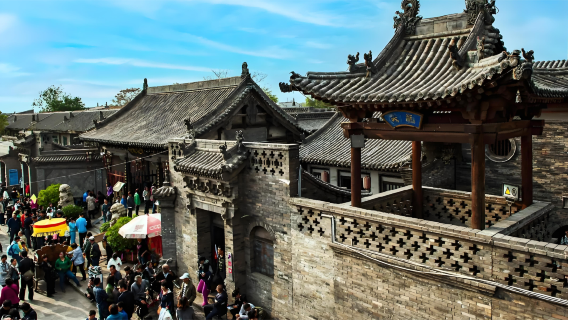
One-day private chartered car tour to Pingyao Ancient City, Qiao Family Compound and Shuanglin Temple in Taiyuan, Shanxi
󱌍
Duration: 3.8 hrs
English
Free cancellation
Instant confirmation
Book now for tomorrow
FromMXN2,160.5
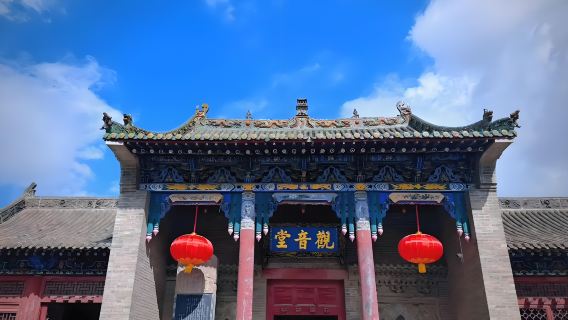
One-day private charter to Pingyao Ancient Town and Qiao Family Courtyard from Taiyuan
󱌍
5.0/5
· 1 review
Duration: 10.5 hrs
English
Free cancellation
Instant confirmation
FromMXN1,297.35
Qiao Family Compound and Pingyao Ancient City private tour (departing from Taiyuan)
󱌍
Duration: 4 hrs
English
Free cancellation
Instant confirmation
FromMXN2,005.56
Zuoquan Today's weatherClear -2-17℃
Zuoquan weather for the next 2 days11/15: -2-10℃, 11/16: 0-5℃

Free things to do in Zuoquan

What travelers say about Zuoquan

user-avatar
lxnellenOctober 28, 2026
5.0
I didn't have high expectations, but I was pleasantly surprised when I entered. It was really nice. It felt like if you're looking at a canyon, you could walk right in and see everything without having to go around to the other side. The scenic area is quite large, so it's a bit far if you don't take public transportation. But the Taihang Mountain landscape is definitely worth a visit.

Huangyadong Scenic Area

user-avatar
M29***61November 2, 2025
1.0
I went on November 1st, 2025, but the park was closed. I made a wasted trip, which was frustrating. I urge relevant departments or platforms to issue a notice if the park is closed, so that more people don't have to make a wasted trip.

Taihang Longquan Tourist Area

user-avatar
M76***34November 13, 2026
5.0
At 7:49 PM on November 13, 2026, as dusk slowly crept over the cliffs of the Longmen Grottoes, the face of the Vairocana Buddha remained gentle in the fading light. A mountain breeze, carrying the moisture of the Yi River, swept across the numerous niches, softly conveying the story of over a thousand years of carving to every visitor who paused to admire it.

Longmen Grottoes
user-avatar
verazheNovember 13, 2026
5.0
Entering early in the morning, there weren't many people, and the front row of the Holy Mother Hall offered a clear view. We caught the last of the ginkgo leaves in bloom, and the lighting was perfect for taking photos. Jinci Temple is highly recommended.

Jinci Temple Museum

user-avatar
Anonymous userNovember 13, 2026
5.0
It completely replicates the Qingming Scroll, bringing the static Qingming Riverside Park to a dynamic one. It's suitable for all ages, and the many interactive NPC games are very exciting. It's definitely worth a visit!

Millennium City Park
user-avatar
侧手翻小子November 11, 2026
5.0
The construction is absolutely stunning, especially the night view! The antique buildings and lanterns create a feeling of stepping back in time. The silver-threaded ancient buildings, combined with the lights and "snowflakes," are incredibly romantic. The NPCs' costumes are exquisite, they're very enthusiastic, and the interactions are excellent. Everywhere you go in the scenic area, they're incredibly helpful when you ask questions—they're practically the equivalent of Pang Donglai in the cultural tourism world! The Bianhe River cruise is fantastic value; definitely buy the combined ticket and take the Imperial River section. Every bridge and archway feels like stepping into a painting. There are also shows along the river. The experience is truly exceptional. The only downside is that Wansui Mountain Scenic Area gets incredibly crowded. Going during the off-season would be an even better experience.

Wansuishan Martial Arts City

user-avatar
M55***20August 18, 2026
5.0
It's very worthwhile, but it's also very crowded, which might slightly detract from the overall experience. However, the people are incredibly welcoming, and there are many beautiful spots for taking photos. The food is also affordable and inexpensive, which kids enjoy. I'll definitely go back when it's less crowded.

Song Du Huangcheng Cultural Tourism Resort

user-avatar
欣戈November 13, 2026
5.0
The splendid treasures of Chinese culture! Only by experiencing it firsthand and observing it up close can one truly appreciate the reflection of our thousands of years of civilization. This is powerful proof of our national cultural confidence!

Yingxian Wooden Pagoda

user-avatar
小宝1979November 9, 2026
5.0
Pingyao Ancient City is truly worth the trip! As the best-preserved ancient county town from the Ming and Qing dynasties, walking on the city walls and overlooking the panoramic view, one is overwhelmed by the weight of history. The underground vaults of Rishengchang Exchange House and Xietongqing Exchange House are eye-opening, allowing one to deeply appreciate the wisdom of Shanxi merchants in "connecting the world through finance." The courtroom performance at the county government office is very interesting and highly interactive. Although commercialization is inevitable, the core cultural charm remains rich. The atmosphere is even better when the lights come on at night, and the local delicacies, such as Pingyao beef and bowl-shaped rice cakes, are also very authentic. It is well worth spending two days slowly exploring and savoring this "living ancient city."

Pingyao Ancient City

Trip Moments in Zuoquan

Popular cities near Zuoquan

Frequently asked questions

How can I contact Trip.com customer support?

Get help anytime, anywhere within 30 secondsContact customer support

Change and cancellation policies vary by attractions and tours. Please check the product details page for more information.

Ticket prices may vary between weekdays and weekends, as well as during peak and off-peak seasons. When booking with Trip.com, you can also use Trip Coins to get extra savings. For more tips on booking discounted tickets, please visit Trip.com for the latest information.