Chengdu Hotpot 2026: Sichuan Style, Menu & Where to Eat

Contents
- Chengdu Hotpot at a Glance
- What Is Chengdu Hotpot?
- Why the broth is beef tallow and not water
- Ma and la are two different sensations
- Chengdu Hotpot vs Beijing Hotpot
- What Beijing hotpot actually is
- Which one should you choose?
- Chengdu Hotpot vs Chongqing Hotpot
- Types of Chengdu Hotpot
- 1. Beef tallow red pot (hongguo)
- 2. Yuanyang split pot
- 3. Chuanchuan skewer hotpot
- 4. Clear, tomato and mushroom broths
- 5. Nine-grid pot
- How to Order at a Chengdu Hotpot Restaurant
- Step 1: Choose the pot before the dishes
- Step 2: Set the spice level
- Step 3: Order in rounds, not all at once
- Step 4: Build your dip at the sauce station
- Step 5: Pay at the table
- Must-Order Hotpot Dishes and Cook Times
- Dipping Sauce: How to Build a Chengdu Hotpot Bowl
- The sesame oil bowl
- The dry dip
- Sauce bar etiquette
- Where to Eat Hotpot in Chengdu
- 1. Xiao Long Kan Hotpot (小龙坎老火锅)
- 2. Shu Da Xia Hotpot (蜀大侠)
- 3. Shu Jiu Xiang Hotpot (蜀九香)
- 4. Da Long Yi Hotpot (大龙燚)
- 5. Chuan Xi Ba Zi Hotpot (川西坝子)
- 6. Ma Lu Bian Bian (马路边边)
- 7. Huangcheng Laoma (皇城老妈)
- How Much Does Chengdu Hotpot Cost?
- First-Timer Tips and Hotpot Etiquette
- Wei la is not mild
- Order something cold and sweet
- Do not cook everything at once
- Dress for the smell
- Getting to Chengdu and Around
- Where to Stay Near Chengdu's Hotpot Districts
- More Chengdu and China Travel Guides
Show more
Chengdu is the city where hotpot stopped being a winter shortcut and became a way of spending an evening. The pot here is a beef-tallow broth packed with dried chilies, Sichuan pepper and fermented broad-bean paste, kept at a rolling boil while plates of tripe, duck intestine, beef and vegetables go in and out on chopsticks. Expect to pay around 70 to 150 yuan per person, to spend two to three hours at the table, and to leave smelling of chili oil. This guide explains the broth, the difference between Chengdu hotpot and the Beijing copper-pot version, how to order without wasting food, what to cook first, and where locals actually eat.
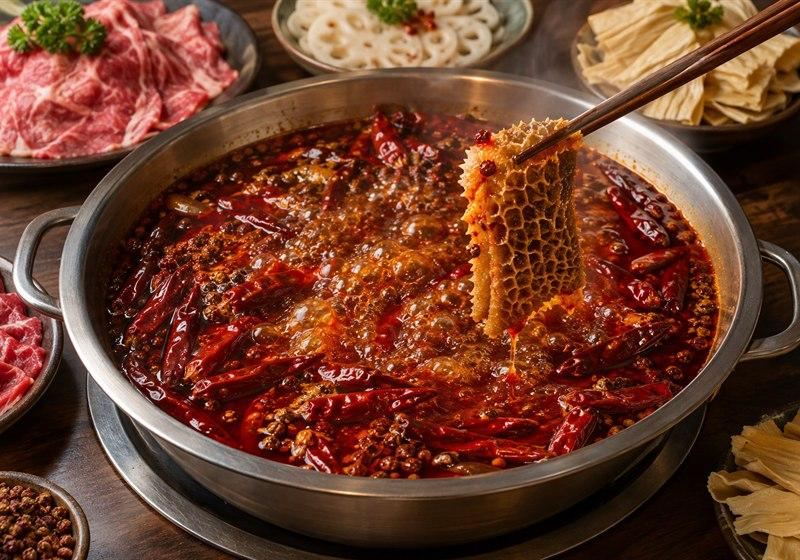
If you read nothing else, these are the answers most first-time visitors need before they sit down.
| Question | Short answer |
| What is it? | A beef-tallow broth boiled at the table; you cook raw ingredients in it and dip them in sesame oil and garlic. |
| How spicy is it? | Numbing and hot at the same time. Even wei la, the mild setting, is hotter than most European or American diners expect. |
| What does it cost? | About 70 to 150 yuan per person at a sit-down restaurant; 40 to 80 yuan at a chuanchuan skewer stall. |
| What must I order? | Tripe, duck intestine, beef slices, lotus root, potato and a plate of crispy pork. Add a bowl of ice jelly at the end. |
| Best choice for a first meal? | A yuanyang split pot, one half spicy and one half clear, at a mid-range chain with an English menu. |
| When should I go? | Before 6pm or after 8:30pm. Between 6pm and 8pm the well-known branches can hold you for an hour or more. |
Chengdu hotpot is a tabletop cooking format built on one very particular broth. A block of beef tallow is melted in the pot, then dried chilies, Sichuan peppercorns, Pixian doubanjiang, ginger, garlic and a long list of whole spices go in and fry until the oil turns deep red. Stock is added, the pot comes to the table, and the diner does the rest. Nothing is pre-cooked. Every plate arrives raw and sliced thin enough to be ready in seconds.
The result is not a single flavour but a sequence. The first ten minutes are the most intense, when the oil is fresh and the chili has not yet mellowed. By the end of the meal the broth has been enriched by beef, mushrooms and vegetables, and the last noodles taste completely different from the first slice of tripe. This is why locals order in waves rather than filling the table at once.
Tallow carries flavour in a way that water cannot. It coats every piece of food, holds the chili and pepper against the tongue, and keeps the broth at a temperature high enough to cook a slice of beef in ten seconds. Chengdu restaurants also offer qingyou, a clear rapeseed-oil base that is lighter and less coating, and many modern rooms now serve several bases in one pot. But the default, the one locals mean when they say hotpot, is the red tallow pot.
La is the burn of chili. Ma is the citrus-scented, vibrating numbness of Sichuan pepper. They arrive together but they are not the same thing, and a good Chengdu pot balances them rather than drowning one in the other. If you have never eaten Sichuan pepper, bite a single peppercorn before the meal starts. The numbness builds for about thirty seconds, fades, and then the next piece of food tastes sweeter. That is the effect the whole cuisine is built around.
These are the two Chinese hotpot styles most travellers meet first, and they share almost nothing except the pot. Beijing hotpot is a clear-broth mutton meal built around the meat itself. Chengdu hotpot is a spiced-oil meal built around the broth. Ordering one and expecting the other is the most common disappointment on a first trip.
| Feature | Chengdu hotpot | Beijing hotpot |
| Pot | Wide steel or cast-iron pot on an induction ring, often split or divided into nine squares | Tall copper pot with a charcoal chimney in the middle |
| Broth | Beef tallow, dried chili, Sichuan pepper, doubanjiang; deep red and oily | Clear water or light stock with scallion, ginger, goji berries and dried shrimp |
| Main meat | Sliced beef, tripe, duck intestine, meatballs, luncheon meat | Paper-thin mutton rolls, usually from the back and leg |
| Dipping sauce | Sesame oil with raw garlic, cilantro and oyster sauce; or a dry chili dip | Sesame paste with fermented bean curd and chive flower sauce |
| Heat | Numbing and hot | Mild and savoury |
| Typical price | 70 to 150 yuan per person | 100 to 150 yuan per person |
| Best for | Offal, spice, long social dinners | Lamb lovers, cold weather, a quieter meal |
Beijing hotpot, shuan yangrou, is a Manchu and northern Chinese tradition. The pot is copper, the heat comes from charcoal in the chimney, and the broth is deliberately plain so that the lamb is the point. Slices of mutton are cut thin enough to change colour in a few seconds, then dragged through a thick sesame-paste dip. Tofu, napa cabbage and vermicelli go in at the end to soak up the lamb flavour. If you want the full northern experience in Beijing, our Beijing hotpot guide covers the classic restaurants and the lamb-spine variant.
Choose Chengdu if you want heat, offal and a loud two-hour dinner. Choose Beijing if you want to taste the meat itself and you are travelling with someone who cannot handle chili. If you have time for both, do Beijing first: the clear broth is a gentle introduction to the format, and the Chengdu pot will then feel like the main event rather than a shock.
The two cities are 300 kilometres apart and argue about hotpot the way neighbouring cities argue about football. Chongqing is the older version, born among dock workers on the Yangtze in the early twentieth century, and it is still the more aggressive one: heavier beef tallow, more chili, a darker and smokier broth. Chongqing hotpot is built to be blunt.
Chengdu adopted the format in the 1980s and 1990s and softened the edges. Restaurants here use more aromatic spices, offer qingyou rapeseed-oil bases alongside tallow, and lean harder on the sauce bar, the dessert counter and the general comfort of the room. The difference is one of degree rather than kind: a Chengdu pot can still strip paint, and a Chongqing pot can still be refined. If you only eat one, eat in the city you are already in and order the split pot.
Menus look intimidating because they mix the pot, the broth and the service style into one list. There are really only five formats to choose from.
The classic. A full pot of red, oily broth with no mild side. This is what to order if everyone at the table eats chili and you want the authentic version. It is also the richest option: the tallow clings to vegetables and makes even a slice of potato taste like a meal. Ask for wei la if you are unsure, and accept that wei la still numbs the tongue.
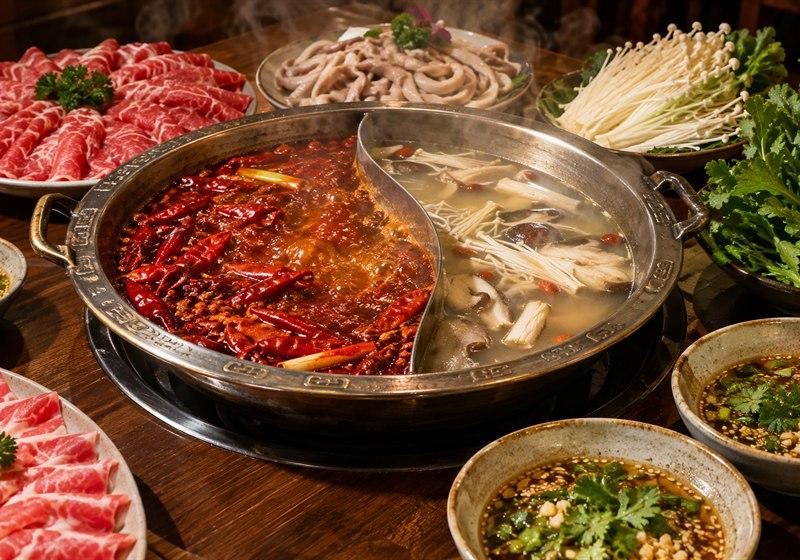
One pot, two broths, divided by a metal wall: red on one side, clear chicken or bone stock on the other. Yuanyang is the standard compromise for mixed groups and the safest order for a first visit. It is not a tourist invention; locals order it whenever someone at the table is unwell, pregnant, or simply tired of chili. The clear side is also where you cook leafy greens, which otherwise turn into oil sponges.
Chuanchuan is Chengdu's own variant. Instead of ordering plates, you walk to a refrigerated wall, pick skewers of meat, offal, tofu and vegetables, and cook them in the pot. At the end the sticks are counted or weighed, and you pay by volume. It is cheaper, faster and rowdier than sit-down hotpot, usually 40 to 80 yuan per person, and the older stalls in Yulin and Wuhou stay open past midnight. English menus are rare, but you can simply point.
Every mid-range restaurant now offers at least one mild base: tomato, mushroom, pork-bone or congee. They are a legitimate choice, not a failure of nerve, and they are the only sensible option for children or anyone who cannot eat chili. The trade-off is that the food tastes of the broth rather than the spice, so order the same ingredients you would in a red pot and compare.
The jiugongge is a single pot divided into nine squares with different heat zones. The centre boils hardest and is for quick items such as tripe and beef; the corners simmer gently and are for potato, lotus root and anything that needs time. It looks like a gimmick and is actually a practical way to keep a large table organised. If you order one, put the tripe in the middle and do not stir the whole pot.
Ordering follows a fixed sequence, and once you know it the menu stops being frightening. Staff will usually ask three questions before you see a menu: how many people, which broth, and how spicy.
Decide as a table, not as individuals. A yuanyang split pot solves most disagreements; a full red pot is better if everyone is confident. Some restaurants charge separately for the base, typically 30 to 60 yuan, and premium bases with more bones or herbs cost more. Ask whether the base price is per pot or per person before ordering.
You will be offered wei la (mild), zhong la (medium) and te la (hot). Choose one level below what you think you can handle. Chengdu mild is not mild in the way a European menu uses the word; it is simply the least spicy version the kitchen is willing to make. If you want no chili at all, ask for clear broth or tomato and do not expect the red pot to be adjusted.
A workable first order for two people is three or four meat or offal plates, two or three vegetables and one starch. For four people, double the meat and add one more vegetable. Do not fill the table: hotpot is eaten over two hours, and restaurants are happy to bring more later. The most common mistake is ordering fifteen plates, watching them sit raw, and losing the texture that makes the meal worth the money.
Most mid-range restaurants have a self-service sauce bar. Take a small bowl, start with sesame oil, add a spoon of raw garlic and a handful of cilantro, then a splash of oyster sauce and black vinegar. That is the standard Chengdu bowl. A dry dip of chili powder, ground peanut, salt and sesame is also common, especially for tripe. Do not pour soy sauce over everything; it flattens the broth.
Almost every sit-down restaurant accepts Alipay and WeChat Pay, and staff will usually point you to a QR code on the table. International cards work at some chains and at hotel restaurants, but not at smaller shops. Tipping is not expected anywhere. If you are paying in cash, keep small notes; older chuanchuan stalls may not have change for a 100-yuan note.
Cooking time is the whole skill. The ingredients below are the ones locals order first, with the timing that makes them taste right. When in doubt, take a piece out early: overcooked tripe is rubber, and no amount of sauce fixes it.
| Dish | Chinese | What it is | Cook time |
| Tripe | 毛肚 | Honeycomb beef stomach, the signature Chengdu ingredient | 7 to 8 dips, about 15 seconds |
| Duck intestine | 鸭肠 | Thin, crisp intestine; goose intestine is the premium version | 8 to 10 seconds |
| Beef aorta | 黄喉 | Crunchy strips that squeak when bitten | 1 to 2 minutes |
| Sliced fatty beef | 肥牛 | Thin rolls of beef with visible fat | 10 to 15 seconds |
| Crispy pork | 酥肉 | Battered pork, eaten as a snack while the pot heats | Already cooked; dip briefly |
| Lotus root | 藕片 | Crunchy slices that soak up oil | 3 to 5 minutes |
| Potato | 土豆片 | Thin slices; soften fully or leave crisp | 5 to 8 minutes |
| Tofu skin | 豆皮 | Dried bean-curd sheets | 30 to 60 seconds |
| Enoki mushroom | 金针菇 | Bundled white mushrooms | 2 to 3 minutes |
| Sweet potato noodles | 红薯粉 | Chewy starch, best at the end when the broth is rich | 4 to 6 minutes |
| Duck blood curd | 鸭血 | Soft, dark cubes; a Chengdu staple | 3 to 5 minutes |
| Pig brain | 脑花 | For the adventurous; creamy texture, strong flavour | 10 to 15 minutes |
Two rules cover most of the table. Thin cuts go in for seconds, thick or starchy cuts go in for minutes, and leafy greens go in last because they absorb the most oil. If you are sharing a pot, keep a pair of public chopsticks for raw meat and use your own for eating. It is not a formal rule in most restaurants, but it is the reason locals never seem to fish their own food out of the middle.
The dip is not a condiment added at the end; it is the cooling layer that makes a two-hour tallow meal possible. Get it wrong and the broth becomes exhausting after twenty minutes.
Two spoons of sesame oil, one of minced garlic, a pinch of cilantro, a splash of oyster sauce and a few drops of black vinegar. The oil coats the tongue and slows the chili; the garlic and vinegar cut the fat. Some restaurants add chopped peanut or sesame seeds for texture. This is the default bowl in Chengdu and the one to build on your first visit.
Gandie is a small dish of chili powder, ground peanut, sesame, salt and sometimes a little sugar. You dip a piece of tripe or beef into it after cooking, and the powder sticks to the oil. It is hotter and more aromatic than the oil bowl, and it is the better choice for offal. Ask for it if you do not see it on the sauce bar; most kitchens have it.
Use a clean bowl each time you go back, do not dip food you have already bitten, and do not take the serving spoon into your own bowl. The sauce bar is shared, and locals treat it like a salad bar. If the restaurant has no bar, the staff will bring a prepared bowl of sesame oil and garlic to the table.
The city has thousands of hotpot rooms, and the best one depends on whether you want a polished first experience, a local neighbourhood room, or a cheap skewer feed at midnight. These seven cover the range. Prices are per person for food and are planning figures, not fixed menus; confirm the current price and opening hours at the branch before you go.
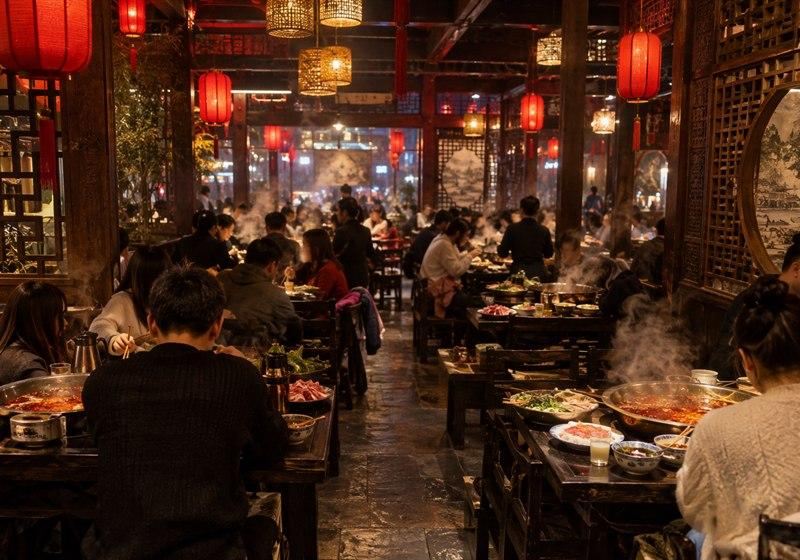
The brand most visitors have seen on social media, and still one of the best introductions to the Chengdu style. The broth is a proper beef-tallow red pot, the rooms are styled like old Chengdu, and the menu has enough English and pictures to order without guessing. The Chunxi Road and Taikoo Li branches are the most convenient. Expect 90 to 120 yuan per person and a queue of one to two hours after 7pm; take a number through the restaurant's mini-program before you leave your hotel. Order the tripe, the marinated beef and a bowl of ice jelly.
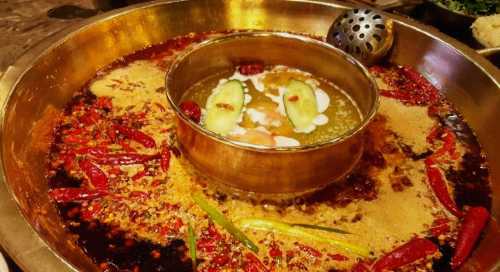
Xiaolong Kanlao Hot Pot (Chunxi)
A wuxia-themed chain with carved screens, lanterns and staff in martial-arts costumes, which sounds like a gimmick until the food arrives. The tallow base is serious, the tripe is fresh, and the hand-beaten shrimp paste is worth the price. Branches are spread across the city, including the Wuhou and Hongpailou areas. Budget 100 to 140 yuan per person. It is a good choice for a group that wants atmosphere as well as heat.
The reliable, slightly more polished option, and the one most likely to have an English menu and staff who will help you build a dip. The flagship on the First Ring Road West in Qingyang has a riverside setting and a beef-tallow base that is rich without being brutal. Expect 110 to 150 yuan per person. Order the marinated beef, the handmade meatballs and the crispy pork, and ask for a yuanyang pot if the table is mixed.
The heat merchant. Da Long Yi's red pot is one of the spiciest mainstream bases in the city, with a heavy tallow load and a long finish. The Yulin branch is the classic, and it stays open late enough to be a post-midnight option. Budget 85 to 120 yuan per person. If you are unsure, order the split pot; the clear side is the only thing that will save you.
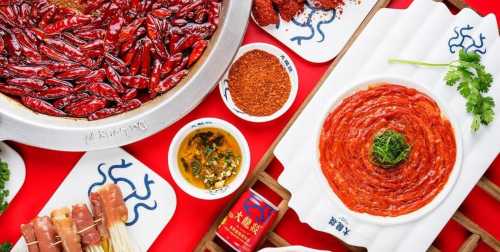
DaLong Yi Hotpot (YuLin)
A modern, market-style room where the kitchen is open and the dessert and snack bar is part of the appeal. The broth is a well-balanced tallow base rather than a stunt, and the self-service sauce station is one of the best in the city. Good for families and for anyone who wants to see how the food is prepared. Expect 100 to 130 yuan per person, and go early: the space is popular with local groups.

Chuanxibazi (yangxi2.0zhiying)
The chuanchuan experience without a tourist markup. Pick your skewers from the wall, cook them in a shared pot, and pay by the stick or by weight at the end. The Yulin and Wuhou branches are the ones to look for, and the older shops stay open past midnight. Budget 40 to 80 yuan per person. There is usually no English menu and sometimes no card machine, so bring cash and a translation app.
The grand old name, open since the 1980s and still the place Chengdu takes visitors when it wants to show hotpot as a cultural evening rather than a quick meal. The flagship is a multi-storey complex with private rooms, a gallery and a stage for face-changing performances. The broth is more balanced than the street chains, and the price reflects it: 200 to 350 yuan per person. Book ahead for a weekend performance night.
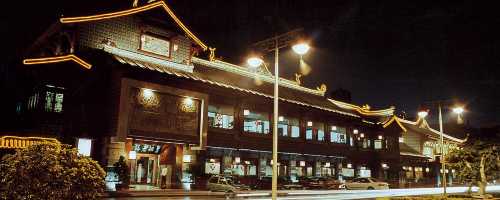
HuangCheng LaoMa (QinTai Road)
A normal sit-down meal lands between 70 and 150 yuan per person. The bill is built from four parts: the pot base, the plates, the sauce bar and drinks. Premium restaurants can double that, and chuanchuan can halve it. The table below is a realistic planning guide, not a price list.
| Item | Typical price | Notes |
| Pot base | 30 to 60 yuan | Per pot, not per person; premium or multi-broth bases cost more |
| Sauce bar | 5 to 10 yuan | Per person, sometimes included |
| Meat and offal plate | 28 to 48 yuan | Tripe and duck intestine sit at the top of the range |
| Vegetable plate | 8 to 18 yuan | Lotus root, potato, tofu skin, mushrooms |
| Staple | 10 to 20 yuan | Noodles, rice cake, fried rice |
| Drinks | 5 to 15 yuan | Soy milk, barley tea, local beer |
| Chuanchuan skewers | 0.5 to 1 yuan per stick | Or 60 to 80 yuan per person by weight at some stalls |
| Full meal for two | 180 to 280 yuan | Three meat plates, three vegetables, one staple, two drinks |
Most of the things that go wrong at a first Chengdu hotpot are avoidable with five minutes of preparation. These are the ones that matter.
The mild setting still contains chili and Sichuan pepper. If you genuinely cannot eat heat, order a clear, tomato or mushroom base, or a yuanyang pot and cook only on the clear side. Do not ask the kitchen to make a red pot "not spicy"; it does not work, and the result is usually still hot.
The local answer to chili is not water. Ice jelly, bingfen, is a bowl of cold jelly with brown sugar syrup; soy milk and the sweet plant-protein drink Wei Yi do the same job. Cold beer works for some people and makes the burn worse for others. Order one of these at the start, not after the pain begins.
Hotpot is a sequence. Start with meat and offal, which season the broth, then vegetables, then starch at the end when the broth is at its richest. If you dump all the vegetables in first, the oil clings to them and the rest of the meal tastes flat.
You will leave smelling of chili oil. Restaurants usually provide an apron and a bag for your coat, and some have a locked cabinet for jackets. Wear something you do not mind washing, and do not plan a formal event directly afterwards.
Chengdu has two airports. Tianfu International (TFU) is the newer one, about 50 kilometres southeast of the centre, and Metro Line 18 connects it to Chengdu South Railway Station in roughly 40 to 50 minutes. Shuangliu International (CTU) is closer, about 16 kilometres southwest, and Metro Line 10 runs from both terminals to the city. Our Chengdu airports guide covers terminals, transfer times and the metro fares in detail.
Within the city, the hotpot districts are easy to reach by metro. Chunxi Road station on Lines 2 and 3 puts you between Taikoo Li and the old commercial centre; Yulin and Wuhou are on Lines 3 and 5. A taxi across the centre costs 20 to 40 yuan outside rush hour. High-speed trains from Chongqing take about 1 hour 15 minutes, and from Xi'an about 3 to 4 hours.
Base yourself around Chunxi Road or Taikoo Li if you want to walk to the best-known restaurants and still be close to the metro. Tianfu Square suits anyone who wants the old city centre and easy transport. Yulin is the choice for a quieter, more local stay within walking distance of the chuanchuan stalls.
Hotels in the Chunxi Road area range from compact business rooms to international five-stars, and prices are highest on Friday and Saturday nights. Book a room with a window and a proper bathroom fan; you will appreciate both after a tallow dinner.
Popular recommendations

Top 10 Things to see and do In the Bund, Shanghai
 _TS***4m

Latest Trip.com Promo Codes, Flight Discounts & Hotel Savings (Weekly Update)
 Trip.com Official

6 Things to know before Exploring the Montmorency Falls, Quebec
_TS***4m
2026 Guide to Shanghai Pudong Airport: Transit Visa & PVG Airport Shuttle
_TS***4m