Ming Tombs Beijing 2026: Tickets, Opening Hours & How to Get There
Contents
- Ming Tombs Beijing | Map, Layout and Which Tombs Are Open
- Where the Ming Tombs Are
- How the 13 Tombs Fit Together
- Which Tombs Are Open in 2026
- Ming Tombs Beijing | Tickets and Prices
- Ticket Prices by Tomb
- Combo Ticket or Single Tickets?
- Discounts and Free Entry
- How to Book with a Passport
- Ming Tombs Beijing | Opening Hours and Best Time to Visit
- Opening Hours by Season
- Best Season and Time of Day
- 2026 Closures and Conservation Works
- Ming Tombs Beijing | How to Get There from the City
- By Bus 872: The One-Seat Option
- By Metro and Local Bus
- By Taxi or DiDi
- By Car
- Getting Between the Tombs
- Ming Tombs Beijing | What to See at Each Open Site
- Sacred Way: The 7.3 km Approach
- Changling: The Hall of 60 Nanmu Columns
- Dingling: The Only Underground Palace You Can Enter
- Zhaoling: The Restored, Quiet One
- Yongling, Siling, Kangling and Jingling: The Booked Tombs
- Ming Tombs Beijing | Routes and How Long You Need
- Half-Day: Sacred Way and Changling
- Full Day: Add Dingling and Zhaoling
- Ming Tombs and the Great Wall in One Day
- Ming Tombs Beijing | Practical Tips
- Tickets, Passports and Timing
- What to Bring
- Accessibility
- Photography and Etiquette
- Ming Tombs Beijing | Food and Where to Stay
- Where to Eat Near the Tombs
- Where to Stay
- More Beijing Guides
Show more
The Ming Tombs (Shisanling) are the burial ground of 13 emperors of the Ming dynasty, set in a valley at the foot of Tianshou Mountain about 50 km northwest of central Beijing. It is not a single ticket gate you clear in an afternoon: four sites — the Sacred Way, Changling, Dingling and Zhaoling — are open on a regular ticket, four more accept only booked guided entries, and the rest are closed. This guide covers Ming Tombs Beijing tickets and prices, 2026 opening hours, which tombs are worth your time, how to get there by bus, metro or taxi, and how to sequence a half-day or full-day visit.
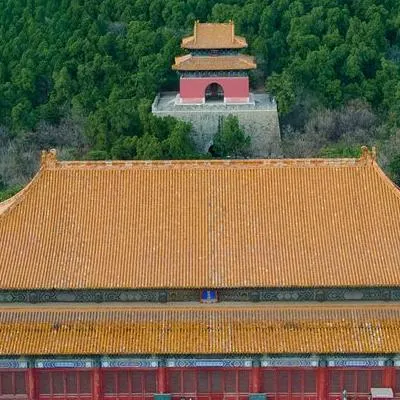
The tombs sit in Shisanling Town, Changping District, roughly 50 km northwest of Tiananmen and 40 minutes to an hour from the North Fourth Ring by car. The site covers more than 120 sq km of hillside, with Tianshou Mountain behind it and two lower ridges closing the valley on either side. From Beijing, you are leaving the city grid entirely — the last 20 minutes are village road, orchards and car parks.
One ceremonial road serves the whole necropolis. The Sacred Way runs 7.3 km south to north: stone archway, Great Red Gate, Stele Pavilion, the avenue of stone animals and officials, then the Dragon and Phoenix Gate, where the road splits toward the individual tombs. Changling, Yongle's tomb, is the anchor at the centre; the others fan out around it, from 500 m to 8 km apart. Siling, the last emperor's tomb, sits apart in the southwest corner.
The practical consequence is simple. This is a driving or bus site, not a walking circuit. Pick two or three tombs and plan transfers between them; trying to walk from the Sacred Way to Changling to Dingling will eat your day on roadside pavement.
| Site | Access in 2026 | What it is |
| Sacred Way | Regular ticket | The 7.3 km processional road with the archway, Stele Pavilion and 36 stone statues. |
| Changling | Regular ticket | Yongle's tomb, 1409, the largest and best-preserved complex above ground. |
| Dingling | Regular ticket | Wanli's tomb, the only one whose underground palace is open to visitors. |
| Zhaoling | Regular ticket | Longqing's tomb, fully restored, the quietest of the four. |
| Yongling | Booked guided visit, CNY 299 | Jiajing's tomb, second largest after Changling, opened to the public in December 2024. |
| Siling | Booked guided visit, CNY 199 | Chongzhen's tomb, the smallest imperial tomb in the complex. |
| Kangling | Booked guided visit (status varies) | Zhengde's tomb; the village below it is known for spring-pancake restaurants. |
| Jingling | Booked guided visit | Xuande's tomb, opened on 22 December 2025. |
| Xianling, Yuling, Maoling, Tailing, Qingling, Deling | Closed | No public access; the scenic area plans to open all 13 tombs by 2030. |
Bookings for the four guided tombs go through the scenic area's Douyin account or the Changping Culture and Tourism Group WeChat mini-program, and every visitor walks round with a guide assigned by the site. Group size was capped at 10 people per slot when Yongling and Siling opened, so book days ahead rather than turning up.
Every site has its own gate and its own ticket; there is no single pass that covers the whole valley. Prices are set by the scenic area and split into two seasons.
| Site | Peak (Apr 1 – Oct 31) | Off-season (Nov 1 – Mar 31) | Time inside |
| Sacred Way | CNY 30 | CNY 20 | 60–90 min |
| Changling | CNY 45 | CNY 30 | 1–1.5 h |
| Dingling | CNY 60 | CNY 40 | 1.5–2 h |
| Zhaoling | CNY 30 | CNY 20 | 40–60 min |
Ticket windows run 08:30–16:30, which is earlier than the closing time at some sites — plan to buy or show your booking before 16:30.

 I specifically chose to go on a Friday, a weekday, to avoid backtracking by car. First, I walked along the Sacred Way to see the 600-year-old stone statues and ceremonial guard, then visited the magnificent golden nanmu wood hall of Changling, which was truly breathtaking. After that, I visited the Dingling Underground Palace to get a close look at the Ming Dynasty's underground palace architecture, and then stopped by Zhaoling, which was less crowded and quieter. The only drawback is that the scenic areas are spread out, so driving is the most convenient option.
All four open sites together cost CNY 165 in peak season and CNY 110 off-season. A combo ticket covering the Sacred Way, Changling, Dingling and Zhaoling is sold online for around CNY 120 peak and CNY 98 off-season, so it only pays off if you actually use three of the four. On a half-day visit, Sacred Way plus Changling (CNY 75 peak) is cheaper than the combo.
The combo sold on Trip.com is an official-partner ticket with instant confirmation, no ticket collection and free cancellation, and the current batch is valid until 31 March 2027. If you are visiting in the last week of a season, check which season your visit date falls in before you compare prices.
Foreign visitors need the passport they will carry on the day. Booking online is the smoother route: the scenic area's mini-program and Trip.com both issue an e-ticket you show at the gate, and the ticket office can register a passport on the spot if you would rather buy in person. Keep the passport handy at every site — each tomb has its own check, even when you hold a combo ticket.
| Period | Opening hours | Last entry |
| Apr 1 – Oct 7 | 08:30–18:00 | 17:30 |
| Oct 8 – Mar 31 | 08:30–17:00 | 16:30 |
The official ticket window closes at 16:30 year-round, so treat 16:30 as the latest you can start, whatever the closing time says. The individual tombs close their gates one by one from late afternoon; Dingling's underground palace is usually the first to feel rushed.
Spring (April to May) and autumn (September to early November) are the comfortable months: the statue avenue has almost no shade, and summer afternoons here are exposed. Winter is quiet and the halls are atmospheric in low light, but the wind across the valley is real.
Go on a weekday and start at opening. Tour groups typically reach the Sacred Way around 10:30 and clear out by 14:00, so the first 90 minutes are the only reliably empty window at the statues. If you arrive at 08:30 and work south to north, you will pass most coaches going the other way.
Two notices matter this year. Conservation work on the main Sacred Way — the Great Red Gate, the Stele Pavilion and a stretch of the paved road — has been running since May 2026 and is scheduled to continue into mid-2027. The current visitor route enters at the south gate, detours around the Stele Pavilion and the Dragon and Phoenix Gate, and exits at the north gate, so the full 7.3 km walk is not available as it was.
At Dingling, the first exhibition hall has been closed since 28 June 2026 while a new Ming artefact exhibition is prepared. The underground palace and the other halls remain open, so the descent itself is unaffected. Both notices change with the construction schedule — read the board at the gate before you commit to a route.
Bus 872 is the simplest public transport route, but the terminus changed. Since 2025 it runs between Madianqiao South and Changling; the old Deshengmen terminus has been dropped, and guides that still send you to Deshengmen are out of date. Services leave Madianqiao South from 07:00 to 20:10 and return from Changling between 05:30 and 19:00, with a fare of about CNY 5 and a journey of 70–90 minutes depending on traffic. Madianqiao South is on the North Third Ring, a 10–15 minute walk from Jiandemen station on metro Line 10.
Take the Changping line north to Changping Dongguan or Changping, then switch to a local bus: 314 runs to Changling, 878 to Dingling, and Chang 67 and Chang 78 link the tombs and the Sacred Way. Allow 60–75 minutes on the metro and another 20–30 minutes on the bus. One trap: the station called Shisanling (Ming Tombs) on the Changping line is still about 4 km from the gates, and the only onward transport there is a local taxi — do not assume the station name means you have arrived.
A DiDi or metered taxi from central Beijing takes 70–90 minutes and costs roughly CNY 150–250 one way depending on traffic and pickup point. It is the only sensible option if you want two or three tombs in one day, because you avoid waiting for the local buses between them. Between sites, expect 10–20 minutes and CNY 20–40 per hop. Agree the price or use the app; there is no meter queue at the smaller tombs.
Drive north on the G6 Jingzang expressway, leave at the Changping exit and follow Changchi Road past the stone archway. Each tomb has its own car park, usually CNY 5–20 for the day, and spaces are plentiful outside holidays. Navigation to "Ming Tombs" alone can drop you at the visitor centre rather than a specific tomb — set Changling, Dingling or Zhaoling as the destination.
| Leg | Distance | How to cover it |
| Sacred Way → Changling | About 4 km | Bus 314 or Chang 67; taxi 10 minutes |
| Changling → Dingling | About 2 km | Bus 314/872/878; taxi 5–10 minutes |
| Dingling → Zhaoling | About 2 km | Chang 67 or Chang 78; taxi 5–10 minutes |
| Dingling → Badaling Great Wall | About 35–40 km | Bus 879 direct; taxi 30–40 minutes |
Inside the Sacred Way there is a sightseeing cart, about CNY 10 one way and CNY 20 return, which is worth it if you are short of time or visiting in summer heat.
The Sacred Way is the part most people photograph and the part most tours skip. It starts at a five-bay, six-pillar stone archway, passes the Great Red Gate and the Stele Pavilion, then runs between 18 pairs of stone figures: six kinds of animal in kneeling and standing pairs — lion, xiezhi, camel, elephant, qilin and horse — followed by civil officials, military officers and meritorious ministers, 36 statues in all, carved from single blocks of marble in the 15th century.
The walkable, photogenic stretch is roughly 800 m around the statues; the full road runs to the Dragon and Phoenix Gate. Come at opening for empty stone avenues and long shadows, and allow 60–90 minutes if you walk the whole open section.
Changling is Yongle's tomb, begun in 1409, and the reason the rest of the valley exists. It is the largest and best-preserved of the 13, laid out in three courtyards with a round Treasure City behind. The highlight is the Ling'en Hall: nine bays wide, five deep, under a double-eaved hip roof, held up by 60 golden nanmu columns cut from single trunks, 32 of them 12.58 m tall and more than a metre across. The frame is original Ming work, held together by joinery rather than a modern rebuild, which is why the hall feels different from the reconstructed sites elsewhere in China.
Climb the Ming Tower at the back for the view over the valley and the other tomb roofs. Allow 1–1.5 hours. The underground chamber here has never been excavated, so do not believe anyone offering an underground tour.

Dingling is Wanli's tomb, built between 1584 and 1590 and excavated between 1956 and 1958 — the only Ming imperial tomb opened by archaeologists. You descend about 27 m into five connected chambers covering some 1,195 sq m, past marble doors and the empty coffin platforms, then come back up into a museum of more than 3,000 finds: the emperor's gold crown, the empresses' phoenix crowns, jade belts, silk and gold ingots.
It stays around 15°C underground all year, the stairs are steep and the floor is damp after rain. Allow 1.5–2 hours, more if you read the exhibition labels. This is the one site where the ticket buys something you cannot see anywhere else in Beijing.
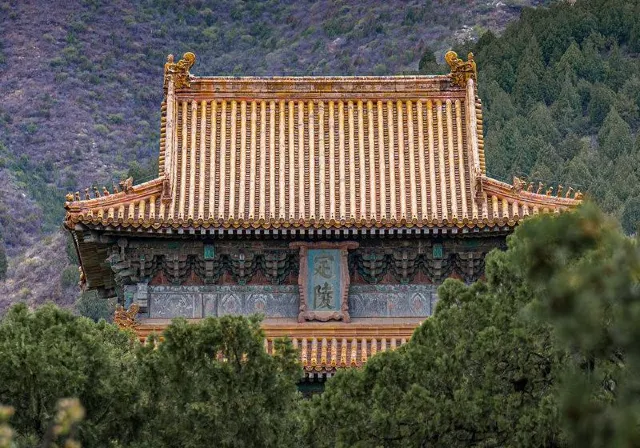
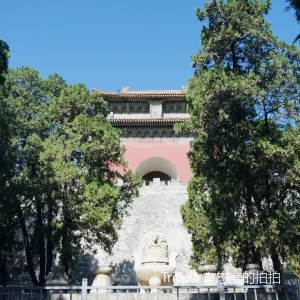

Zhaoling belongs to Longqing, the 12th emperor, and his three empresses. It was restored in the 1980s, so the full sequence — Ling'en Gate, Ling'en Hall, Ming Tower, Treasure City, and the crescent-shaped courtyard behind — reads clearly, which is not true of the unrestored tombs. It is the least crowded of the four open sites, with cypresses, birdsong and almost no coaches.
Allow 40–60 minutes. Public transport here is thinner than at Changling and Dingling, so pair it with Dingling and take Chang 67 or Chang 78, or keep a taxi.
If you have already seen the main four, the guided tombs are the reason to come back. Yongling, Jiajing's tomb, covers 25 hectares and is second in scale only to Changling; Siling, Chongzhen's tomb, is the smallest at 6,500 sq m and sits alone in the southwest corner. Jingling opened on 22 December 2025. Entry is by paid booking with a site guide — CNY 299 at Yongling, CNY 199 at Siling — and slots are limited, so this is a plan-ahead add-on rather than a walk-up.
Leave central Beijing at 07:30, reach the Sacred Way for 09:00 and walk the statues for an hour, then take bus 314 or a taxi to Changling for 10:30. The Ling'en Hall and Ming Tower take 90 minutes; you are back in the city by 14:00. This is the version to choose if you have one free morning and want the two things the site does best: stone carving and Ming timber architecture.
Start at the Sacred Way at 08:30, move to Changling, lunch near Dingling, then spend the afternoon underground at Dingling and finish at Zhaoling before the 16:30 ticket cut-off. Seven to eight hours door to door, and the only version that justifies the combo ticket. Carry water and snacks: food inside the sites is limited to small shops and stalls, and the distances between gates are longer than they look on a map.
Badaling is 35–40 km north of Dingling and bus 879 runs between the two, which makes a wall-and-tombs day possible without a tour. The calmer order is wall first: leave at 07:00, climb Badaling when it opens, take bus 879 or a taxi south after lunch, then do Dingling and the Sacred Way. Budget 10–12 hours and expect to be tired; if you only want one tomb, make it Dingling.
If you would rather walk a quieter section of wall, Mutianyu is a further hour east and does not combine well with the tombs on the same day.
Buy the combo online before you travel and keep the QR code offline; mobile signal in the valley is patchy. Carry the passport you booked with, arrive before 15:00 so you are not sprinting at the 16:30 cut-off, and check the gate notice for the Sacred Way detour before you walk in.
Comfortable shoes for stone paving, water in summer, a layer for the 15°C underground palace, and sun protection — the statue avenue and the courtyards have very little shade. Cash is useful at the small stalls outside the gates; cards and phones work inside the ticket offices.
The main courtyards and the Sacred Way are largely flat and step-free, but Dingling's underground palace is reached by a long, steep staircase and is not wheelchair accessible. Changling and Zhaoling have steps at the gate and hall thresholds. If mobility is a concern, build the day around the Sacred Way and Changling and skip the descent.
Photography is allowed outdoors and the statue avenue is the shot everyone wants. Rules inside the underground palace are stricter and can change with conservation work, so follow the signs at the entrance rather than assuming. Do not climb the tomb mounds, the walls or the Ming Tower parapets, and do not carve or touch the nanmu columns — the timber is 600 years old and the halls are unheated, unairconditioned originals.
Food at the sites is basic: snack stalls, instant noodles and a few village restaurants around Dingling and Changling. The local speciality is the spring-pancake feast in Kangling village, where thin pancakes are rolled with pork knuckle, egg, bean sprouts and scallions for around CNY 50 per person. It is worth the detour if you are driving, less so if you are relying on buses. Otherwise, eat a proper meal in Changping town on the way back.
Three bases work. Changping town, on the metro line, is the practical choice for an early start without city traffic. The Badaling area has the widest choice of hotels if you are combining the wall and the tombs. Central Beijing works if you accept a 07:00 departure and a 90-minute ride each way.
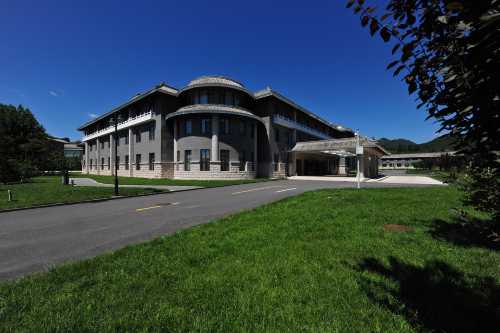
Baozhigu International Convention Center Beijing
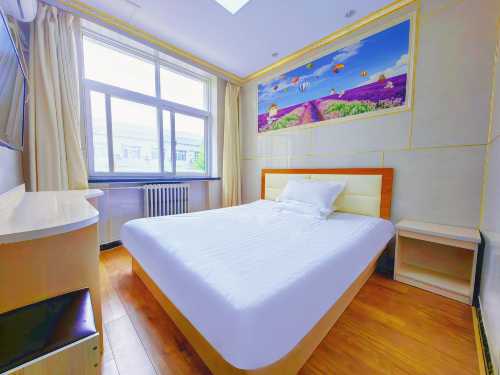
Jinziyuan Hotel (Beijing Changping Subway Station Branch)
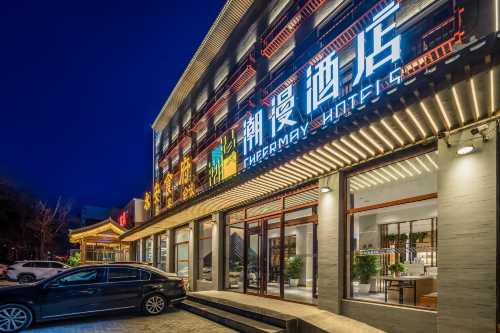
CHEERMAY Hotel (Beijing Changping Subway Station University Town)
Before you go: fix your date and check live ticket availability for the Ming Tombs first — the combo ticket is the cheaper way in if you plan to see three or four sites, and the four guided tombs need booking days ahead.
The tombs sit in the same imperial circuit as the city's other headline sights. If you are building a Beijing itinerary, these are the guides to read next.
Popular recommendations

Forbidden City Beijing 2026: Map, Route & How to Get There
 OneVoyager

Great Wall Hiking in Beijing: Mutianyu, Badaling & Wild Routes (2026)
OneVoyager
Mutianyu Great Wall 2026: Tickets, Toboggan & Transport
OneVoyager
7 Reasons to Put Cancun Mexico Into Your Vacation Bucket List.
 _TS***4m
Popular Picks
West Hotel (Beijing Tian'anmen Qianmen Dashilan)
4.3/5(584)
INR6,985.00INR18,565.00
JI Hotel (Beijing Qianmen Street Zhushikou)
4.7/5(2,502)
INR9,270.00

Mainland China 5G eSIM | Day Pass/Total Data Package | ChatGPT Available | 24-Hour Billing | 1-365 Days | QR Code
4.6/5(74,874)
INR8.23INR16.46

One-way
INR10,128.78

Mainland China 5G eSIM | Supports Google Maps / ChatGPT | Daily/Total Data Plans | 24-Hour Billing | 1–365 Days | QR Code
4.6/5(33,955)
INR8.23INR16.46