Sichuan Panda Bases 2026: Chengdu, Dujiangyan & Wolong

Contents
- Sichuan Panda Bases 2026: Chengdu, Dujiangyan & Wolong
- Why Sichuan Is the Best Place to See Pandas
- The Wild Population Lives Here
- Most Zoo Pandas Outside China Came From Sichuan
- Wild Pandas vs Captive Pandas
- Sichuan Panda Bases at a Glance
- Chengdu Research Base of Giant Panda Breeding
- Tickets and Opening Hours
- How to Get There
- Why Go
- Dujiangyan: Two Panda Sites, One of Them Closed
- Dujiangyan Panda Valley
- Dujiangyan Panda Base (China Giant Panda Garden)
- Wolong China Panda Reserve (Shenshuping)
- Tickets and Opening Hours
- How to Get There
- Why Go
- Which Sichuan Panda Base Should You Choose?
- Beyond Pandas: What Else to See in Sichuan
- Chengdu
- Dujiangyan and Qingcheng Mountain
- Leshan and Mount Emei
- Jiuzhaigou and Huanglong
- Western Sichuan
- Where to Stay in Chengdu
- More Sichuan and China Guides
Show more
Sichuan is the one Chinese province where the giant panda still lives in the wild at scale, and it is where most of the pandas you have seen on loan in zoos abroad were bred. Three facilities within reach of Chengdu let you see them: the Chengdu Research Base inside the city, Dujiangyan Panda Valley an hour to the northwest, and the Wolong reserve at Shenshuping in the mountains.
This guide compares what each one costs, when it opens, how to reach it, and which one fits your trip. It also covers the part most panda pages skip: Dujiangyan has two panda sites, and one of them has been closed since April 2026.
Sichuan is not just a convenient place to watch pandas. It is the centre of the species' range, its breeding programme, and its conservation story.
The Sichuan Giant Panda Sanctuaries were inscribed as a UNESCO World Heritage Site in 2006. The protected area covers 924,500 hectares across 7 nature reserves and 9 scenic parks in Chengdu, Ya'an, Aba and Ganzi prefectures, and it holds more than 30 percent of the world's wild giant pandas. Wolong alone is home to around 104 wild pandas, roughly a tenth of China's wild population, along with more than 80 other protected plant and animal species.
What that means for a visitor is simple. When you see a panda in Sichuan, you are seeing it in the province it evolved in, on the edge of the bamboo forests where its wild relatives still live.
The two institutions that supply pandas to overseas zoos are both based here: the Chengdu Research Base of Giant Panda Breeding and the China Conservation and Research Center for the Giant Panda at Wolong. Famous residents you may already know are here too. Hua Hua, the most followed panda online, lives at the Chengdu base. Fu Bao, born in Korea and returned in 2024, lives at Wolong Shenshuping.
Every base in this guide keeps pandas in large enclosures, not in cages, and none of them offers a chance to hold or touch a panda. Paid panda-holding experiences were discontinued nationwide years ago. What you can do is watch them at close range, and in Wolong you can watch them at 1,700 metres in a valley that is part of an active nature reserve.
All three bases are day trips from Chengdu. Prices below are adult walk-up or online rates checked in November 2026.
| Base | Distance from Chengdu | Adult ticket | Opening hours | Best for |
|---|---|---|---|---|
| Chengdu Research Base of Giant Panda Breeding | 10 km, 30 to 40 min | CNY 55 | 07:30 to 17:00 (Mar to Oct); 08:00 to 16:30 (Nov to Feb) | First visits, cubs, Hua Hua, half a day |
| Dujiangyan Panda Valley | About 55 km, 1 to 1.5 h | CNY 55 | 07:30 to 18:00 (May to Oct); 08:00 to 17:30 (Nov to Apr) | Quieter mornings, semi-wild enclosures, red pandas |
| Wolong China Panda Reserve (Shenshuping) | About 130 km, 2 to 2.5 h | CNY 90, CNY 85 online | 09:00 to 17:00, last entry 16:30 | Mountain setting, Fu Bao, photography, a full day |
One site is missing from that table on purpose. The Dujiangyan Panda Base, also called the China Giant Panda Garden, has been closed for upgrading since 23 April 2026, with no reopening date announced. It is a different place from Panda Valley, which is open. More on that below.
The Chengdu base covers 3.07 square kilometres of bamboo and forest 10 km north of the city centre. It holds more than 200 giant pandas, plus red pandas and black-necked cranes, which makes it the largest captive collection in the world. If you have half a day in Chengdu and want to see the most pandas in the shortest time, this is the one.
| Ticket | Price | Who qualifies |
|---|---|---|
| Adult | CNY 55 | Visitors aged 18 to 59 |
| Student | CNY 27 | Full-time students, with ID |
| Free | CNY 0 | Visitors aged 60 and over, children under 6 or under 1.3 m |
| Annual pass | CNY 168 | Unlimited entry for one year |
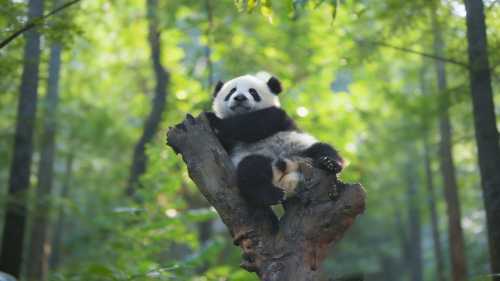
Booking is online and real-name only, and tickets are released 14 days ahead. The daily cap is 85,000 visitors and peak dates do sell out, so reserve before you travel rather than at the gate. Entry is split into a morning slot, 07:30 to 12:00, and an afternoon slot, 12:00 to 17:00.
The park opens at 07:30 from March to October and at 08:00 from November to February, closing at 17:00 and 16:30 respectively. Villa 6, where Hua Hua lives, and the panda art museum are closed on Mondays except public holidays. The shuttle bus inside the park costs CNY 30.
Read the full ticket breakdown in our Chengdu Panda Base tickets guide.
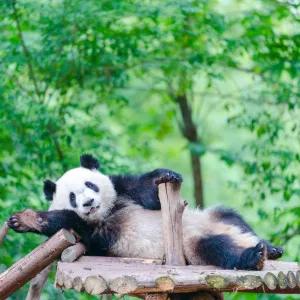
 If you want to see pandas at their home this is the place to be. Recommended arrival time is 7-10am - by 11am the place is absolutely packed with visitors, so you’ll have to queue longer to take good photos and pandas tend to go to sleep towards lunch time after eating their bamboo for breakfast. I expected to see hundreds of them on one place which wasn’t the case - they’re quite spread out across the reserve, so be prepared to move the spots where they live - each has quite a lot of space. But looking back it was an awesome experience and animals are really cute. If like me you arrive too early and not sure where to start, I’d recommend just to follow where most people go and if you see a little group gathering with cameras, most likely a panda will be there. You can also find a food court area with panda-post - can send a postcard globally.
The cheapest route is Metro Line 3 to Panda Avenue station, Exit A, then bus 408 for CNY 2, which takes about 10 minutes to the south gate. The shuttle runs from 06:45 to 18:00 in summer and 07:15 to 17:30 in winter.
A taxi from Chunxi Road costs around CNY 40 and takes 25 to 35 minutes. From Chengdu East Railway Station it is also about CNY 40. From Shuangliu Airport allow CNY 100, and from Tianfu Airport CNY 200, because the new airport is 50 km away. Whichever way you come, aim to be at the gate when it opens.
Pandas eat, climb and play in the morning and sleep through much of the afternoon. Arriving at 07:30 to 08:00 is the difference between watching eight pandas move around and watching eight pandas lie still. Late summer and autumn are the best window for the nursery, when that year's cubs are old enough to be on view.
The trade-off is crowds. This is the busiest panda site in China, and weekends and public holidays are noticeably worse than weekdays.
Dujiangyan is where most panda guides confuse readers. There are two separate panda facilities in the same county, about 20 km apart, run by different institutions. One is open. One is closed.
Panda Valley, or Xiongmaogu, is the Chengdu base's field-release research centre. It sits on 2,004 mu, about 134 hectares, in Yutang Town at the foot of the mountains, 6 km from the Dujiangyan irrigation system. Enclosures are forested rather than manicured, red pandas move freely along the boardwalk, and the pace is slower than in the city. The colony is smaller than the Chengdu base's, but you can stand at one enclosure for fifteen minutes without anyone behind you.
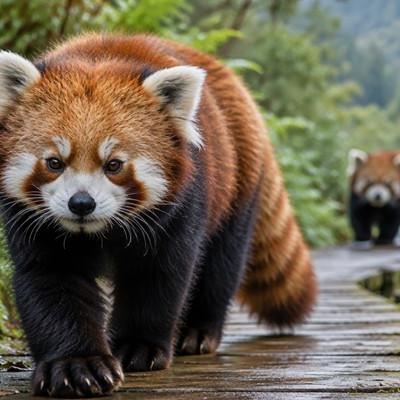
Tickets cost CNY 55 for adults and CNY 27 for students, the same as the Chengdu base. Booking is online and real-name through the official Panda Valley WeChat account or mini-program, with no offline ticket window and no third-party agents. Tickets open 7 days ahead and the daily cap is 16,000, split evenly between morning and afternoon. Visitors with a passport can book with the passport number.
From May to October the park runs 07:30 to 18:00, with morning entry 07:30 to 12:00 and afternoon entry 12:00 to 17:00. From November to April it runs 08:00 to 17:30, with afternoon entry ending at 16:30. Arrive early: the pandas are most active between 09:30 and 11:00, and afternoon slots are quieter but sleepier.
To get there, take a high-speed train from Chengdu Xipu station to Dujiangyan, about 30 minutes, then a 20-minute taxi to the gate. By road it is 1 to 1.5 hours. Many visitors pair it with the train stations guide and spend the rest of the day at the irrigation system or Qingcheng Mountain.
The other site, the China Conservation and Research Center's Dujiangyan base at Qingchengshan, closed on 23 April 2026 for facility upgrades. No reopening date has been announced, and its keeper-for-a-day programme is suspended. If an operator offers you a Dujiangyan panda volunteer day, ask which site it uses before you pay. Until the base reopens, Panda Valley is the only panda facility open in Dujiangyan.
Wolong is the one place where the setting changes what you see. The Shenshuping base sits at about 1,700 metres inside the Wolong National Nature Reserve, 130 km and 2 to 2.5 hours by road from Chengdu, in Gengda Town. It covers around 150 hectares with 59 enclosures in natural bamboo forest, and it holds about 70 pandas across nursery and adult areas, including Fu Bao and several pandas returned from overseas zoos.
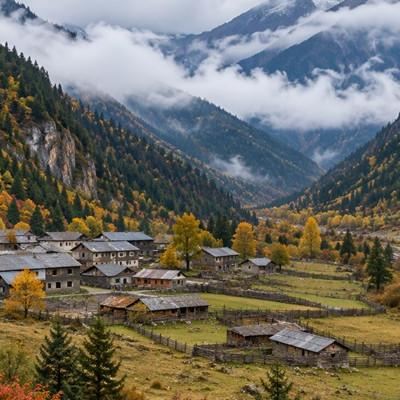
Adult admission is CNY 90 at the gate or CNY 85 online. Children under 1.3 m and visitors over 65 enter free, and students pay half price with ID. The base is open 09:00 to 17:00 every day, with last entry at 16:30. Between 1 August and 31 December 2026 a combined ticket with Siguniang Mountain's Shuangqiao Valley costs CNY 136, a 20 percent saving on the two separate tickets.
There is no practical public transport for international visitors. The realistic options are a private car or a small-group day trip, following the Chengdu, Dujiangyan, Yingxiu, Gengda route. Bring food and water, because there is little inside the reserve, and expect the valley to be 5 to 8 degrees cooler than Chengdu.
Many travellers overnight in Dujiangyan and drive up in the morning, which puts them at the gate at opening instead of arriving at noon after a long transfer.
Wolong is the closest you can get to seeing a captive panda in something like its wild habitat: steep forested slopes, streams, climbing trees and very few visitors. It is also the base for the most serious volunteer programme in the system, with a small daily cap and real keeper tasks, though places must be booked weeks ahead and are not always open to foreign passport holders.
It is a poor choice if you have half a day or are travelling with young children who will not enjoy a four-hour round trip. It is the right choice if pandas are the reason for your trip, or if you are continuing to Siguniang Mountain and the western Sichuan highlands.
| If you want | Go to | Why |
|---|---|---|
| Pandas in half a day, first visit | Chengdu Research Base | Ten kilometres from downtown, more than 200 pandas, the easiest logistics of the three |
| A quieter morning and a Dujiangyan day | Dujiangyan Panda Valley | Fewer visitors, forested enclosures, 20 minutes from the irrigation system |
| A mountain setting and a full day out | Wolong Shenshuping | 1,700 metres inside a nature reserve, Fu Bao, on the road to Siguniang |
| A keeper or volunteer day | Wolong | The Dujiangyan base is closed; Wolong runs the deepest programme, book early |
| Two panda mornings | Chengdu, then Panda Valley | Different settings and a shorter second transfer than Wolong |
If you only have one panda day, choose the Chengdu base and be there at opening. Timing matters more than which base you pick: the city base at 07:30 beats Wolong at noon.
Pandas take a morning. Sichuan can take two weeks. These are the add-ons that make the flight worth it.
Teahouses in People's Park, the lanes around Kuanzhai and Jinli, Sichuan opera with face-changing, and a food culture that runs from mapo tofu to hot pot. Read our guides to Chengdu's famous food and where to eat hot pot, and see the Chengdu destination page for hotels and neighbourhoods.
The Dujiangyan irrigation system has been diverting the Min River for more than 2,200 years and still waters the Chengdu plain. It is a UNESCO site, a 20-minute drive from Panda Valley, and easy to combine with Qingcheng Mountain, one of the birthplaces of Taoism, in a single day.
The Leshan Giant Buddha is 71 metres tall, carved into a cliff where three rivers meet, and reachable by high-speed train from Chengdu in about an hour. Mount Emei, another UNESCO site, needs an overnight if you want sunrise from the summit.
Turquoise lakes, travertine terraces and forested valleys in northern Sichuan, both UNESCO listed. Jiuzhaigou is a one-hour flight from Chengdu or a long road transfer, and the colours peak in October. Allow three days.
The G318 road west of Chengdu climbs through Kangding, Tagong grassland and Xinduqiao to Daocheng Yading, the valley often called the last Shangri-La. This is a four to seven day trip, best in autumn, and it pairs naturally with Wolong on the first day out of Chengdu.
For a panda morning, stay in the north of the city or near Chunxi Road, which keeps the taxi to the base under 40 minutes.

Crowne Plaza CHENGDU PANDA GARDEN by IHG
Crowne Plaza Chengdu Panda Garden is the closest international hotel to the research base, which makes a 07:30 entry easy without a 06:00 taxi.
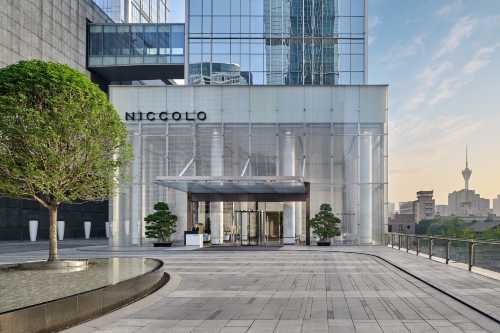
Niccolo Chengdu

 No. 3 of Luxury Hotels in Chengdu
Niccolo Chengdu sits on the edge of Taikoo Li, walking distance to Chunxi Road and the metro, which makes it the easiest base for a first trip.
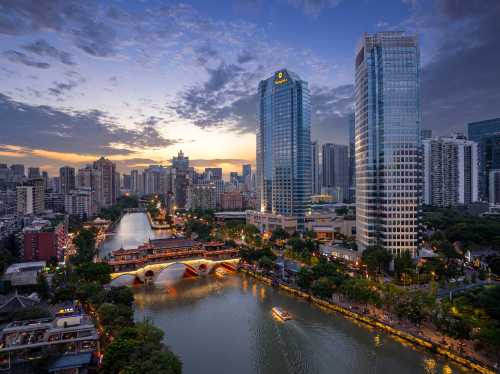
Shangri-La Hotel Chengdu
No. 2 of Scenic Hotels in ChengduShangri-La Chengdu is on the Jinjiang riverside, a quieter part of the centre with the same short taxi ride to the panda base.
Popular recommendations

Top 10 Things to see and do In the Bund, Shanghai
 _TS***4m

Latest Trip.com Promo Codes, Flight Discounts & Hotel Savings (Weekly Update)
 Trip.com Official

6 Things to know before Exploring the Montmorency Falls, Quebec
_TS***4m
2026 Guide to Shanghai Pudong Airport: Transit Visa & PVG Airport Shuttle
_TS***4m