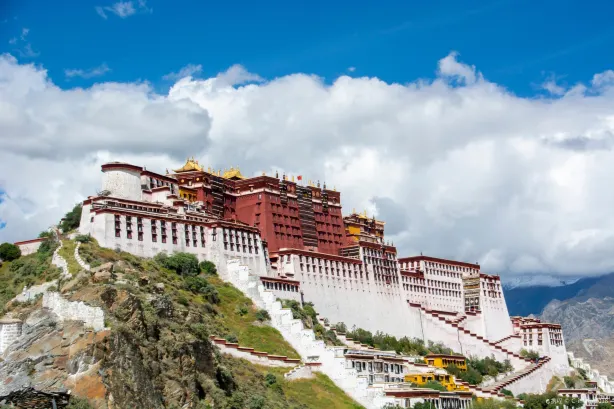
Lhasa

Things to do in Lhasa

Search attractions or local attractions & tours
Search

Explore top experiences

Top 10 attractions in Lhasa

View all Attractions
Drak Yerpa
No. 5 of Fall Viewing Attractions in Lhasa

Drak Yerpa

4.6
4.4/5
42 reviews

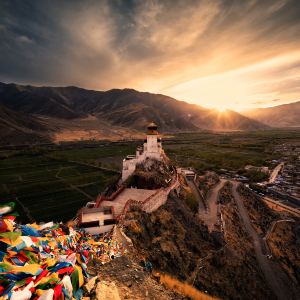
Drak Yerpa is a Nyingma (Red Sect) monastery and one of the four major retreat sites. Founded in the 7th century, it has a 1,500-year history. It was one of the meditation temples built by the Tibetan King Songtsen Gampo for his beloved Princess Mangza Trichun. After several expansions, it formed the Drak Yerpa that is tightly embedded in the cliff crevices. A major feature is that the temples are built into caves, integrating caves and temples. Unlike the surrounding peaks, which have only a thin layer of turf on their surfaces, Drak Yerpa is full of natural spiritual energy. On the mountain, there are towering, lush green pines and cypresses, while below, there are trickling springs and babbling brooks. In spring and summer, wildflowers bloom and birds sing in chorus. The temples are nestled within the cliffs, creating a unique landscape. There are over a dozen existing caves, among which Songtsen Gampo's meditation cave was built earlier and is located on a cliff halfway up the mountain. The original cave contained niches, ancient murals, and a statue of Songtsen Gampo, though the statue has since been destroyed. Temples were built around the cave, and after multiple repairs and expansions, it became a famous large monastery. In the mid-8th century, King Trisong Detsen promoted Buddhism and invited people from India to spread the Dharma. Not far from the meditation cave, there was originally a bell room containing a bronze bell with two circular inscriptions. Judging from the style of the characters, it was an artifact from the Tibetan Empire period. The bell's current whereabouts are unknown. In the 11th century, the ancient Indian master Atisha wrote books and gave teachings here. His former residence and meditation cave are located here.

Lhasa · 18.6 km from downtown
Tibetan Costume Experiences in Lhasa
No. 2 of Activities in Tibet

Tibetan Costume Experiences in Lhasa

4.6

When the sunlight from the plateau shines on Lhasa, this ancient holy city seems to be awakened, exuding a mysterious and charming atmosphere. Putting on gorgeous Tibetan clothes is like traveling through time and space, starting a journey of exploration into the customs of the plateau. The profound heritage of Tibetan culture:Lhasa, a holy land of Tibetan Buddhism, has a profound cultural heritage of Tibetan clothing. Tibetan clothing carries thousands of years of beliefs and folk customs, with unique styles and auspicious patterns. It incorporates religious elements, fully demonstrating the heroism and piety of the plateau people, and is a vivid display of the essence of Tibetan culture. The perfect fusion of scenery and clothing:Standing in front of the Potala Palace in Tibetan clothing, the red and white palace and the colorful Tibetan clothing complement each other, and the weight of history hits you; strolling in Barkhor Street, Tibetans shuttle on the prayer path, holding prayer wheels, integrating into local life, and taking photos with a strong sense of atmosphere. There are also Sera Monastery, Drepung Monastery, and other historical sites around. Tibetan clothing and ancient temples complement each other, showing a mysterious charm. Professional makeup and service:The local Tibetan clothing merchants in Lhasa are professional and considerate. The makeup artist is well versed in the connotation of Tibetan clothing and creates distinctive makeup according to the style, matching traditional headdresses and gemstone accessories to restore the authentic style. The photography team is a master of capturing light and shadow, using the blue sky and white clouds, golden roofs and white walls as the background, and cleverly using angles to freeze the beautiful moment when Tibetan clothing blends with Lhasa. When you wear Tibetan clothes and travel through every corner of the holy city, those ancient stories and pious souls seem to embrace you, as if you are on a pilgrimage.

China · Lhasa
World Peak Planetarium

World Peak Planetarium

4.6
5.0/5
1.1k reviews

The Tibetan Planet Astronomy Experience Hall is the first astronomy-themed science and technology experience hall in Tibet. It is currently the largest immersive interactive astronomy experience hall in the country, and it is also an astronomy science popularization experience hall at a very high altitude. Venue at2019Year12moon14Officially opened on the same day, the venue is located next to the Tibet Astronomical Tourism Park on the banks of the Lhasa River in the Lhasa Economic and Technological Development Zone. It is one of the highlight projects of the Lhasa Economic and Technological Development Zone. Popular science infrastructure. The venue is designed with visitors' first sensory experience as its design guide, with the theme of "perceiving the universe, recognizing the universe, exploring the universe, and discovering the universe". Through interactive projection, immersive suspended projection, dome theater, object tracking, human body capture, Somatosensory interaction,VRTechnology and other high-tech means show the mystery of Tibet and reveal the mysteries of the universe. The first floor of the venue is a chapter of "Eternal Times Connecting to the Present, Perceiving the Universe".7personal exhibition area,15Individual exhibition items. Through information and data sharing with Ngari and Yangbajing Observatory, you can see an exhibition of giant starry sky paintings taken across Tibet, learn about the development of astronomy in ancient and modern times at home and abroad and Tibet's astronomical calendar, and display the physical objects and classification distribution of meteorites. The second floor of the venue is dedicated to the chapter "Studying Things to Learn and Understanding the Universe".6display area,21A solo exhibition project to gain a comprehensive understanding of the universe in which we live. Including the earth-moon system, the solar system, the Milky Way, the universe, etc., it mainly presents the Big Bang, star constellations, cosmic wonders (black holes, gravitational waves and adventures on Mars),UFODecryption etc. The third floor of the venue is the chapter of "Sword Expanding the Sky and Exploring the Universe".3personal exhibition area,15The solo exhibition mainly displays the origin of life, human exploration methods, the construction and use of astronomical telescopes, and the development process of space exploration and lunar exploration projects, etc. The fourth floor of the venue is the chapter of "Learning is Endless and Discovering the Universe", which mainly includes astronomical telescopes, dome theaters,VRexperience, space classroom, derivatives area, etc. Visitors can have close contact with astronomy through game interaction in any area, and fully embark on a journey of exploring the mysterious universe. At the same time, Tibetan Planet is also an astronomy-themed tourist venue. In addition to displaying astronomical culture, it also focuses on displaying traditional Tibetan culture through high-tech means; including Tibetan medicine, Tibetan medicine, and Zang Tianwen's calendar. At the same time, the project strives to become a highlight project in the Tibet-wide tourism reform pilot project, providing a unique tourism experience for tourists entering Tibet, and also providing local residents with a leisure destination for parent-child travel and technology travel.

Lhasa · 10.6 km from downtown
Ganden Monastery

Ganden Monastery

4.5
4.6/5
109 reviews

The Ganden Monastery consists of more than 50 buildings, mainly including the Tsongkhapa Hall, the Tsongkhapa Dorm, the Yangbajian Sutra House, the Tsongkhapa Lingta Temple, Jiangzi Dratsang, Xiazi Dratsang and 23 Kang villages, 20 It consists of a rice village. Among the 23 Kang villages, each Kang has a scripture hall. Most of them are two-story buildings. They are built along the mountain, layer upon layer. From a distance, they occupy the entire half of the mountain. The scale is grand and spectacular. The main hall of Cuoqin (meaning Dajing Hall, namely Daxiong Hall) was built in 1409. There are 108 large columns, which can accommodate 3300 monks chanting sutras at the same time. The main offering in the hall is the future Buddha Jampa Buddha, and later offerings to Tsongkhapa and other gilded bronze Buddhas. There are five golden lions in the hall, named "Gandan Picking Red", which is the seat after Tsongkhapa founded the Yellow Sect. There is a very strange pillar in the main hall. It is a palm-thick distance from the ground. People who come to the Ganden Monastery to worship Buddha must touch the bottom of the pillar to pray for good luck. On the left side of the Cuoqin Hall is the Yangbajian Academy, which is four stories high. It is said that it cost 900 taels of silver to cast, and the pagoda is decorated with a large number of precious jewels, which is magnificent. The Ling Pagoda is covered with a yurt-like sandalwood tent with a curtain inside, and the top of the pagoda is covered with an umbrella, which is very beautiful. There are two major Zhacangs in Ganden Monastery, Xiazi Zhacang and Jiangzi Zhacang. Jiangzi Zhacang (meaning "North Summit Monastery") is the dormitory of Gandan Tribac's master and his daily retreat. Xiazi Dratsang (meaning "Dongding Monastery") was built by Tsongkhapa personally passed on to Sherpa Rinchen Gyaltsen. The murals and sculptures in the halls of Ganden Monastery are very exquisite, and there are many cultural relics and treasures in the temple. Among them, in 1757, Emperor Qianlong of the Qing Dynasty bestowed the temple with armors inlaid with gold and silver jewels, the armor in four languages of Han, Manchu, Mongolian and Tibetan, and the complete set of "Ganjur" in the Tibetan "Tripitaka" written by pure gold Khan. Buddhist scriptures, as well as many beautifully made silk "Thangkas", Tsongkhapa's seat and the meditation bed at his death. There are 24 thangkas gifted by Emperor Yongle of Ming Dynasty, and cushions of Gushi Khan, all of which are rare treasures. All this is enough to show the long history of Ganden Monastery and the lofty religious status. Twenty-four of the thangkas are displayed to the monks and believers every year for three weeks, and the annual "Gandan Embroidery Tang Festival" is also formed.

Lhasa · 36.6 km from downtown

Traveler favorites curated for you

More things to do

Private Tours in Lhasa

View More Private Tours in Lhasa
Group Tours in Lhasa

View More Group Tours in Lhasa
Lhasa Today's weatherClear -1-16℃
Lhasa weather for the next 2 days11/16: -1-14℃, 11/17: -2-12℃

Free things to do in Lhasa

What travelers say about Lhasa

user-avatar
妙珍88October 8, 2025
5.0
Yaowang Mountain and its surrounding areas have now been transformed into Tuanjie Park, which is very large with a quiet environment, lush vegetation and beautiful scenery. Visitors can climb the mountain along the wooden plank road and overlook the entire Lhasa city.

Yaowang Mountain

user-avatar
格格巴July 6, 2021
4.0
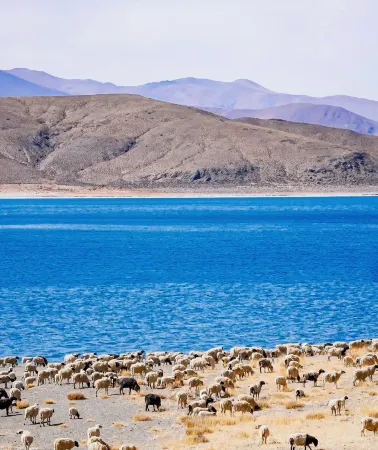
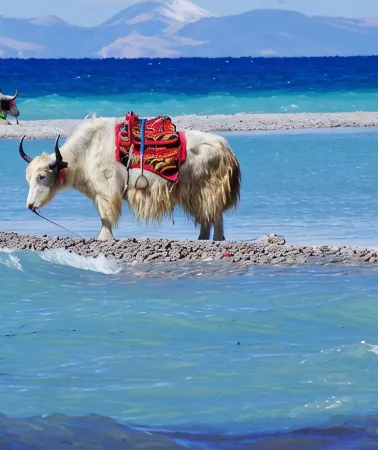
The northern Tibetan grassland is the largest natural grassland in Tibet, located between the Kunlun Mountains, the Tanggula Mountains and the Gangdise Mountains, with an average altitude of more than 4,500 meters. Yaks and herders' tents are scattered all over the place, forming a unique landscape. The biggest feature is its vastness and magnificence. It is not only a paradise for yaks and sheep, but also a fertile land of culture, where well-preserved nomadic culture can be seen.

North Tibet Grassland

user-avatar
橙色的荧光萍叶April 18, 2023
5.0
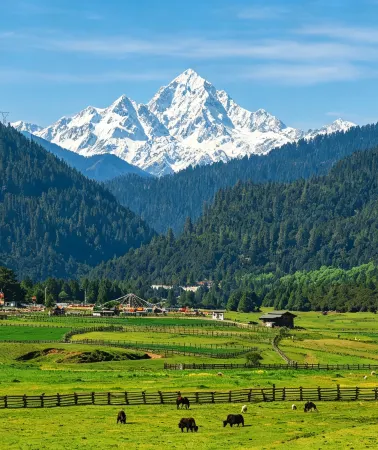
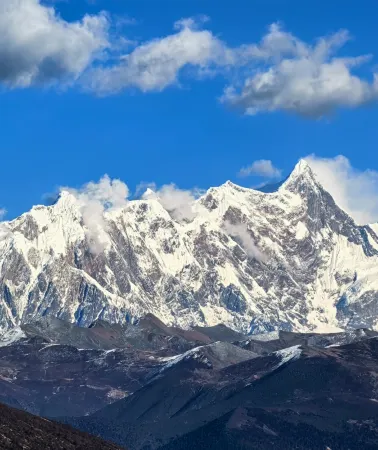
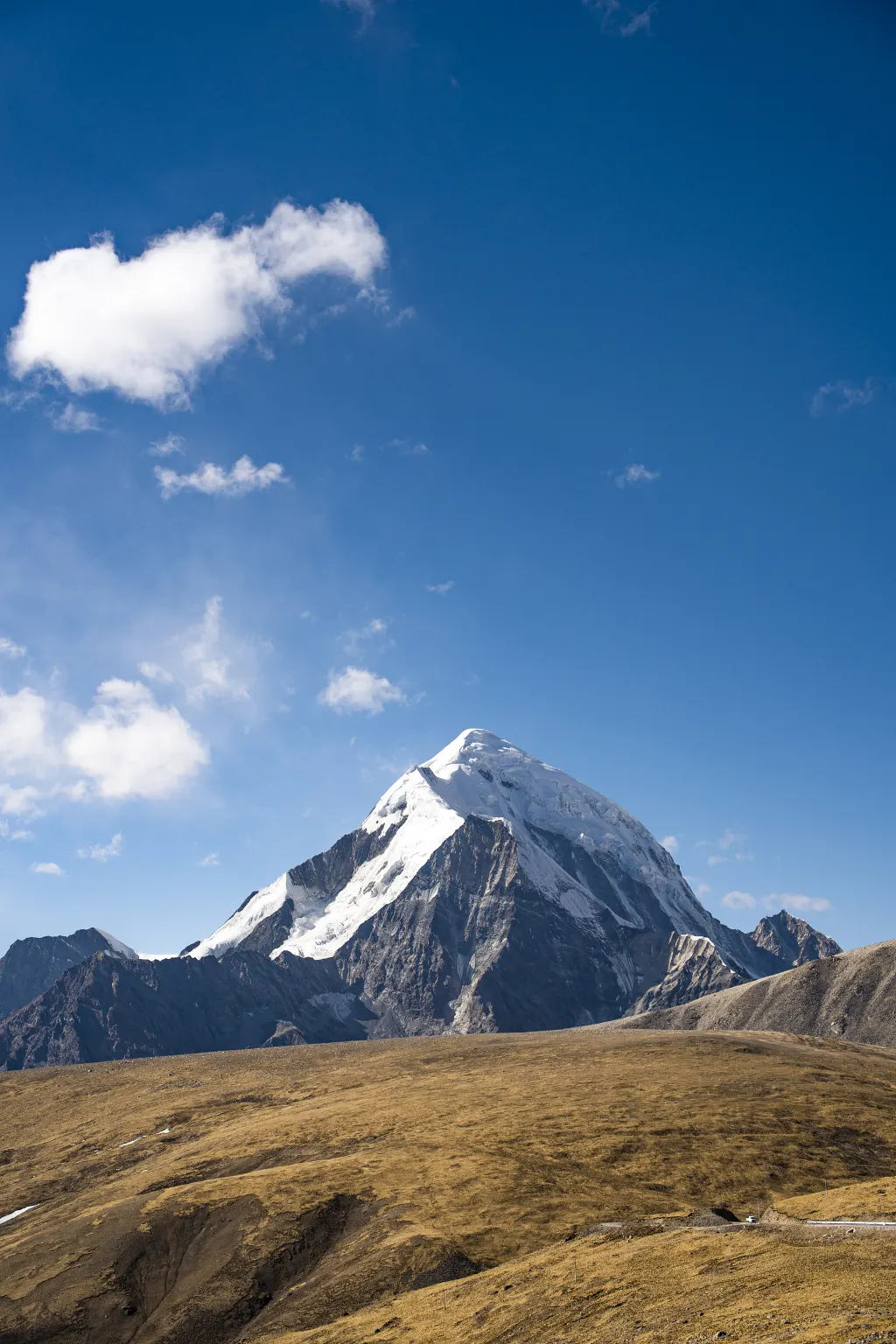
It's free and there is a toilet, but the toilet is not in a very good condition. However, you can see the scenery of Nyainqentanglha Mountain and the blue sky of the grassland. The scenery is very pleasant. When taking pictures, use a high-contrast filter to get a better view.

Nyenchen Tanglha Viewing Platform

user-avatar
M29***51June 21, 2025
5.0
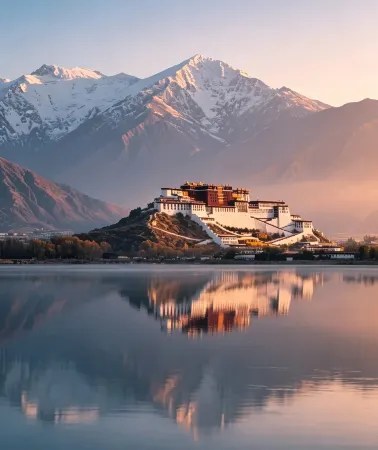
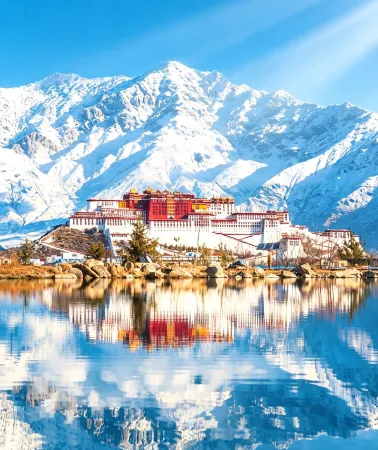
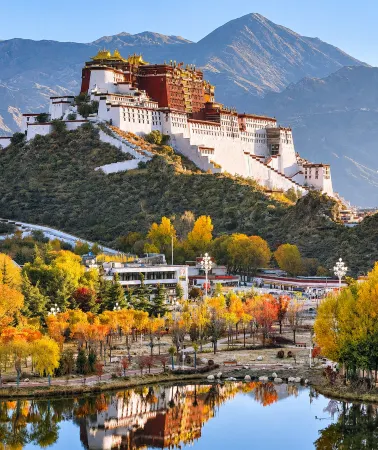
Behind the Potala Palace is a very beautiful park called Zongjiaolukhang Park. It is an open urban park in Lhasa that integrates natural landscape and cultural history. It is an important place for tourists and citizens to relax, take photos, and experience Tibetan culture. There is an artificial lake in the park called "Longwangtan". Wild ducks and bar-headed geese often inhabit the lake. The reflection of the Potala Palace is a popular photography location.

Zongjiao Lukang Park

user-avatar
vivienvivienMay 26, 2022
4.0
The most distinctive feature of Zhayeba Temple is that it is built in a cave, and the cave and temple are integrated. It is said that this was one of the temples built by the Tubo King Songtsen Gampo for his beloved concubine Princess Mangsa Chizun. After an unknown period of time, it was expanded several times to form the Zhayeba Temple that is now tightly embedded in the cracks of the cliff. The most common thing in this temple is the caves for practice, which are said to be as many as 108. The monks in the temple said that these caves can treat joint diseases, but I don't know if it is true.

Drak Yerpa

user-avatar
最美不过蓝天June 4, 2025
4.0
Nanshan Park is located in Chengguan District, Lhasa City, Tibet Autonomous Region. It is located directly south of the majestic Potala Palace. A green mountain separates it from the Lhasa River and Liuwu Bridge. After climbing to the top, you can see the entire city center with the Potala Palace as the center. There are also four big characters "Long Live the Motherland" on the back mountain, which will be lit up at night.

Nanshan Park

user-avatar
YoYo_D1l9r9b1June 8, 2025
5.0
藏域星球天文体验馆,是一处融合了科技与教育于一体的奇妙场所。在这里,游客可以尽情探索宇宙的神秘,通过高科技的展示手段,深入了解星系、星云、黑洞等天体的奥秘,感受宇宙的浩瀚与壮美。

World Peak Planetarium

user-avatar
好景致July 29, 2023
5.0
Ganden Monastery (also known as Ganden Monastery) was personally planned and built by Tsongkhapa, the founder of the Gelug Sect of Tibetan Buddhism, in 1409 (both Drepung Monastery and Sera Monastery were built by Tsongkhapa's disciples). It is also known as the mother temple or ancestral temple of the Yellow Sect. In the 1960s, a catastrophe razed Ganden Monastery to the ground. Local villagers successfully hid the statue of Tsongkhapa, which was the only cultural relic in Ganden Monastery that escaped the looting. The buildings seen now were newly built after 1980.

Ganden Monastery

user-avatar
黑豹AJanuary 3, 2025
5.0
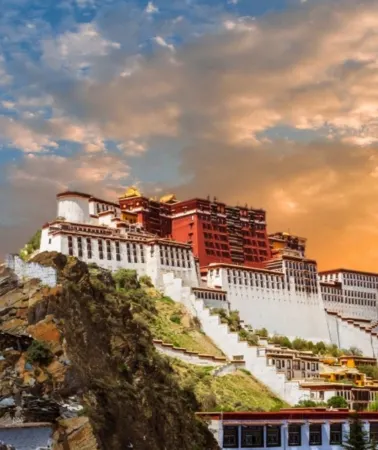
The Yaowangshan Observation Deck of the Potala Palace is located on the right side of the Potala Palace, at an altitude of 3,725 meters. This is a great place to take photos of the Potala Palace and also the location for taking the background photo of the 50-yuan RMB ticket. The observation deck is high above the ground, with a wide field of vision. You can appreciate the magnificence of the Potala Palace up close, and overlook the beautiful scenery of Lhasa from afar. In the early morning and evening, many photography enthusiasts wait here to capture the beautiful moments of the Potala Palace in the changing light and shadow.

Yaowang Mountain - Viewing Platform

Trip Moments in Lhasa

Lhasa travel guides

Popular cities near Lhasa
Frequently asked questions

How can I contact Trip.com customer support?

Get help anytime, anywhere within 30 secondsContact customer support

Change and cancellation policies vary by attractions and tours. Please check the product details page for more information.

Ticket prices may vary between weekdays and weekends, as well as during peak and off-peak seasons. When booking with Trip.com, you can also use Trip Coins to get extra savings. For more tips on booking discounted tickets, please visit Trip.com for the latest information.