Things to do in Lingbao
Explore top experiences
Top 10 attractions in Lingbao


Hangu Pass Tourist Area
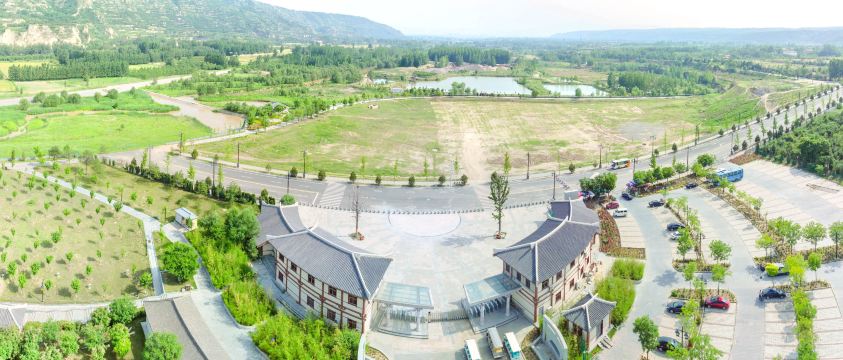
Hangu Pass, located in Lingbao, Sanmenxia City, Henan Province at the golden triangle junction of Henan, Shaanxi, and Shanxi provinces, is a national AAAA-level cultural attraction blending military history with Laozi philosophy. Spanning over 300 acres, the site features more than 30 attractions including the Hangu Pass watchtower, ancient Hangu trail, arrow storage wall ruins, Laozi statue, Dao De Tian Shu scripture, Dao Island, Virtue Hall, Taichu Palace, Great Dao Temple, Lingfu ruins, Cockcrow Platform, and a forest of steles. Hangu PassThis sacred valley is where Laozi, the great ancient Chinese philosopher, composed the foundational Taoist text "Tao Te Ching," marking the birthplace of Taoist culture. Strategically located along the historic route connecting Chang'an (now Xi'an) to Luoyang, it served as a vital crossroads where Central Plains culture met Qin-Jin traditions. For centuries, this fortress witnessed pivotal military conflicts and inspired legendary tales like "Purple Air from the East" and "Rooster Crows at Hangu Pass."Lingbao · 13.1 km from downtown

Yongle Palace
Yongle Palace, also known as Dachunyang Longevity Palace, was built in the Yuan Dynasty. Construction of such a magnificent palace complex with Taoist characteristics took over a century. Yongle Palace displays the typical architectural style of the Yuan Dynasty. Thick brackets intersect with each other layer by layer without much carved decoration. The architecture is spare and bright compared with the building style in the Ming and Qing Dynasties. The halls are arranged on the south-north axis. Of note, there are elaborate wall paintings on the Yongle Palace. There are many and of high artistic value, true rarities.Ruicheng · 29.1 km from Lingbao

Shanzhou Silo-cave
The Shanzhou Cave Dwellings are located in the south of Shan County in Sanmenxia. The site is easily accessed by road or rail. The cave dwellings kept residents cool in summer and warm in winter, and provided excellent shelter from wind and earthquakes. In addition to spending the night in renovated dwellings, visitors can relax in the hot springs, taste local cuisine, and watch traditional cultural performances.Sanmenxia · 29.5 km from Lingbao
Temple of Prince Guangren
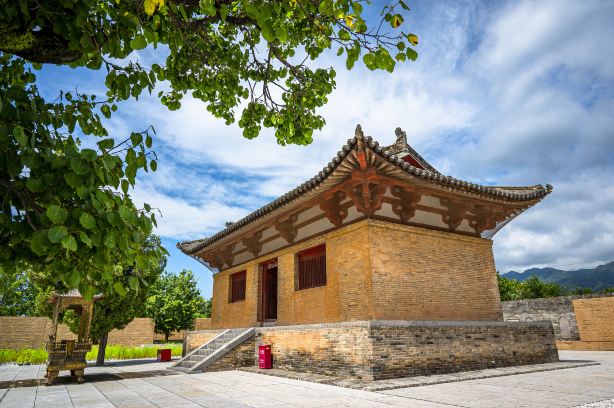
The Temple of Prince Guangren is a courtyard-style temple building located in Ruicheng County, Yuncheng City, Shanxi Province. Originally built during the Taihe era of the Tang Dynasty, this historic site serves as both a provincial and national key cultural relic protection unit. As an attraction combining religious faith, architectural artistry, and cultural experiences, the Temple of Prince Guangren draws numerous history enthusiasts and visitors who come to admire its architecture and offer prayers. Temple of Prince Guangren and the Yuan Dynasty Taoist temple about 1 li to the southeastYongle PalaceFacing each other from afar, atYongle PalaceNot far to the northwest, there isLongquan VillageIn the past, a spring called Longquan gushed from the high ground north of the village, irrigating fertile farmland, so the villagers built upon it.LongwangmiaoSacrificial rituals. The temple enshrines the Five Dragon Kings of the Five Directions. Legend says Nuwa appointed five dragons, with the Azure Dragon as their leader to govern all dragons, bestowing upon him the title Prince Guangren - hence the name Temple of Prince Guangren. The Temple of Prince Guangren faces south and covers an area of 4,560 square meters. It consists of a main hall, an opera stage, and side rooms, featuring simple construction with an elegant, rustic charm. The opera stage has three bays in width and three purlins in depth, with unadorned bracket sets on the column-top lintels. The central bracket set features a dragon head emerging from the large bracket mouth, while elephant trunks extend from both sides. The two end bays display dragon heads emerging from their bracket mouths. The main hall is the only surviving Tang Dynasty wooden structure in the Hedong region. Among the four remaining Tang Dynasty wooden buildings in China, the main hall of the Temple of Prince Guangren is one. The temple's Tang Dynasty stele holds significant reference value for studying ancient water conservancy projects that benefited the people, as well as the temple's construction period. Visitors can explore the main hall, side rooms, and courtyard at the Temple of Prince Guangren, admiring the exquisite wooden architecture and stone inscriptions. They'll learn about the legendary stories of Prince Guangren and local history while experiencing the solemnity and sacredness of this traditional temple.Ruicheng · 30.2 km from Lingbao

Emperor Qinshihuang's Mausoleum Site Museum
Emperor Qinshihuang's Mausoleum Site Museum, also known as the Terracotta Army, is located about 1.5 kilometers east of the Mausoleum of the First Qin Emperor and forms part of the extensive necropolis. There were more than a thousand terracotta soldiers unearthed here, each with a different facial expression. Standing before the massive underground army, you will feel the extraordinary might of the Qin Emperor that enabled him to unify six warring states two thousand years ago. The Qin Emperor Ying Zheng began building the mausoleum for himself at the age of 13. Nearly 720000 men and 38 years were required to complete this vast project.China · Xi'an

Han Mountain Scenic Area
Hanshan Scenic Area is located in Hexi Village, Guxian Town, Lingbao City. The Attraction is beautiful with clear water and intact vegetation. In spring, Hanshan has brilliant rape flowers and pink peach blossoms; in summer, there are thousands of rice waves at the foot of Hanshan, and green pines and cypresses on the mountainside; in autumn, Hanshan is full of wild chrysanthemums; in winter, Hanshan is covered with snow. Hanshan also has many cultural relics for you to visit. Here are the marks left by Liu Xiu, the founding emperor of the Eastern Han Dynasty, who was chased by Wang Mang after his arm was broken. The place where Liu Xiu hid was Liu Xiu Cliff, and the place where he stopped his horse was Ma Ti Cha; there is also a small temple in the mountain - Waguan Temple, which is dedicated to the land god. This is a small temple built in the shape of gray pottery, hollow with a door, small and exquisite, 45 cm high and 35 cm in diameter, which can be said to be the smallest temple in the world. At the foot of the mountain, there is a Sanguan Cave. There are statue platforms on the east, west and north sides of the cave. Originally, there were clay sculptures and painted statues. Due to damage over the years, only a few colored seated statues on the north side remain. To play in the Hanshan Scenic Area, you need to climb thousands of steps. For tourists who don't exercise much, they will feel backache and leg pain the next day after playing for a day. There are not many Dining facilities in the mountains. It is recommended that tourists bring their own drinking water and some snacks.Lingbao · 34.8 km from downtown

Shaanxi History Museum
History background: Shaanxi History Museum is located in the northwest of the Dayan Pagoda in Xi'an. It is one of the landmark attractions of Xi'an. The museum was planned in 1983, started in the summer of 1986, and officially opened on June 20, 1991. It was named Shaanxi History Museum. In 2016, Shaanxi History Museum was selected as "China's 20th Century Architectural Heritage" by the Chinese Cultural Relics Society and the Chinese Architectural Society. Museum Features: Shaanxi History Museum is a large modern museum, and its completion marks a new milestone in the development of China's museum industry. This museum is a Tang-style building complex with a "central hall and four corner towers". The main and secondary buildings are well-organized, the heights are staggered, and the momentum is solemn. It integrates national traditions, local characteristics and the spirit of the times. The museum covers an area of 65,000 square meters, and houses more than 380,000 cultural relics ranging from simple stone tools used in the initial stage of ancient humans to various artifacts in social life before 1840, covering a time span of more than one million years. The cultural relics are not only numerous and diverse, but also of high quality and wide value. The collections in the museum are dazzling and exquisite. It is an art hall that showcases the history and culture of Shaanxi and ancient Chinese civilization, and is known as the "Pearl of the Ancient Capital, the Treasure House of China." There are many treasures in the museum, including bronzes from the Shang and Zhou dynasties, pottery figurines from various dynasties, gold and silver utensils from the Han and Tang dynasties, and murals from Tang tombs. Most of them are treasures from the prosperous periods of the Han and Tang dynasties, and some of them are fine items that are prohibited from leaving the country. Collection treasures: There are three exhibition halls in the center of the museum. The first exhibition hall displays cultural relics from the prehistoric civilization of Lantian ape-man 1.15 million years ago to the Qin Dynasty; the second exhibition hall displays cultural relics from the Han Dynasty and the Wei, Jin, Southern and Northern Dynasties; and the third exhibition hall is mainly cultural relics from the prosperous Tang Dynasty. Each exhibition hall has its own treasure. There are special exhibition halls on the east and west sides of the central hall. On the west side, there is a "Special Exhibition of Tang Dynasty Treasures (Treasure Hall, Cultural Relics Unearthed in Hejiacun)", where many fine gold and silver wares from the heyday of the Tang Dynasty were transferred to be exhibited. On the east side, there is a "Treasures of Tang Dynasty Murals Exhibition", which exhibits a number of authentic Tang Dynasty tomb murals. The tripod The tripod is placed in the first exhibition hall at the entrance of the museum, and it can be said to be the treasure of the first exhibition hall. The replica is placed here, and the original is kept in the warehouse. Inscription on the outer wall: The inscription "All under heaven is the king's land; all the people are the king's subjects" reflects the land ownership system in the Western Zhou Dynasty. There are four lines of inscriptions with 28 characters on the inner wall of the Yi Ding. The general meaning is: In early August of a certain year, Wang Jiang took back the land originally given to Shi Lu and gave it to Yi, who then made this tripod to commemorate it. Queen's Seal: One of the treasures worth seeing in the second exhibition hall is the jade seal of the empress of the Han Dynasty, which is displayed separately. The seal is made of Xinjiang Hetian mutton-fat jade and is engraved with a Chihu, symbolizing royal power. Three-color camel figurines carrying music: This world-famous tri-color camel figurine carrying music is located in the third exhibition hall of Shaanxi History Museum. Its overall appearance and color are well preserved. There are seven men sitting on the camel's back, holding different musical instruments in their hands. Among them, the figurine holding the clapboard is listening attentively, as if intoxicated by the wonderful music. The woman in the middle is performing, and the camel opens its mouth wide and looks up to the sky, as if it is also singing with its master. Gold-inlaid animal head agate cup: This cultural relic, located in the special exhibition "Tang Dynasty Relics Special Exhibition", is one of the first 64 national treasures listed by the State Administration of Cultural Heritage that are never allowed to be exhibited abroad. There are also many other treasures such as black-glazed oil-drip bowls, green-glazed porcelain pots with handles, gilded silver bamboo-joint copper incense burners, gold bowls with mandarin duck and lotus petal patterns, and so on.China · Xi'an

Guanyun Mountain
Lingbao · 38.7 km from downtown

Mount Hua
Mount Hua, formerly known as "Xiyue", is one of the five famous mountains in China. It is located in Huayin City, Shaanxi Province. Huashan is also known as "Taihuashan". It is the birthplace of Chinese civilization. The "Hua" in "Zhonghua" and "Huaxia" comes from Huashan. The words "strange and dangerous" are the essence of Huashan's scenery. "Since ancient times, there has been only one road to Huashan" describes the steepness of Huashan. The Attraction has many thrilling attractions such as Changkong Plank Road, Kitesurfing, Qianchi Chuang, Baichi Gorge, Laojun Ligou, etc., which are carved out on the steep cliffs. Those who visit them in person will be amazed. Huashan Attraction covers a vast area, including the Main Peak Attraction, Xiyue Temple Attraction, Xianyu Attraction, etc. The Main Peak Attraction is the core Attraction of Huashan, including "Huashan One Road" and the five main peaks in the southeast, northwest, and center. Huashan in most people's minds refers to the Main Peak Attraction. Five main peaks The East Peak is about 2,100 meters above sea level and is named for its location in the east. There is a platform on the top of the peak, which is high and dangerous with a wide view. It is a good place to watch the sunrise. It is called Chaoyang Terrace, and the East Peak is also called Chaoyang Peak. The East Peak consists of four peaks, one main peak and three s-ervant peaks. The peak where Chaoyang Terrace is located is higher, the Yunv Peak is in the west, the Shilou Peak is in the east, and the Botai is in the south. There are more than dozens of landscapes on the East Peak. There is a natural stone pattern on the cliff on the side of the East Shilou Peak, which looks like a giant palm print. This is the Huayue Immortal Palm, which is listed as the first of the eight scenic spots in Guanzhong. The story of the giant spirit opening the mountain and guiding the river originated from this. The West Peak is about 2,000 meters above sea level. Because there is a huge rock on the top of the peak that looks like a lotus petal, ancient literati often called it Lotus Peak or Hibiscus Peak. Xu Xiake wrote in his "Diary of Traveling to Mount Taihua": "There is a rock rising on the peak, and there are stone pieces covering it, like a lotus flower." This stone must be referring to it. There are many landscapes on the West Peak, including Cuiyun Palace, Lotus Cave, Giant Spirit Foot, Axe-Split Stone, Sheshen Cliff, etc., and there are many beautiful myths and legends. Among them, the well-known story of Chenxiang splitting the mountain to save his mother is circulated here. The South Peak is over 2,100 meters above sea level and is the highest peak of Huashan. The ancients called it the "Head of Huashan". On one side of the South Peak is a thousand-foot cliff, standing straight like a knife, and below is a deep ravine, which is separated from Sangong Mountain and Sanfeng Mountain. The South Peak consists of one peak and two peaks. The east side is called Songhui Peak, and the west side is Luoyan Peak. The origin of the name of Luoyan Peak is said to be because the migrating wild geese often land here to rest. The North Peak is about 1,600 meters above sea level, with cliffs on all sides, covered with clouds above and connected to the earth veins below. It stands tall and unique, and is also called Yuntai Peak because it looks like a cloud platform. Li Bai of the Tang Dynasty wrote in his poem "A Song of the Cloud Platform of Mount Xiyue to Complimentary Danqiuzi": "Three peaks stand as if about to collapse, and the green cliffs and red valleys are high. The golden essence of the White Emperor mobilizes his vitality, and the stones become lotus flowers and the clouds become platforms." The famous story of "Taking Huashan by Strategy" took place here. There are many landscapes on the mountain, including the Zhenwu Hall, Jiaogong Stone Chamber, Changchun Stone Chamber, and the place where Laojun hung the plow. The Middle Peak is the only way to the other four peaks. It is located in the middle of the East, West and South Peaks. The forests on the peak are lush and green, and the environment is quiet. There is a Taoist temple named Yunu Temple on the top of the peak. It is said that it was the place where Qin Mu Gong's daughter Nong Yu cultivated herself in the Spring and Autumn Period, so it is also called Yunu Peak. Main landscape: There are more than 210 famous Attraction in Huashan. From ancient times to the present, countless literati and poets have left various classic poems here. Skywalk The Changkong Plank Road is located on the east side of the Huashan South Peak. It was built by the master of the Huashan School, Taoist He Zhizhen of the Yuan Dynasty, who wanted to get away from the world and practice Taoism. He built it by inlaying stone piles on the cliffs and paving wooden boards. At the end of the plank road, you can see the "Hezu Cave" where Master He practiced self-cultivation. The road builders chiseled stone holes on the cliffs, wedged stone piles into the holes, and laid wooden boards about 40 cm wide between the stone piles. Visitors must stick to the cliff wall, pull the iron chain with their hands, step on the wooden boards, and move forward slowly sideways. Xiyue Temple Xiyue Temple, also known as Huayue Temple, is a temple where emperors of all dynasties worshipped and offered sacrifices to Shaohao, the Great Emperor of Xiyue. It was first built during the Yuanguang period of Emperor Wu of the Han Dynasty (134-129 BC) at the entrance of Huangshengu (now Huangfuyu) at the foot of Huashan Mountain. It was moved to its current location during the reign of Emperor Huan of the Eastern Han Dynasty (147-167 AD) and renamed today. It was rebuilt many times during the Tang, Song, Ming and Qing dynasties. Canglong Ridge The steps on Canglong Ridge are only 2 feet wide, with deep ravines on both sides, as steep as a knife. The height difference between the ridge and the top is about 500 meters, and the slope is more than 45 degrees. Looking at the green pines and white clouds in the distance and hearing the sound of the wind is dizzying. Jinsuoguan Jinsuoguan is one of the five passes of Huashan Mountain. It is built on a stone archway at the entrance of the three peaks. It is the throat of the Wuyun Peak to the four peaks of East, West, South and Center. There is no way to pass after the pass, so it is also called Tongtianmen. Taoists believe that Huashan is the fairyland of gods. Only after passing Tongtianmen can you enter the fairyland. Therefore, there is a folk song that "after passing Jinsuoguan, there is another world". There has been only one road to Mount Huashan since ancient times "There has been only one road to Mount Hua since ancient times" refers to the "Huashan Valley" hiking trail, which includes various scenic spots along the Huashan hiking trail since ancient times. When connected together, it is what is commonly referred to as "There has been only one road to Mount Hua since ancient times." How to visit Huashan has two mountain gates (entrances): East Gate and West Gate (also known as Huashan Gate). Take the cable car up the mountain and go to the East Gate; if you climb the mountain on foot, enter from the West Gate. Huashan currently has two cable cars, the East and West Lines, which reach the North Peak and the West Peak respectively (please plan the climbing route in advance before purchasing the ticket and purchase the corresponding ticket type, and you cannot change it midway.). Route 1: Hiking route There has been only one road on Mount Huashan since ancient times. It is an ancient mountaineering road with a total length of 12.5 kilometers and 9,567 steps. It takes about 4 hours to hike from Yuquanyuan, through Wuli Pass, Shaluoping (night climbing), Qianchi Chuang, Baichi Gorge, etc. to the North Peak, and then start the tour from the North Peak. Route 2: "Up West and Down West", a mountaineering route suitable for the Seniors and tourists with children This route goes up the West Peak Cableway of Mount Huashan and down the West Peak Cableway, that is, going up from the west and down from the west. The whole route takes a relatively short time, about 4 hours, and is also more energy-saving, making it more friendly to the Seniors and tourists with children. Route 3: "Up West and Down North", a one-day mountaineering route chosen by 80% of tourists This route goes up by cable car from the West Peak of Mount Huashan and down by cable car from the North Peak, that is, going up from the west and down from the north. The entire route is a classic one-day tour route, which takes about 6 hours. You can visit all the attractions without backtracking. Most tourists choose this route because this road almost goes straight down, which is easier and faster than the uphill road. Route 4: "North up and north down", a time-saving, economical and panoramic mountaineering route This route goes up by cable car at the North Peak of Huashan and down by cable car at the North Peak, that is, going up from the north and down from the north. The whole route is a relatively low-cost cable car mountaineering route. If your sightseeing time is limited, you can choose this route and visit the North Peak, which has the Memorial Pavilion, Ear-Crushing Cliff, Canglong Ridge, Huashan Sword Contest Monument, panoramic Huashan and other attractions.Huayin · 75.9 km from Lingbao

Yuncheng Guan Gong Hometown Cultural Tourism Scenic Area
The Jiezhou Guandi Temple is located at the West Pass in Yuncheng's Jiezhou Town. The current buildings are reconstructions of buildings that would have stood here during the Qing Dynasty. The Jiezhou Guandi Temple is divided into two parts: the main temple and the Jieyi Garden. Upon entering the scenic site, visitors will first come to the Jieyi Garden. In the garden are structures such as the Jieyi Building and the Junzi Pavilion. In the main temple, the primary hall is Chongning Hall. This is where the statue of Guandi can be found. Every year, around National Day, a grand "Guandi Cultural Festival" is held featuring historical ceremonies and folk worship activities.Yuncheng · 43.8 km from Lingbao
Experiences you can't miss in Lingbao
Featured Cultural experiences in Lingbao
View all Cultural experiences
5% off
Limited-time sale
FromSEK 1,944.00SEK 2,047
Free cancellation
Book now for tomorrow
FromSEK 334.00
Free cancellation
Book now for tomorrow
FromSEK 334.00
5% off
Limited-time sale
FromSEK 1,944.00SEK 2,047

5.0/5
· 5 reviewsFree cancellation
Instant confirmation
Book now for tomorrow
FromSEK 592.00
Featured Outdoor experiences in Lingbao
View all Outdoor experiences
4.8/5
· 134 reviews· 455 bookedFree cancellation
Instant confirmation
Book now for tomorrow
21 consecutive positive reviews
FromSEK 845.00

4.8/5
· 38 reviews· 264 bookedFree cancellation
Instant confirmation
Book now for tomorrow
21 consecutive positive reviews
FromSEK 845.00

4.3/5
· 32 reviews· 285 bookedInstant confirmation
Book now for tomorrow
74 travelers saved
5% off
Limited-time sale
FromSEK 1,057.00SEK 1,113
4.4/5
· 5 reviews· 78 bookedFree cancellation
Instant confirmation
Book now for tomorrow
FromSEK 894.00

4.2/5
· 20 reviews· 132 bookedFree cancellation
Instant confirmation
Book now for tomorrow
5% off
Limited-time sale
FromSEK 961.00SEK 1,012

5.0/5
· 4 reviews· 55 bookedFree cancellation
Instant confirmation
5% off
Limited-time sale
FromSEK 1,932.00SEK 2,034

4.7/5
· 10 reviewsFree cancellation
Instant confirmation
Book now for tomorrow
FromSEK 570.00

Free things to do in Lingbao


What travelers say about Lingbao

Anonymous userSeptember 22, 2026
5.0
The Hangu Pass of the Qin Dynasty, relying on its natural defenses, blocked countless armies. Lao Tzu wrote the Tao Te Ching here, spreading culture with a long and rich history. The scenic area is vast and well-equipped, making it a great place for history buffs and well worth a visit!
Hangu Pass Tourist Area

青衫磊落踏歌行October 18, 2026
5.0
Yongle Palace was built to commemorate Lü Dongbin. The entire building is grand in scale. In the 1960s, it was moved here to make way for the construction of the Sanmenxia Reservoir. As a result, the original site was not flooded, so the combined ticket also includes a visit to the original site. The most famous is the Yuan Dynasty mural "Chaoyuan Tu" in the Wuji Hall.
Yongle Palace

M63***07October 21, 2026
4.0
This is a cluster of traditional houses with a very distinctive local flavor. You enter the village but see no one, yet every household seems to be filled with voices. During the visit, there are occasional folk performances that incorporate local customs, which are quite interesting. The entire scenic area has a well-planned route, and you won't feel tired after walking through it all. There's a courtyard inside that sells huge steamed buns, especially the red date and sweet potato ones, which are particularly delicious.
Shanzhou Silo-cave

M37***45October 5, 2026
4.0
The Guangrenwang Temple in Ruicheng, Yuncheng, is one of the few remaining Tang Dynasty wooden structures in China and a fifth batch of National Key Cultural Relics Protection Units. The ancient temple sits atop a loess plateau, devoid of elaborate decorations; its simple yet robust brackets and walls perfectly embody the rustic and majestic spirit of Tang Dynasty architecture.
Having withstood a thousand years of wind and rain, the temple retains the original Tang Dynasty structural features in its eaves and beams. This ancient building, far removed from the hustle and bustle of the countryside, stands quietly on the plateau, a must-see for anyone exploring early wooden architecture.
A few words to say...
Temple of Prince Guangren
Anonymous userOctober 22, 2026
5.0
A must-visit attraction in China. Go early to avoid crowd. Best to arrive before the gate open. Highly advisable to hire a guide to explain the exhibits. You will be totally overwhelmed.
Emperor Qinshihuang's Mausoleum Site Museum

M25***l6May 4, 2025
5.0
The scenery is pleasant, the environment is good, the cable car price is very reasonable, and parking is free. I will go again if I have the chance!
Han Mountain Scenic Area

HtengOctober 22, 2026
5.0
陕西历史博物馆文物众多,令人震撼,还真能夠让人一眼千年,回味无穷。另外,讲解员June很称职,讲解十分详细、生动有趣。
Shaanxi History Museum

Passport & PilatesOctober 22, 2026
5.0
Known as one of the most precipitous mountains in the world, this journey was the test of fear of heights, and stamina.As first time traveler recommend to take the West Cable Car up. If you want to save your knees for the actual peaks, take the cable car up and hike the loops between the summits. It still offers plenty of challenge without destroying your joints on the lower ascent. You will still be able to cover all the 5 peaks. Each peak has its own profound moment and beauty. The terrain are somewhat rugged but well maintained stone paths making it manageable . Also highly recommend to experience the vertical stone staircase. There are a few around Mount Hua . Some are much shorter in length but I would suggest to challenge yourself by going for the hardest climb stairs. The other experience I would recommend is the plank road in the sky. Finally get a pair of gloves unless you don’t mind touching the cold, rough iron chains lining the paths in Mount Hua. Pack light.
Mount Hua

爱旅游的孔雀August 10, 2026
5.0
The ancestral temple of Guan Yu, one of the 30,000 temples worldwide, is indeed magnificent and awe-inspiring. Several emperors personally inscribed plaques, making it a royal temple exuding grandeur. It's a bit far from the city center, so it's advisable to plan your time accordingly.
Yuncheng Guan Gong Hometown Cultural Tourism Scenic Area


