Qingchuan

Things to do in Qingchuan

Search attractions or local attractions & tours
Search

Explore top experiences

Top 10 attractions in Qingchuan

View all Attractions
Qingxi Ancient City
No. 3 of Night Attractions in Guangyuan

Qingxi Ancient City

4.8
5.0/5
816 reviews

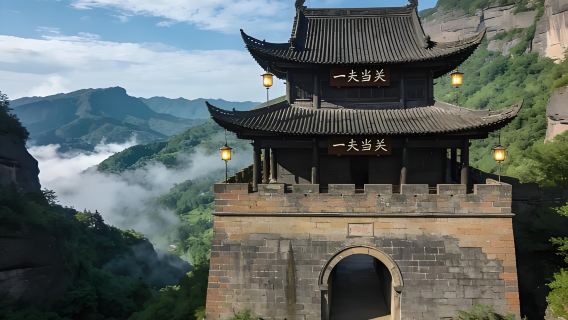
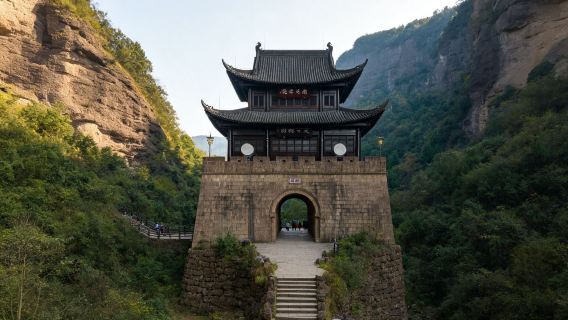
Qingxi Ancient Town (a national AAA-level tourist Attraction) is an ancient border town with a long history of more than 1,700 years. During the Three Kingdoms era, the Shu general Liao Hua once cultivated land and garrisoned here. It was also here that perhaps the most successful sneak attack in the history of ancient Chinese warfare took place. The Wei general Deng Ai wrapped himself in a felt and sneaked across the Motianling Mountains to capture Jiangyou and Chengdu and destroy Shu. For many years, this place has always been a border town that has been relied on by successive dynasties. The ancient city covers an area of about 300 mu. It has been the county government of prefectures and counties many times in history. Before 1951, it was also the seat of Qingchuan County. The ancient city is located in the location of "Double Dragons Playing with Pearls" and "Five Horses Galloping in the Trough". Its shape is like a "boot" and the gate is like a "jar", so it is also called "Shoe City" and "Wang City". "Catching a turtle in a jar" and "Please enter the jar" come from this. To this day, the small city still preserves a relatively complete Ming Dynasty fortress pattern and the Ming and Qing architectural complex in northern Sichuan, with an ancient and simple style. This place controls the Yinping Ancient Road, one of the ancient Shu Roads, and further ahead are towering mountains. Officials, messengers, merchants, even prisoners of the court, or down-and-out literati would stop here to rest before continuing their next unpredictable journey. Qingxi Ancient City is not only rich in Three Kingdoms culture, but also closely related to the royal secrets. Emperor Jianwen of the Ming Dynasty, Zhu Yunwen, once lived in seclusion in Huayan Temple here. Qingxi Ancient City is a place where Hui and Han people live together and multiple religions coexist. The Hui and Han people live in harmony here. The strong Islamic residential arch architecture, the magnificent mosques and the surrounding Catholic churches, Taoist temples and Buddhist temples complement each other and become a beautiful scenery of Qingxi Ancient City. Walking in Qingxi Ancient City, you are simple, otherworldly and happy. The ancient city of Qingxi also left its own glorious chapter in the history of China's revolutionary war. In 1934, in order to cover the main force of the Red Army crossing the Jialing River and attacking Mianzhu, Li Xiannian led his troops to fight with Hu Zongnan's troops in Motianling, successfully covering the main force of the Red Army to the north, so there are still remains of the Red Army Bridge in Tangjiahe; in 1950, the People's Liberation Army entered Sichuan through the Yinping Ancient Road and liberated Qingxi and Jiangyou. The vicissitudes of the past are now just a joke. Today, the ancient city of Qingxi, which has experienced the severe disaster of the Wenchuan earthquake, has regained new vitality in the reconstruction and has become a popular tourist Attraction in northern Sichuan.

Qingchuan · 39.6 km from downtown
Zhuxi Valley Scenic Area

Zhuxi Valley Scenic Area

3.2
5.0/5
10 reviews

Zhuxi Square: Based on the excellent natural ecological environment of Zhuxi Valley, the attraction relies on elements such as mountains, water, and bamboo, and uses scenic pavilions, walking trails, and bamboo corridors as carriers to provide residents with a space for leisure and give tourists a reason to stop and stay. Zhuxi Culture Wall: Features wall paintings depicting various aspects of bamboo culture. In the center of the square, there are several bamboo shoot sculptures. "Frozen thunder startles the bamboo shoots, ready to sprout." As spring arrives, it "awakens" the bamboo shoots that have slept through the winter, breaking through the soil and growing freely. This symbolizes the life of the people of Chashu, just like these bamboo shoots after the rain—full of vitality and boundless energy—while also highlighting the self-reliant and upward-striving qualities of the Chashu people. Tingzhu Pavilion: This is a quiet and secluded pavilion. "In the virtuous pavilion, lying and listening to the rustling bamboo, naturally comes the sound of folk laughter." Here, "thoughts are sorted out, and the heart is as empty and quiet as bamboo." On weekends, invite a few friends to stroll leisurely, watch the clouds roll and unroll, see the sunrise, embrace nature, clear your mind, and fully enjoy the pleasures of the natural world. Zhuxi Lansheng: Pass through this archway, walk up the stone steps along the blue brick path, and arrive at "Zhuxi Lansheng." Here, you can gaze at the rolling mountains, see a few tiled houses, play in the water by the stream amidst the scattered bamboo, watch pedestrians on the bridge, and feel the natural ink-wash landscape painting of Zhuxi Valley, truly capturing the poetic imagery of "small bridges, flowing water, and households." Zhuxi Valley Residential Resettlement Area: The valley residential resettlement area is also a centralized resettlement site for poverty alleviation relocation in Chashu Village. It covers an area of approx. 40 mu, with a total project investment of approx. 23 million yuan, and was completed in December 2017. The residential resettlement area adheres to the principle of following the mountain terrain and being well-arranged, following the concept of "small-scale, cluster-style, micro-pastoral, and ecological," allowing tourists to see the mountains, view the water, and remember their nostalgia. It features attractions such as the Time Tunnel, Colorful Pond, Sun and Moon Shining Together, Cranes Playing in Water, Seven Sages of the Bamboo Grove, Bamboo Art Waterwheel, Bamboo Tube Dripping Water, Zhuxi Tea Art, and Yutan Yingyue. The design adopts the approach of "coordinated symbiosis between the vertical cultural axis and the horizontal ecological axis." The cultural axis is the spiritual connotation running through the entire resettlement site, starting from the rock wall inscriptions at the entrance, extending along the road with characteristic bamboo culture, gratitude and striving culture, and rule-of-law culture, covering the entire resettlement area. The ecological axis uses the original streams and ponds of the resettlement site as clues, and through water management, afforestation, and enclosing green spaces, creates a three-dimensional green background, providing a good environment for residents and tourists to visit and relax. Time Tunnel: The Time Tunnel is built along the stream, dividing the resettlement site evenly into two halves. Beside the road, the stream flows gently. Wandering on the trail, welcoming the mountain breeze, playing with the waterwheel in the stream, and listening to the murmuring water, it has a feeling of prosperity. Beside it, "The Taoist's courtyard is quiet, and the moss color connects to the deep bamboo." Walking into the resettlement site, bathing in the breeze and mist, enjoying the green water and green mountains, tasting wild forest fruits, feeling the magnificence, and expressing one's feelings. The Time Tunnel and the Seven Sages Garden complement each other, showing a sense of mystery in the winding paths, and also presenting a sense of warmth in being connected and dependent. Colorful Pond: This was originally an abandoned fish pond. According to the overall plan, we renovated the old fish pond and added landscape features such as cranes, waterwheels, and fountains, turning it into the exquisite Colorful Pond of today. Looking from a distance, the three cranes have different postures. "In the clear dawn, the corner eaves brush the colorful neon, the fairy birds announce auspiciousness and suddenly arrive." The cranes are so elegant, refined, and otherworldly, wandering outside the world, not competing for favor, which also expresses the contentment of the Chashu people living and working in peace. Playing on the boardwalk of the pond, feeling the quiet pond peacefully reflecting the unfathomable sky, "laughter on the treadle waterwheel," it has a unique charm. Seven Sages Garden: The Seven Sages Garden is connected to the Time Tunnel. In the morning light (or twilight), we travel through a thousand years, stepping quietly through the Time Tunnel, and with the seven famous scholars of the late Wei and early Jin dynasties—Ruan Ji, Ji Kang, Shan Tao, Liu Ling, Ruan Xian, Xiang Xiu, and Wang Rong—recite an ancient poem, taste a cup of good tea, discuss philosophy in the bamboo grove, drink and have fun, and fully enjoy a free and easy life. Reading the vicissitudes and glory in the tunnel of time, time seems to stand still. Ring Road—Arch Bridge: According to the existing distribution of the village, the settlement has been renovated and upgraded to form a new village settlement with perfect facilities, complete functions, beautiful environment, and distinct characteristics. Arch Bridge—Yutan Yingyue: Firmly establish the development concept of "innovation, coordination, green, openness, and sharing," deepen the rural revitalization strategy, focus on "people, land, and money," strengthen the circular economy, optimize sightseeing agriculture, refine the health and wellness industry, and strive to build a provincial-level tourism poverty alleviation demonstration village. The beautiful village environment allows tourists to "please the eyes," "soothe the heart," and "nourish the body." Zhuxi Valley has characteristic homestays, pastoral mountain scenery, beautiful waterscapes, charming colored leaves, delicate cherry blossoms, and resilient green bamboo. There is scenery all year round, making it a truly great place to please the eyes. Although Zhuxi Valley is located around the county town, it is uniquely quiet and secluded. "One hundred thousand households in the city, but only two or three here." It can truly make people calm down and is a truly great place to soothe the heart. Living in Zhuxi Valley, you eat ecological products, breathe fresh air, stay in boutique homestays, and have close contact with nature, making it a truly great place to nourish the body. Public Building: This is our county's unique village-level public building, with a construction area of 280 square meters and complete functions. The public can relax, be entertained, and carry out public services here. We also advocate changing customs and handling new things in new ways by establishing a Red and White Council, guiding the public to develop the good habit of diligence and thrift. Yutan Yingyue—Zhuyun Square: Relying on the existing ecological view and village layout, combined with folk culture elements, we have implemented residential style renovations and vigorously developed household-run small courtyard economies, making the farm courtyards by the mountains and water both rustic and modern. Although it is not as poetic and picturesque as Tao Yuanming's "Peach Blossom Spring," it can be called an exquisite leisure place where one can still be self-contented. Here, you can treat your dreams as horses and live your days like poetry.

Qingchuan · 3.4 km from downtown
Qingmuchuan Ancient Town
No. 10 of Night Attractions in Shaanxi

Qingmuchuan Ancient Town

7.3
4.5/5
757 reviews

Qingmuchuan Ancient Town boasts picturesque scenery, pristine ecology, and simple folk customs. The ancient town has a long history; in ancient times, it was an area where Qiang and Han people lived together, and it gradually prospered during the Ming Dynasty, with most residences built during the Ming and Qing dynasties. Today, the ancient town retains large clusters of ancient streets, ancestral halls, plank roads, and traditional dwellings, and has been listed as a national key cultural relic protection unit. Here, the river runs through the town, and people go about their various tasks at a leisurely pace, enjoying a free and easy life. Huilongchang Old Street was built during the Chenghua period of the Ming Dynasty. The street is 800 m long and 4 m wide, and has largely retained its ancient appearance. The Wei Family Courtyard was built by Wei Futang, a well-known gentleman of the time. Three sections of the Wei Family Courtyard remain, along with a middle school he advocated establishing, all well preserved. There are also ancestral halls built during the Ming and Qing dynasties for the Qu, Wei, Zhao, and Tu families, as well as erected steles with inscriptions. Five km from the old street lies an ancient commercial trade route from the Ming and Qing dynasties leading to Sichuan and Gansu. It stretches 60 km, following the river upward, with paths cut into the cliffs, making the route very steep and dangerous. The 2008 Wenchuan earthquake caused parts of the ridges and walls of the Wei family residence to crack and collapse. The Huilongchang old street, built during the Ming Chenghua period and over 800 m long, was also damaged, and many old houses had collapsed. Because aftershocks continued in Qingmuchuan Ancient Town, the preservation condition of these historic sites was concerning, but they were fully restored after the earthquake, and their appearance has returned to its original state.

Ningqiang · 42.7 km from Qingchuan
Chengdu Research Base of Giant Panda Breeding
2026 Global 100 - Best Things to Do

Chengdu Research Base of Giant Panda Breeding

9.4
4.6/5
114.6k reviews

The Chengdu Research Base of Giant Panda Breeding is home to many adorable giant pandas, and you can observe these charming national treasures up close. Located in the northern suburbs of Chengdu, the Chengdu Research Base of Giant Panda Breeding is approx. 10 km from the city center, and its construction fully simulates the wild living environment of giant pandas, with lakes, streams, bamboo forests, lawns, and more. The Chengdu Research Base of Giant Panda Breeding has many "panda villas", which are enclosed leisure areas for pandas. Each features an outdoor yard and an indoor rest room. When the weather is cool, the giant pandas play in the yard, and visitors can watch the adorable pandas through the railings; when the weather is hot, the giant pandas hide in the air-conditioned rest rooms, and visitors can only watch them through the glass. You can also see pandas in the new area of the Chengdu Research Base of Giant Panda Breeding, and they are our hero pandas. The pandas' home is bigger, and their activity range is wider. Seeing pandas is the main draw, but there is plenty more to do and see. A must-visit is our landmark building — the internet-famous Panda Tower. As a new landmark of Chengdu, it stands at the highest point of the Chengdu Research Base of Giant Panda Breeding. The tower is 69.8 m tall with 11 floors. Its exterior resembles a giant bamboo shoot, while the interior is shaped like a blooming hibiscus flower. Inside, 81 platforms are distributed throughout, allowing visitors to enjoy the views of the Chengdu Research Base of Giant Panda Breeding from multiple angles. There is also the Art Museum (New Building) located in the dense forest area of the new district, which uses emerging exhibition methods such as multi-sensory interaction, lighting installations, interactive installations, and thermal sensing to create immersive exhibition scenes for visitors. The new area of the Chengdu Research Base of Giant Panda Breeding plans to set up science popularization display boards and interactive facilities with rich content and diverse forms in four major zones, so that visitors can learn about giant pandas while watching them and enhance their interactive experience. On festivals related to animal and environmental protection, themed science popularization activities will also be carried out for visitors of different age groups, such as interactive lectures, family-friendly science popularization, mystery exploration games, and other activities that combine education with entertainment. When you're tired from playing, you can also go enjoy a musical — "Panda": it vividly presents to the audience the scene of magical animals, with the giant panda as their representative, coexisting harmoniously, sharing nature, and loving life on the beautiful and fertile land of Chengdu, Sichuan. Through the form of a musical, it reflects the livable landscape of Chengdu, Sichuan, and the simple and leisurely life of the local people. In terms of total area, it has increased from the original 1,035 mu to 3,570 mu, expanding by 2.5 times. During the expansion, the original topography and landforms were fully followed and preserved, and the multi-level landscape belts of mountain valleys formed by mountain gullies and streams were utilized to create 11 giant panda venues, multiple science popularization venues, and visitor pedestrian streets and other sightseeing locations. After the expansion project is completed, it can accommodate no fewer than 180 giant pandas and companion animals such as red pandas and golden snub-nosed monkeys. As of now, multiple giant pandas and red pandas have moved into the "new homes" in the expansion area, and rare animals such as golden snub-nosed monkeys will also be waiting to welcome everyone in the future. In terms of design, the new area is equipped with ample visitor facilities in accordance with 5A attraction standards. It not only provides basic facilities such as sightseeing vehicles and tourist restrooms, but also equips the hill commercial street, the exit commercial street, and scattered commercial complexes in various zones with a large number of tourism service facilities. The planned business formats include dining, souvenir sales, postal services, cinemas, theaters, and experiential education, among others, and the quantity is sufficient to meet visitor demand. After nearly a year of operation, in response to the practical issues of the new area's large size and uneven distribution of supporting facilities, the Chengdu Research Base of Giant Panda Breeding has added multiple beverage vending machines, direct drinking water dispensers, and shared convenience facilities throughout the new area to improve the visitor experience. Next, the Chengdu Research Base of Giant Panda Breeding will further supplement and improve visitor rest facilities, inquiry service facilities, and guide and navigation facilities to meet visitor needs. The expanded Chengdu Research Base of Giant Panda Breeding will help Chengdu build a demonstration site of harmonious coexistence between humanity and nature, improve conditions for giant panda research and conservation, protect biodiversity, fully demonstrate the brand value, cultural value, and economic value of giant pandas, and build the cultural tourism brand of "Sanxingdui, Jiuzhaigou, and Giant Pandas: A Leisurely Journey Through Sichuan." New businesses and projects such as the Panda Art Museum, IMAX Theater, and Panda Theater are now open, meeting visitors' needs for dining, entertainment, sightseeing, shopping, and leisure while they watch giant pandas.

China · Chengdu

Experiences you can't miss in Qingchuan

Qingchuan Today's weatherOvercast 9-19℃
Qingchuan weather for the next 2 days11/7: 8-15℃, 11/8: 5-17℃

Free things to do in Qingchuan

What travelers say about Qingchuan

user-avatar
Anonymous userJune 21, 2026
5.0
Because of some unforeseen circumstances, we didn't enter the scenic area until after 2 PM. It was so cold for the Dragon Boat Festival; the wind was howling and it was raining. I hadn't brought a jacket, so I just took a quick look around. I thought it was a riverside boardwalk, but it turned out to be a mountain climb, which was too tiring, so we gave up. We only saw monkeys around the hotel in the scenic area, which was a bit of a disappointment, but the kids had a great time.

Tangjiahe National Nature Reserve

user-avatar
M10***19April 14, 2022
5.0
Qingxi Ancient City is an ancient border town with a long history of more than 1,700 years. The ancient city is located at the entrance of Tangjiahe National Nature Reserve. There is no scorching heat in summer, and the local specialties are mountain delicacies. The passionate rafting in Tangjiahe passes around the city, adding a modern beat to the quiet rhythm of the ancient city.

Qingxi Ancient City

user-avatar
娴雅小溪December 13, 2019
4.0
Bikou Ancient Town, Wen County, Longnan, Gansu: Located in the southeast of Wen County, Gansu, it is known as one of the four famous towns in Gansu, along with Ankou Town, Huating County, Gansu, Maying Town, Tongwei County, and Hongcheng Town, Yongdeng County. In ancient times, Bikou Town was a Ganchuan water and land wharf, where merchants gathered and trade flourished, ranking first among the four famous towns. Today, Bikou Town is simple and natural, with clear water and green mountains and a beautiful environment, like a painting. It is not Jiangnan, but better than Jiangnan.

Bikou Ancient Town

user-avatar
_We***53November 22, 2024
5.0
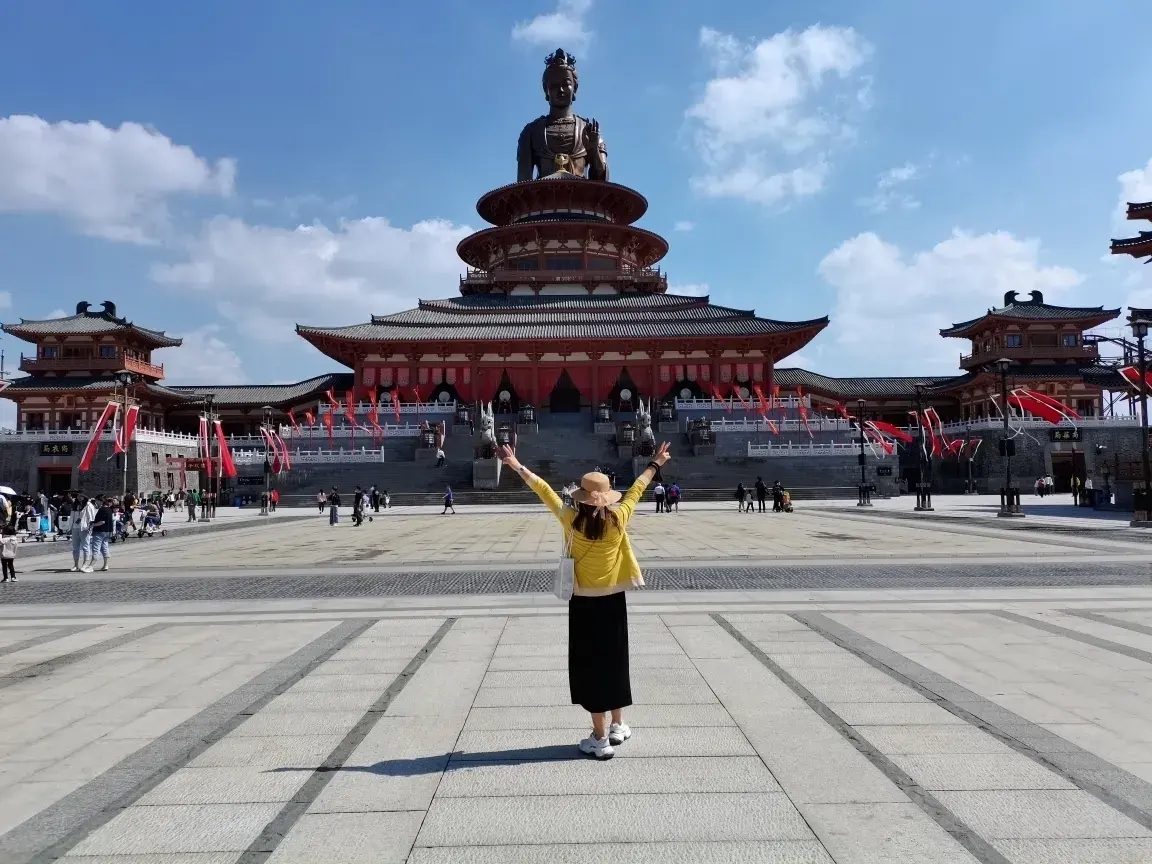
The Seven Sages of the Bamboo Forest in Zhuxi Valley is full of humanistic atmosphere and worth seeing. The firewood chicken at the Zhuxi Farmhouse is also delicious. I look forward to coming again next time.

Zhuxi Valley Scenic Area
user-avatar
132***58October 28, 2026
5.0
Qingmuchuan Ancient Town is known as "one foot in three provinces" and "a place where a rooster's crow can be heard in three provinces". The town has 260 existing ancient buildings, most of which are decorated with wood carving, brick carving, stone carving, and painting techniques. They are exquisitely crafted and have a strong local style.

Qingmuchuan Ancient Town

user-avatar
Anonymous userNovember 5, 2026
5.0
It looked thrilling, but there was absolutely no time to be afraid. We just focused intently on taking each step carefully, truly understanding the meaning of "one step at a time," because a single misstep could lead to an abyss. This is why Li Bai lamented in his poem "The Road to Shu is Hard," "Even monkeys and apes hesitate to climb!" Strangers encouraged each other, and even two girls with a fear of heights successfully completed the challenge. The most breathtaking scenery is found at the most dangerous peaks, and in their photos, their genuine smiles shine like the sun!

Jianmen Pass

user-avatar
M22***73November 5, 2026
5.0
"Having seen Huangshan, one need not see other mountains; having seen Jiuzhaigou, one need not see other waters!" Jiuzhaigou truly did not disappoint us! The water here, clear, green, and blue, is breathtaking, showcasing the beauty of nature! Besides the water, Jiuzhaigou's colorful forests also made us linger!

Jiuzhaigou National Park

user-avatar
LillianHNovember 5, 2026
5.0
I have been wanting to come here for a very long time. The place us very big! The pandas were amazing. The view from the bamboo tower was spectacular. If you cannot walk long distsnces or hills, I would reccomend using the little bus that takes you round (additional cost)

Chengdu Research Base of Giant Panda Breeding

user-avatar
M24***26March 29, 2022
5.0
Along the Yinping Ancient Road, there are Qingxi Ancient Town - Tangjiahe Rafting - Yinping Village, a model village for rural tourism in China - Tangjiahe National Nature Reserve, with beautiful scenery and pleasant climate...

Yinping Ancient Path

Trip Moments in Qingchuan

Popular cities near Qingchuan

Frequently asked questions

How can I contact Trip.com customer support?

Get help anytime, anywhere within 30 secondsContact customer support

Change and cancellation policies vary by attractions and tours. Please check the product details page for more information.

Ticket prices may vary between weekdays and weekends, as well as during peak and off-peak seasons. When booking with Trip.com, you can also use Trip Coins to get extra savings. For more tips on booking discounted tickets, please visit Trip.com for the latest information.