
Things to do in Lujiang
Explore top experiences
Top 10 attractions in Lujiang


Sanhe Ancient Town
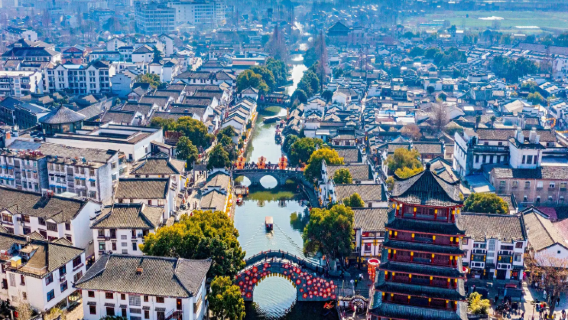
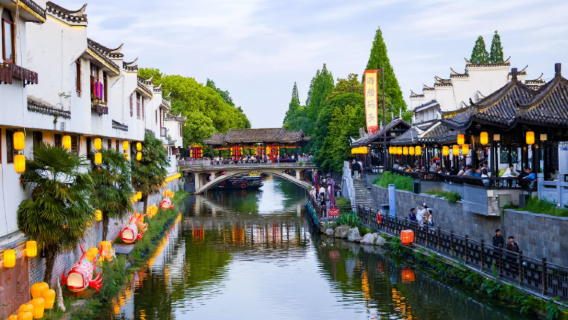
Sanhe Ancient Town is situated at the southern tip of Feixi County in Hefei, where the Fengle River, Hangbu River, and Xiaonan River converge. The town derives its name from these three waterways, with the name "Sanhe" appearing as early as the Ming Dynasty and officially becoming Sanhe Town during the Qing Dynasty. In 1858, Taiping Rebellion generals Chen Yucheng and Li Xiucheng achieved a decisive victory over the Xiang Army here, historically known as the "Great Victory of Sanhe." The triumphal arch at the town entrance, Yingwang Mansion, and ancient city walls still bear witness to this turbulent period. The old bluestone-paved streets stretch along the river, lined with contiguous Huizhou-style residences featuring gray brick walls and soaring horse-head gables, blending water-town alleys with Huizhou-style markets seamlessly. Most tours begin at Sanxian Bridge in the town center. To its northwest stands the seven-story Guocui Tower, offering panoramic views of the town and displaying Huizhou artifacts like sedan chairs, inscribed tablets, carved beds, and stone carvings. Nearby, the Dafu Mansion (Sanhe Folk Museum) recreates an official residence's hall with exquisite wood carvings, including an oversized abacus over one meter long. Northeast of the bridge, Xiangu Tower is a Huizhou-style temple funded by merchants including the owner of the time-honored pastry shop "Zhonghexiang." Heading north along the east bank of Xiaonan River leads to ancient West Street, paved with bluestones and once bustling with shops—Liutongxinglongzhuang still maintains its original commercial layout. South along the west bank brings you to Quezhu Covered Bridge, named after Sanhe's ancient moniker "Quezhu," featuring a two-tiered eaves corridor with "beauty's seat" railings perfect for resting and enjoying the waterfront. The southern area around Old South Street and Wannian Street clusters notable former residences, including those of physicist Chen-Ning Yang, general Sun Liren, and Helu. During the Anti-Japanese War, young Chen-Ning Yang sheltered here with his family. Nearby, the famous "One-Person Alley" narrows to barely accommodate a single visitor, making it a popular photo spot. Further south stand Wannian Temple, Chenghuang Temple, and the historic Wannian Stage—Sanhe being the birthplace of Lu Opera, whose authentic melodies often grace the stage during festivals. Local snacks concentrate near Sanxian Bridge: freshly fried Sanhe rice dumplings with crispy shells, shrimp paste, crispy duck, and various river delicacies represent regional cuisine, while tea-flavored dried tofu makes for perfect street-side nibbling. Rice wine and feather fans serve as portable souvenirs. In 2026, Sanhe became a key filming location for CCTV's Spring Festival Gala Hefei segment, with its night scenes of a thousand fish lanterns captivating nationwide audiences.Feixi · 28.8 km from Lujiang

Lu'nan Sichuan-Tibet Route
Lujiang · 33.3 km from downtown

Tomb of Zhou Yu
Zhou Yu's tomb is located in Lucheng Town, Lujiang County, Hefei City, Anhui Province. The tomb was built in the fifteenth year of Jian'an in the Eastern Han Dynasty (AD 210). The cemetery is about 5 mu, with a height of about 8 feet in the northern area. There are seals and no tables. The tomb is built on the ground. There is a wooden hexagonal "talking pavilion". After thousands of years, the tomb collapsed and the pavilion collapsed, and the stone fence was destroyed.Lujiang · 1.5 km from downtown

West Lake
West Lake is undoubtedly the epitome of Hangzhou's beauty. The famous "Ten scenes of West Lake" surround its shores, where nature and culture complement each other, forming the core area of Hangzhou tourism. You don't need to visit every attraction - instead, spend half a day or a full day strolling along the lake. However you choose to enjoy it, the experience will surely lift your spirits. West Lake is the core attraction of Hangzhou, surrounded by clouds and mountains on three sides and the city on one side. The Su Causeway and Bai Causeway stretch across the lake, dividing it into several water areas. The lakeside scenery is highlighted by the "Ten Scenes of West Lake" from the Southern Song Dynasty, along with the later "New Ten Scenes" and "Three Additional Scenes," featuring over a hundred attractions along the shore and mountains. Pavilions, temples, pagodas, gardens, causeways, and islands complement the distant mountains and nearby waters, while legends like the Broken Bridge where Lady White Snake met Xu Xian add a layer of storytelling to the landscape. West Lake extends east from Songmuchang in Hangzhou and the north of Baolu Road turning to Shaoniangong Square, passing Baisha Road, Huancheng West Road, Hubin Road, and Nanshan Road to the south of Wansong Ridge, covering all attractions including Wu Mountain, Ziyang Mountain, and Yunju Mountain. To the south, it stretches from Gulou along the eastern foothills of Wu Mountain, Ziyang Mountain, and Yunju Mountain, passing Fengshanmen and Fenghuangshan Road, then following the West Lake water diversion channel to the north bank of the Qiantang River, turning to the Coral Sand Reservoir and ending north of Liufangling. To the west, it runs from Liufangling, Zhugan Mountain, Jiuqu Ridge, and Mingren Ridge to Meiren Peak, Beigaofeng, Lingfeng Mountain, and east of the ridge line of Laohe Mountain. To the north, it follows the foothills of Laohe Mountain (west wall of Zhejiang University), turns 30 m north of Qingzhiwu Road, connects to Yugu Road, Zhejiang University Road, and Shuguang Road, ending south of Songmuchang. West Lake has over 100 attractions, renowned for its "Ten scenes of West Lake", "New ten scenes of West Lake" and "Three reviews · Ten scenes of West Lake". West Lake overview You can explore West Lake on foot, by cruise, on electric bikes, via self-drive, or by riding. Among these, electric bikes are the most convenient and effortless option, with hop-on-hop-off sightseeing vehicles circling the entire lake. Riding along the lakeshore is romantic and leisurely, with many public bike rental spots available. For a boat tour, there are nearly 10 docks around the lake offering various vessels and routes. We highly recommend taking a cruise to Three Pools Mirroring the Moon at the lake center while enjoying the scenic views. Alternatively, you can hail a hand-rowed boat for a more flexible experience with a boatman guiding your tour. North line scenery The north shore of West Lake gathers quite a few attractions, usually starting from the remnant snow on broken bridge at the northeast corner and heading west all the way to Yuewang Temple. You can walk along Bai Causeway to Solitary Hill, visiting cultural attractions like Xiling Seal Engravers' Society, Zhejiang Provincial Museum, Chinese Seal Art Museum, and Zhongshan Park's Crane Pavilion. Enjoy authentic West Lake vinegar fish at Louwailou Restaurant, then cross Xiling Bridge to leave the island - Yuewang Temple and Breeze-ruffled lotus at Quyuan Garden are just a short distance away. If it's a summer day with strong sunlight, it is recommended to stroll along Beishan road, hiding under the dense shade of trees to admire the curve of Broken bridge and the swaying weeping willows on Bai causeway opposite. There are many entrances along the way leading to Precious stone hill, where you can hike for views, and descend to reach Yuewang temple. Yuewang square has many small shops for snacks, and the Impression West Lake show here in the evening is also worth watching. If you have ample time and energy, you can also head to Su causeway from here for a walk to enjoy the panoramic view of West Lake. Southeast coast (Lakeside-Nanshan Road) Another area with a concentration of attractions is the Hubin Road-Nanshan Road along the southeastern coast. Hubin Road is located at the junction between Hangzhou's urban area and the attraction, offering views of West Lake, a dock for West Lake cruises, and the iconic music fountain. The advantage of Hubin Road is its quick access from the attraction to the downtown business district, making it suitable for travelers with a tight itinerary to make a short stop. Head south from Hubin road and walk along Nanshan road, where you can visit attractions like Orioles singing in the willows, Long bridge, Leifeng pagoda, Evening bell at Nanping hill, and Viewing fish at flower harbor. The distance between adjacent attractions is not far, so you can walk or take a sightseeing bus or public transport, which are also convenient. You can arrange a day to visit a few of them according to your preference. Among them, Leifeng pagoda and Evening bell at Nanping hill can be visited in the evening. Listening to the bell at Jingci temple and overlooking the night view of West lake from Leifeng pagoda are both great experiences.China · Hangzhou

Lingyin Feilai Peak Scenic Area
Lingyin Feilai Peak Scenic Area is located west of West Lake Scenic Area, including Lingyin Temple andFeilai peakTwo main views.Feilai peakNot large or tall, yet it gathers hundreds of statues of bodhisattvas and eminent monks from different dynasties, creating a beauty of fusion. The Lingyin Temple in the mountains is a famous ancient temple in Hangzhou, bustling with incense offerings. Lingyin Feilai Peak Scenic Area itself is not very large, and you can explore it on foot. After entering the main gate, turn left, and you'll see it in no time.Feilai peak, following the forest trail for less than 5 minutes, you'll see the entrance to Qinglin Cave. It's said that the stone slab in front of the cave was once the sleeping bed of Ji Gong, and lying on it is believed to free one from worldly troubles, attracting many travelers to take a rest here. Heading north, the Yuru Cave houses exquisite statues of the Eighteen Arhats from the Northern Song Dynasty, with additional finely crafted statues of the Six Patriarchs of Zen Buddhism on both sides of the cave's eastern entrance. The Longhong cave ahead is commonly known asGuanyin caveInside, there is a rock crevice known as "a thread of sky." Not everyone can see the light passing through the crevice, so you often see people craning their necks to look up. The cliff outside the cave is covered with stone carvings of Buddha statues. At the lower part, you can see the Song Dynasty carving of "the white horse carrying scriptures." The Ligong Pagoda at the entrance of Longhong Cave is the only remaining Ming Dynasty pagoda in Hangzhou. Following the Cold Spring Stream from here, you can also see the big-bellied Maitreya. Opposite the stone carvings stands the famous Lingyin Temple, which is open to the public free of charge but requires real-name reservation in advance, and is still well worth a visit. The statue of Skanda in the heavenly king hall is a relic from the Southern Song dynasty, carved from a single piece of camphor wood, making it extremely precious. The newly renovated Yongfu Temple in Hangzhou is located next to Lingyin Temple. Follow the signs uphill to reach it. Besides the serene ancient architecture, the temple grounds also feature a tea plantation and many ancient trees, offering quite a scenic view. Visitors must return the same way from Yongfu Temple. For those who wish to hike, there is a fork in the path halfway back to Lingyin Temple, leading to Taoguang Temple's exit and onward to Beigao Peak. This route is quiet with few people, making for a pleasant walk. Beigao Peak can be reached by hiking or taking a cable car. At the summit, the Temple of the First Wealth God under Heaven is one of Hangzhou's famous ancient temples.China · Hangzhou

Lingyin Temple
Lingyin Temple, also known as "Yunlin Temple," is located at the foot of Lingyin Mountain on the west side of West Lake. With its serene environment, it is the oldest renowned temple in Hangzhou, preserving numerous exquisite cultural relics from various dynasties. This is the place where Jigong became a monk, and it is said that prayers made here are very efficacious, attracting a continuous stream of worshippers every day. Seventeen hundred years of trials have made Lingyin Temple a treasure trove of history and culture: the plaque inscribed "Yunlin Chan Temple" hanging in the heavenly king hall was written by Emperor Kangxi of the Qing dynasty; the stone pagoda in front of the main hall and the stone sutra pillar in front of the heavenly king hall are relics from the Wuyue period of the Five Dynasties and Ten Kingdoms; the temple houses precious Buddhist artifacts such as ancient palm-leaf scriptures, a gilded statue from the Eastern Wei dynasty, a handwritten copy of the "Diamond Sutra" by Dong Qichang of the Ming dynasty, and the wooden dragon sutra from the Yongzheng era of the Qing dynasty. Lingyin Temple is also where the monk "Jigong" (Daoji) was ordained. In the Daoji Chan Master Hall of Lingyin Temple, a statue of Jigong is enshrined, holding a broken fan in his right hand, prayer beads in his left, and resting his right foot on a wine jar. Lingyin Temple is nestled against the Northern Peak and faces Feilai Peak. Though Feilai Peak is not tall, it features numerous fantastically shaped caves and over 340 Buddhist rock carvings dating back to the Five Dynasties period, making it a rare gem of ancient grotto art in southern China. The temple enjoys year-round bustling incense offerings, especially on the first and fifteenth days of the lunar month or major Buddhist festivals, when devotees flock from all directions, creating massive crowds.China · Hangzhou

Hubei Provincial Museum
The Hubei Museum is composed of three antique buildings, including a comprehensive exhibition hall, a Chu Culture Hall, and a bell museum. The layout reflects the ancient Chu architectural concept of "One Hall" and "Multiple Stations". The Hubei Museum boasts four treasures: the Zeng Houyi Chime Bells unearthed in the Tomb of Marquis Yi of Zeng; the exquisite workmanship of the cold weapon era, the King of Yue's Sword of Goujian, the 1 million year-old Xunxian Man Skull Fossil, and the White and Blue Porcelain Plum Vase.China · Wuhan

Qingchuan Pavilion
Qingchuan Pavilion is located on Hanyang's Tortoise Mountain and faces the Yangtze River, across the river from the Yellow Crane Tower. Qingchuan Pavilion was built in the Ming Dynasty and was named after the Tang Dynasty poet Cui Wei. The pavilion as it exists today was rebuilt in the 1980s according to historical photos. The scenic area consists of three main buildings: Qingchuan Pavilion, Wuhan Dayu's Palace, and Tiemenguan. There are also a number of other attractions such as various stone tablets and monuments, decorated archways, and cloisters, all rich in classical Chinese charm. It is very pleasant to climb up to the pavilion, feel the wind from the river, and enjoy the view of the river. The classical architecture and the greenery here complement each other perfectly, and the beautiful scenery has caused this to become a popular spot for wedding pictures in Wuhan.China · Wuhan

Anhui Museum (New Building)
The Anhui Provincial Museum (new building), located in Hefei, opened in 2011 and is the main museum area. The building itself is a highlight: its architectural design draws inspiration from the traditional Hui-style residences, featuring interconnected buildings with white walls and black tiles that enclose a central courtyard, covering an area of over 40,000 square meters. The museum houses over 200,000 artifacts, with Shang and Zhou bronzes, Han dynasty stone carvings, Song and Yuan dynasty gold and silver wares, the Four Treasures of the Study (writing brush, ink stick, inkstone, and paper), and Hui-style carvings being its most distinctive features. The permanent exhibition, "Anhui Civilization History Exhibition," traces the history from prehistoric jade artifacts of Lingjiatan to the Ming and Qing dynasties, with its popularity concentrated on several important bronze artifacts: the Zhuke Ding (also known as the Chu Ding), unearthed from the tomb of King You of Chu in Shouxian County, is astonishing in size, with a twelve-character inscription engraved on its rim, named after the first two characters "Zhuke" (铸客). The characters "Anbang" (安邦) are also cast on its front legs and underside. The Ejun Qijin Jie (鄂君启金节), a tax-free confirmation voucher for vehicle and ship transportation issued by the King of Chu, resembles a split bamboo section. The five round pillars of the Western Zhou cloud-patterned bronze five-column vessel stand equidistantly on a square base; their purpose remains undetermined, but their resemblance to a router often brings a knowing smile to visitors' faces. The special exhibitions are also worth spending time on. The "Ancient Architecture of Huizhou" exhibition hall showcases the beauty of Huizhou architecture through water features, ancestral halls, memorial archways, and wood, stone, and brick carvings. At its heart is the Feng Renjing Residence, a Qing Dynasty house relocated from Shexian County and rebuilt exactly as it was. With a central courtyard and a "回" (hui) shaped floor plan, visitors can walk into the courtyard and look up to see how the water from the four slopes flows into it. The "Four Treasures of the Study" exhibition brings together Xuan paper, Huizhou ink, Xuan brushes, and She inkstones. The "Treasures of Jianghuai" exhibition is small yet exquisite; a Southern Song Dynasty gold-rimmed agate bowl with a warm, translucent luster, and a Yuan Dynasty lacquer box with carved cloud patterns bearing an inscription on the bottom, demonstrate the exquisite craftsmanship even to those unfamiliar with antiques. The adjacent Anhui Provincial Geological Museum is a good option to visit on the same day. It is recommended to set aside half a day: first see the bronze artifacts in the "Anhui Civilization History Exhibition", and then visit the "Ancient Architecture of Huizhou", "Anhui Stationery", and "Treasures of Jianghuai" in that order; if time is limited, prioritize the first two exhibition halls. Don't just take photos at the entrance of Feng Renjing's residence; you can only truly appreciate it by walking into the courtyard.Hefei · 61.2 km from Lujiang

Jingdezhen China Ceramics Museum
The Jingdezhen Ceramics Museum is a large-scale ceramics special art museum. The contents of the exhibition are divided into “history department”, “new China department” and special exhibition hall. The Jingdezhen Ceramics Museum exhibits five generations of celadon, the Qing Dynasty white porcelain of the Song Dynasty, and the blue and white porcelain of the Ming Dynasty. Not only can you appreciate the fine porcelain, but you can also learn about porcelain. It is a good place for a relaxing holiday.China · Jingdezhen
Experiences you can't miss in Lujiang
Featured Cultural experiences in Lujiang
View all Cultural experiences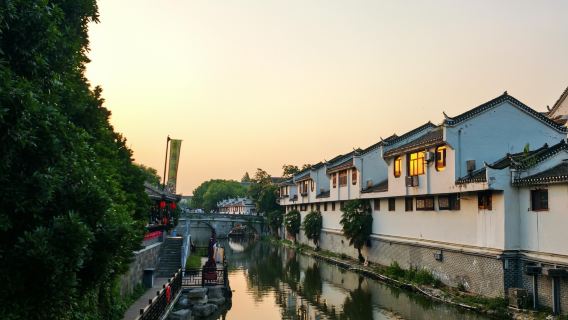
5% off
Limited-time sale
From€124.96€131.54
![[Hefei Guide] Urgent bookings welcome for in-depth live guide services in Hefei city area, including the Former Residence of Li Hongzhang, Lord Bao Park, Sanhe Ancient Town, and Mushan Island.](https://ak-d.tripcdn.com/images//0581512000n325ly0D02A_C_568_320.jpg?_fr=wc)
![[Hefei Guide] Urgent bookings welcome for in-depth live guide services at Hefei city attractions including Anhui Provincial Museum, Anhui Celebrity Hall, and Crossing the Yangtze River Memorial Hall.](https://ak-d.tripcdn.com/images/0351v12000ky8clty487D_C_568_320.jpg?_fr=wc)
From€196.97
From€226.85
From€211.73
Free things to do in Lujiang
Sanhe Ancient Town
Feixi · 28.8 km from LujiangLu'nan Sichuan-Tibet Route
Lujiang · 33.3 km from downtownTomb of Zhou Yu
Lujiang · 1.5 km from downtownWest Lake
China · HangzhouLingyin Feilai Peak Scenic Area
China · HangzhouLingyin Temple
China · HangzhouHubei Provincial Museum
China · WuhanImmediate access, Book now for today, Cancel anytimeQingchuan Pavilion
China · WuhanImmediate access, Book now for today, Cancel anytimeAnhui Museum (New Building)
Hefei · 61.2 km from LujiangJingdezhen China Ceramics Museum
China · Jingdezhen
What travelers say about Lujiang

爱旅行的溪姐October 7, 2026
5.0
Sanhe Ancient Town is a free ancient town near Hefei that's well worth visiting. With its charming canals, ancient streets, and alleys, it exudes a captivating atmosphere. You can stroll along the cobblestone paths, visit historical residences, and sample local delicacies such as rice dumplings, rice wine, and dried tea. It's not overly commercialized, making for a relaxed and enjoyable experience. Overall, it offers great value for money and is perfect for a short trip to experience the charm of a Jianghuai water town.
Sanhe Ancient Town

乐观小妮子July 15, 2025
5.0
At first I thought the Lu'nan Sichuan-Tibet Line was just another man-made attraction, but I was amazed when I went there on the weekend. The road was filled with lush greenery, blue sky and white clouds, and the scenery was so beautiful, with the fresh feeling of the empty mountains after the rain and the explosive colors of the clear sky after the rain.
Lu'nan Sichuan-Tibet Route

惊奇队长1May 22, 2020
4.0
Zhou Yu's Tomb is a major attraction in Lujiang County. It is open to the public free of charge. It has been looted and destroyed many times in history. The original ancient buildings were all destroyed in modern times. Except for the tomb, all other buildings are newly built in modern times. It does not cover a large area and has good greenery.
Tomb of Zhou Yu

Anonymous userOctober 14, 2026
5.0
My second visit to West Lake was great; the boat tour was excellent. The dock was easy to find, the staff were very friendly, provided clear explanations, and helped with any issues. There were also sightseeing buses, which were nice but a bit pricey. Taking the boat tour and then walking around was both perfectly fine.
West Lake
Anonymous userOctober 13, 2026
5.0
At the summit, there's just a rock and a flat area, nothing special. On the other side, there's a temple to the God of Wealth with 1399 steps. You need to be very sincere to reach the top. Below are various Buddhist halls and temples, as well as some stone carvings of Buddha statues. The scenery is pleasant, with mountains, water, and forests.
Lingyin Feilai Peak Scenic Area

TravellingTravellerAugust 15, 2026
5.0
This was during lunar 1st. Which attraction tons of crowds. Overall great place with museum relics shown apart from just the temple. Also the outer stone Buddha images was unique!
Lingyin Temple

沅大王September 30, 2026
5.0
The scenic area is filled with the fragrance of osmanthus blossoms. From the top, you can enjoy panoramic views of the Yangtze River Bridge and the Yellow Crane Tower. At the very top, watching the ships on the Yangtze and the cars and trains on the bridge, with the breeze blowing, is very pleasant, and it's not too crowded. The scenic area isn't large; a leisurely hour is about right to appreciate the scenery.
Qingchuan Pavilion and Guishan Scenic Area are directly connected by the Iron Gate Pass, which leads to the West Gate of Guishan. Climbing the mountain and enjoying the breeze and osmanthus fragrance is a wonderful experience.
Qingchuan Pavilion

娜娜家小公主September 13, 2026
5.0
The new Anhui Provincial Museum features a Hui-style "four waters returning to the hall" design, exuding grandeur and tranquility. Admission is free, but remember to make a reservation in advance. The exhibition halls unfold along a historical timeline, from the Lingjiatan Jade Pig and the Zhuke Ding (a large bronze vessel), to the Wu King Guangjian (a bronze mirror) and Hui-style brick carvings, each artifact connecting five thousand years of civilization in the Jianghuai region. The Chu Ding (a large bronze vessel) is particularly impressive. The guide, Liu Ruya, provides a patient and humorous explanation, enhancing the visit.
Anhui Museum (New Building)

Dina娜儿October 3, 2026
5.0
Taking kids to a museum definitely requires a guided tour! Luckily, we met a great guide – Ms. Yuan! Her explanations were very detailed, and we listened attentively. We bought many souvenirs. The chicken cup is a must-buy! The museum architecture is also stunning – highly recommended!
Jingdezhen China Ceramics Museum


