Chengdu Nightlife 2026: Night Markets, Bars & Sichuan Opera
Contents
- Chengdu Nightlife at a Glance
- Sichuan Opera and Face-Changing Shows
- Shufeng Yayun Teahouse in Chengdu Culture Park
- What the 90-Minute Show Includes
- Tickets, Seating and Show Times
- Getting There and Booking Tips
- Jinli Ancient Street at Night
- When the Lanterns Come On
- What to Eat on the Snack Lanes
- The Opera Stage and Craft Shops
- Getting There and Timing Your Visit
- Kuanzhai Alley After Dark
- The Three Lanes Explained
- Evening Tea, Snacks and Courtyard Bars
- Best Time and Metro
- Jiuyanqiao Bar Street and Anshun Bridge
- Anshun Bridge: The Photo Everyone Wants
- Which Bars Suit Which Kind of Night
- Jinjiang River Night Cruise
- Getting There
- Yulin Road: Where Locals Drink
- Little Bar and the Song That Made Yulin Famous
- Cocktail Bars and Late-Night Eats
- Getting There and Etiquette
- Night Markets and Late-Night Food
- Fuqin Night Market
- Chuanchuan, Hot Pot and Rabbit Head After Midnight
- What to Order
- Tea Houses After Sunset
- Heming Teahouse in People's Park
- The Long-Spout Pour and Ear Cleaning Ritual
- Taikoo Li and Chunxi Road at Night
- Rooftop Bars and Late Shopping
- Daci Temple at Dusk
- Getting Around Chengdu at Night
- Metro Last Trains
- Taxis, Ride-Hailing and Payments
- Safety and Etiquette
- Where to Stay for Chengdu Nightlife
- More Chengdu and China Travel Guides
Show more
Chengdu is a daytime city of teahouses and a nighttime city of lanterns, stages, riverside bars and steam. The moment the sky turns blue, Jinli lights up, opera houses start their face-changing routines, and the bar streets along the Jin River fill with people who have no intention of going home early. This guide covers where to go after dark in Chengdu: the Sichuan opera shows worth booking, the old streets that look best after 7 pm, the bar districts locals actually use, and the late-night food that keeps the city going until 4 am.
Chengdu's night scene is compact. Most of the places below sit within a 15 to 25 minute taxi ride of each other, so a good evening usually combines two areas rather than staying in one. Here is how they compare.
| Area | Best for | Peak time | Metro | Typical spend |
| Jinli Ancient Street | Lanterns, snacks, first-night atmosphere | 18:30 - 21:30 | Line 10, Wuhou Shrine | CNY 50 - 100 |
| Kuanzhai Alley | Courtyard tea, snacks, slow strolling | 18:00 - 21:00 | Line 4, Kuanzhai Alley | CNY 60 - 150 |
| Jiuyanqiao and Anshun Bridge | River views, live music bars, night cruise | 20:00 - 23:30 | Line 13, Jiuyanqiao | CNY 100 - 250 |
| Yulin Road | Cocktails, small local bars, late eats | 21:00 - 01:00 | Line 1, Tongzilin | CNY 80 - 200 |
| Taikoo Li and Chunxi Road | Shopping, rooftop bars, people-watching | 19:00 - 22:30 | Line 2 or 3, Chunxi Road | CNY 100 - 300 |
Two practical notes before you plan. First, the metro is fast and cheap but most lines stop running between about 23:00 and 23:30, so decide early whether you are ending the night near a station or taking a taxi. Second, every major site now accepts Alipay and WeChat Pay, but a physical passport is still required for opera tickets and some hotel check-ins. Chengdu is a big city, so read our guide to free things to do in Chengdu for the daytime side of the trip.
Sichuan opera (chuanju) is more than 300 years old, and its signature trick, bian lian or face-changing, is the reason most visitors book a ticket. Performers switch painted masks in a fraction of a second with no visible hand movement, a technique still guarded by the troupes. The good news is that you do not need to understand Chinese to enjoy it: the shows are built as a variety programme of acrobatics, comedy, puppetry and music rather than one long narrative.
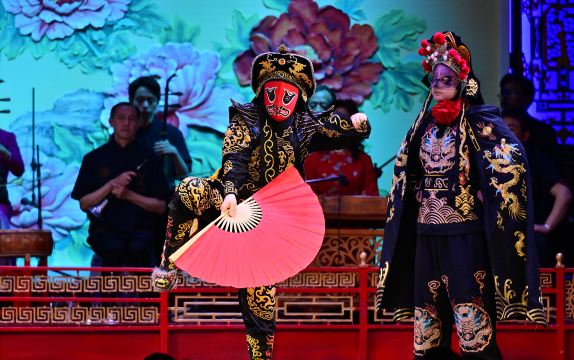
Shufeng Yayun is the most foreigner-friendly venue in the city and the one most visitors end up at. It sits inside Chengdu Culture Park at 73 Qintai Road, next to Qingyang Palace, in a courtyard building styled after old West Shu architecture. You sit at tea tables rather than cinema seats, with a gaiwan of tea and a bowl of sunflower seeds included, and the stage is close enough that you can see the masks change.
The show runs about 90 minutes without an interval. Doors usually open well before curtain, and arriving 30 minutes early lets you watch the performers put on make-up and settle in with tea instead of rushing to your seat.
The programme rotates, but the standard line-up covers face-changing, fire-spitting, hand puppetry, shadow play, rolling-light acrobatics (performers balancing oil lamps on their heads), folk music and short comic pieces. Because each act is self-contained, the evening works even if you arrive knowing nothing about Chinese theatre. The face-changing finale is almost always last, which is worth knowing if you are tempted to leave early to beat the crowd.
Tickets are sold by seat class, and the price difference buys proximity rather than a different show. Book online in advance during weekends, holidays and the autumn high season; walk-up seats are often gone by early evening.
| Seat class | Indicative price | Where you sit | What is included |
| VIP | From around CNY 300 | Front centre tables | Tea and seeds, plus a shoulder massage or a simple costume try-on before the show |
| First class (Jia) | From around CNY 250 | Rows directly behind VIP | Tea and seeds; extras depend on the booking option |
| Second class (Yi) | From around CNY 200 | Middle section, slightly raised | Tea and seeds; good value for the view |
| Third class (Bing) | From around CNY 150 | Back rows | Tea and seeds; the cheapest way to see the full show |
Shows usually start at 20:00 and finish around 21:30. In peak periods an earlier sitting at about 18:00 is added, and during the busiest weeks a 16:00 matinee may appear. Always confirm the exact time on your ticket, because the schedule changes with demand. Children under 1.3 m usually enter free but sit on a parent's lap.
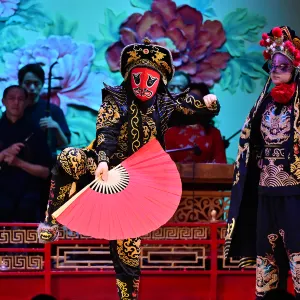
 I absolutely love the show and the seat given, which gave me the opportunity to take these beautiful pictures.
Take Metro Line 2 to Tonghuimen station, leave by Exit A, and walk 5 to 10 minutes into the Culture Park. A taxi from Chunxi Road or Taikoo Li takes around 15 minutes outside rush hour. Bring your passport, since tickets are nominative and checked at the door, and book one to two days ahead if you want VIP or first class on a Friday or Saturday. If you are combining the show with dinner, eat early: the 20:00 sitting ends too late for most sit-down restaurants.
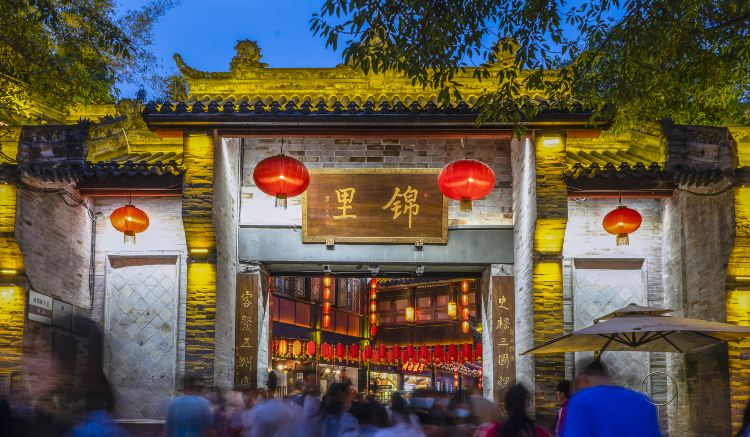
Jinli is a 550 metre lane of grey brick, timber shopfronts and red lanterns built in Qing style beside Wuhou Shrine. It is free to enter, unashamedly commercial, and at its best after dark, when the lanterns come on and the snack stalls switch into evening mode. Treat it as atmosphere and food rather than history: the real Three Kingdoms story is next door in the shrine museum.
The street is accessible from 08:00 to 22:30, and most shops trade from 09:00 to 22:00. The lanterns are switched on at about 19:00 in summer and 18:00 in winter, with weather and daily operations able to shift the timing. The best window is the 20 minutes before lighting-up, when the sky still holds colour and the crowd has not yet peaked. Weekday evenings after 20:30 are noticeably calmer than Saturday nights.
Jinli is a tasting menu of Sichuan street food rather than a dinner destination. Look for san da pao (three-cannon rice balls), bobo chicken skewers in chilli oil, rabbit head for the adventurous, tang you guo zi (fried glutinous rice cakes) and Zhang Fei beef. Portions are small and most stalls price between CNY 10 and 30, so graze across four or five stalls instead of committing to one.
Teahouses along the lane run short face-changing and shadow-puppet sets through the evening, and the open-air stage near the centre often has free performances during festivals. Between shows, the craft shops sell sugar painting, Shu brocade, paper cutting and clay figurines, and several artisans work in the doorway so you can watch before buying.
The closest metro is Line 10 to Wuhou Shrine (Jinli) station, Exit A2, which puts you at the entrance. Lines 3 and 5 to Gaoshengqiao also work, with a 10 minute walk. Wuhou Shrine closes earlier than the street, so visit the museum first in late afternoon and finish with Jinli as the lights come on. Allow 60 to 90 minutes for the street alone.

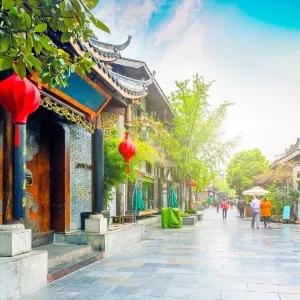
Kuanzhai Alley is the quieter, more curated counterpart to Jinli: three restored Qing era lanes in the old Manchu quarter, now filled with courtyard teahouses, snack shops, craft stores and a handful of low-key bars. It is free, flatter and less frenetic, which makes it a good early-evening stop before a later bar district.
Kuan Xiang (Wide Lane) has the largest courtyards and the most polished restaurants. Zhai Xiang (Narrow Lane) is the busiest for snacks and small shops. Jing Xiang (Well Lane) is the calmest, with residential walls, a few galleries and the old well that gives it its name. Most visitors walk Wide to Narrow and finish in Well Lane, which is also the easiest direction to exit toward People's Park.
Sit down for a gaiwan of jasmine tea in a courtyard, order a few small plates, and let the evening slow down. Snack stalls sell rabbit head, chilli oil dumplings, sweet rice cakes and skewers at CNY 10 to 30. After 20:00 the bars in the side courtyards pick up, mostly craft beer, wine and simple cocktails rather than loud music. For a more local tea experience, Heming Teahouse in People's Park is a 15 minute walk away.
Shops generally open from 10:00 and close around 22:00, with restaurants running later. Arrive between 18:00 and 19:00 to see the lanes in blue hour before the dinner crowd. Metro Line 4 stops at Kuanzhai Alley station, a short walk from the entrances; Line 2 to People's Park, Exit D, is about 8 minutes on foot if you are combining the two.

Jiuyanqiao is the postcard version of Chengdu nightlife: a riverside strip of bars and live-music rooms on the Jin River, anchored by the illuminated Anshun Covered Bridge. It is touristy, uneven in quality and still worth an evening, because nowhere else in the city gives you this combination of traditional architecture, river reflections and a drink in hand.
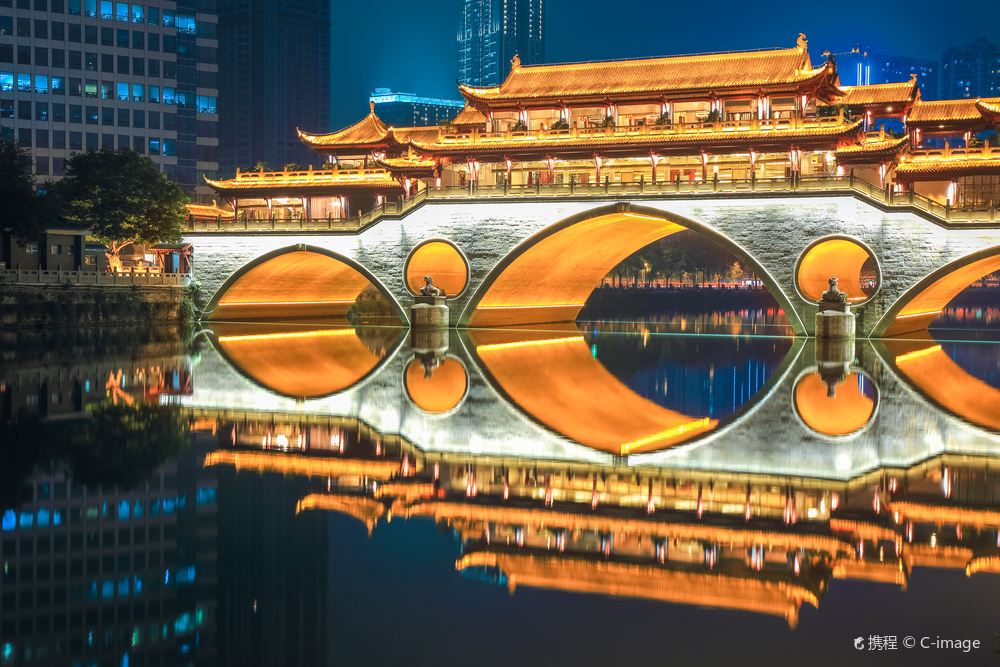
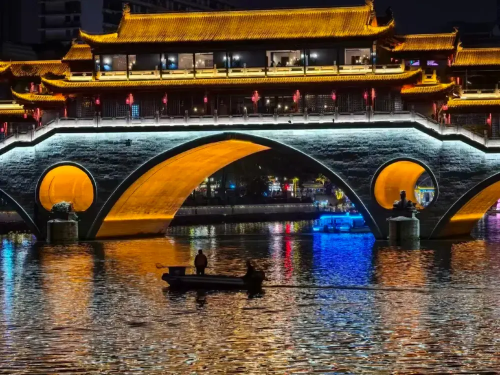
Anshun Bridge is an 81 metre, three-arch covered bridge rebuilt in Ming and Qing style, with carved railings and a covered walkway above the road deck. It is usually illuminated after dark, with the strongest viewing period roughly 19:00 to 22:30, though the schedule can change seasonally. The classic shot is from the opposite bank, where the bridge and its reflection form a full circle. Hejiang Pavilion, at the confluence of the Fu and Nan rivers, is the other reliable night viewpoint, and the decorated zebra crossing nearby is a popular photo stop.
Riverside terraces are best for folk music and conversation, with drinks around CNY 30 to 60. The live houses behind the strip lean toward rock and indie and get loud after 21:00. Craft beer bars sit in the side lanes, and the larger clubs toward the 339 TV Tower charge CNY 80 to 150 per person once you factor in table minimums. If you only have one night, walk the strip once, pick a terrace with a river view, then cross the bridge for photos.
The 45 minute Jinjiang night cruise leaves from Dongmen Wharf, passes nine bridges and runs through the lit-up bar street, which is a much better use of an hour than another round of drinks if you are travelling with family. Tickets are around CNY 98 per person and departures cluster in the evening.
Metro Line 13 stops at Jiuyanqiao station, Exit C, about 350 metres from the bar street. Bars generally open around 18:00 and close between 02:00 and 04:00, with live music starting around 20:30 to 21:00. Coming from Taikoo Li, a taxi takes about 15 minutes.

Yulin is a residential neighbourhood south of the centre that became Chengdu's bar district the old-fashioned way: small bars opened in converted ground floors, students and musicians moved in, and the streets stayed low-rise and walkable. It is where locals go when they want a drink rather than a show.
Little Bar (Xiaojiuguan) on Yulin West Road is the area's cultural landmark, a scruffy live-music room that has hosted Chengdu bands for decades. It became a pilgrimage site after Zhao Lei's song "Chengdu" name-checked the street, and the wall outside is now covered in handwritten notes from visitors. Check the schedule before you go: some nights are ticketed shows, others are quiet.
The cocktail bars around Yulin West Road and the neighbouring lanes charge roughly CNY 40 to 120 per drink and hit their stride from 21:00 to 01:00. They are small, often seat 15 people, and reward walking rather than planning. Late-night food is part of the deal: chuanchuan skewer shops, noodle stalls and barbecue joints stay open well past midnight, and the smell of chilli and cumin follows you down the street.
Take Metro Line 1 to Tongzilin station and walk north, or simply take a taxi from Taikoo Li (about 15 minutes). Bars here are casual, tipping is not expected, and most accept Alipay or WeChat Pay rather than foreign cards. If a venue looks like a house with a small sign, that is normal; ring the bell or push the door.
Chengdu eats late. Night markets and skewer streets run past midnight, hot pot chains stay open around the clock, and the city's signature snack, chuanchuan, is at its best after 22:00 when the office crowd has gone home. If you want a dish-by-dish plan, our Chengdu Sichuan cuisine guide covers the ten dishes worth ordering and where to eat them.
Fuqin Night Market in the Fuqin neighbourhood is the local answer to the tourist-oriented food streets: a dense run of stalls selling grilled skewers, fried rice cakes, cold noodles and Sichuan pickles at CNY 10 to 30 a portion. It is busiest from 19:00 to midnight and is best reached by taxi or ride-hailing app rather than metro.
Chuanchuan is the late-night default: skewers of beef, tripe, quail eggs, lotus root and greens cooked in a communal pot and charged by the stick. Hot pot restaurants, including the big chains, often stay open until 02:00 or later, and some branches run 24 hours. Rabbit head is the local dare, roasted or braised with chilli and eaten by hand; it tastes like rich, spicy chicken and is worth trying at least once.
| Dish | What it is | Typical price |
| Chuanchuan | Skewers cooked in a chilli broth, charged per stick | CNY 0.5 - 2 per stick |
| Bobo chicken | Cold skewers dressed in chilli oil and sesame | CNY 1 - 3 per skewer |
| Rabbit head | Braised or roasted with chilli and Sichuan pepper | CNY 15 - 30 each |
| Dan dan noodles | Dry noodles with minced pork, sesame and chilli oil | CNY 10 - 18 a bowl |
| San da pao | Glutinous rice balls rolled in soybean flour and sugar | CNY 8 - 15 a portion |
Chengdu's teahouse culture is usually sold as an afternoon activity, but the best ones stay open into the early evening and are a gentle way to start a night out rather than end it. Our Chengdu tea houses guide covers eight of them, from lakeside classics to courtyard rooms.
Heming Teahouse has operated inside People's Park since 1923 and remains the city's most famous tea room: hundreds of bamboo chairs under trees along the lake, long-spouted copper kettles moving between tables, and a tea menu that runs from jasmine at around CNY 18 to Mengding yellow tea at around CNY 50, with unlimited hot-water refills. It is at 12 Shaocheng Road, a few minutes from Metro Line 2 People's Park station. Hours are usually reported as morning to around 18:00, though some visitors find it open later in summer, so treat it as an early-evening stop. Free Sichuan opera snippets are sometimes staged on Saturday afternoons.
Two rituals define a Chengdu teahouse visit. The first is the long-spout pour: servers carry brass kettles with metre-long spouts and top up your gaiwan from a distance without spilling. The second is ear cleaning, offered by roving practitioners with metal picks, feathers and a tuning fork for about CNY 30 to 50 and 10 to 15 minutes. Agree the price first, check that the tools look clean, and treat it as optional.
Taikoo Li is an open-air shopping district wrapped around the 1,600 year old Daci Temple, with luxury stores, bookshops and restaurants in low-rise grey-brick buildings. Shops generally close at 22:00, but the bars and restaurants above them run later, and the rooftops facing the temple are the best place in the city for a skyline drink. Chunxi Road next door is brighter, louder and better for people-watching than for shopping.
The temple inside Taikoo Li is free to enter and stays open into the early evening. Arriving around 17:30 gives you quiet courtyards and incense smoke with the shopping crowd still at dinner, then you can walk straight out into the lit-up streets. Metro Line 2 or 3 to Chunxi Road station puts you at the edge of both districts.

The metro is the fastest way between districts before 23:00. After that, plan on taxis. Times below are typical rather than guaranteed, so check the station board on the night.
| Station | Line | Connects to | Last train (approx.) |
| Chunxi Road | Line 2 and Line 3 | Taikoo Li, People's Park, Chengdu East | 23:00 - 23:30 |
| Jiuyanqiao | Line 13 | Jiuyanqiao bar street, Anshun Bridge | 23:00 - 23:20 |
| Kuanzhai Alley | Line 4 | Kuanzhai Alley, Chengdu West | 23:00 - 23:20 |
| Wuhou Shrine | Line 10 | Jinli, Wuhou Shrine | 23:00 - 23:10 |
Taxis are metered and easy to flag on main roads; ride-hailing through Alipay or WeChat works well and avoids language problems because the destination is entered in the app. Set up Alipay or WeChat Pay before you arrive, since many bars and stalls no longer handle cash efficiently, and keep a little cash for small vendors. Tipping is not expected anywhere in Chengdu.
Chengdu is a safe city at night, and the main risks are traffic, pickpockets in crowded lanes and overestimating how much chilli you can handle. Keep an eye on your phone in the busiest parts of Jinli and Jiuyanqiao, agree prices before add-on services such as ear cleaning, and remember that many bars close abruptly rather than gradually, so decide on your last stop before 01:00.
Staying near Chunxi Road or Taikoo Li puts you within walking distance of dinner, bars and the metro, with Jinli and Jiuyanqiao a short taxi away. These three hotels cover different budgets and both sides of the river.
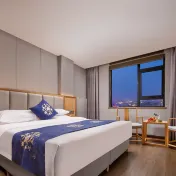
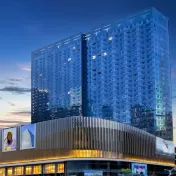
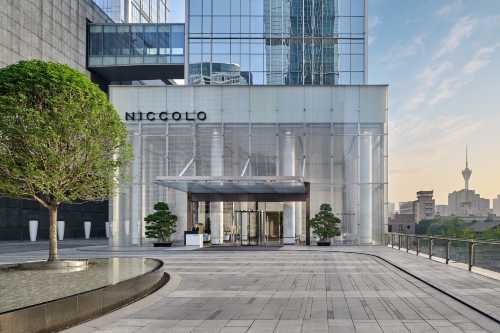
Niccolo Chengdu sits directly above the IFS mall at Chunxi Road, which makes it the most convenient base for Taikoo Li, rooftop bars and late-night shopping. Rooms are large, the pool is indoor, and you can be back in your room ten minutes after your last drink.
Niccolo Chengdu

 No. 3 of Luxury Hotels in Chengdu
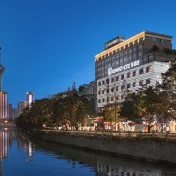
Shangri-La Chengdu is on Binjiang East Road, a short walk from Jiuyanqiao and the Anshun Bridge, with river-view rooms that look straight at the lights. It suits travellers who want the bar street on their doorstep and a quieter street to return to.
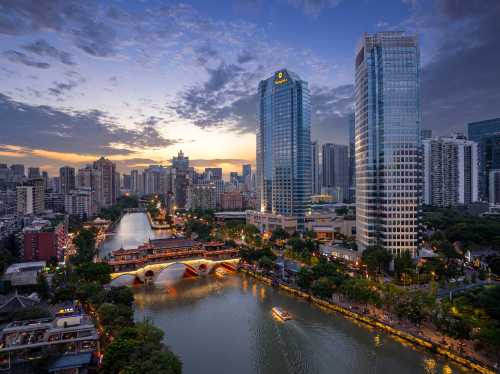
Shangri-La Hotel Chengdu
No. 1 of Gourmet Hotels in ChengduThe Ritz-Carlton Chengdu is on Shuncheng Street near Tianfu Square, central for the metro and a 15 minute walk from Kuanzhai Alley. It is the most polished of the three, with a spa and a high-floor lounge that works well for a slow start to the evening.
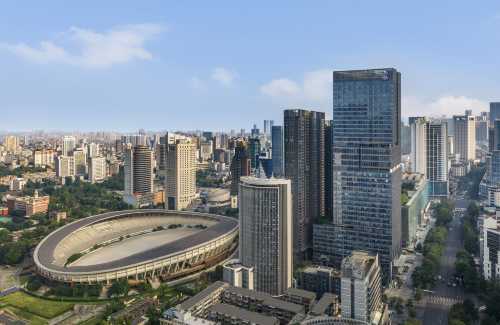
The Ritz-Carlton Chengdu
No. 6 of Luxury Hotels in ChengduIf you are building a longer trip around the city, these guides cover the practical side and the food:
Popular recommendations

Panda Zoos in China 2026: Chengdu, Wolong & 12 More Parks
 OneVoyager

Chengdu Airports Guide 2026: Terminal Map,Metro,Transfer & Tianfu (TFU) vs Shuangliu (CTU)
OneVoyager
2-Week China Itinerary: Beijing, Xi'an, Chengdu, Guilin & Shanghai
OneVoyager
Latest Trip.com Promo Codes, Flight Discounts & Hotel Savings (Weekly Update)
 Trip.com Official