Chongqing to Chengdu Train 2026: Times, Fares & Tickets

Contents
- Chongqing to Chengdu Train at a Glance
- How Long Is the Train from Chongqing to Chengdu?
- G Trains: 1 Hour to 1 Hour 45 Minutes
- D Trains: 1.5 to 2.5 Hours, and Much Cheaper
- What Slows a Train Down
- Chongqing to Chengdu Train Schedule
- Morning Departures
- Afternoon Departures
- Evening Departures
- Chongqing to Chengdu Train Ticket Prices
- Which Station Should You Use?
- Chongqing North Railway Station
- Chongqing West Railway Station
- Chongqing East and Shapingba
- Chengdu East Railway Station
- Chengdu South and Chengdu West
- How to Book Chongqing to Chengdu Train Tickets
- Booking on Trip.com
- Booking on 12306
- Buying at the Station
- Boarding with a Passport
- What to Bring
- Security and Boarding Time
- Luggage and Seat Etiquette
- What to See in Chengdu After You Arrive
- Chengdu Research Base of Giant Panda Breeding
- Dujiangyan Irrigation System
- Mount Qingcheng
- Du Fu Thatched Cottage
- Wuhou Shrine
- Where to Stay in Chengdu
- Chunxi Road and Taikoo Li
- Tianfu Square and the City Center
- Wenshu Monastery Area
- One Day in Chengdu After the Train
- Morning: Pandas and Tea
- Afternoon: Wuhou Shrine and Jinli
- Evening: Hot Pot and Kuanzhai Alley
- Practical Tips Before You Go
- Best Time to Travel
- Peak Dates to Avoid
- Apps and Payment
- More China Travel Guides
Show more
Chongqing and Chengdu sit about 265 km apart on the Sichuan Basin, and the high-speed line between them is one of the busiest intercity routes in China. Around 160 trains run every day, the fastest covering the distance in 1 hour 2 minutes, and second-class seats start at roughly ¥85 on the slower D trains.
This guide lays out the whole trip: which stations to use, sample timetables, what each seat class costs, how to book with a passport, and how to use your first afternoon in Chengdu.
The route is short enough that most travelers treat it as a morning hop rather than a real journey. These are the numbers worth knowing before you book.
| Detail | Chongqing to Chengdu high-speed train |
| Fastest journey | 1 hour 2 minutes (G8612, Shapingba to Chengdu East) |
| Typical journey | 1h 15m to 1h 45m on G trains, 1h 30m to 2h 30m on D trains |
| Distance | About 265 km |
| Trains per day | Around 160 in each direction |
| First and last departure | 05:11 and 21:52, with a few overnight D trains after that |
| Chongqing stations | Chongqing North, Chongqing West, Chongqing East, Shapingba |
| Chengdu stations | Chengdu East, Chengdu South, Chengdu West |
| Second class | ¥85 to ¥217 |
| First class | ¥135 to ¥347 |
| Business class | ¥465 to ¥758 |
| Tickets on sale | 15 days before departure |
Nearly every fast service runs between Chongqing West or Chongqing North and Chengdu East. If you are staying near Chunxi Road or Tianfu Square, Chengdu East is the arrival station you want, because Metro Line 2 takes you straight into the center.
Journey time depends far more on the train letter than on the distance. G trains are the fast expresses, D trains are slower but substantially cheaper, and both use the same tracks for most of the way.
G trains are the default choice. The quickest departures from Shapingba and Chongqing West reach Chengdu East in 1 hour 2 minutes to 1 hour 15 minutes, with only one or two intermediate stops. Mid-morning and late-afternoon departures usually run 1 hour 30 minutes to 1 hour 45 minutes because they call at more stations along the line.
D trains share the corridor but stop more often, so the same trip takes 1 hour 30 minutes to 2 hours 30 minutes. In exchange, second class can drop to ¥85 to ¥123, which makes them popular with students and commuters. If you are not in a hurry, the savings easily cover a meal in Chengdu. Traveling further east afterwards? Our Chongqing to Zhangjiajie train guide covers the next leg.
Three things add time: extra stops at stations such as Yongchuan East, Neijiang North, Ziyang North and Jianyang South; departure from Chongqing North rather than Chongqing West, which adds a loop around the city; and peak-hour departure slots, when trains wait outside Chengdu East for a platform.
Timetables are rewritten twice a year and around public holidays, so treat the table below as a pattern rather than a fixed list. Always confirm the exact train number and time on the day you book.
| Train | Departs | Arrives | Duration | Type |
| G8690 | 05:53 Chongqing North | 07:16 Chengdu East | 1h 23m | G |
| G1836 | 08:02 Chongqing West | 09:26 Chengdu East | 1h 24m | G |
| G1888 | 09:58 Chongqing West | 11:41 Chengdu East | 1h 43m | G |
| G8612 | 10:30 Shapingba | 11:32 Chengdu East | 1h 02m | G |
| G8618 | 12:05 Shapingba | 13:07 Chengdu East | 1h 02m | G |
| G8506 | 12:10 Shapingba | 13:43 Chengdu South | 1h 33m | G |
| G3432 | 15:29 Chongqing West | 17:05 Chengdu East | 1h 36m | G |
| G8694 | 19:59 Chongqing North | 21:30 Chengdu East | 1h 31m | G |
| D2223 | 19:47 Chongqing North | 22:03 Chengdu East | 2h 16m | D |
| G3712 | 20:49 Chongqing West | 22:12 Chengdu East | 1h 23m | G |
Trains leave from about 05:11 and run every 10 to 20 minutes until noon. Early departures are the quietest and the most reliable, and they put you in Chengdu before lunch. If you plan to visit the pandas the same day, aim for a train that lands by 09:00.
The 12:00 to 17:00 block is the busiest. Friday and Sunday afternoons sell out first, especially the 1-hour expresses from Shapingba. Booking a few days ahead is enough outside holidays, but not on the day itself.
The last fast train leaves around 21:52, with a handful of D trains running later. Arriving after 22:00 means relying on a taxi or DiDi from Chengdu East, because the metro winds down around 23:00.

China Railway sets fixed fares per train, so there is no dynamic pricing and no advantage in booking later — the only reason to book early is availability. Fares differ between G and D trains and between seat classes.
| Seat class | D trains | G trains | What you get |
| Second class | ¥85 to ¥123 | ¥149 to ¥217 | Five seats per row, 3+2 layout, reclining backrest, power socket |
| First class | ¥135 to ¥197 | ¥239 to ¥347 | Four seats per row, 2+2 layout, wider seat, more legroom |
| Business class | Not offered | ¥465 to ¥758 | Shell-style pod seat, 2+1 layout, meal service on some trains |
| Standing | Same as second class | Same as second class | Sold only when seats are gone, not worth it on this route |
Children under 1.2 m travel free without a seat, and children between 1.2 m and 1.5 m pay half. Foreign passports are booked at the same fare as Chinese ID cards, and Trip.com shows the final price including its service fee before you pay.
For a 1-hour trip, second class is perfectly comfortable and most travelers never bother upgrading. Business class only makes sense if you are connecting straight to a long-haul flight from Chengdu Tianfu or Shuangliu — see our Chengdu airports guide for the transfer timing.
Chongqing has four stations on this corridor and Chengdu has three, so the station pair matters more than the train number. A cheap ticket on the wrong side of town can cost you an hour in traffic.
Chongqing North sits in Yubei District, on Metro Line 3 and Line 10, about 25 minutes from Jiefangbei by metro. It handles a mix of G and D trains to Chengdu East and is the most convenient option if you are staying downtown or near Jiangbei Airport.
Chongqing West is the largest station in the city and the main departure point for the fastest G trains. It is served by Metro Line 5 and the Loop Line, but it sits further out, so allow 40 minutes from Jiefangbei.
Chongqing East, opened as part of the newer high-speed corridor, now handles a share of the Chengdu services. Shapingba is the most central of the four and has the quickest expresses, which makes it a favorite for day trippers.
Chengdu East is where almost every Chongqing train arrives. Metro Line 2 runs under the station and Line 7 circles the city from there, so Tianfu Square is about 20 minutes away and Chunxi Road about 25.
A few services terminate at Chengdu South, useful for the southern business district and the airport line, while Chengdu West mainly serves conventional and regional trains. Check the arrival station before you book a hotel.
Foreign travelers have three practical options. All of them need the exact name and passport number of every passenger, and all of them issue an e-ticket tied to that passport.
Enter Chongqing as the departure city and Chengdu as the destination, pick a date, and the planner lists every train with live seat availability. Choose your class, add passenger details exactly as printed in the passport, and pay. The confirmation arrives within minutes, and the ticket sits in your Trip.com account. Booking opens 15 days before departure, and the fastest morning trains go first.
The official China Railway site and app are cheaper because no service fee applies, but the English interface is limited and foreign cards are sometimes rejected. It is a reasonable fallback if you already have a verified 12306 account.
Ticket windows accept passports, and the staff will usually help with the train choice. Avoid this route around holidays: queues are long and the cheap seats are gone by mid-morning. Self-service machines generally need a Chinese ID card, so foreigners end up in the staffed queue.
Since the switch to full e-ticketing, there is no paper ticket to collect. Your passport is the ticket, and the gate reads it directly.
Bring the passport you booked with. A photo or a copy will not open the gate, and station staff cannot look up a booking without the original document. If you changed passports after booking, the ticket must be reissued at a window before departure.
Arrive 45 to 60 minutes before departure. The station sequence is security check, ticket gate, waiting hall, then platform gate, which closes 5 minutes before departure. Chongqing West and Chengdu East are large, and the walk from security to the correct waiting area can take 10 minutes on its own.
There is no weight limit on high-speed trains. Bags go on the rack above your seat or in the rack at the end of the carriage; large suitcases fit in the space behind the last row. Seats are numbered by carriage and letter, and the platform screen tells you where your carriage stops.
Chengdu rewards a slow first afternoon. The city center is compact, the metro is cheap, and most of the headline sights are within 30 minutes of Chengdu East.
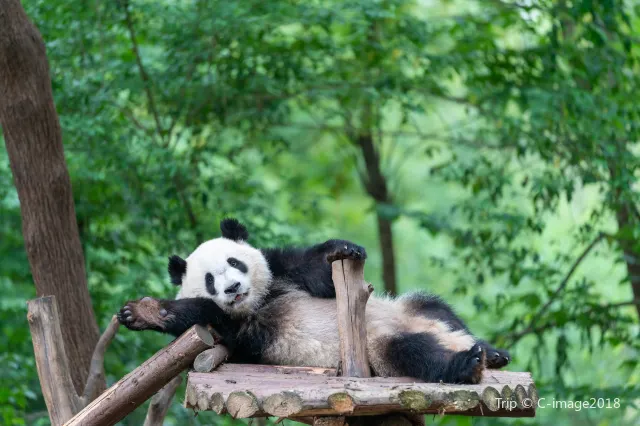
The panda base is the reason many travelers make this trip. Tickets cost ¥55 for adults and ¥27 for students, and entry is by timed real-name reservation made online up to 14 days ahead — there are no ticket windows on site. From March to October the gates open at 07:30, and from November to February at 08:00. Pandas are most active before 10:30, so take an early train if this is your priority.
Metro Line 3 to Panda Avenue plus the 408 shuttle is the cheapest way in, or a taxi from Chunxi Road takes about 25 minutes. Read our panda parks in China guide if you want to compare the base with Wolong and Dujiangyan.

 No need buying tickets at counter, scan our passport can enter south or west gate, bought the transfer bus, very easy to get up, scanning the password or scan QR from trip com app.
Dujiangyan is the 2,200-year-old water project that turned the Chengdu plain into farmland, and it still works today. Admission is ¥80, and the site is open 08:00 to 18:00 from March to mid-November and until 17:30 in winter. Allow three hours for the walk from Lidui Park past Baopingkou, Feishayan and the Anlan suspension bridge.
High-speed trains from Chengdu Xipu to Lidui Park station take about 20 minutes and cost around ¥10, which makes Dujiangyan an easy half-day add-on rather than a separate trip.


Mount Qingcheng is the birthplace of the Celestial Masters school of Taoism and one of the most wooded mountains in Sichuan. Front Mountain admission is ¥80 and covers the temple route up to Laojun Pavilion; Back Mountain is ¥20 and is the hiking option, with waterfalls, streams and a longer loop. The two entrances are not connected, so pick one.


The poet Du Fu lived at the Du Fu Thatched Cottage for three years and nine months in the 8th century and wrote more than 240 poems on the site. Admission is ¥50, and the museum and bamboo gardens are open 09:00 to 18:00, with longer hours in July and August. It is a quiet, green stop that pairs well with a walk through the nearby Sichuan cuisine streets.

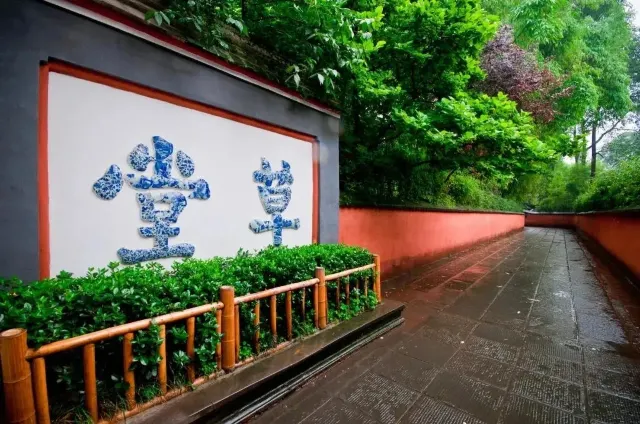
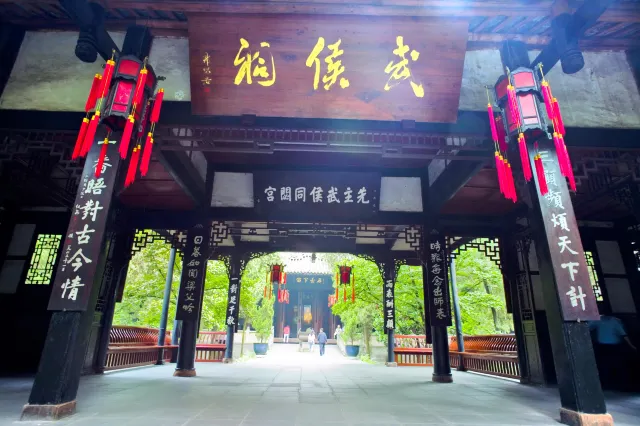
Wuhou Shrine honors Liu Bei, Zhuge Liang and the Shu Han generals, and it is one of the few places in China where a ruler and his ministers are worshipped together. Admission is ¥50, and the halls, red walls and bamboo corridors take about 90 minutes. Jinli Street is directly outside the gate for snacks afterwards.

Three areas work best for a short trip, and all of them are on the metro line from Chengdu East.
The most convenient base for shopping, restaurants and late nights. The Mercure Chunxi Taikoo Li sits a few minutes from the pedestrian street and the Line 2 and Line 3 interchange.

Mercure Chengdu Chunxi Taikoo Li
 No. 2 of 4-Star Select Hotels in Chengdu
Tianfu Square puts you between the museum district, People's Park and the metro hub. Yuguang Jinxi Mansion is a comfortable mid-range choice within walking distance of both.
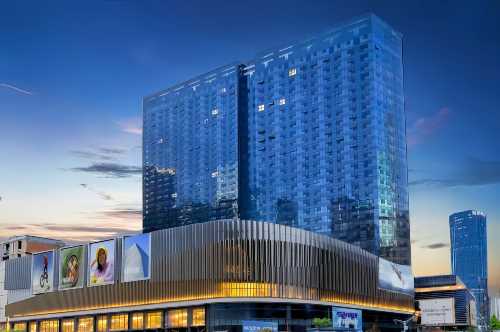
JinXiFu
Quieter, cheaper and with the best street food, plus a direct Line 1 connection to the center. Chengdu Chanyin Shiya Bieyuan is a small courtyard hotel near the monastery.

Chengdu ChanYin·ShiYaBieYuan Hotel
No. 3 of Global Traveller-Picked Hotels in ChengduIf you only have one day, resist the urge to cover everything. Three stops with proper meals in between beats five rushed photo stops.
Take the earliest train that arrives before 08:30, drop your bag at the hotel, and go straight to the panda base. Back in town by noon, a teahouse in People's Park is the classic Chengdu reset.
Wuhou Shrine and Jinli Street sit together and fill an easy afternoon. Add the Du Fu Thatched Cottage if you still have energy — it is 20 minutes away by metro.
Chengdu hot pot is a different animal from the Chongqing version: milder, with a sesame oil dip instead of a pure chili broth. Finish the night in Kuanzhai Alley, where the restored lanes stay busy until late.
Spring and autumn are the pleasant months. Summer is humid and hot in both cities, and winter is grey but mild, with few crowds and cheaper hotels.
Golden Week in early October, the Spring Festival travel rush and the May Day holiday fill every train for days. If your dates overlap, book the moment tickets open 15 days out.
Install Alipay or WeChat Pay before you arrive and link an international card; almost nothing in Chengdu runs on cash now. For metro and buses, the Alipay transport mini-program works in both Chongqing and Chengdu.
If Chengdu is one stop on a longer route, these guides cover the connections:
- Chongqing to Zhangjiajie Train: Times, Fares and Stations
- Beijing to Chongqing: Train vs Flight
- How to Get to Wulong from Chongqing
- Chongqing Zoo: Panda House, Tickets and Metro
- Chengdu Train Stations: East, South and West Compared
- 2-Week China Itinerary: Beijing, Xi'an, Chengdu, Guilin and Shanghai
Popular recommendations

【成都自由行】3天2夜成都旅遊這樣玩,行程規劃懶人包全面看!
 Trip Travellers Magicians

【成都美食】2026成都美食盤點!附餐廳推薦、當地景點
Trip Travellers Magicians【深圳到成都】2026成都高鐵旅行指南:從深圳出發,輕鬆玩轉成都
Trip Travellers Magicians【廣州到成都】2026成都高鐵旅行指南:從廣州出發,輕鬆玩轉成都
Trip Travellers Magicians