China High Speed Rail Map: Top Routes & Latest Ticket Info

Planning a trip up north? Want to experience the extensive high-speed rail network but are not sure where to start? Don’t worry—Trip.com has put together a comprehensive guide to the high-speed rail route map, covering the route map, popular high-speed rail routes, how to buy train tickets, and more.
to Shanghai
to Beijing
to Guangzhou
See all flights


High-Speed Rail Overview
China Railway Highspeed, also known as China High-Speed Rail or simply high-speed rail, refers to the high-speed railways built and in operation within China and is a cornerstone of modern China’s transportation infrastructure.
As of 2019, all 34 provincial-level administrative regions nationwide—except Tibet and Macau—had opened high-speed rail service. By the end of 2023, the country’s rail network in operation reached 159,000 kilometers, including 45,000 kilometers of high-speed lines—the most in the world.
What’s more, China aims to increase the total length of its high-speed rail network to 70,000 kilometers by 2035, covering more than 90% of the population.
Popular High-Speed Rail Routes
Routes | Average time | Distance |
1 hour | About 142 km | |
4.5-6 hours | Approximately 1,318 kilometers | |
8-10 hours | About 2,298 kilometers | |
1.5-2 hours | About 308 kilometers | |
11 hours | About 1,400 kilometers |
High-Speed Rail Categories
- High-speed rail lines designed for speeds of 300–380 km/h, such as the Beijing–Tianjin Intercity, Beijing–Shanghai High-Speed Railway, Beijing–Shenyang High-Speed Railway, Beijing–Guangzhou High-Speed Railway, Shanghai–Kunming High-Speed Railway, Harbin–Dalian High-Speed Railway, Guangzhou–Shenzhen–Hong Kong High-Speed Railway, and other lines.
- High-speed rail lines designed for speeds of 200–250 km/h, such as the Qinhuangdao-Shenyang Passenger-Dedicated Line (now the Qinhuangdao-Shenyang section of the Beijing-Harbin Line), the Hefei-Nanjing Railway, the Hefei-Wuhan Railway, the Lianyungang-Huai'an-Yangzhou-Zhenjiang Railway, and the new double-track Jinhua-Wenzhou line, among others.
- Railways with a design speed of 200–250 km/h where passenger and freight trains operate on the same line, such as the Han–Yi Railway, the Heng–Liu Railway, the Jin–Bao Railway, and other lines.
High-Speed Rail Route Map | Guangzhou–Shenzhen–Hong Kong High-Speed Rail
The Guangzhou–Shenzhen–Hong Kong High-Speed Rail links Hong Kong with Shenzhen and Guangzhou, with full service launched on September 23, 2018. The 142-km line starts at Hong Kong West Kowloon Station and reaches Guangzhou South in about 47 minutes, and Shenzhen Futian in just 14 minutes, strengthening Greater Bay Area connectivity and creating a one-hour travel circle.
As part of China’s national high-speed rail network, it allows travelers to conveniently access over 60 Mainland cities, with easy transfers available at Shenzhen North or Guangzhou South to reach destinations across the country.
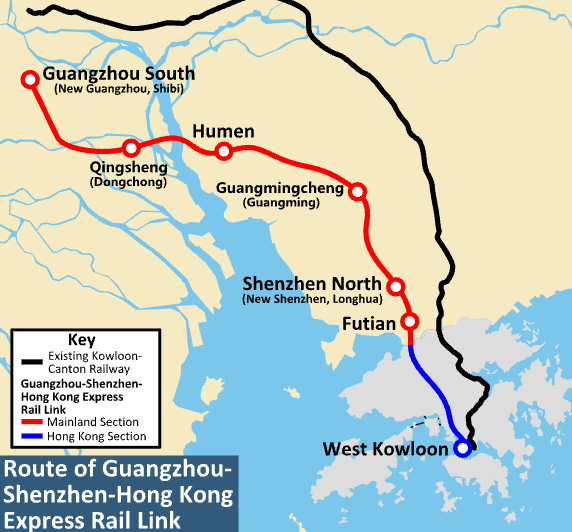
Credit: Wikipedia
Guangzhou–Shenzhen–Hong Kong High-Speed Rail Schedule
High-Speed Rail Routes | Travel time | Departures | Ticket Price |
14 minutes | Departures from Hong Kong West Kowloon: 07:07-21:51 Departures from Futian: 06:46-22:31 | From HK$74 | |
18 minutes | Departures from Hong Kong West Kowloon: 07:01-20:05 Departures from Shenzhen North: 06:36–22:21 | From HK$82 | |
30 minutes | Departures from Hong Kong West Kowloon: 07:35-19:44 Departures from Guangmingcheng: 07:44-19:17 | From HK$104 | |
40 minutes | Departing from Hong Kong West Kowloon: 08:30–22:08 Departures from Humen: 09:11-21:12 | From HK$195 | |
43 minutes | Departing from Hong Kong West Kowloon: 08:23-17:05 Departures from Qingsheng: 08:01-20:39 | From HK$202 | |
47 minutes | Departing from Hong Kong West Kowloon: 08:23–22:24 Departing from Guangzhou South: 07:07-20:53 | Starting from HK$236 |
High-Speed Rail Route Map | Distribution of China’s High-Speed Rail Routes
China’s railway plan includes five types of high-speed rail lines, from dedicated passenger routes to upgraded lines and new western routes. In 2016, the network expanded to the “Eight Verticals and Eight Horizontals,” now the core of the national high-speed rail map.
These major corridors—such as the Beijing–Shanghai, Coastal, Land Bridge, and Along-the-Yangtze routes—combine with intercity rail to form 1–4 hour travel circles between major cities and 0.5–2 hour circles within city clusters.
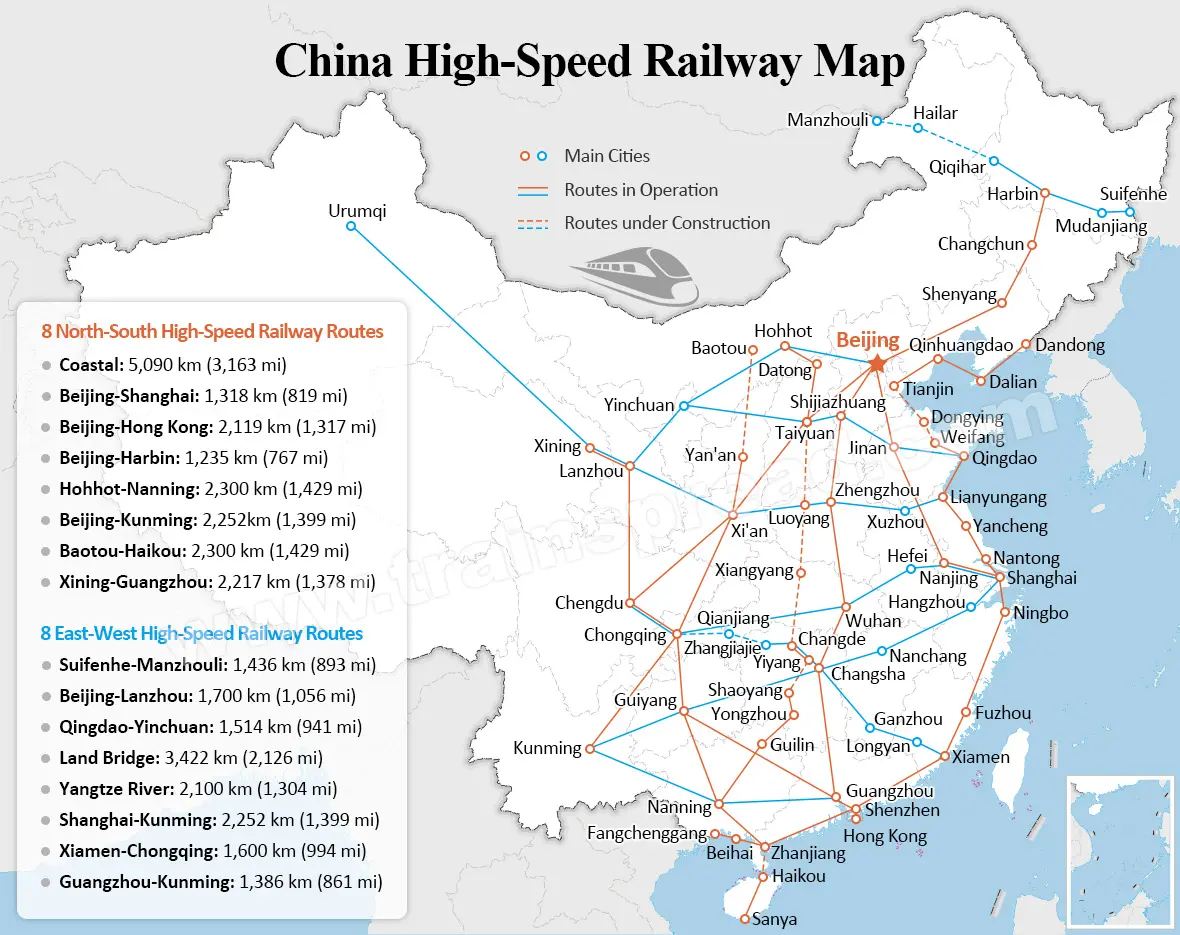
Credit: Train Speed
High-Speed Rail Route Map: Eight North–South Corridors
- Coastal Corridor: Dalian (Dandong) - Qinhuangdao - Tianjin - Dongying - Weifang - Qingdao (Yantai) - Lianyungang - Yancheng - Nantong - Shanghai - Ningbo - Fuzhou - Xiamen - Shenzhen - Jiangmen - Zhanjiang - Beihai (Fangchenggang)
- Beijing–Shanghai Corridor: Beijing–Tianjin–Jinan–Xuzhou; Nanjing–Shanghai (Hangzhou), including Nanjing–Hangzhou and Bengbu–Hefei–Hangzhou, and running parallel to Beijing–Tianjin–Dongying–Weifang–Linyi–Huai’an–Yangzhou–Nantong–Shanghai
- Beijing–Hong Kong (Taiwan) Corridor: Beijing – Hengshui – Heze – Shangqiu – Fuyang – Hefei (Huanggang) – Jiujiang – Nanchang – Ganzhou – Shenzhen – Hong Kong (West Kowloon); the branch line runs Hefei – Fuzhou – Taipei, including Nanchang – Fuzhou (Putian).
- Beijing–Harbin to Beijing–Hong Kong–Macau Corridor: Harbin–Changchun–Shenyang–Beijing–Shijiazhuang–Zhengzhou–Wuhan–Changsha–Guangzhou–Shenzhen–Hong Kong, including Guangzhou–Zhuhai/Macau and Guangzhou–Zhongshan/Jiangmen
- Hohhot–Nanning Corridor: Hohhot–Datong–Taiyuan–Zhengzhou/Luoyang–Xiangyang–Changde–Yiyang–Shaoyang–Yongzhou–Guilin–Nanning
- Beijing–Kunming Corridor: Beijing – Shijiazhuang – Taiyuan – Xi’an – Chengdu – Kunming
- Baotou (Yinchuan)–to–Sea Corridor: Baotou – Yan’an – Xi’an – Chongqing – Guiyang – Nanning – Zhanjiang – Haikou
- Lanzhou (Xining)–Guangzhou Corridor: Lanzhou – Xining – Chengdu – Guiyang – Guangzhou
High-Speed Rail Route Map: Eight East–West Corridors (East–West Direction)
- Suiman Corridor: Suifenhe – Mudanjiang – Harbin – Qiqihar – Hailar – Manzhouli
- Beijing–Lanzhou Corridor: Beijing – Hohhot – Yinchuan – Lanzhou
- Qingdao–Yinchuan Corridor: Qingdao–Jinan–Shijiazhuang–Taiyuan–Yinchuan
- Land Bridge Corridor: Lianyungang – Xuzhou – Zhengzhou – Luoyang – Xi'an – Lanzhou – Xining – Urumqi
- Yangtze River Corridor: Shanghai–Nanjing–Hefei–Wuhan–Chongqing–Chengdu, including Nanjing–Anqing–Jiujiang–Wuhan–Yichang–Chongqing and Wanzhou–Dazhou–Suining–Chengdu
- Shanghai–Kunming Corridor: Shanghai – Hangzhou – Nanchang – Changsha – Guiyang – Kunming
- Xiamen–Chongqing Route: Xiamen – Longyan – Ganzhou – Changsha – Changde – Zhangjiajie – Qianjiang – Chongqing
- Guangzhou–Kunming Corridor: Guangzhou – Nanning – Kunming
High-Speed Rail Route Map: International Outbound Routes
- K3 Beijing-Ulaanbaatar-Moscow (Yaroslavsky)
- K23 Beijing-Ulaanbaatar
- K19 Beijing-Moscow (Yaroslavsky)
- 4652/4653 Hohhot-Ulaanbaatar
- K27 Beijing-Pyongyang
- T8701 Nanning - Hanoi (Gia Lam)
- K9797 Urumqi-Astana
- K9795 Urumqi-Almaty
- D887 Kunming-Vientiane
Popular High-Speed Rail Routes
Popular Routes | Main Stations |
Beijing South Railway Station, Tianjin Railway Station | |
Beijing South Railway Station, Tianjin West Railway Station, Jinan West Railway Station, Xuzhou East Railway Station, Bengbu South Railway Station, Nanjing South Railway Station, Shanghai Hongqiao Railway Station | |
Guangzhou South Railway Station, Humen Station, Shenzhen North Railway Station, Hong Kong West Kowloon Station | |
Shanghai Hongqiao Station, Hangzhou East Station |
1. Beijing–Tianjin Intercity Railway
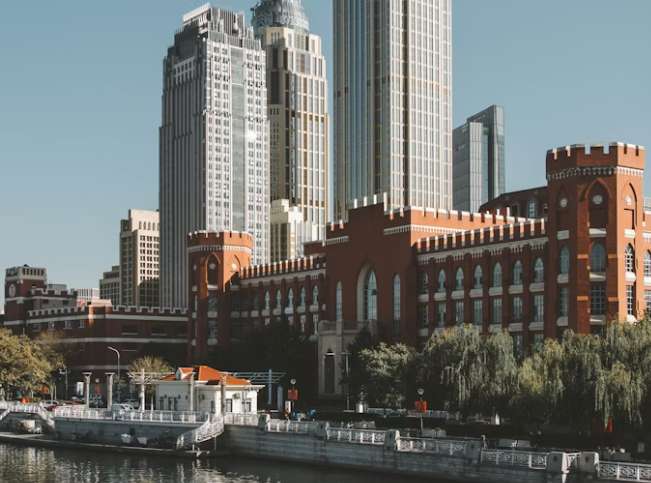
Credit: Valery Rabchenyuk, Unsplash | Tianjin
On the eve of the opening of the 2008 Beijing Olympics, the Beijing–Tianjin Intercity High-Speed Railway began operations. Stretching 120 kilometers with a design speed of 350 km/h, it cut the trip between Beijing and Tianjin—two centrally administered municipalities—from about two hours to roughly 30 minutes, spurring the two cities’ urban integration.
The Beijing–Tianjin Intercity Railway was not only China’s first high-speed rail line with independent intellectual property rights; at the time, it was also among the fastest-operating high-speed railways in the world.
2. Beijing–Shanghai High-Speed Railway
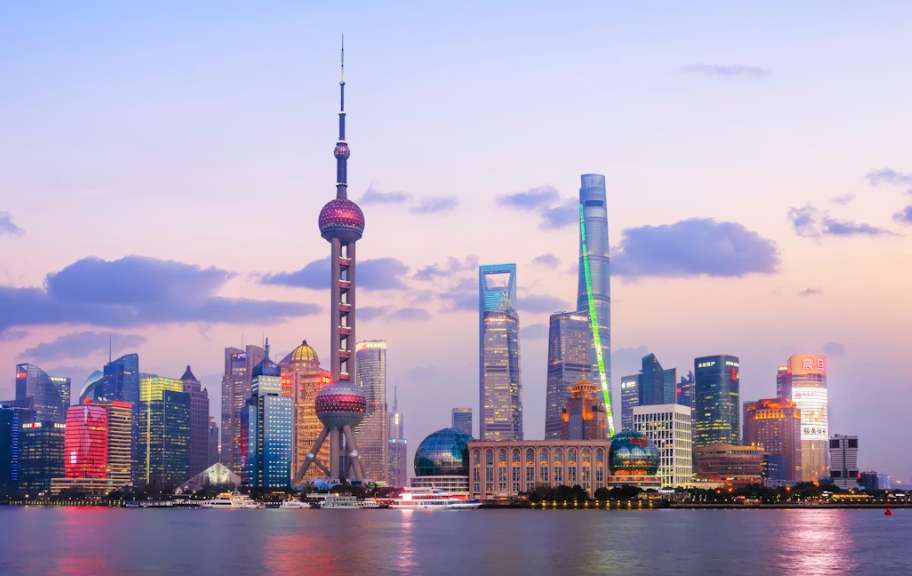
Credit: from Edward he, Unsplash | Shanghai
The Beijing-Shanghai High-Speed Railway has been in official operation since 2011. At the time, it was the world’s longest high-speed rail line completed in a single construction phase and was built to the highest standards.
Stretching 1,318 kilometers with a designed top speed of 350 km/h, it links Beijing, the political and cultural center, with Shanghai, the economic hub, passing through seven provinces and municipalities—Beijing, Tianjin, Hebei, Shandong, Anhui, Jiangsu, and Shanghai—and lets you travel between the two cities in as little as 4 hours.
In February 2013, its total number of passenger trips surpassed 100 million for the first time. As of 2021, that figure had exceeded 1.3 billion.
3. Guangzhou–Shenzhen–Hong Kong High-Speed Rail
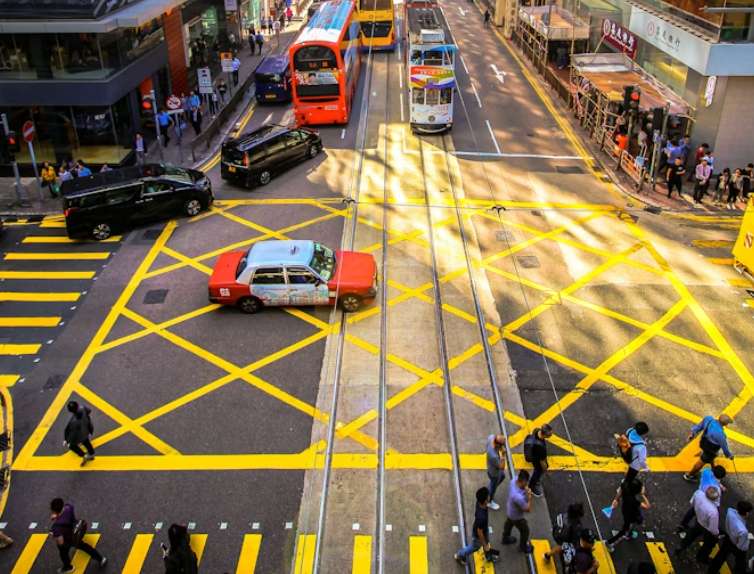
Credit: Florian Wehde, Unsplash | Hong Kong
The Guangzhou–Shenzhen–Hong Kong High-Speed Rail is a high-speed railway in China that connects Guangzhou, Dongguan, and Shenzhen with Hong Kong.
It’s also part of the Beijing–Guangzhou–Shenzhen–Hong Kong passenger-dedicated line within Mainland China’s “Four Vertical and Four Horizontal” network, and serves as a backbone of the Pearl River Delta intercity rapid transit system, with trains reaching speeds of up to 350 kilometers per hour.
4. Shanghai-Hangzhou High-Speed Railway
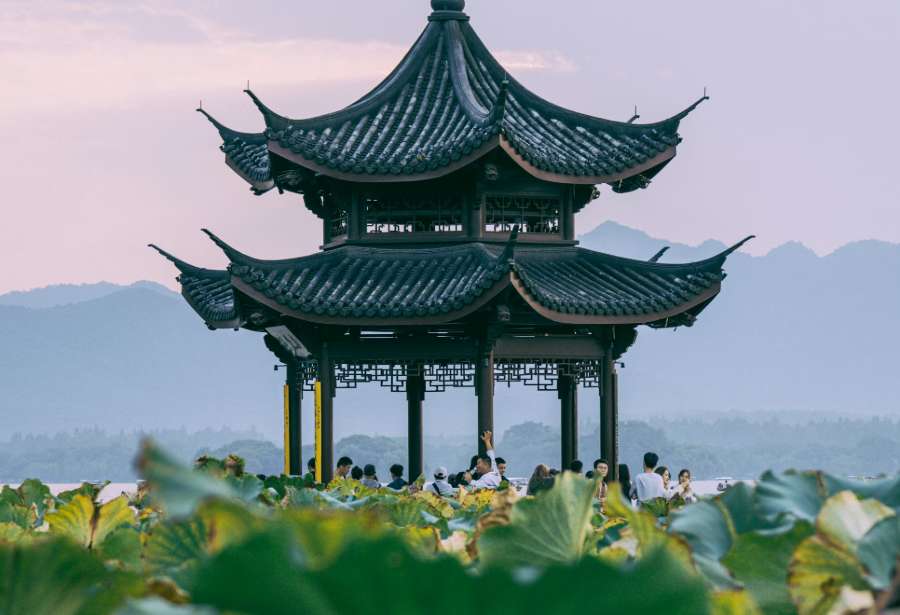
Credit: from Luobing, Unsplash | Hangzhou
The Shanghai–Hangzhou High-Speed Railway is a dedicated passenger line connecting Shanghai and Hangzhou.
Running from Shanghai Hongqiao Station to Hangzhou East Station, it stretches 166 kilometers and forms part of the "Shanghai–Kunming Passenger-Dedicated Line" within the national "Four Verticals and Four Horizontals" passenger-dedicated network. Designed for speeds up to 350 kilometers per hour, it opened for service on October 26, 2010.
How to Buy China Train Tickets on Trip.com?

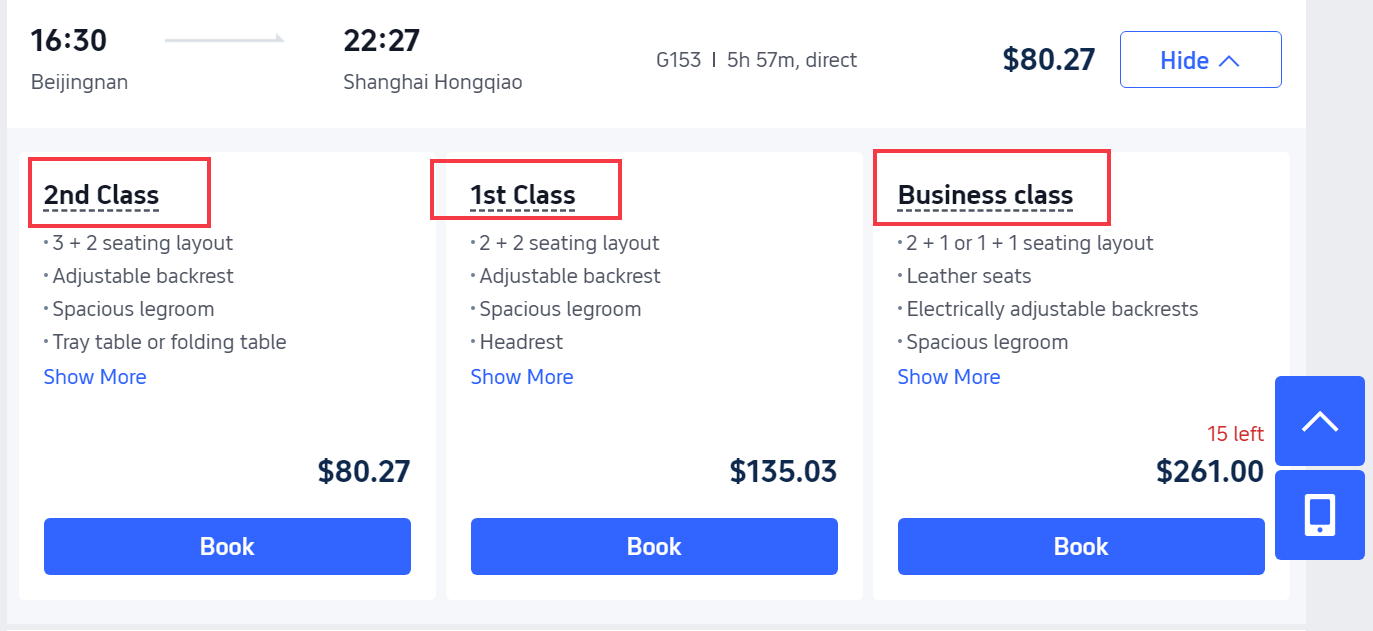
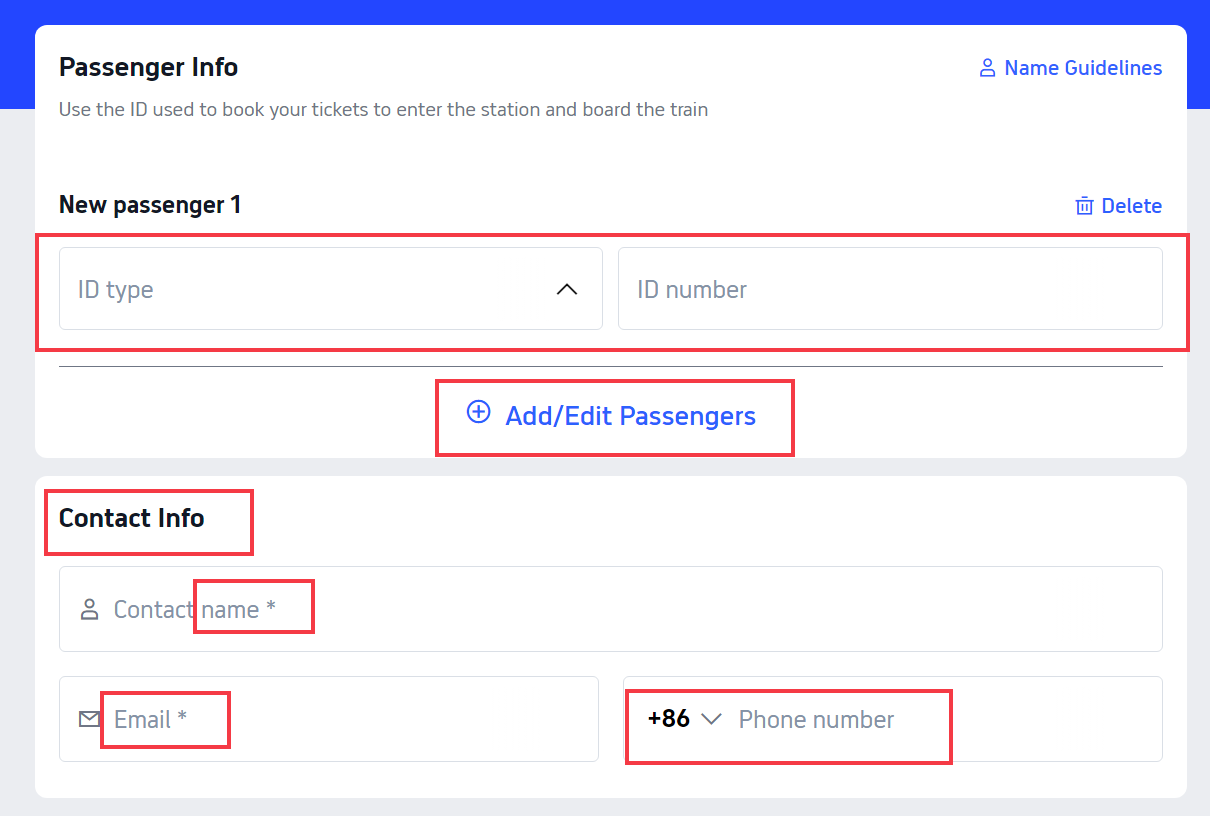

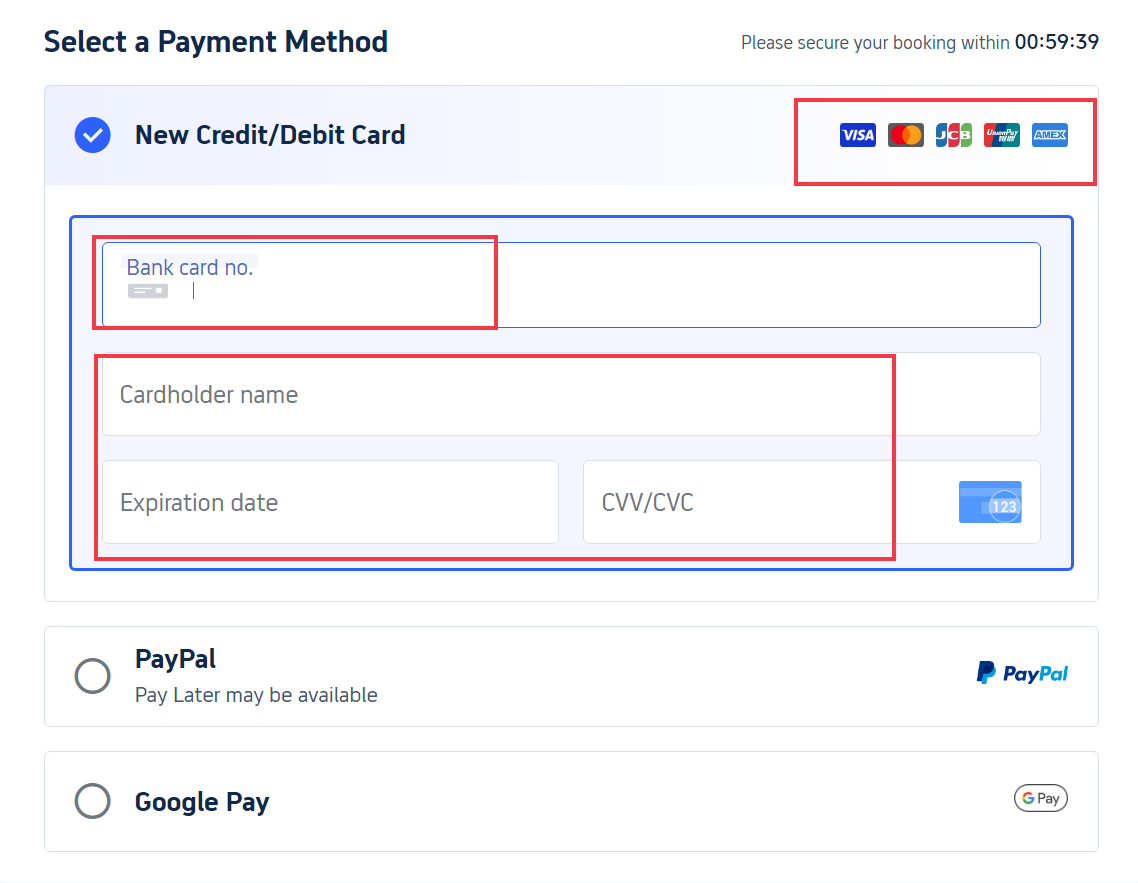
Note: You can also download the Trip App and book your China train tickets in minutes on your phone! Steps are similar to booking on the Trip.com website~
China High-Speed Rail Booking Tips
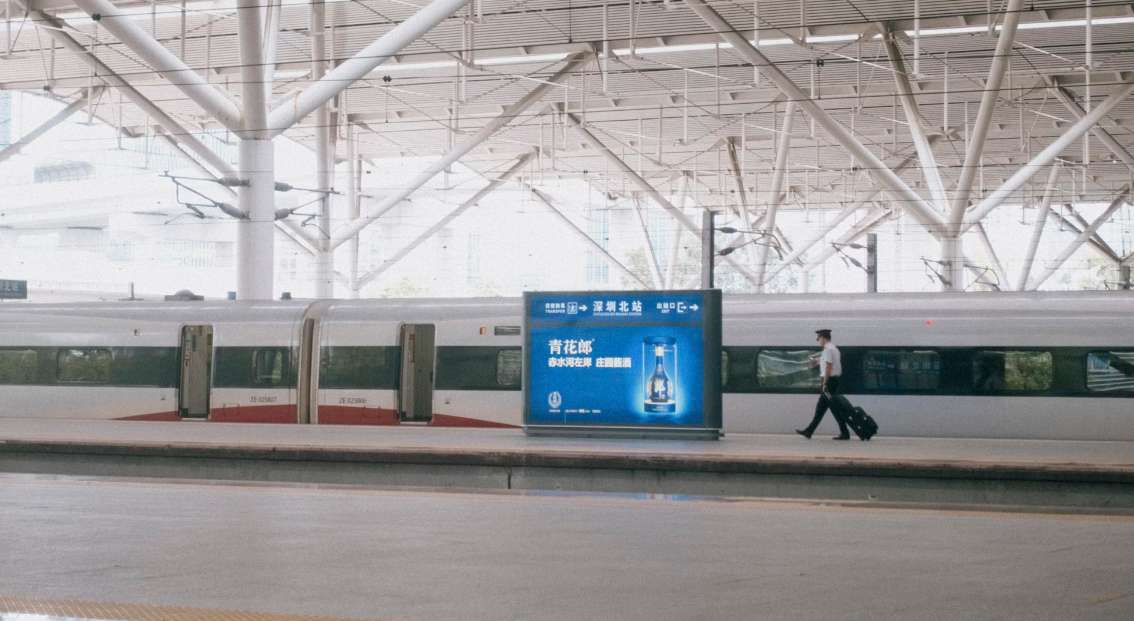
Credit: from Catgirlmutant, Unslpash | Shenzhen North Railway Station
- Book early. High-speed rail, especially for popular routes, sells out fast. Peak seasons (Lunar New Year & National Week in Oct) require booking 30 + days ahead.
- Know seat classes better. Second class is the cheapest, first class has wider seats, while business class has premium service (like reclining beds) but at 2-3x cost.
- Be familiar with the facilities on the train. For high-speed rail, find most of the power outlets under the seats. Scan QR code to order food or any other services (WeChat/Alipay). Or you can buy from the trolley or the dining car.
- Book a soft sleeper for overnight trains. It saves time and hotel costs.
- Travel with Trip.com for English and foreign card support.
- Download Amap or Baidu Maps to find exits or platforms (English-supported).
8% OFF Best Hotels in China
Best Hotels Picks in Top Cities of China
See All Hotels
 NO.1
NO.1


FAQs about China High Speed Rail Map
-
What is shown on the China high speed rail map?
-
How do I use the China high speed rail map to plan trips?
-
Does the China high speed rail map include the “Eight Verticals and Eight Horizontals”?
-
Is Hong Kong included on the China high speed rail map?
-
How often is the China high speed rail map updated?
Disclaimer: This article has been provided by an individual contributor or third party platform. If there is any discrepancy regarding the copyright, please contact us directly and we will delete the content immediately.
Popular Searches
-
Trending Searches
- China High Speed Rail
- Europe Train Booking
- China Train Booking
- China Train Ticket
- 12306
- china high speed rail seat
- Eurostar
- hong kong to shenzhen
- China High Speed Rail Map
- Shanghai Maglev Train
- How to Buy Train Tickets in China as a Foreigner
- China High Speed Rail Child Ticket
- Shinkansen Tickets
- Guangzhou to Shenzhen
- Tokyo to Osaka Shinkansen
- China Train Food
- Tokyo to Osaka Bullet Train
- Cheap Train Tickets China
- Tsuruga to Kyoto trains
- Beijing to Chaoyang trains
- Shenzhen to Wuhu trains
- Yingkou to Shenyang trains
- Gaobeidian to Guangzhou trains
- Xiaogan to Shanghai trains
- Ankang to Changsha trains