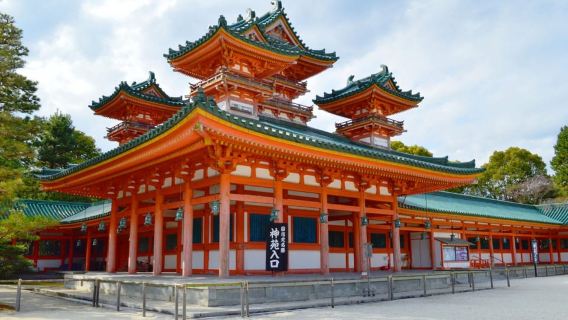
▲ Built in 1895 to commemorate the 1,100th anniversary of the relocation of the capital to heian-kyo, it is one of the newer shrines in Kyoto. The shrine buildings imitate the heian-kyo imperial palace architecture, featuring striking vermilion colors. Renowned for its magnificent torii gate and the "sacred garden" blooming in all seasons, it is considered a powerful attraction for forging good relationships.


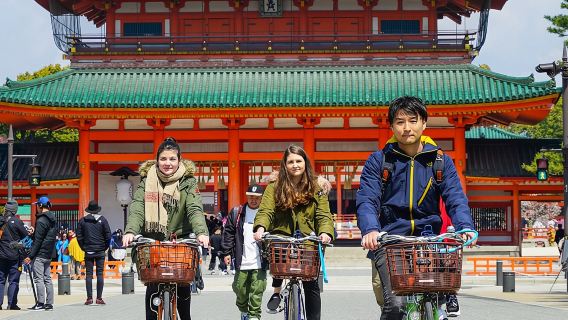
▲ The 24 m tall and 18 m wide vermilion torii gate is the symbol of Heian-jingū shrine, visible from afar with its magnificent presence, and is one of Kyoto's most iconic photo spots.


▲ The shrine buildings are modeled after the "Chodoin," where important ceremonies were held in Heian-kyo. The vermilion pillars and beams contrast beautifully with the green tiles and white sand, creating an atmosphere that transports visitors back to the Heian period.

▲ The shrine is surrounded by a divine garden divided into four areas: east, central, west, and south. This pond-strolling garden features seasonal flowers in bloom throughout the year, offering breathtaking beauty.

▲ The Daigokuden is symmetrically flanked by the Seiryuro (east) and Byakkoro (west) towers, embodying the "Four Guardian Gods" concept of Heian-kyo to form a complete protective layout with the Azure Dragon on the left and White Tiger on the right.


▲ The "Taiping Pavilion" on the Qifeng Pond in Dongshen Garden is a distinctive bridge hall with an open design, offering a perfect spot to sit and enjoy the scenery. It provides a poetic photo opportunity with the distant reflection of the Shangmei Hall in the pond.

▲ The head temple of the Rinzai Nanzen-ji school, founded by Emperor Kameyama in 1291, holds a status above the "Five great Zen temples of Kyoto" and represents the pinnacle of Japanese Zen Buddhism. It is renowned for its magnificent "Sanmon" gate, red-brick "Suiroko" aqueduct, and the dry landscape garden "Hojo garden".

▲ Built in 1628, the three-gate structure stands 22 m tall and is one of Japan's three great sanmon gates, symbolizing Buddhism's "three gates of liberation" (gate of emptiness, gate of formlessness, and gate of wishlessness).

▲ Nanzen-ji Temple's Tatchu Tenju-an features both a dry landscape garden with white sand and a pond garden. In fall, the reflection of red leaves on the water creates a serene atmosphere with fewer crowds, allowing for quiet appreciation of its profound beauty.

▲ The reconstructed hojo garden from the edo period is designated as a "place of scenic beauty." Its dry landscape features six main stones symbolizing a mother tiger carrying her cubs across a river (tora no ko watashi), with exquisite sand patterns and a masterful composition.


▲ The red brick aqueduct built during the Meiji era for Lake Biwa's water diversion project spans 93 m in length and stands 9 m tall, still functioning for water supply today. The striking contrast between Japanese Zen temple aesthetics and Western civil engineering makes it a popular photography spot.


▲ A approx. 2 km walking path connecting Ginkaku-ji Temple and Nanzen-ji Temple, built along the Lake Biwa Canal. Named after Kyoto University professor Kitaro Nishida who walked and contemplated here daily, the path offers seasonal views of cherry blossoms, fresh greenery, and autumn leaves, and is selected as one of the "100 best roads in Japan".


▲ Extending from Ginkaku-ji Temple to Kumano Nyakuoji Shrine, this approx. 2 km path runs alongside the Lake Biwa Canal, offering a serene walking experience with the soothing sound of flowing water, perfect for a leisurely stroll.


▲ In the early 20th century, Nishida Kitaro, a philosophy professor at Kyoto University, took daily walks and meditated here, hence the name "Tetsugaku No Michi", which is imbued with literary charm.

▲ In 1922, Japanese painter Hashimoto Kansetsu and his wife donated 300 cherry trees, which were thus named "Kansetsu cherry trees." In 1987, they were selected as one of the "100 best roads in Japan."

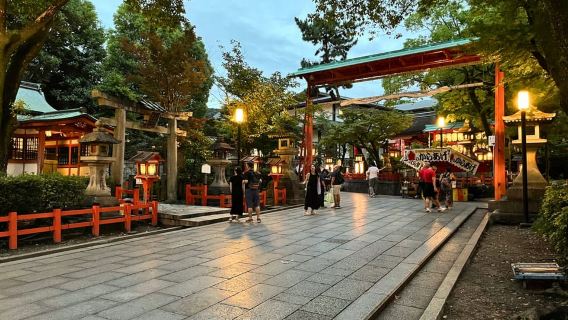
▲ The head shrine of approx. 3,000 Yasaka shrines across Japan, it was reportedly founded in 656 and is one of Kyoto's most representative shrines. Its vermilion western tower gate serves as a landmark of Gion. The Gion Festival, along with Tokyo's Kanda Festival and Osaka's Tenjin Festival, is considered one of Japan's three major festivals.


▲ The vermilion two-story gate facing Shijo-dori is the symbol of Yasaka Shrine. Legend has it that this gate "does not gather spider webs nor retain rain marks," showcasing the divine order of the sacred grounds.


▲ The main hall, designated as a national treasure in 2020, features the unique "Gion-zukuri" architectural style. With its majestic curved roof made of hinoki cypress bark covering both the sanctuary and worship hall, it represents a distinctive Japanese architectural form.


▲ The grand procession of the Gion Festival is held annually on July 17, starting from the west tower gate. The majestic parade of portable shrines continues a thousand-year tradition, making it Kyoto's premier summer celebration.

▲ At the center of the square, the dance hall is adorned with hundreds of lanterns donated by Gion geisha and teahouses. When lit at night, the crimson architecture intertwines with the play of light and shadow, creating a dazzling and enchanting spectacle.