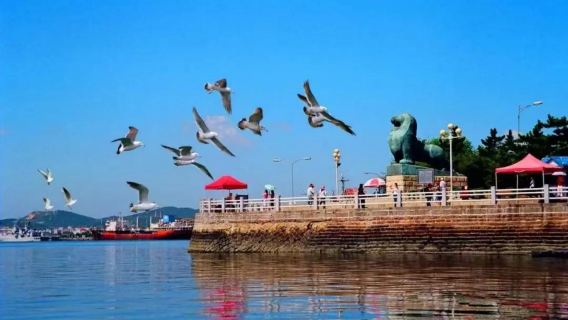
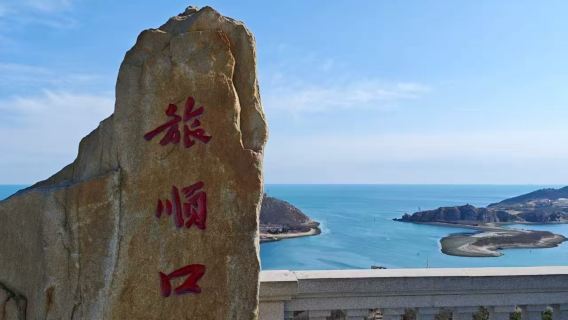
▲ The view of Lushun naval port from the top of Baiyu Mountain. Lushun naval port is a natural ice-free harbor, and the area outside the port entrance was the site of the Yellow Sea naval battle during the Russo-Japanese War.

▲ Located at the foot of Baiyu Mountain near the Lushun naval port, it is the southern terminus of the South Manchuria Railway branch line. Designed by Russians in 1900, opened in 1903, and completed in 1907 after the Russo-Japanese War.

▲ Ruins of Russian defense fortifications from the Russo-Japanese War. These are remnants of fortifications constructed by the Russian military between 1900 and 1904. It served as a crucial strategic point during the war, where Japanese forces faced fierce resistance. You can see the interior of trenches, ammunition depots, and barracks.

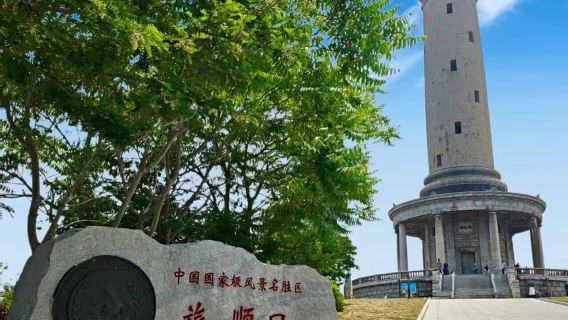
▲ This famous tourist spot is located on the northern shore of Lushun Port. From Baiyu Mountain, you can enjoy a panoramic view of the naval port. The Baiyu Mountain Tower at the summit stands 66.8 meters tall and was built as the Hyochuto (Loyalty Tower) through a joint proposal by General Nogi and Admiral Togo Heihachiro to console anti-war sentiments in Japan.

▲ This is the site where General Nogi and Russian Lieutenant General Stoessel met on January 5, 1905. The highlights include group photos of representatives from both countries and historical photographs from that period.

▲ It is a national first-class museum and the oldest historical museum in the Tohoku region. Its predecessor was a product exhibition hall established in 1915 during the Japanese colonial era. Currently, it displays exhibits such as the Otani Kozui collection, Xinjiang mummies, and Shang-Zhou dynasty bronze ware in the main building.