


Route highlights: A combination of Three Kingdoms culture and zen-inspired ancient temples, experiencing the dual emphasis on civil and military traditions in the Shu region.
Brief itinerary
Pickup within Chengdu's third ring road from 07:30-08:00
08:00-09:00: Head to Sanxingdui museum
09:00-12:00: Sanxingdui museum
12:00-13:00: Head to Chengdu Wuhou Shrine Museum
1:00 PM - 1:30 PM: Lunch near Wuhou Shrine
13:30-15:30: Chengdu Wuhou Shrine Museum
3:30 PM - 5:00 PM: Wenshu Monastery
17:00-17:30 Return to the hotel within Chengdu's third ring road
——
From the shamanic kingdom of ancient Shu to the halls of loyalty in Shu Han, then to the zen courtyards of Ming and Qing dynasties, this "dual-literary-martial" route lets you experience all three pillars of Sichuan spirit (divinity, heroism, zen) in a single day - an exceptionally compelling itinerary design.
——
07:30-09:00 Head to Sanxingdui | Morning light on the way to ancient Shu
Depart from within Chengdu's third ring road in the early morning.
——
09:00-12:00 Sanxingdui museum | 3 hr of gazing at bronze artifacts
From the spiritual system of the ancient Shu kingdom, which was entirely independent of the Central Plains civilization.
It is recommended to visit according to the "emotional curve" rather than the exhibition hall sequence.
Take a deep breath in the lobby—the high ceilings with bronze-patterned decorations in the new wing will help you quickly detach from the outside world.
Head straight to the striking "group statues": pause before the towering bronze figure and circle around it. Notice those disproportionately large hands—what did they once hold? A scepter? Ivory? Or nothing at all? This mystery is more fascinating than any answer.
Then behold the bronze sacred tree: nine birds perch on branches while a dragon coils around, as if an entire myth was "cast" into metal. It's recommended to sit quietly before the display case for three minutes—just observe, don't photograph—letting vision precede the lens.
Look again at the protruding-eyed masks: those bulging "clairvoyant eyes" seem to gaze not at the earthly realm but beyond the heavens. If you stare at them for more than ten seconds, you'll feel an uncanny sense of being watched.
Golden scepter and mask area: observe closely the fish, bird, and arrow motifs—these served as the ancient Shu people's "script" and remain undeciphered codes to this day.


12:00-13:00 Head to Chengdu Wuhou Shrine Museum | From deities to heroes
Return from Guanghan to downtown Chengdu, approx. 1 hr drive. This "transition" time is perfect for a mental shift—from the celestial beliefs of ancient Shu to the earthly loyalty of Shu Han. You can briefly recall the moment Sanxingdui moved you during the ride, then close your eyes to clear your mental cache for the next stop's "heroic aura."
——
1:00 PM - 1:30 PM: Lunch near Wuhou Shrine | Satisfying meal with local flair
We recommend dining at Shua Du food street or Wuhou Shrine horizontal street near the Chengdu Wuhou Shrine Museum. Try a plate of husband and wife lung slices with dan dan noodles for a spicy kick, or opt for a bowl of chitterlings noodles with bread - simple yet satisfying. The local cuisine carries a distinctive "martial spirit" - imagine Shu Han warriors eating these very flavors before battles 1,800 years ago.
——
13:30-15:30 Chengdu Wuhou Shrine Museum | The eternal masterpiece of joint worship of ruler and subjects
The only temple in China where an emperor and his prime minister are worshipped together, Liu Bei and Zhuge Liang have shared incense here for over a thousand years.
Enter through the main gate and pass by the Tang and Ming dynasty steles: they are witnesses of time, with inscriptions weathered by wind and rain, yet the words "Three Kingdoms" have never faded.
After passing through the second gate, you enter the liu bei hall (chengdu wuhou shrine museum): in the center stands the gilded statue of liu bei, flanked by guan yu and zhang fei. Standing and looking up—this emperor who rose from weaving mats and selling shoes shows no arrogance on his face, only solemnity. It reflects the resilience forged through countless failures.
The real climax lies in the Zhuge Liang hall: passing through the corridor from the Liu Bei hall, you enter the "Jingyuan hall" - the plaque inscribed with "Famed throughout the universe" perfectly captures posterity's reverence for Zhuge Liang. In the center sits the statue of Zhuge Liang, holding a feather fan with slightly lowered gaze - not a deity looking down upon mortals, but a minister whose heart belonged to the world.
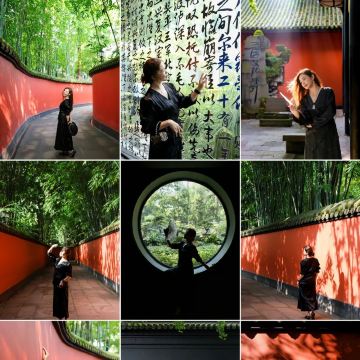

3:30 PM - 5:00 PM Wenshu Monastery | Silence after the hustle
Step out of the heroic lament and into the profound silence of the zen monastery.
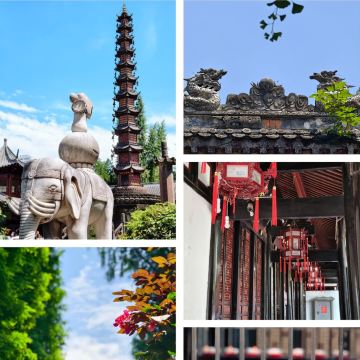
After entering the temple, it's recommended to mute your phone and walk clockwise around the courtyard: no need for deliberate "sightseeing," just walk. Observe devotees pressing palms together before Manjusri Pavilion, watch pigeons taking off and landing in front of the main hall, and see sunlight filtering through ancient nanmu trees onto the bluestone pavement.

5:00-5:30 p.m. Return | Yuyin
On this day, you'll experience three different versions of Chengdu: the celestial land from 3,000 years ago, the heroic kingdom from 1,800 years ago, and the zen courtyards from 600 years ago. Though these eras never intersected, you'll connect them all within 24 hours - this "trans-temporal juxtaposition" reveals the profound cultural essence of Sichuan.