


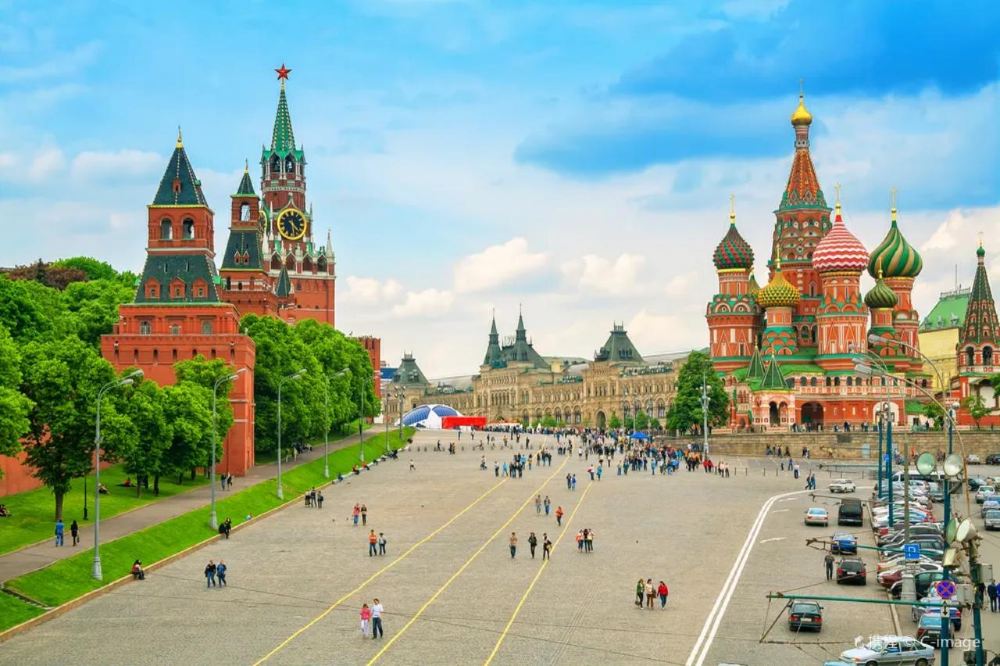
▲ Red square is a famous square in the center of Moscow. It was the site of important Soviet holidays, mass gatherings and military parades, and is now a leisure spot for locals and visitors. The victory day parade activity is held here annually. Red square is a witness to Moscow's history and a symbol of the city.
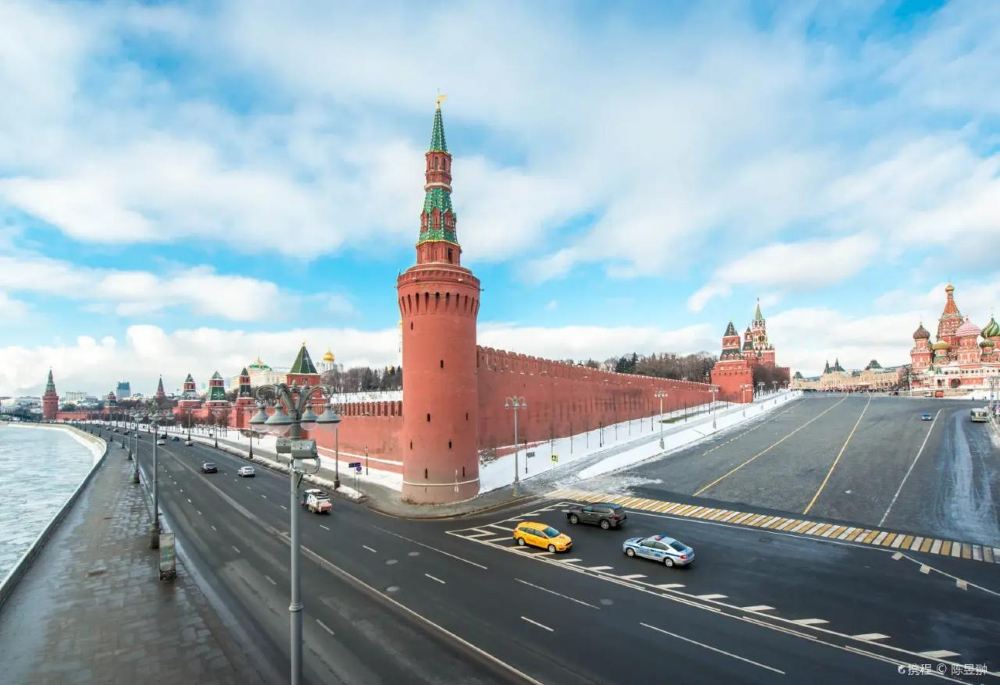
▲ Red Square is not large, with a narrow and elongated shape, only one-fifth the size of Beijing's Tiananmen Square. However, it is surrounded by very famous architectural complexes featuring distinctive Russian characteristics. Along its long sides, the western edge borders the Moscow Kremlin, while the eastern side faces a department store. At its shorter ends, the southern side is graced by St. Basil's Cathedral - Russia's beautiful onion-domed landmark. The northern side features the elegant red-brick State Historical Museum, where a statue of Marshal Zhukov, the heroic commander of the Battle of Moscow, stands mounted on horseback facing away from Red Square. Lenin's Mausoleum is located in the middle section near the Kremlin wall, with a reviewing stand atop the tomb and viewing platforms on both sides guarded by soldiers.
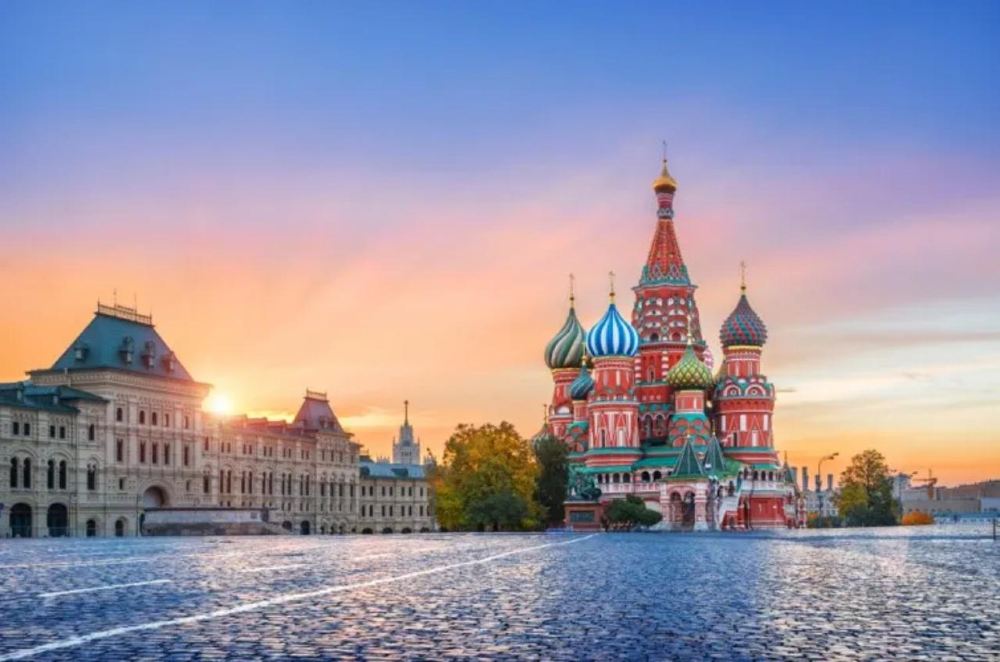
▲ St. Basil's Cathedral is located in the southeastern part of Red Square, facing the Spasskaya Tower of the Moscow Kremlin. It is one of Russia's most renowned churches, famous for its nine uniquely shaped and colored onion domes, making it a landmark structure in the area around the Moscow Kremlin and Red Square.
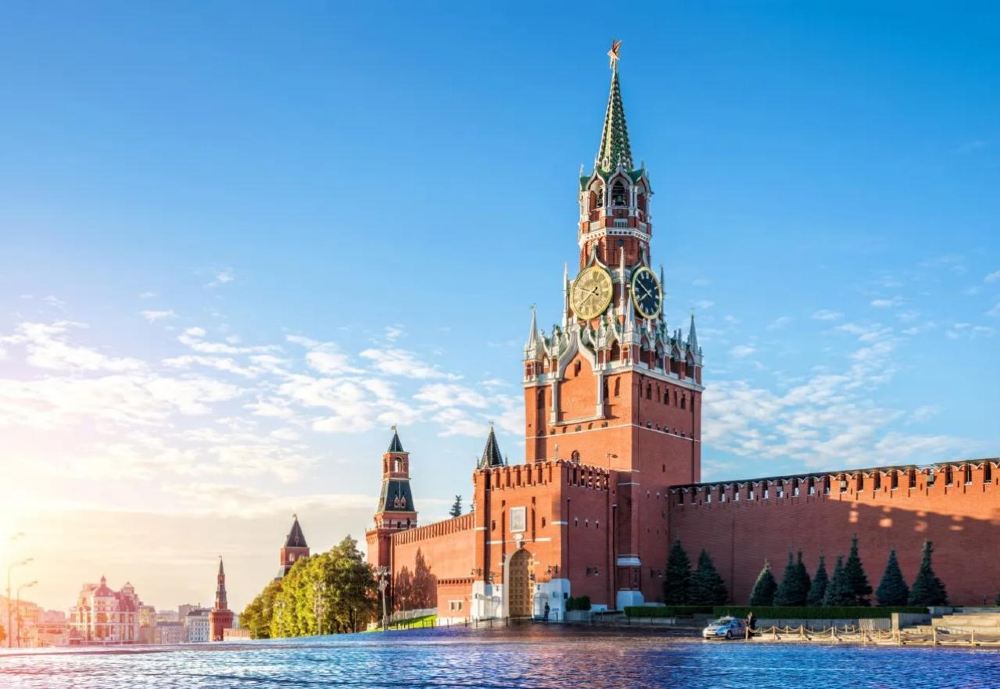
▲ The Moscow Kremlin is an architectural complex located in the heart of Moscow, serving as a symbol of the Russian Federation. This irregular triangular complex is surrounded by red palace walls, resembling a "city within a city." It has been listed as a UNESCO World Heritage Site. Currently, the main buildings open for visits include the Armory Museum, Patriarch's Palace, Dormition Cathedral, Church of the Deposition of the Robe, and Ivan the Great Bell Tower. The red palace walls of the attraction can be seen from Red Square, where the State Duma building is located.
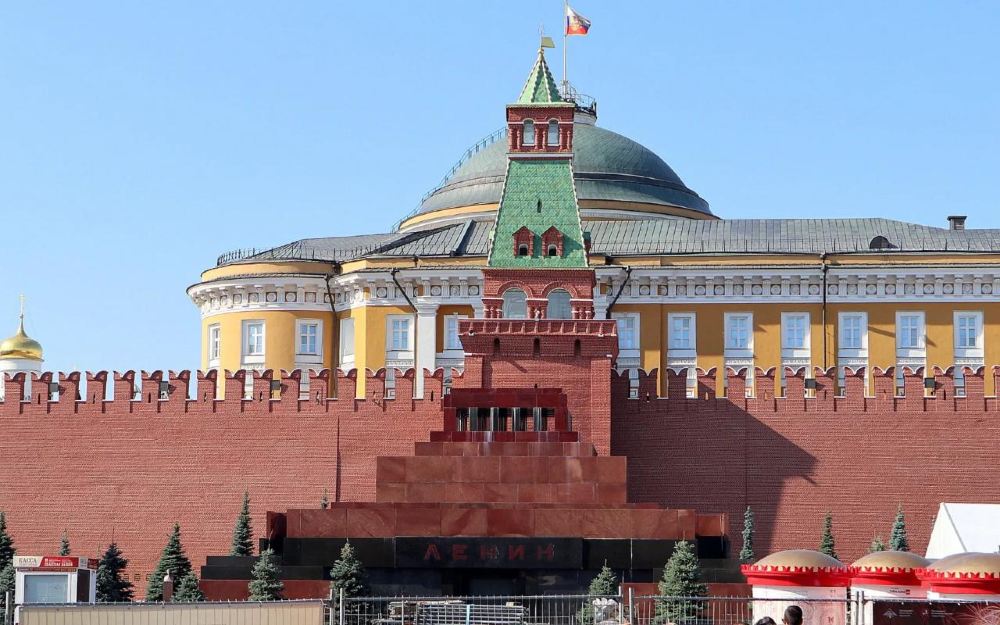
▲ The tomb is constructed with black and red marble and granite in a T-shape, simple yet solemn, with half of it underground and the other half above ground. A steady stone base is laid with steps leading to the stone platform, followed by five tiers of steps at varying heights and a colonnade composed of 36 pillars. The top features a two-tiered flat roof serving as the reviewing platform, where troops are inspected during major holidays. On both sides of the platform are gray marble viewing stands.
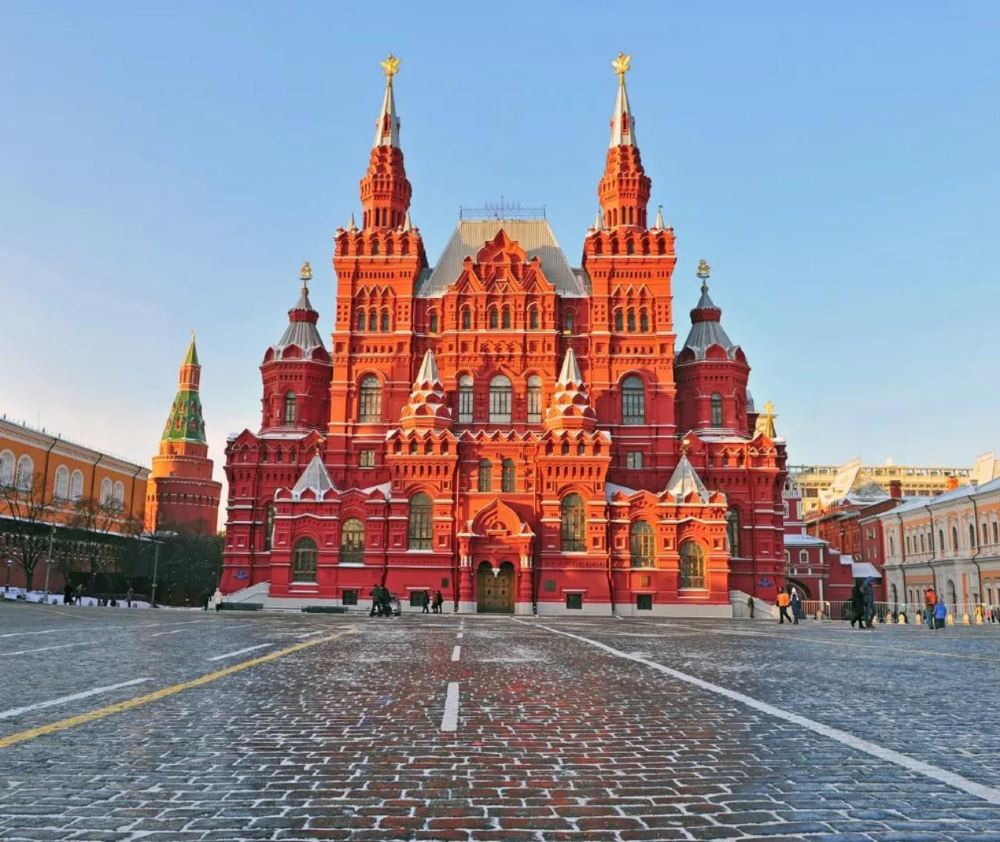
▲ Passing through the archway on the northern side of Red Square, you can't miss this magnificent crimson building - the State Historical Museum, constructed in 1873. The museum stands in harmonious contrast with St. Basil's Cathedral across Red Square, its elegant red-brick structure crowned with silvery spires that showcase Russian architectural style with understated sophistication. This site was once the original location of Moscow State University and remains Moscow's oldest museum, with origins tracing back to the late 19th century. Each exhibition hall features distinct decorative styles from different eras or regions, while some wall paintings intricately depict the development history of Orthodox Christianity, offering fascinating insights.
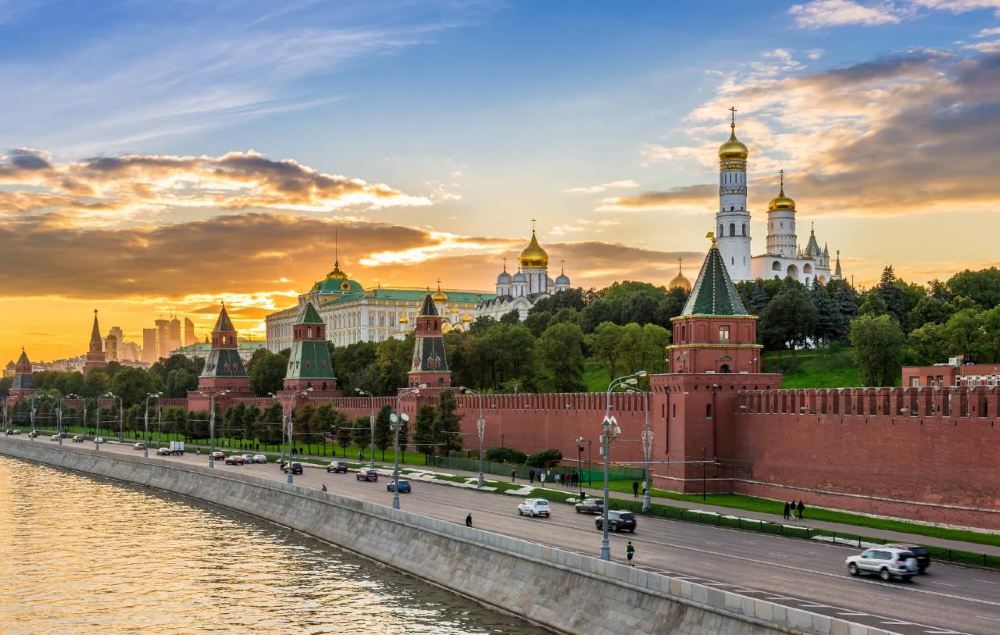
▲ The Moskva River flows through the entire city of Moscow, from which the city derives its name. The river stretches 502 km in total, with approx. 80 km flowing through the urban area. Its width is generally around 200 m, while the wider sections exceed 1 km.
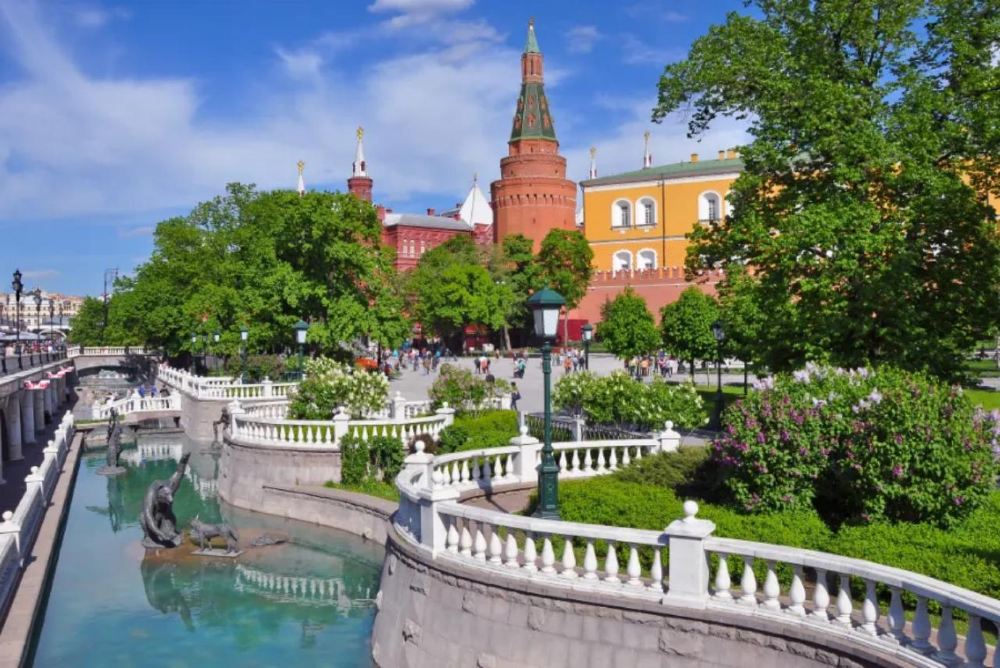
▲ Alexander garden is a rectangular park located outside the red walls of the Moscow Kremlin. It is one of the favorite leisure spots for Muscovites. The newly constructed Manege underground mall and square blend seamlessly with the garden, where fountains and sculptures can be seen everywhere.