


ANGKOR WAT - HERITAGE OF HUMANITY AND WORLD WONDER
Pick up at hotels have location in Siem Reap, Cambodia.
Visit the antique capital of Angkor Thom (12 century): the South Gate with its huge statues depicting the churning of the ocean of milk.
Bayon Temple
Constructed: Late 12th century C.E.
Religion: Buddhist
King/Patron: Jayavarman VII
Style: Bayon
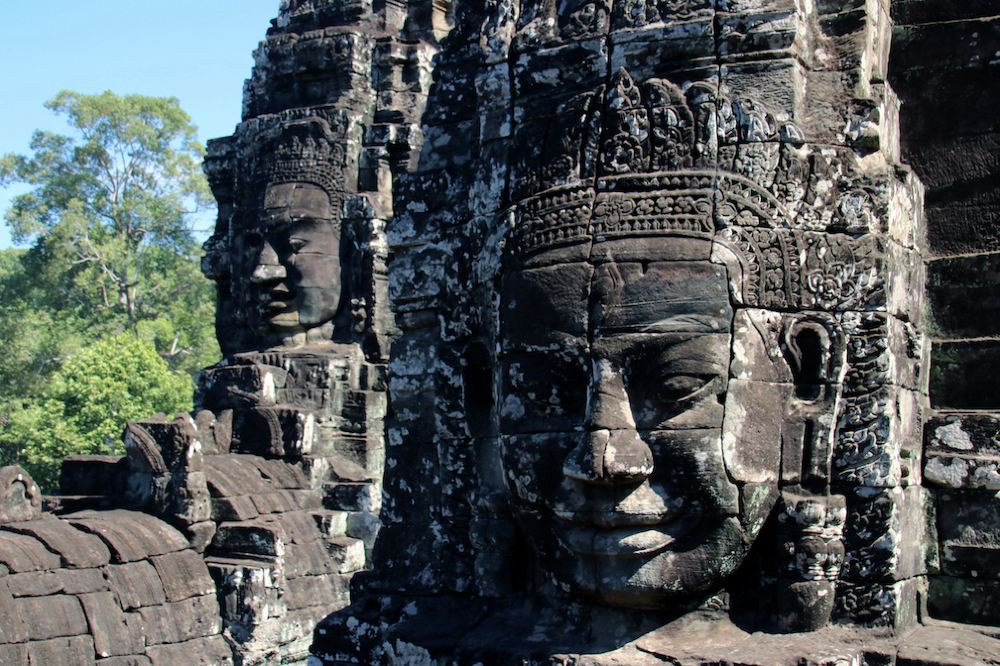
The Bayon Temple, located in the heart of Angkor Thom, the ancient royal capital of the Khmer Empire in Siem Reap, is one of the most remarkable temples within the Angkor Archaeological Park, Cambodia's UNESCO World Heritage Site. Unique for its 54 towers decorated with over 200 smiling faces traditionally associated with Avalokitesvara, this richly decorated Khmer temple was built in the late twelfth century under King Jayavarman VII. Constructed at the center of the king's capital, Angkor Thom, it was the last state temple to be built at Angkor. The Bayon Temple was originally built primarily as a Mahayana Buddhist shrine dedicated to Buddha. Following Jayavarman VII's death, it was modified and augmented by later Hindu and Theravada Buddhist kings in accordance with their religious preferences.
The Bayon's most distinctive feature is the multitude of serene and massive stone faces on the many towers that rise from the upper terrace and cluster around its central peak. These remarkable carvings reflect the artistic and architectural sophistication of the Khmer civilization, which also created the world-famous Angkor Wat, Cambodia's national symbol and one of Southeast Asia's most iconic temple complexes.
The similarity of the 216 gigantic faces to other statues of Jayavarman VII has led many scholars to hypothesize that the faces represent the king himself. Others believe that the faces belong to Avalokitesvara, the bodhisattva of compassion.
The temple is also popular for its two impressive sets of bas-reliefs, which present an unusual combination of mythological, historical, and everyday scenes, offering fascinating insights into life during the Angkorian era. This is one of the must-visit temples for anyone wishing to discover the rich history, culture, and religious heritage of Cambodia.
Continue exploring the remarkable ancient capital with visits to Phimeanakas Temple, the Royal Enclosure, the Terrace of the Elephants, and the Terrace of the Leper King, each reflecting the grandeur of the Khmer Empire and the historical significance of Angkor Thom.
Lunch included at the local restaurant
In the afternoon, we will visit:
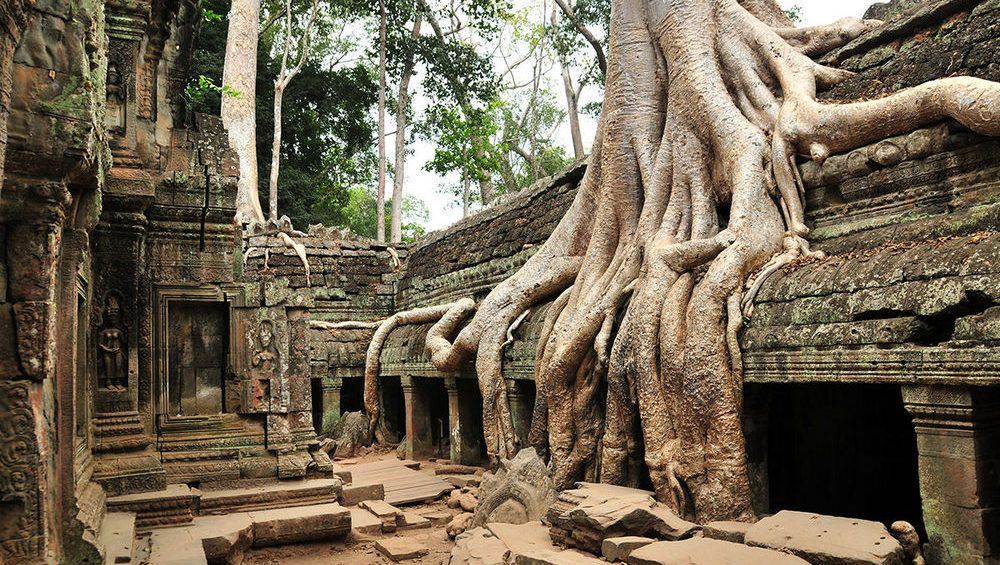
Ta Prohm, one of the area's most beautiful temples. Ta Prohm has been relatively untouched since it was discovered and retains much of its mystery.
Constructed: Mid 12th - Early 13th century C.E.
Religion: Buddhist
King/Patron: Jayavarman VII
Style: Bayon
Ta Prohm, a Bayon-style temple, is believed to have been built in the late 12th and early 13th centuries. It was founded by King Jayavarman VII as a Mahayana Buddhist monastery and university. Located within the magnificent Angkor Archaeological Park in Siem Reap, Ta Prohm reflects the spiritual and architectural achievements of the Khmer Empire. Unlike most Angkorian temples, Ta Prohm has been left largely in the same condition in which it was discovered, allowing nature to intertwine with the ancient ruins. The photogenic combination of enormous trees growing out of stone structures, sprawling roots, and lush jungle surroundings has made it one of Angkor's most popular temples with visitors, offering a unique glimpse into Cambodia's fascinating historical and natural heritage.
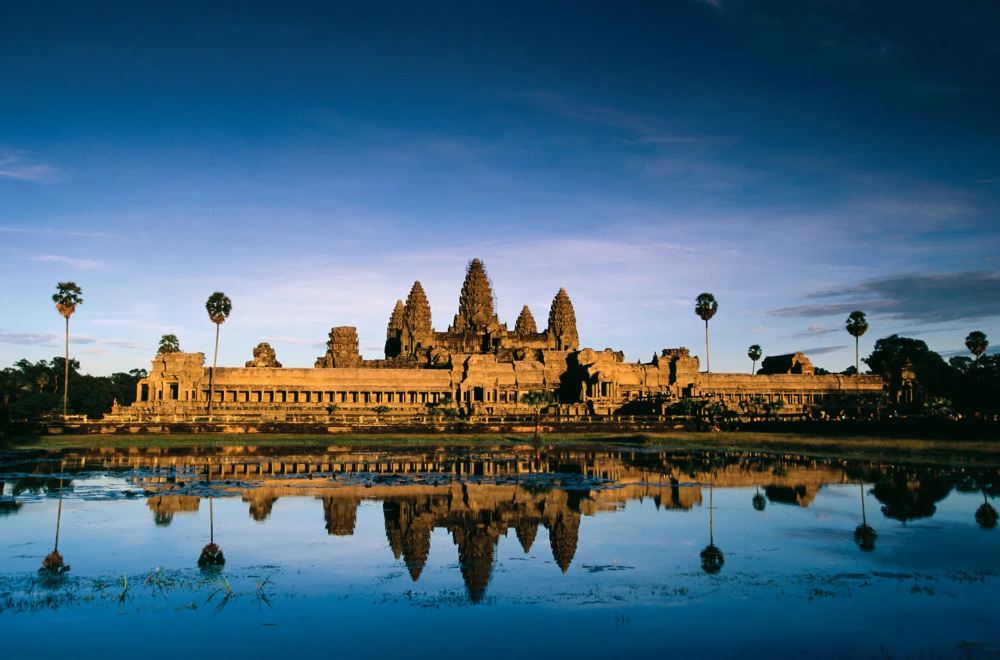
Then visit the most famous of all the temples on the plain of Angkor: Angkor Wat, the crown jewel of Cambodia and one of the most iconic religious monuments in the world. The temple complex covers approximately 81 hectares and is comparable in size to the Imperial Palace in Beijing. Originally constructed in the 12th century under King Suryavarman II and dedicated to the Hindu god Vishnu, Angkor Wat later became an important Buddhist sanctuary. Its distinctive five towers are emblazoned on the Cambodian national flag, making it a powerful symbol of the country's identity and cultural heritage. This 12th-century masterpiece is considered by art historians to be a prime example of classical Khmer art and architecture, renowned for its harmonious design, intricate bas-reliefs, and remarkable stone carvings. Discover the grandeur of this UNESCO World Heritage Site and gain a deeper appreciation of the Khmer civilization that shaped the history and cultural identity of Cambodia.
Angkor Wat
Constructed: Early – Mid 12th century C.E.
Religion: Hinduism
King/Patron: Suryavarman II
Style: Angkor Wat
Angkor Wat, which literally means “City Temple,” is a magnificent Hindu temple complex designed to represent the heavens on earth. Located in Siem Reap, Cambodia, it is the crown jewel of the Angkor Archaeological Park and one of the most celebrated monuments of the Khmer Empire. Constructed for King Suryavarman II in the early 12th century, it is the best-preserved temple in the Angkor complex and the only one to have remained a significant religious center since its foundation, first as a Hindu temple dedicated to Vishnu and later as a Buddhist sanctuary.
The temple is the epitome of the high classical style of Khmer architecture, showcasing the remarkable artistic, engineering, and spiritual achievements of ancient Cambodia. This magnificent monument combines two basic plans of Khmer temple architecture: the temple mountain and the later galleried temple, influenced by early South Indian Hindu architecture. Constructed within a moat and an outer wall approximately 3.6 kilometers (2.2 miles) long, Angkor Wat features three rectangular galleries, each raised above the next, symbolically representing Mount Meru, the sacred home of the devas in Hindu mythology.
At the center of the temple stands a quincunx of towers, forming its distinctive and iconic silhouette. Unlike most Angkorian temples, Angkor Wat is oriented to the west, a feature whose significance continues to be discussed by scholars. The temple is admired for the grandeur and harmony of its architecture. Its extensive bas-reliefs and numerous guardian spirits adorning the walls offer fascinating insights into the religious beliefs, mythology, and artistic traditions of the Khmer civilization.
At the end of the day, enjoy a breathtaking sunset from the top of Phnom Bakheng Mountain, one of the most popular viewpoints overlooking the Angkor Archaeological Park. Take in the panoramic views of the surrounding jungle and the magnificent landscape of Angkor as the sun sets over Siem Reap, bringing your memorable journey through Cambodia's ancient Khmer heritage to a beautiful close.
Back to hotel for the night. End of the tour (Dinner not included)