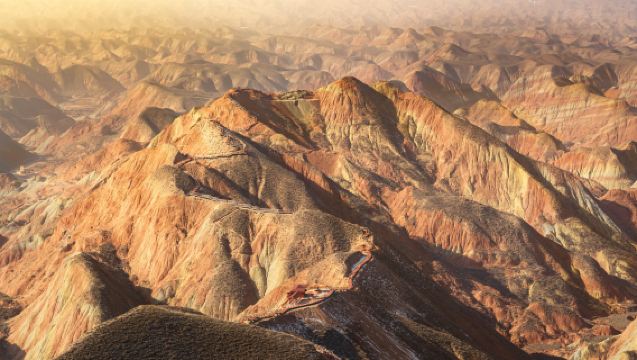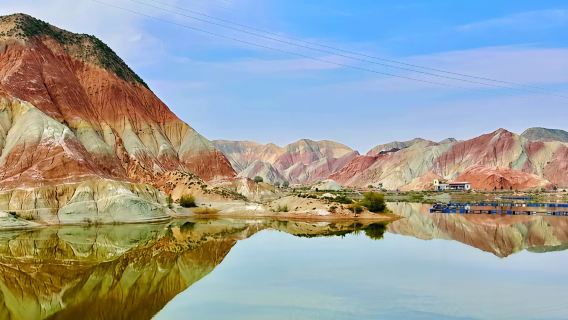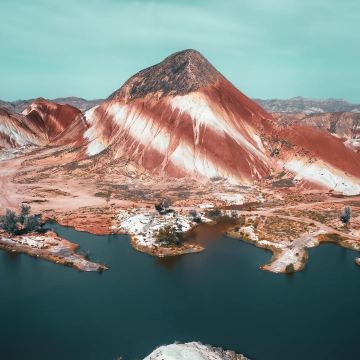

▲ Time wields its brush, painting endless danxia scrolls across the arid land of Kushi. Hundreds of millions of years of geological shifts and erosion have sculpted layered, colorful hills—bands of ochre, orange, slate blue, and pale purple winding along the slopes, crisscrossed by ravines and intricate textures. The distant mountains stand majestic, while nearby ridges dazzle with hues. Across the wilderness, the undulating hills stretch without sharp cliffs, only the earth's gentle, flowing contours. As sunlight shifts, the mountains transform—their colors intensifying under the glow of sunset, vivid and grand. Standing in this vast expanse, you witness a tapestry of land and sky, a unique northwestern epic of earth's palette.
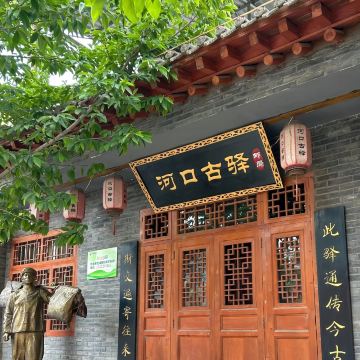

▲ The surging Yellow River meets the Zhuanglang River in a confluence that cradles He Kou Ancient Town, once hailed as the western gateway of the Golden City and a millennia-old ferry along the ancient Silk Road. Bluestone-paved lanes wind through its four streets and seventeen alleys, whispering tales of time. Ming and Qing courtyards stand in harmonious disarray, adorned with exquisite brick-and-wood carvings, while the bell-and-drum tower watches silently over the eternal river. Once a bustling port where boats plied and camel bells echoed, the town preserves remnants of its mercantile glory, including Gansu's first customs house. Stroll through lantern-lit alleys where intangible heritage like He Kou gauze lanterns and military Nuo dance thrives, as the river's breeze weaves through. Between the vast river and tranquil lanes, every brick and tile etches stories of the Silk Road intertwined with the Yellow River's timeless flow.