



▲ Beihu Wetland Park unfolds around the lakes and shallow wetlands in northern Changchun. The willow causeway, Thirteen-Arch Bridge, view tower, and long waterfront boardwalks connect the water surface, reeds, and woods. On both sides of Beihu Bridge, there are distinctive lake bays and garden views, making this place not only a wetland habitat but also a distinctive urban park scale.

▲ Wanshou Temple is located in the Changchun North Lake area, with its history dating back to the Qing Dynasty. The current buildings and courtyards were reconstructed in later periods. The vermilion mountain gate, temple eaves, and layered courtyards form the spatial sequence of a Buddhist temple. Surrounded by the waterside and woods of North Lake, it presents an open environment distinct from temples in the city center.
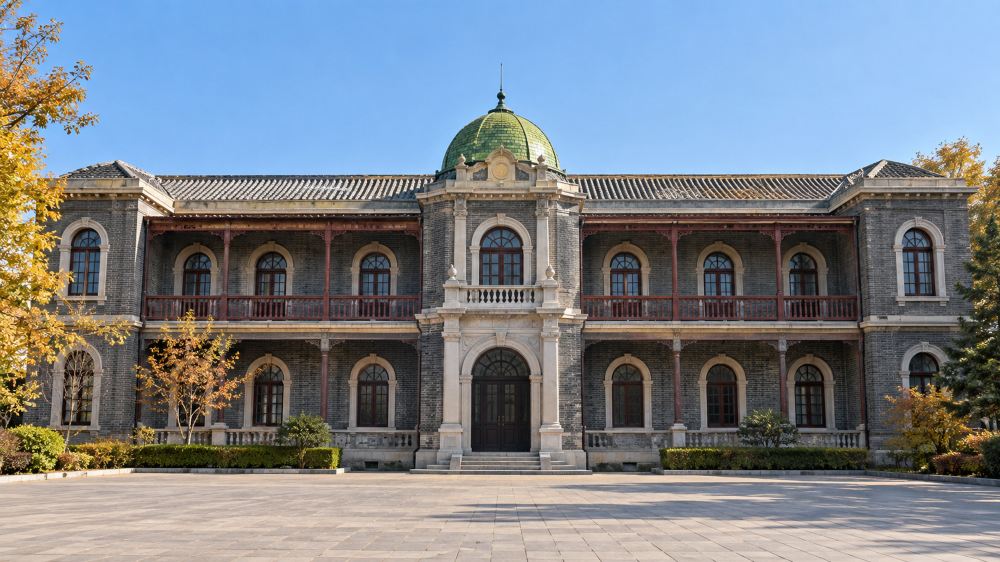
▲ The PALACE MUSEUM OF THE PUPPET MANCHUKUO is located at No. 5, Guangfu North Road, Kuancheng District. It preserves the palace site used by Puyi during the puppet Manchukuo period established with Japanese support. Its predecessor was related to the salt administration agencies of Jilin and Heilongjiang provinces. From 1932 to 1945, it served as Puyi's imperial residence. It began functioning as an exhibition site in 1962 and was renamed the PALACE MUSEUM OF THE PUPPET MANCHUKUO in 2000. The architecture, original displays, and historical materials collectively present the relationship between personal destiny and the history of Northeast China's occupation.

▲ Changchun Confucius Temple Museum is located on Dongtian Street, with Confucius temple architecture and traditional ritual culture as its themes. The courtyards, halls, and central axis space present the architectural order of Confucius worship sites, while also allowing visitors to understand the historical and cultural layers of Changchun through architectural details.