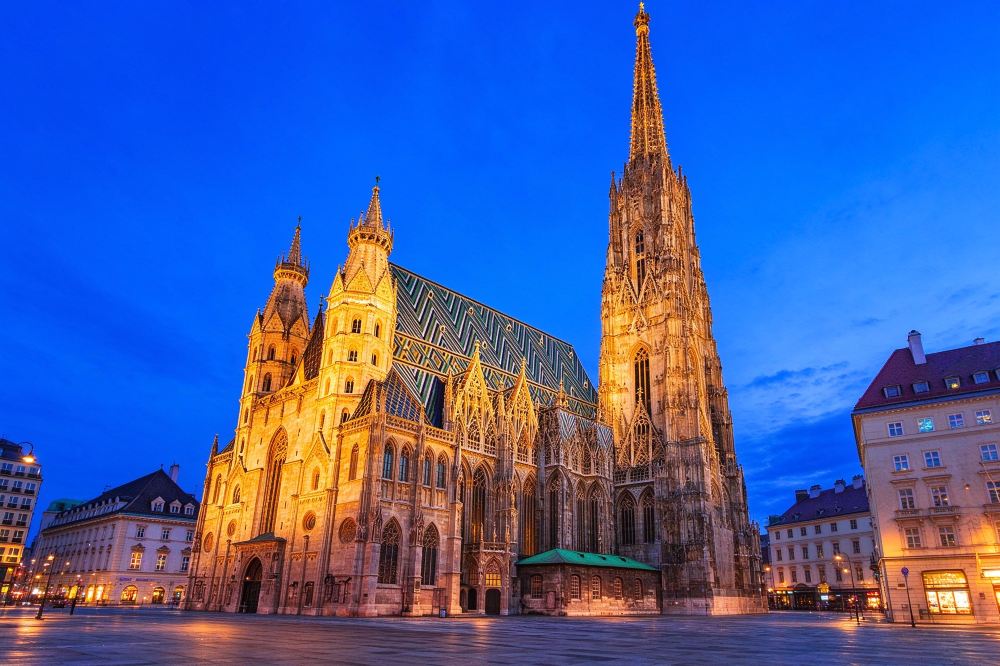
▲ A city landmark of Vienna, the magnificent Gothic St. Stephen's Cathedral, the seat of the Archbishop of Vienna. Recognizable by its iconic green and yellow tiled roof and towering south spire, it stands at the central square of the old town. The square is surrounded by old-town cafes and souvenir shops, serving as both the starting point of Vienna's historic center and a meeting hub for locals and travelers.
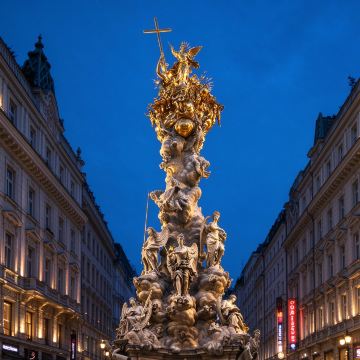

▲ Vienna's famous historic pedestrian street features smooth and wide pavement, lined with Baroque buildings, various shops, and long-established cafes. At the center of the street stands an ornate white plague column, a monument built in the 17th century after Vienna's plague ended. The entire avenue exudes the grandeur of the Habsburg Empire.
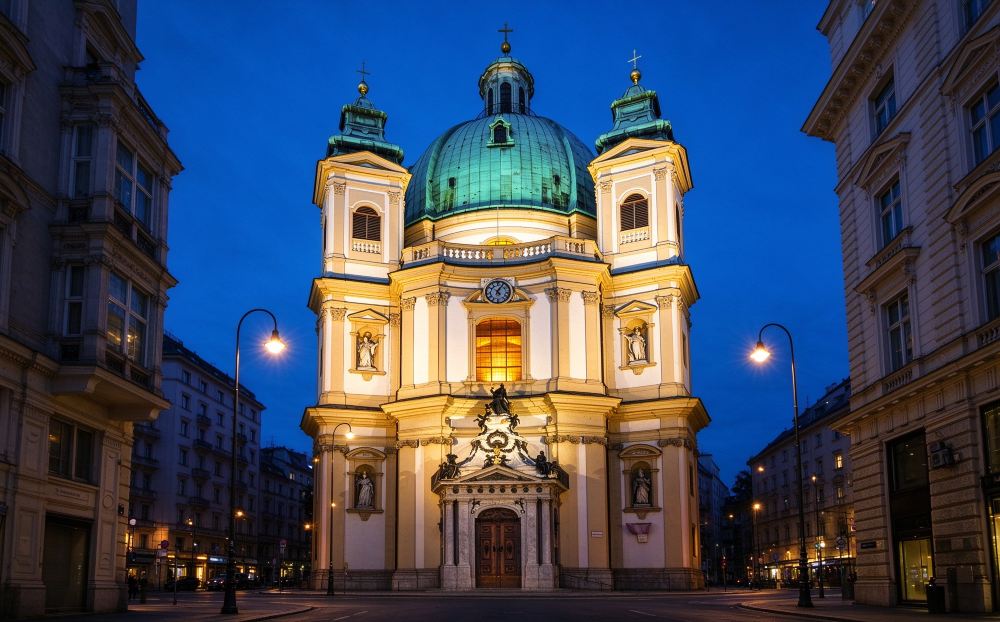
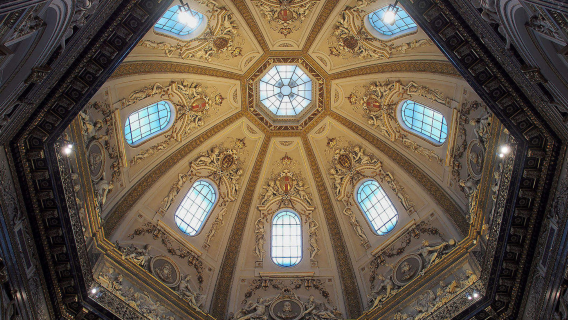
▲ A Baroque gem hidden beside Graben, featuring a green dome paired with an exquisite facade. The interior is resplendent with gold, adorned with numerous golden sculptures and painted domes. Though compact in size, its decoration is extraordinarily lavish, making it a representative of Vienna's Baroque churches. Quiet and refined, it forms a striking contrast with the bustling street outside.
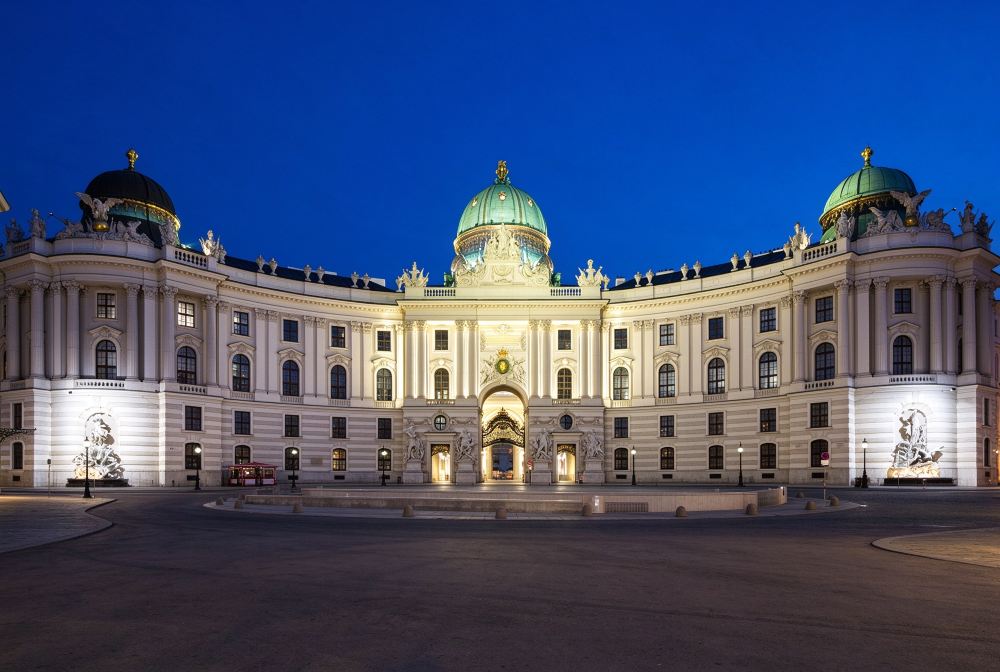
▲ The imperial palace of the Habsburg dynasty, a vast palace complex. Michaelerplatz is the entrance square to the palace, featuring a grand curved facade and exquisite gates, with remnants of ancient Roman ruins visible on the square's ground. The exterior square and the palace's open public courtyards can be freely traversed, offering views of palace arches, courtyard greenery, and classical sculptures. This was once the residence of the Austrian royal family, exuding an imperial aura.
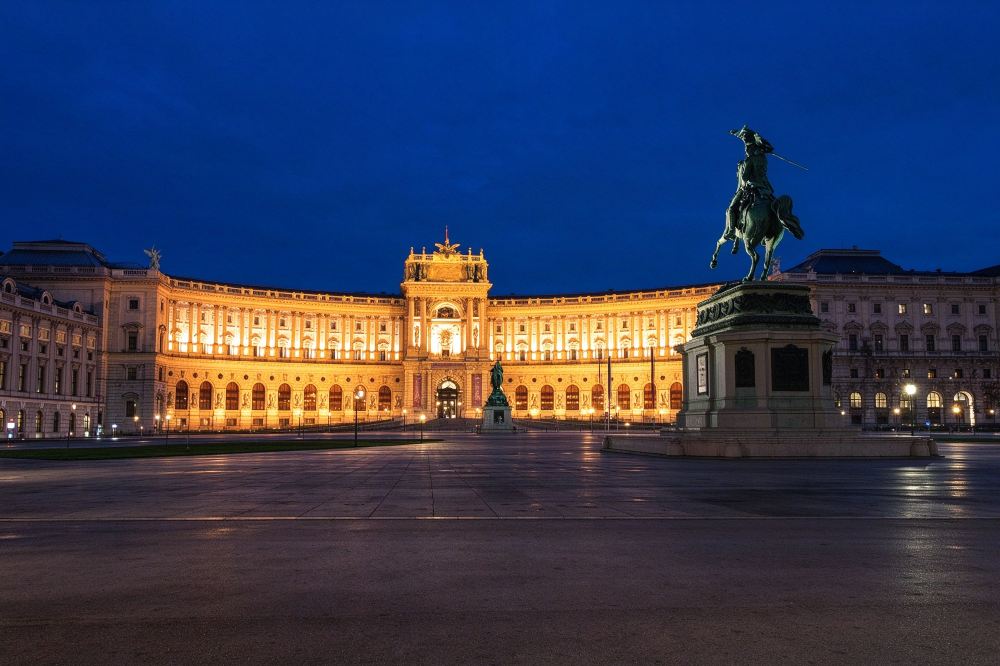
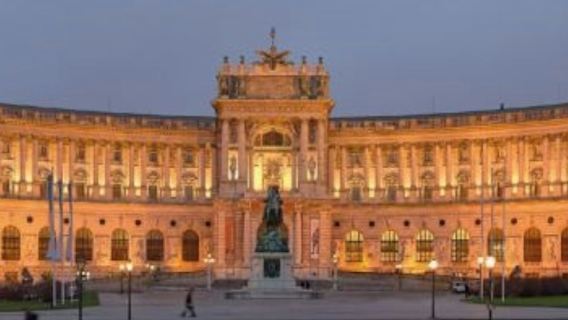
▲ The vast square in front of Hofburg Palace's Neue Burg offers an unobstructed view. Two towering bronze equestrian statues of heroes stand on the square—one depicts Prince Eugene of Savoy who defeated the Ottomans, the other Archduke Charles. From here, one can admire the magnificent long facade of Hofburg Palace, creating a grand and awe-inspiring space.