▲ Package analysis: Our company specializes in family trips, offering a more worry-free experience by avoiding travel with strangers. Inclusions cover private car tour costs and attraction admission ticket fees. Hiking package tour of Jizu Mountain: includes door-to-door pickup and drop-off, round-trip transportation to Jizu Mountain, Jizu Mountain admission ticket, driver service fee, and travel insurance fee. Cable car package tour of Jizu Mountain: includes door-to-door pickup and drop-off and round-trip transportation fare to Jizu Mountain, Jizu Mountain admission ticket fee, Jizu Mountain round-trip cable car fee, upper section round-trip electric bikes fee, and travel insurance fee. Simply place your booking based on the number of passengers and the required vehicle type. With more people sharing the fare, you can enjoy an instant discount at checkout. Tips: In the event of peak season/holidays/traffic control, vehicles can only reach the Siqian Village parking lot; a sightseeing shuttle is required at your own expense: one-way 15, round-trip 30 per person.
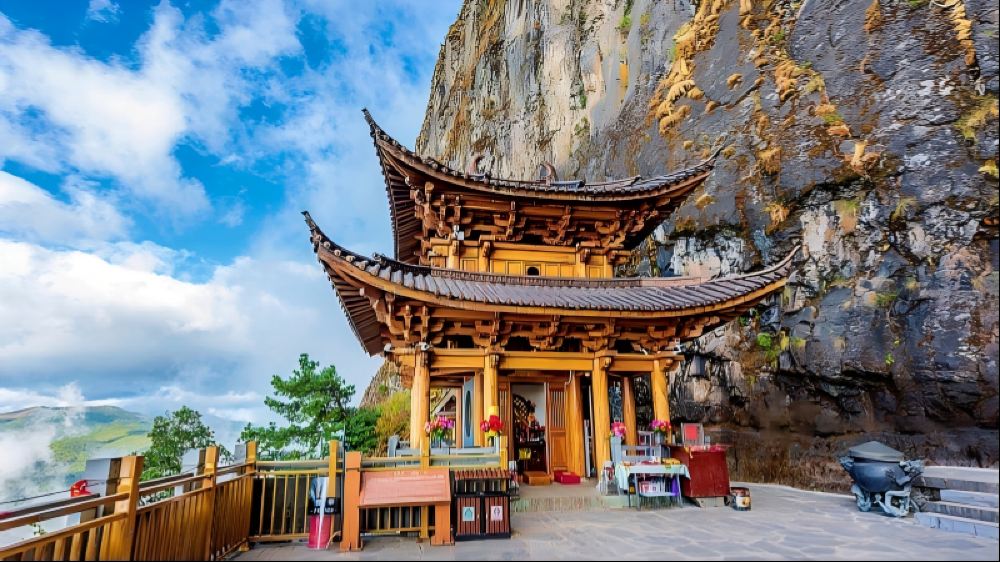
▲ Huashou Gate, situated on the sheer cliff of Sheshen Cliff southwest of Tianzhu Peak on Jizu Mountain, is the core sacred site of Jizu Mountain's Kassapa Bodhimanda and the source of Jizu Mountain's Buddhist culture. It is a naturally formed stone cliff wonder, not a man-made structure: approx. 40 m high and 20 m wide, with cliff walls as steep as if cut by a knife. A vertical stone crevice divides the rock face into two stone doors, and a huge boulder hangs in the crevice like a stone lock holding the doors tightly shut. The lintel and eaves are naturally formed, the cliff face bears stone inscriptions reading "Place where Venerable Mahākāśyapa entered meditative concentration" and "Soaring to the heavens," and an ancient pine known as the "Finger-snap Pine" stands at the upper left.
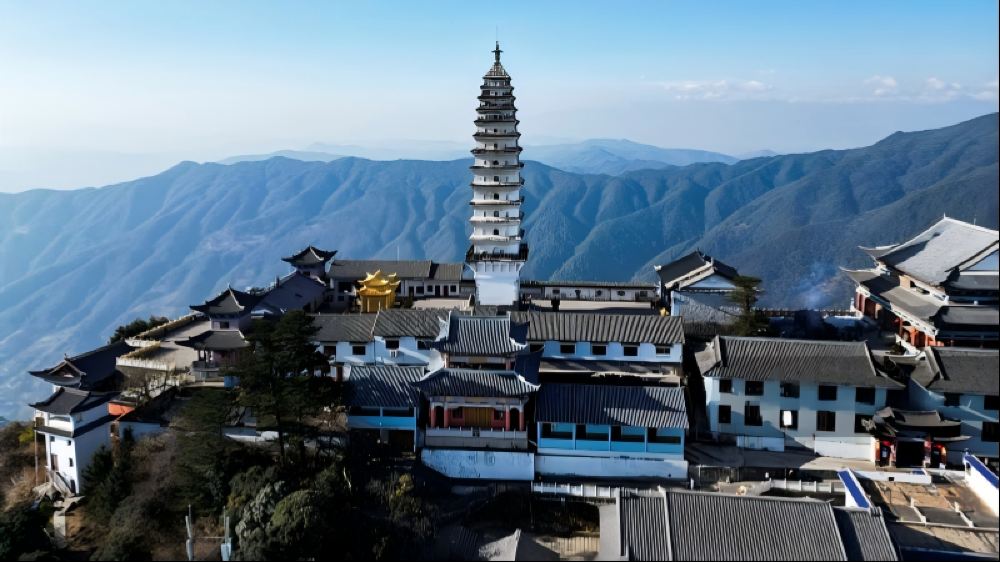
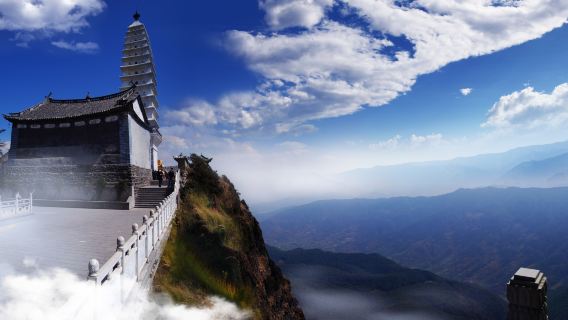
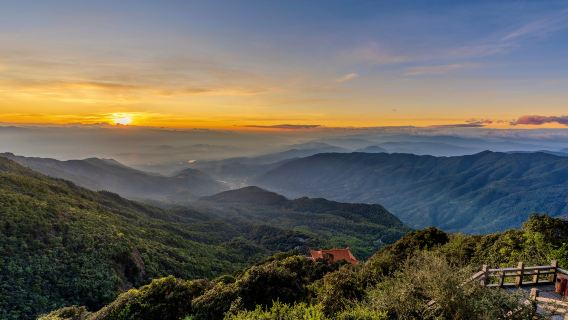
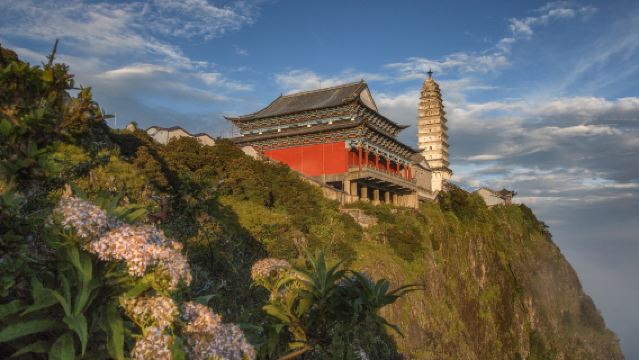
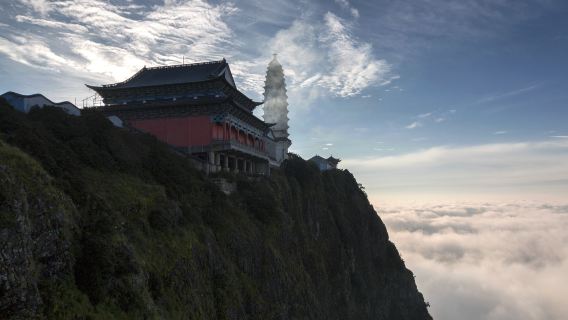
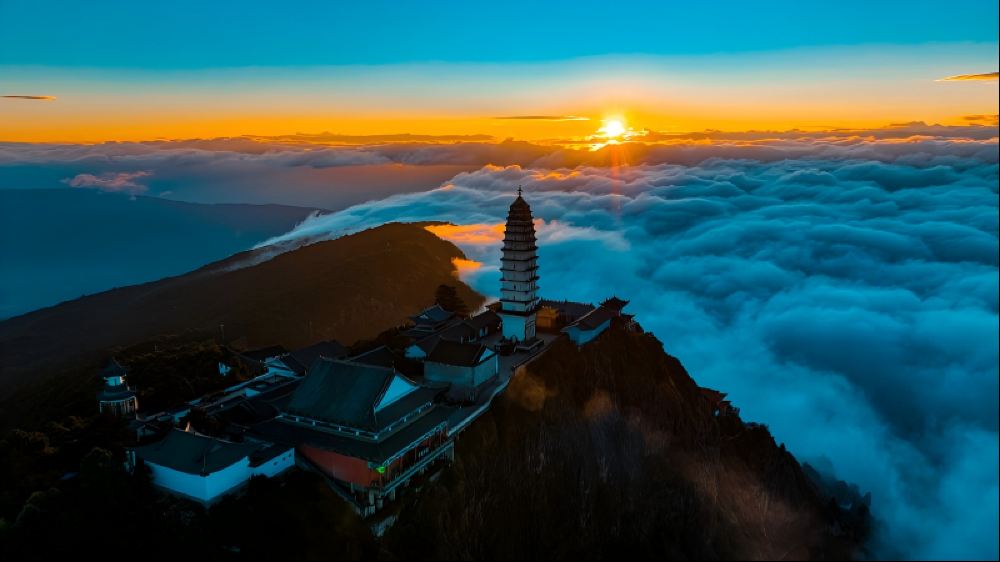
▲ Jinding Temple is located at the summit of Tianzhu Peak, the main peak of Jizu Mountain, at an elevation of 3248 m. It is the highest point of Jizu Mountain and the endpoint of the Kassapa Bodhimanda. First built during the Hongzhi period of the Ming Dynasty, in the 14th year of Chongzhen of the Ming Dynasty, Mu Tianbo, Duke of Qian, relocated the bronze golden hall of Taihe Palace in Kunming to this site, hence the name Jinding Temple. The Lengyan Pagoda within the temple is 42 m tall, a square dense-eave brick pagoda with 13 stories outside and 7 levels inside. It was built under the supervision of Long Yun in 1934 and served as an important navigational marker on the Hump Route during the War of Resistance.