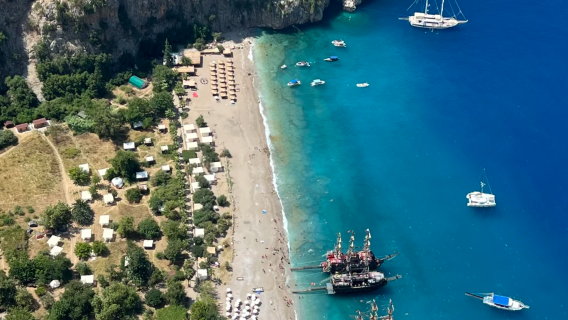
▲ Butterfly Valley | Butterfly Valley Address: South side of Oludeniz, at the foot of Babadag Mountain Introduction: A secluded and deep canyon flanked by vertical cliffs hundreds of meters high, with a beach, stream, and small waterfall at the bottom, named for the large gathering of Jersey tiger moths in summer. There is no road; most visitors arrive by boat from Oludeniz, and it is also a hiking section of the Lycian Way.

▲ Love Cave | Könül Plajı / Heart Cave Address: Beside the D400 highway, from Fethiye towards Kas, near Oludeniz Introduction: A hidden natural coastal cave where the entrance naturally forms a heart-shaped outline. Sunlight streams through the opening, casting romantic light and shadows, and the water is a jelly-like color. It is a trendy check-in spot along the D400 route. There is no direct road access; visitors must hike downhill from a roadside path to reach it. The terrain is rugged, making it ideal for photography. Tour tip: This is an unofficial attraction with no supporting facilities. Non-slip shoes are recommended; the cave entrance is submerged by seawater at high tide, so it is best to visit during low tide.

▲ Dead Sea Beach (Oludeniz) | Ölüdeniz / Dead Sea Beach Address: Fethiye, Ölüdeniz, Muğla Introduction: A famous blue lagoon in Türkiye, the calm lagoon water has gradient layers, blue-green jelly sea, and fine sandy beach. Babadağ Mountain is right behind, it is a world-class paragliding takeoff site, and the paragliding landing point is right on this beach. The name "Dead Sea" comes from the sea surface being calm all year round, not the Dead Sea in Jordan.


▲ Ghost village (Kayaköy) | Kayaköy (Ghost Village) Address: Approx. 8km south of Fethiye, near Oludeniz Introduction: An abandoned Greek village, formerly named Livissi. Following the 1923 Greek-Turkish population exchange, the original Greek inhabitants moved away and the village was abandoned. Over 500 ruined stone houses and the remains of two Greek churches survive here. The mottled, crumbling walls create a strong atmosphere, making it an open-air museum village.

▲ Tomb of Amyntas | Tomb of Amyntas (Amyntas Rock Tomb) Address: Kesikkapı Mahallesi, Fethiye (southern hillside of Fethiye town center) Introduction: A classic rock-cut tomb of the Lycian civilization, dating to the 4th century BC (approx. 350BC), with an Ionic temple-style facade carved directly into the rock face. The inscription records the tomb owner as Amyntas, and it is a landmark of Fethiye. Climbing the steps offers a panoramic view of the entire town of Fethiye and the bay.

▲ Inclusions: full-day vehicle service for the itinerary, driver service, downtown hotel transfers, attraction admission tickets listed in the itinerary, customer support concierge service Exclusions: Meals are not included; lunch is self-arranged; Secondary paid items within the attraction; All personal expenses during the trip and fees not mentioned in the "inclusions";