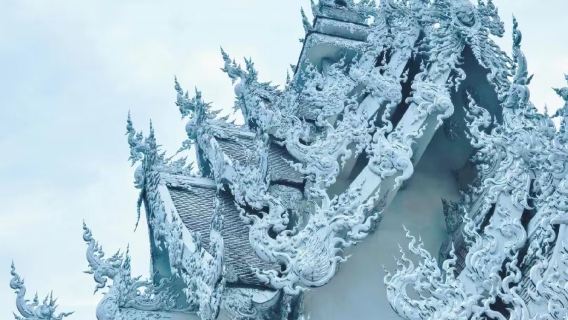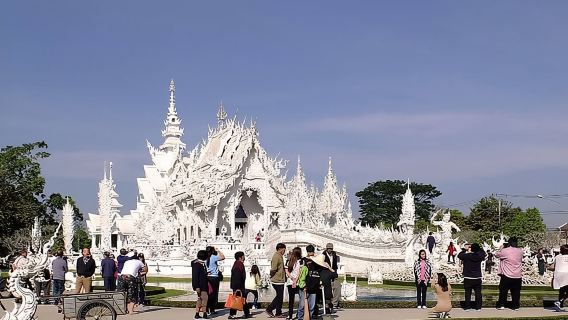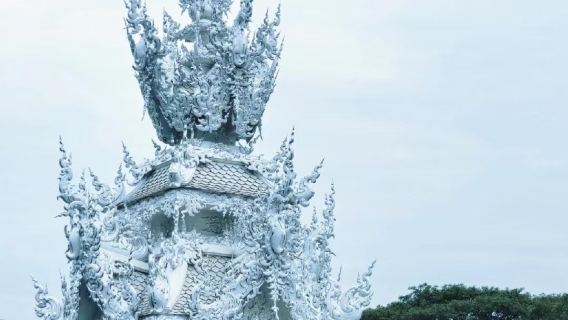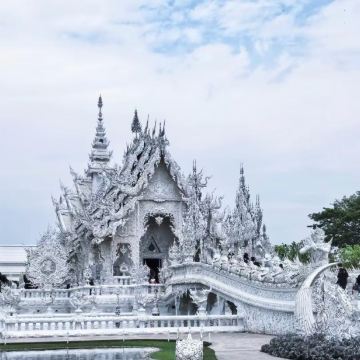

▲ The full name of Chiang Rai's Wat Rong Khun - White Temple is Wat Rong Khun Art Temple. It is a top-tier internet-famous art temple in northern Thailand, overturning the golden splendor of traditional Thai temples. The entire structure is pure white, with tens of thousands of mirrored glass fragments embedded in its walls. On sunny days, sunlight pours down and the whole temple glitters, like an icy crystal sacred hall floating in the human world—ethereal and highly photogenic. The iconic view unique to Wat Rong Khun - White Temple is the Bridge of Rebirth leading to hell, with its sides covered in layer upon layer of "hands of hell" sculptures, symbolizing worldly greed, anger, and ignorance along with countless desires. It conveys the meaning of moving forward across the bridge without looking back, letting go of troubles and heading toward a pure land, combining a sense of ritual with philosophical depth. Inside the hall, the intricate hand-carved ornamental details are fully expressed, and the murals blend traditional religious stories with modern creative elements, creating a visual impact through the collision of ancient and modern.

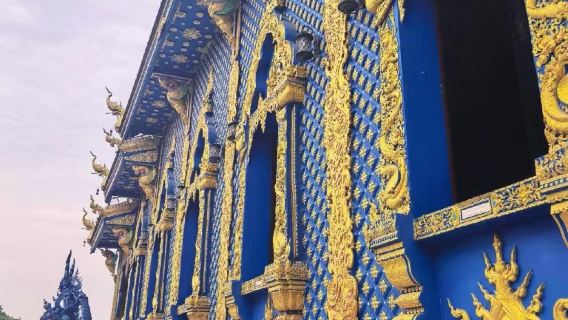
▲ Wat Rong Suea Ten is a newly emerging hidden-gem temple, meticulously crafted by a disciple of the White Temple's designer. Its style is truly one of a kind, offering an escape from the crowds and focusing on tranquility, sacredness, and understated luxury. The entire temple is dominated by a translucent, deep gradient indigo, complemented by delicate and ornate gilded carvings and flying-eave totems. The cool-toned blue and warm-toned gold blend perfectly—unassuming yet solemn and dynamic, like a giant sapphire set amidst the mountains and forests of northern Thailand. At the temple entrance stands a giant Naga dragon sculpture, with intricate scale patterns and a magnificent presence, making it a great photo spot. The main hall enshrines an oversized seated white jade Buddha, pure white and solemn, complemented by ceiling murals in blue with gold lines. Looking up, you are greeted with Zen aesthetics everywhere, creating a serene and healing atmosphere.
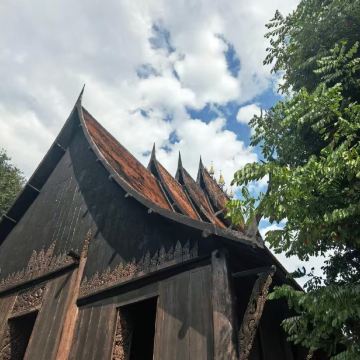

▲ A private art museum created over 36 years by a Thai national treasure-level artist, it is also a unique and distinctive off-the-beaten-path photo spot in Chiang Rai, featuring dark art aesthetics. The entire park is composed of dozens of Lanna-style black teak buildings. The deep black wooden structures paired with tropical greenery create a mysterious, retro atmosphere with plenty of character. The museum houses a large collection of art pieces, including horn crafts, rare animal skins, ancient bone sculptures, and vintage wooden ornaments. Each exhibit carries artistic contemplation, telling stories of humans and nature, life and art. Baan Dam Museum does not focus on Zen-like spirituality; it emphasizes a humanistic art experience, with a niche, unique style and extremely high recognizability, forming a contrast with the pure white and sacred Wat Rong Khun - White Temple and the deep blue and serene Blue Temple. Visitors who enjoy niche aesthetics, humanistic photography, and distinctive photo spots should not miss this one-of-a-kind dark art sanctuary.
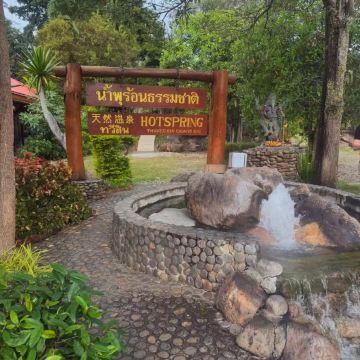

▲ Along the way, first arrive at Maekhajan Hot Spring, where you can get off to rest and experience the natural hot spring. A pristine geothermal hot spring with warm and comfortable waters, rising steam, and fresh, natural air. Unlike large commercial hot springs, this spot focuses on a relaxed and casual short-stop experience with no long queues. Pause and rest midway through your journey, step into the warm spring waters, breathe in the fresh mountain forest air, relieve the lower back soreness from sitting long hours in the car, and shake off travel fatigue. As the golden transfer hub of the Chiang Rai 1-day tour, take a brief stop to relax your body and mind, rest and replenish, then continue visiting the three great temples in full spirits, keeping the whole journey relaxed and comfortable without rushing.