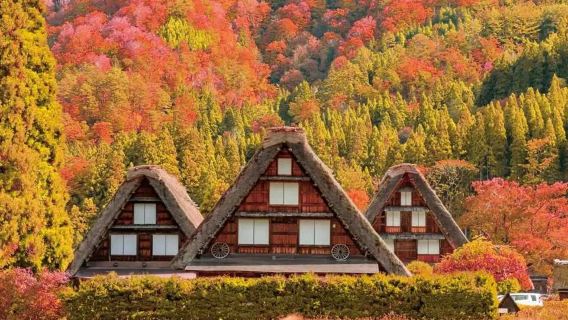
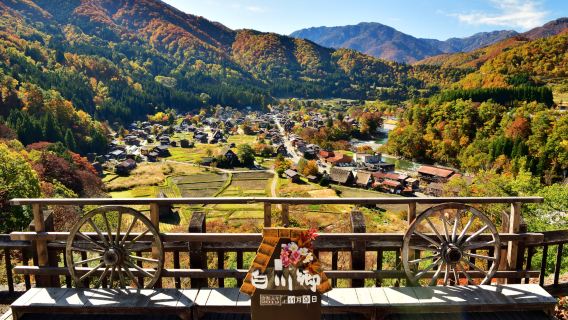
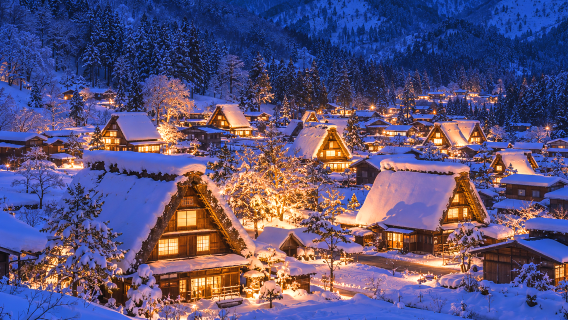
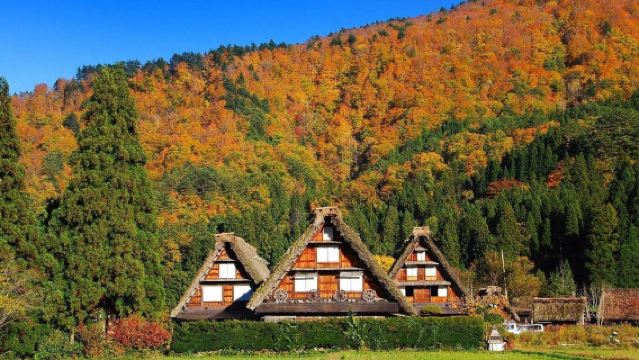
The gassho village in Toyama is officially called "Gokayama" and mainly includes the Ainokura gassho-zukuri village and Suganuma gassho-zukuri village, sharing equal fame with Shirakawa-go in Gifu prefecture.
Limited lighting activity in Toyama gassho village on October 7, October 14, 2027 January 13 and January 27


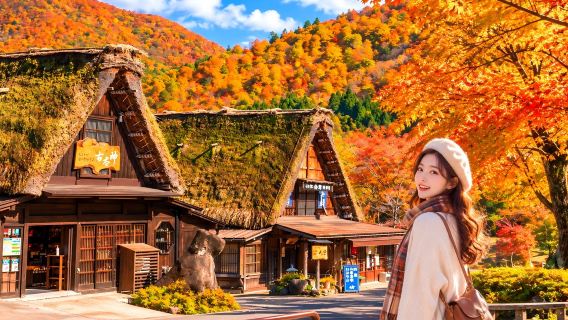
Three villages were collectively inscribed as a UNESCO World Heritage site in 1995. Depart from Nagoya Station and visit the historic gassho-zukuri villages of Shirakawa-go, a UNESCO World Heritage site. Stroll through the ancient villages filled with the atmosphere of fall, admiring the traditional gassho-style architecture and mountain scenery.
Gokayama is located in the secluded mountains of Nanto, Toyama Prefecture, and consists of traditional settlements such as Ainokura and Suganuma. Due to its long isolation from the outside world, it has preserved the ancient mountain village scenery and traditional lifestyle culture intact.
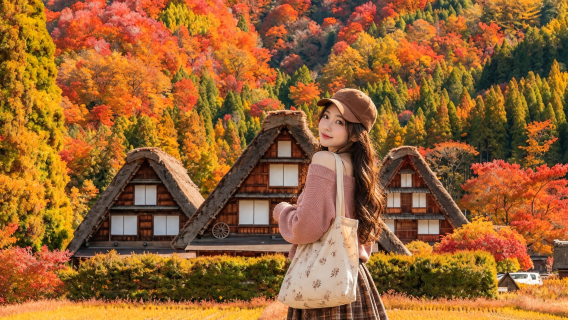
The village's representative "gassho-zukuri" farmhouses are named for their steep thatched roofs resembling hands in prayer. This unique structure can withstand heavy snowfall in winter, and the spacious attics were once used for silkworm cultivation, embodying the wisdom of snow country residents adapting to their environment. Compared to the bustling Shirakawa-go, Gokayama is smaller and more tranquil, with relatively fewer travelers. Strolling among the ancient houses, rice fields, and mountains allows for a more leisurely appreciation of Japan's traditional satoyama landscape.


[Local cuisine]
• Gokayama tofu
The texture is firmer than regular tofu, with some even saying "it can be tied with a string." It's suitable for pan-frying, grilling, stewing, or making dengaku tofu.
• Salt-grilled rockfish
The whole iwana fish, grown in mountain streams, is skewered and slowly grilled with salt, resulting in crispy skin and tender flesh, making it a representative local mountain village dish.
• Gokayama soba
Made with mountain spring water, it has a refreshing taste and can be enjoyed with wild vegetable tempura.
• Wild vegetable cuisine
Wild vegetables such as bracken, bamboo shoots, and mushrooms are prepared as tempura, nimono, or cold dishes depending on the season.
• Pickled red turnips
Made from locally grown red turnips through pickling, this sweet and sour crispy dish is a traditional side dish in Gokayama and also suitable as a souvenir.
• Tochi mochi and tochi senbei
Made with the fruit of the Japanese horse chestnut tree, it has a subtle nutty aroma and is a common traditional local snack.
In winter, you can also sample Toyama's specialty "turnip sushi," where fish is sandwiched between turnips and fermented with rice malt, offering a rich and unique flavor.
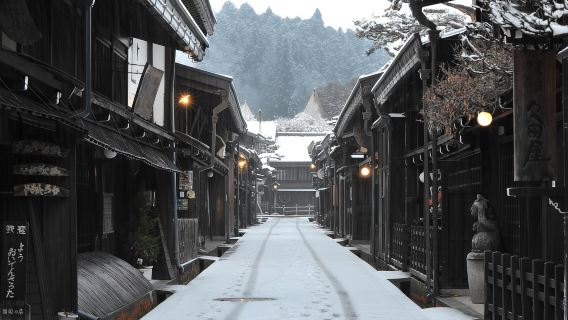
Takayama City is a "castle town" (a town developed around a feudal lord's castle) built around Takayama Castle from the 16th century. The entire city is predominantly wooden, with exquisite carpentry skills giving it a timeless charm. Since ancient times, Hida's wood carving techniques have been ranked among the best in Japan. Hida's carpenters have long been summoned to build palaces and residences for the Japanese imperial family, and many temples in the Kyoto and Nara regions were crafted by Hida artisans. To this day, these traditional crafts remain vibrant, representing the pinnacle of Japanese craftsmanship. Many streets in Takayama retain an elegant, ancient atmosphere, with numerous historic sites worth exploring for travelers. The temples, shrines, and river bridges here possess the grace of Kyoto, with some aspects even surpassing the charm of Kyoto itself.