Huangshan City


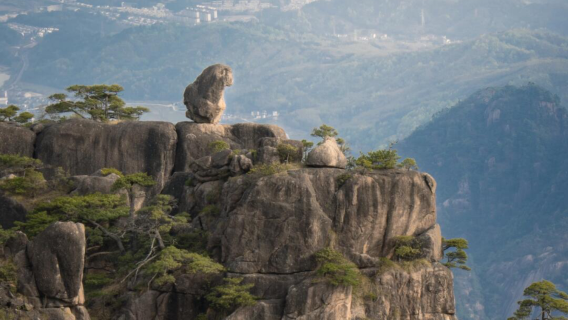
It is a famous mountain towering in the southern part of Anhui Province.
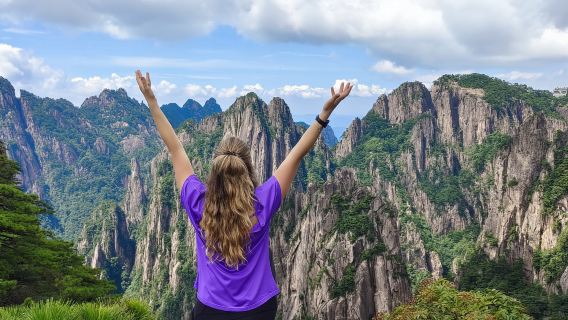
It consists of 72 peaks, with the highest being Lianhua Peak at an elevation of 1,860 meters.
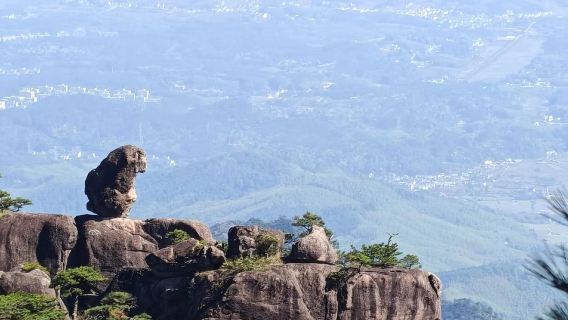
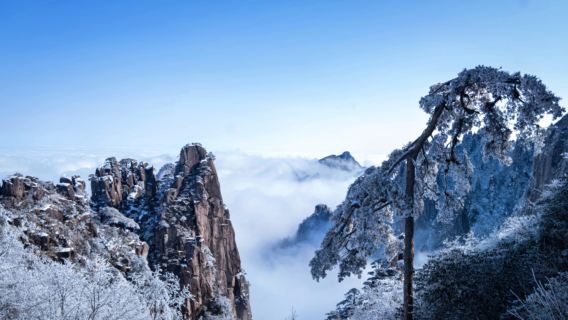
Towering peaks stand in rows, with pine trees growing on their rugged surfaces, all enveloped by a sea of clouds, creating a truly fantastical landscape.
The Ming Dynasty traveler Xu Xiake's famous saying, "After returning from the Five Great Mountains, no other mountains are worth seeing; after returning from Huangshan City, even the Five Great Mountains are not worth seeing," is still frequently quoted today.
The most outstanding features of Huangshan City are collectively known as the "Four Wonders of Huangshan": the uniquely shaped pines, the bizarre rocks, the sea of clouds, and the hot springs. The scenery transforms beautifully with the changing seasons.
It was registered as a "World Cultural and Natural Heritage" site in 1990.
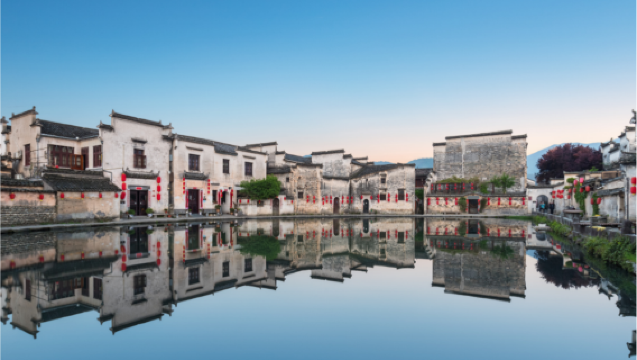
Hongcun Village


One of the villages scattered at the southern foot of Huangshan City that preserves Ming and Qing dynasty folk houses, it is the hometown of Anhui merchants.
During the Ming and Qing dynasties, many merchants from Anhui amassed enormous wealth through businesses dealing in salt, tea, ink, paper, and other goods. They brought their fortunes back to their hometowns and built magnificent mansions. As a result, beautiful rows of houses with white walls and black-tiled roofs emerged, resembling scenes from traditional Chinese paintings. These architectural treasures have been preserved to this day, seemingly left behind by urban modernization.
The largest building in Hongcun Village is called "Chengzhi Hall," which served as the residence of the Wang family. The village preserves 138 ancient houses, most of which date back to the Qing Dynasty.
Tunxi (Tonkei)

A town on the southern foothills of Huangshan City that flourished through tea trade. It's famous for Maofeng tea, with high-quality leaves grown at elevations around 800 meters.
Moreover, due to the scarcity of farmland, many people left to work elsewhere as migrant laborers, and merchants who achieved success through Yangzhou's salt trade also emerged.
With the economic power developed through these factors as a backdrop, many scholars gathered, and combined with Anhui Province's long-standing reputation as a famous production area for the Four Treasures of the Study, a unique culture was created.
Old Street (Rōgai)


Located in the heart of Tunxi District, this bustling commercial street stretches 1,272 meters long.
The stone-paved path is lined with old houses on both sides, featuring white walls and black tiles, numbering around three hundred in total.
Most of the buildings date back to the Ming and Qing dynasties, but they were constructed imitating the architectural style of the much earlier Song Dynasty, hence the area is also called "Song Street." Some original Song Dynasty structures still remain as well.
The items commonly sold in stores include ink sticks, inkstones, and paper from She County, as well as traditional Chinese medicines, dried bamboo shoots and chrysanthemums, and tea.
A place where you can feel the fragrance of culture and the essence of daily life, offering plenty of enjoyment just by looking around.