


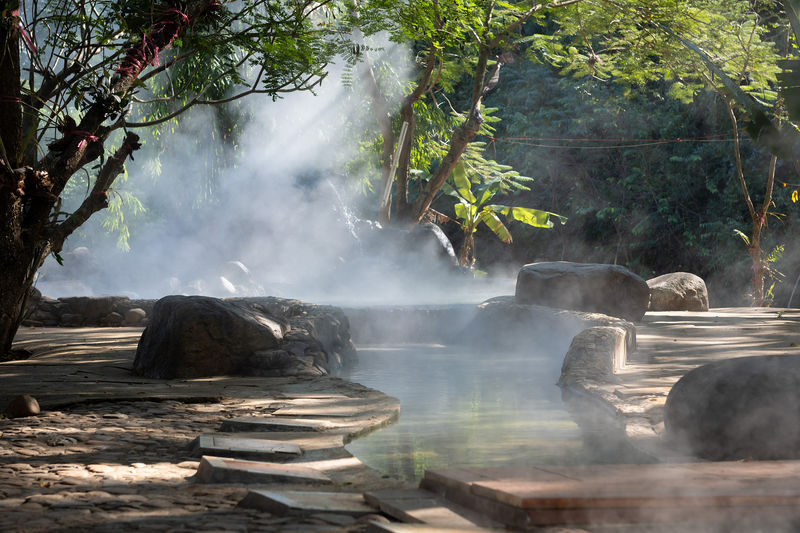
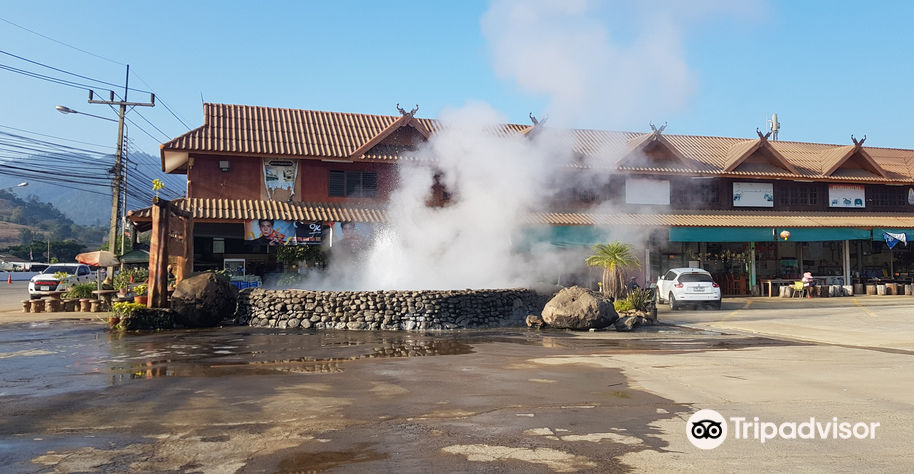
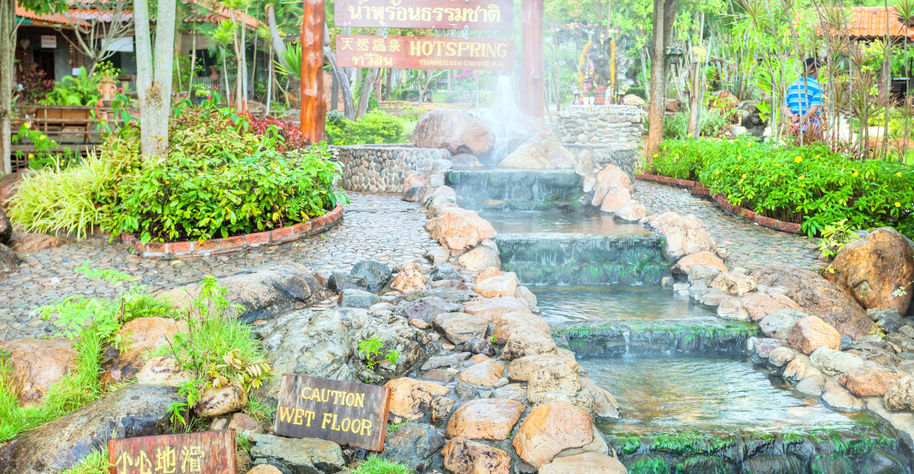

The Mae Khachan hot spring in Chiang Rai is a natural hot spring. According to the elders of Pong Nam Ron village, there was no village here in the past, only a primeval forest known as Pong Din. Large and small animals would often come down to lick salt, and the hot spring area also served as a passage for merchants traveling between Chiang Mai and Chiang Rai. Using oxen and horses as transportation, they would travel along the mountainside, making it an ideal overnight stop due to its spacious courtyard, convenient location, and the presence of natural hot springs.
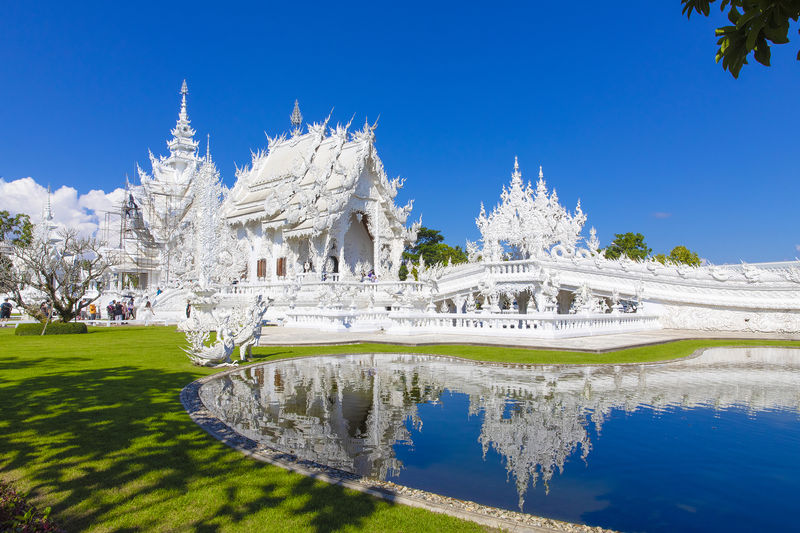
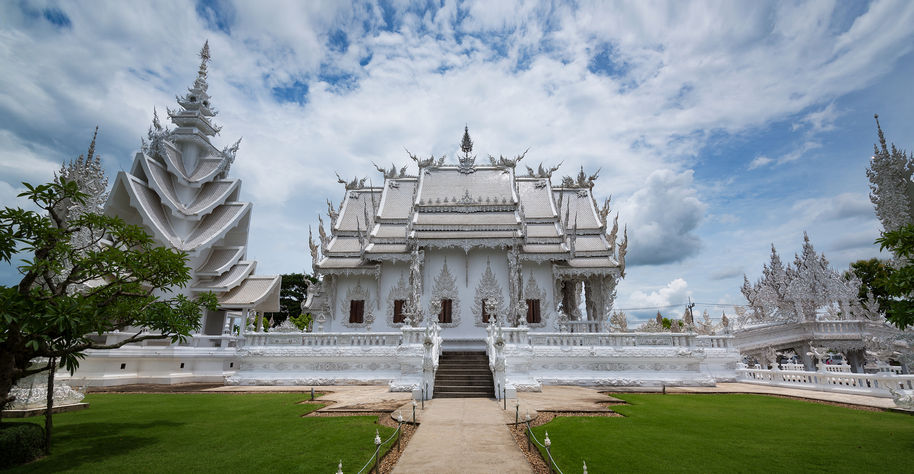
The highlight of Wat Rong Khun in Chiang Rai is its white-colored floor decoration in the ubosot (ordination hall). Adorned with captivating glass decorations, it appears beautiful and extraordinary. The stucco features Thai-style patterns. Particularly noteworthy are the Buddha images behind the main principal Buddha image and those on the northern side, decorated with mythical half-elephant, half-bird creatures. These look exceptionally beautiful, along with the murals inside the ubosot - all painted by Ajarn Chalermchai Kositpipat himself.
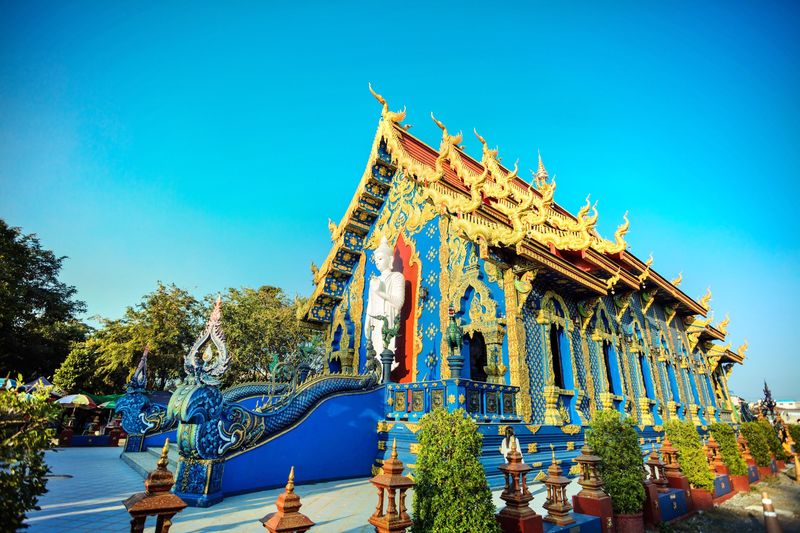
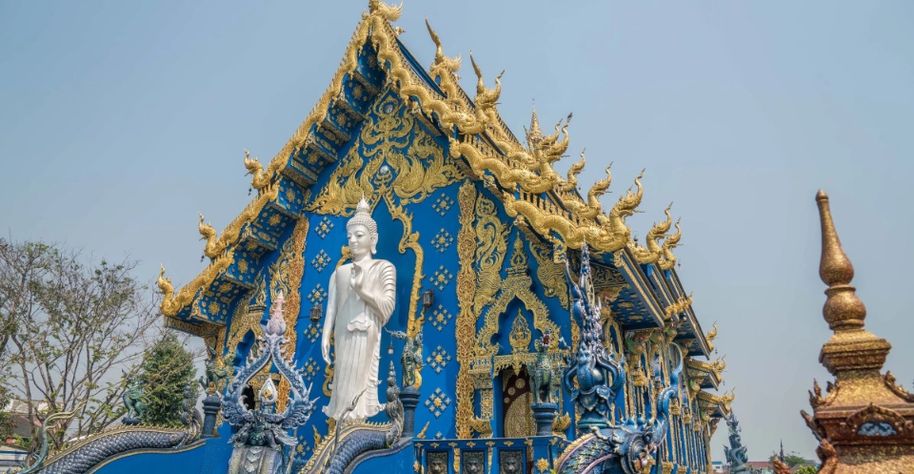
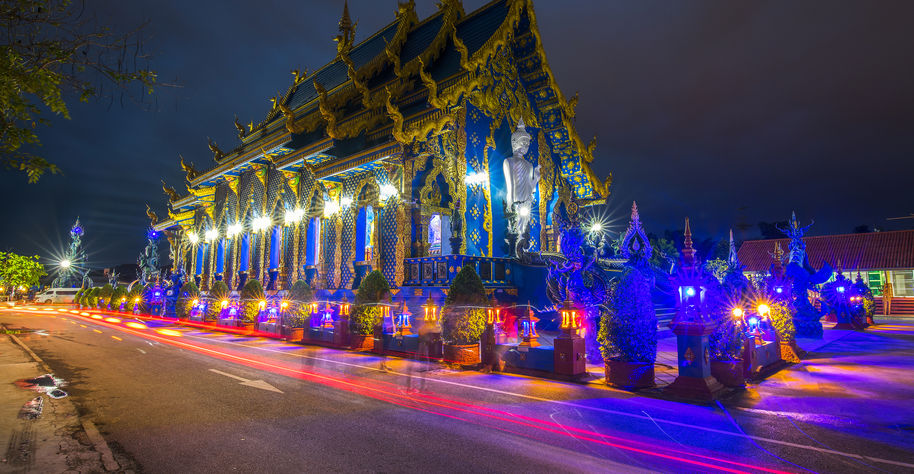
The Rong Suea Ten Temple in Chiang Rai has been renovated. This creative work originated from Ajarn Nok (Mr. Phutta Kapkaew) or Sala Nok, a reunion of local Chiang Rai artists and villagers from Rong Suea Ten. The temple hall was built to showcase contemporary Buddhist art that embodies the hidden teachings of Buddha. The temple walls feature deep blue and blue tones, creating a serene and cool atmosphere that contrasts beautifully with the intricate white and gold wall patterns. The flowing design, resembling a river, makes it stand out from other temples with its unusual colors. This concept aims to encourage Buddhists to return to temples to study Buddha's teachings for practical application in daily life.
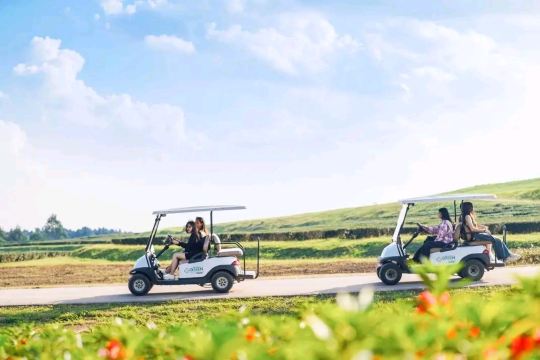
Chiang Rai long-neck village is a community gathering various hill tribes including Akha, Yao, Lahu, Padong, long-neck Karen and Palong. Each tribe residing here maintains unique living beliefs and cultural traditions. These tribes, since beginning their migration, have not established permanent settlements but form an institutional collective brought from northern regions of multiple provinces to create this village community. Singha Park Chiang Rai or Rai Boon Rawd serves as Thailand's agricultural tourism landmark featuring tea plantations, fruit orchards, ornamental plants, restaurants and cafes. Beyond being a renowned tourist attraction, Singha Park functions as a complete national-grade premium tea production base sourcing raw materials from its tea gardens. It also houses a high-quality tea factory as the production source, offering tea flavors through various food and beverage menus.
Reference itinerary
07:00-07:30 Pick up from hotel (exact time subject to actual arrangement)
-Visit Maekhajan hot spring
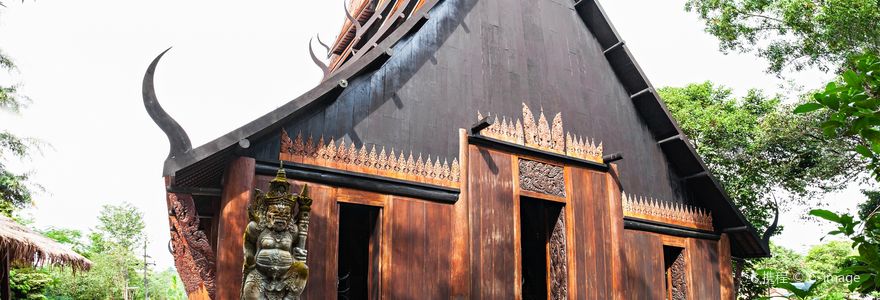
- Visit Baan Dam Museum
- Visit Wat Rong Suea Ten - Blue Temple
- Have lunch
- Visit Wat Rong Khun - White Temple
- Back to Chiang Mai (specific end time subject to transportation conditions on the day of travel)
The above itinerary is for reference only and subject to the actual arrangements on the day.
During certain periods, there may be fewer Chinese or English-speaking guests, which could result in Chinese guests joining English tours or English-speaking guests joining Chinese tours. For details, please contact customer support.
Some time slots may include combined tours with the long-neck tribe or Singha Park, which may require waiting. Please refrain from booking if this is a concern. Thank you~