[Product information]
This product is a guide service, not an admission ticket, not an admission ticket, not an admission ticket!!!
This product does not include the Temple of Heaven admission ticket! ! ! ! !
Guide itinerary please purchase the Temple of Heaven combo ticket (admission ticket + small attraction ticket) in advance
[Time slot description]
Morning session: 9:30 (9:10–9:20 meeting);
Afternoon session: 13:30 (13:10–13:20 meeting)
The specific meeting time and location will be provided by the guide.
[Package description]
Regular join-in tour: group size approx. 30–40 people;
25-person premium tour: group size up to 25;
Premium small group (15 people): Group size within 15 people;
Private tour for 1–10 people with private guide service
For VIP private tours and ticket-inclusive products for 10+ people, contact customer support
Tai chi experience package: Only includes a 1 hour experience session with no guide
[Itinerary details]
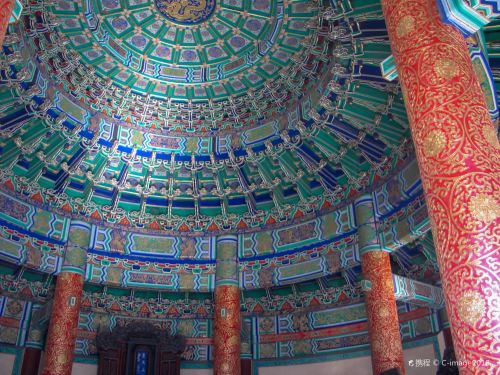
East Heaven Gate - The Seven Star Stone - Corridor of Temple of Heaven - Hall of Prayer for Good Harvests - Danbi Bridge - Nine-Dragon Cypress - Imperial Vault of Heaven - Echo Wall - Circular Mound Altar - South Heaven Gate
The visiting sequence at attractions may be adjusted based on attraction visitor volume
[Arrival method]
1: Subway: Take subway line 5 (toward Songjiazhuang) and get off at Tiantandongmen station, exit A;
2: Taxi: you can directly locate "east gate of the temple of heaven"
Attraction introduction
The Temple of Heaven served as the site for Ming and Qing emperors to "worship heaven" and "pray for good harvests," located east of Zhengyang Gate. The northern part of the altar is circular, while the southern part is square, symbolizing "the heavens are round and the earth is square." It is enclosed by double altar walls, dividing the complex into inner and outer sections, covering a total area of 273 hectares. The main structures are concentrated in the inner altar.

The Temple of Heaven in Beijing was completed in the 18th year of the Yongle reign in the Ming Dynasty (1420) and underwent expansions and renovations during the Jiajing reign of the Ming Dynasty and the Qianlong reign of the Qing Dynasty. Its architecture is grand and magnificent, with a solemn and serene environment. After the founding of the People's Republic of China, the state invested substantial funds in the protection and restoration of the temple's cultural relics and historic sites. Having weathered centuries of change, the Temple of Heaven, with its profound cultural significance and majestic architectural style, stands as a testament to the ancient civilization of the East.

The Temple of Heaven represents the pinnacle of Ming and Qing architectural techniques and is a treasure of ancient Chinese architecture. In 1961, the State Council designated it as a "national key cultural relics protection unit." In 1998, it was recognized by UNESCO as a "World Cultural Heritage Site."