


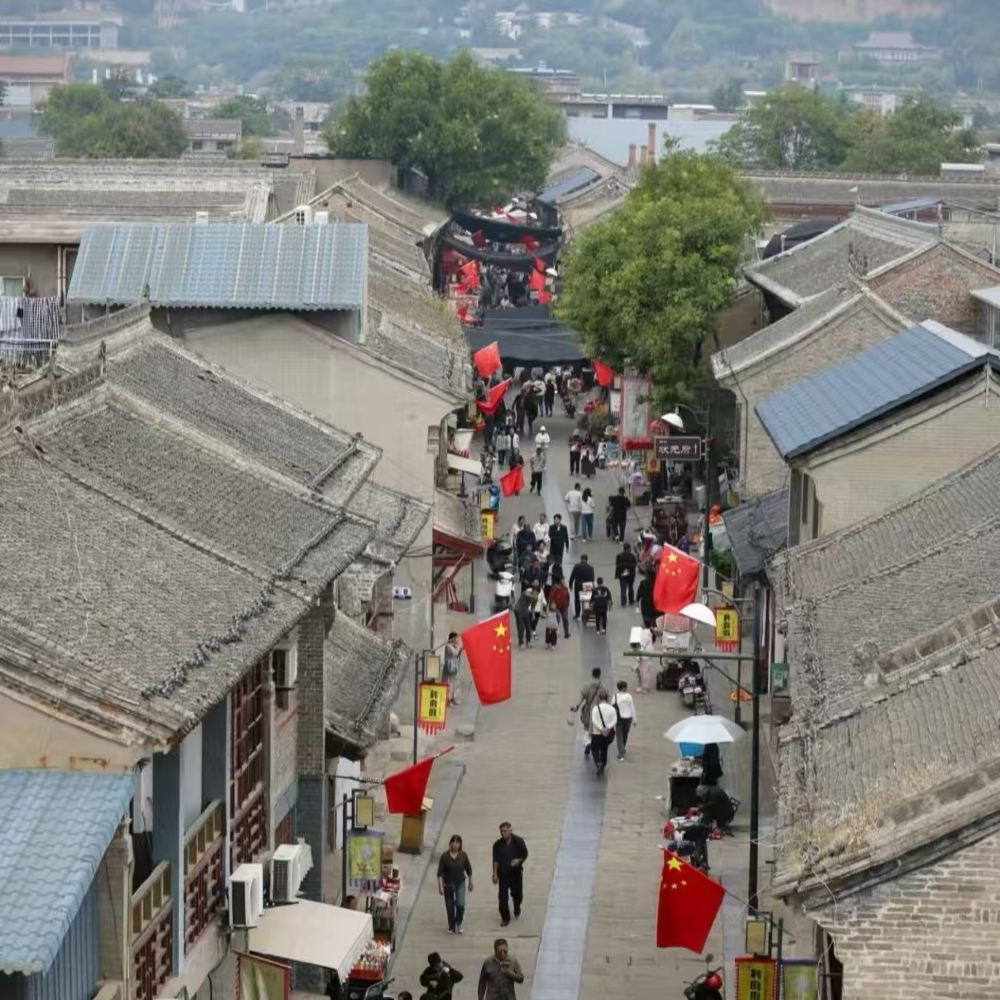

▲ Hancheng Ancient City was built during the Sui and Tang dynasties. In the fourth year of the Jin Dynasty's Dading era, earthen walls were constructed. In the thirteenth year of the Ming Dynasty's Chongzhen era (1640), with the approval of the imperial court upon the petition of then-Prime Minister Xue Guoguan, a native of the city, local officials and gentry were encouraged to donate funds to rebuild the earthen walls into brick walls. The gate towers of the city's four gates bear inscriptions: "East Embraces the Yellow River" on the east gate, "West Connects to Liangyi" on the west gate, "Vast Hancheng" on the south gate, and "Gateway to Longmen" on the north gate. The ancient city's main street runs north-south in the shape of a dragon, stretching nearly a kilometer with slight curves resembling a dragon's body lying horizontally. At the northern end, the towering Yuanjue Temple's golden pagoda from the Jin Dynasty stands like a raised dragon's head, while the ancient stone bridge at the southern end sways like a dragon's tail. Flanking the dragon-shaped main street and extending to the four city gates are 72 interconnected lanes and alleys, forming an orderly and well-connected network.
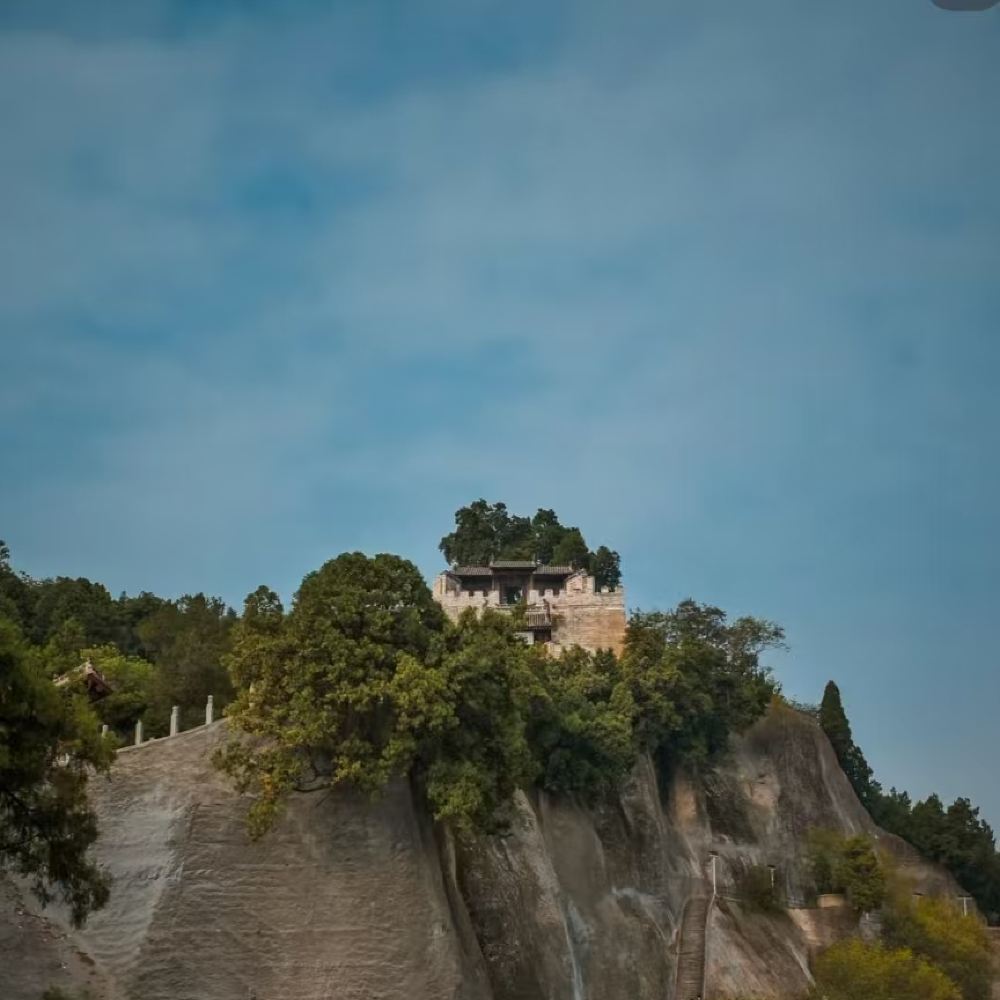

▲ Dang Jia Village is located northeast of Hancheng City in Shaanxi Province, on a high bank of the Mishui River valley in a habitable area shaped like a "gourd." It is 9 kilometers from the urban area of Hancheng, 1.5 kilometers west of National Highway 108, and 3.5 kilometers east of the Yellow River. The village is primarily inhabited by the Dang and Jia clans, with 320 households and over 1,400 residents. Established in the second year of the Zhishun era of the Yuan Dynasty (1331 AD), it has a history of nearly 700 years. Dang Jia Village boasts a long history and simple folk customs. With 123 courtyard houses, 11 ancestral halls, 25 watchtowers, as well as temples, opera stages, Wenxing Pavilion, the Watchtower, Miyang Fort, and the Jiexiao Stele, it has been praised by experts both domestically and internationally as a "living fossil of ancient traditional human settlements in the East" and a "treasure of world folk dwellings." As an outstanding representative of ancient Shanxi-Shaanxi residential architecture, the ancient architectural complex of Dang Jia Village...
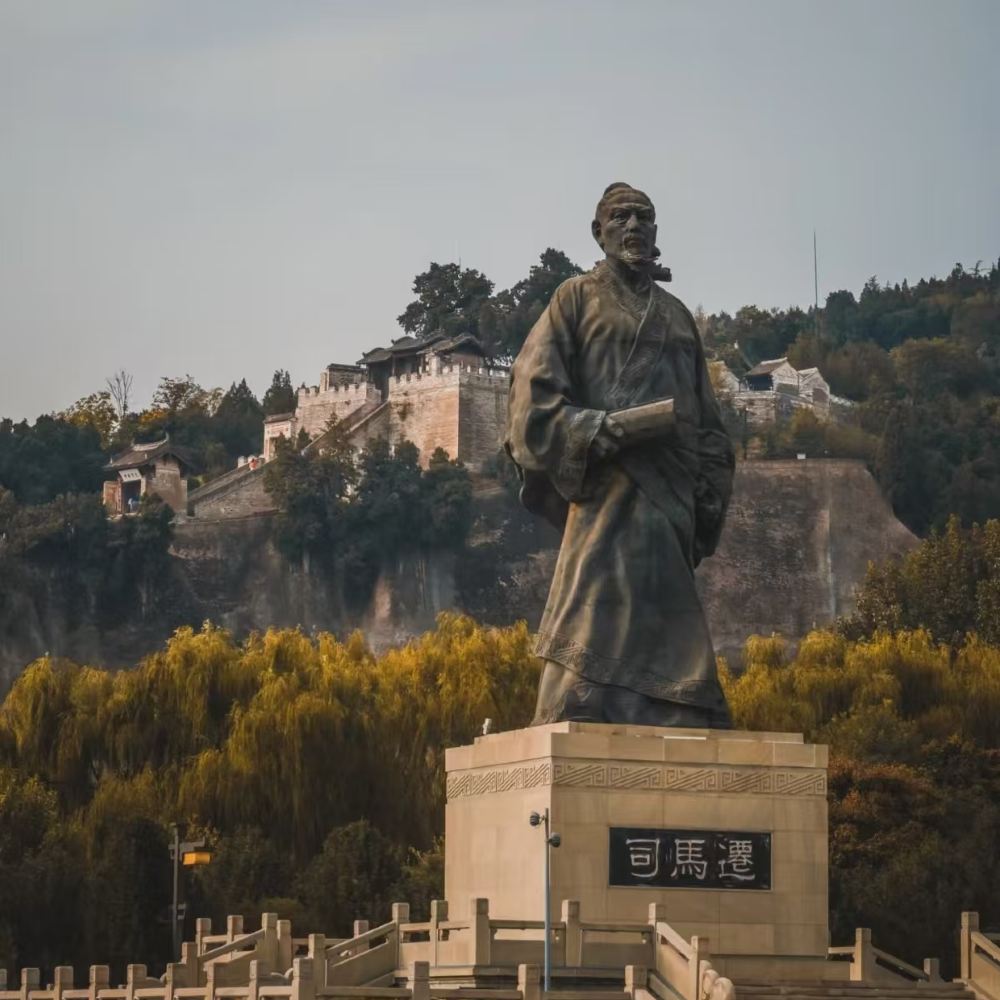

▲ Pay homage to the Grand Historian Sima Qian. The Sima Qian Temple and Tomb was first built in 310 AD, boasting a history of over 1,600 years. The entire temple complex stands tall on Longting Plateau, overlooking the Yellow River floodplain to the east, leaning against Mount Liang to the west, bordered by steep cliffs to the north, and facing deep ravines to the south, with ancient carriage roads below. The elevated vantage point offers magnificent panoramic views. The attraction features historical sites including the Sima Ancient Path, sacrificial halls, Sima Qian's tomb, and various exhibition halls. At the front lies the grand Sima Qian Memorial Square, where large-scale folk sacrificial ceremonies are held annually during Qingming Festival to remind descendants of their ancestors' virtues and honor the legacy of the Grand Historian Sima.