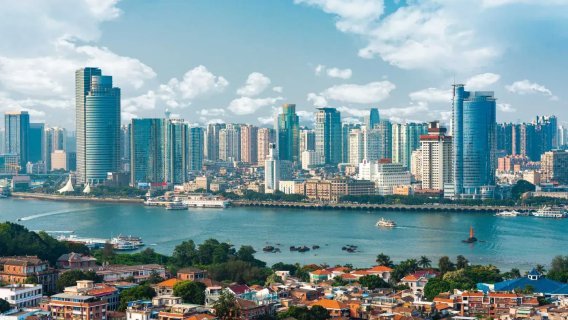
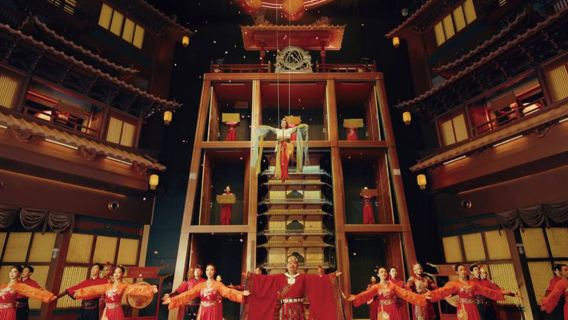
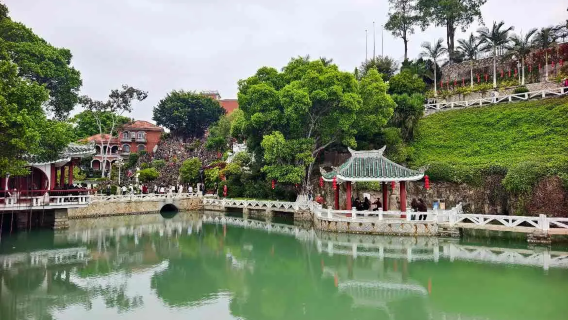
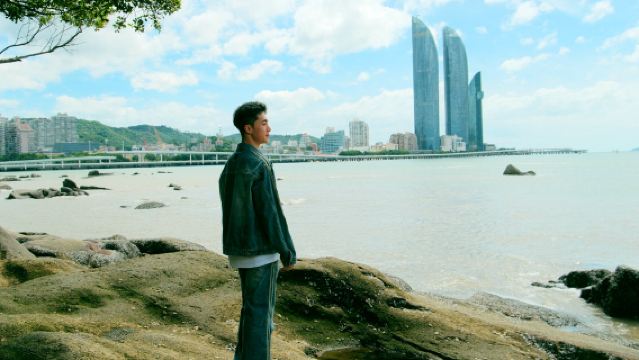
▲ Taking a boat is the only way to reach Kulangsu, marking the romantic prelude to this piano island on the sea. The cruise sails through the Lujiang waters, with a journey of approx. 20 min. Step onto the open deck and feel the gentle salty sea breeze. During the voyage, enjoy a 360° view of the Lujiang scenery, overlooking the red-roofed international architecture of Kulangsu, the giant stone statue of Zheng Chenggong, and the Xiamen city skyline across the water. On sunny days, the sparkling sea dazzles, while at dusk, you might encounter a breathtaking sunset over the water, offering numerous photo opportunities. The boat ticket is a round-trip pass, arriving at Sanqiutian Pier for direct access to Kulangsu's core sightseeing areas, effortlessly starting your island stroll.

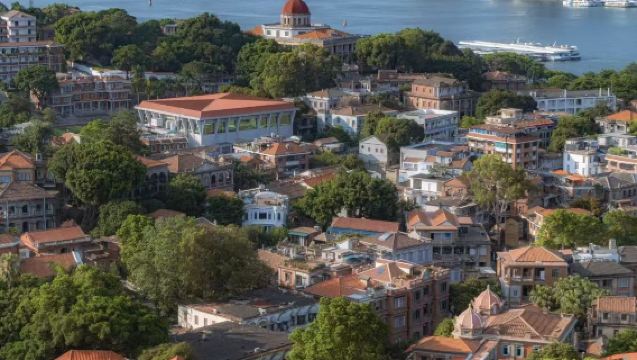
▲ Kulangsu is located in Xiamen Bay, facing Xiamen Island across the sea. As a UNESCO World Heritage site and a national 5A-level attraction, it is renowned as the "garden on the sea" and the "island of pianos." The entire island is car-free, with only cobblestone alleys, sea breezes, and birdsong. The island is scattered with over a thousand century-old buildings, where gothic, baroque, Nanyang-style villas, and southern Fujian ancient houses blend together, earning it the title of an international architecture exhibition. Ascend Sunlight Rock for a panoramic view of the Lujiang River; Shuzhuang Garden cleverly "hides the sea within the garden," and the Piano museum inside houses numerous century-old pianos; stroll through the streets to encounter the popular Most Beautiful Corner, and listen to the waves and relax at Gangzai Beach. The island combines historical heritage, an artistic atmosphere, and coastal scenery, making it an unmissable island destination when visiting Xiamen.

▲ Perched on the seaside cliff of Bijiashan on Kulangsu (No. 57 Guxin Road), this modern representative British-style villa of Kulangsu, a UNESCO World Heritage site, was built in 1876 and once served as the residence of the HSBC bank manager. The structure is built against a natural granite cliff, featuring a unique clover-shaped design with red-brick Corinthian colonnades, blending Western architectural aesthetics with southern Fujian craftsmanship. The mansion overlooks the sea from its elevated position, offering an unobstructed view of the Lujiang River and the Xiamen city skyline in the distance. Away from the bustling crowds, it is a hidden gem on Kulangsu, where a century-old Western-style building, lush trees, cliffs, and the azure sea frame a nostalgic atmosphere, making it perfect for artistic photography.

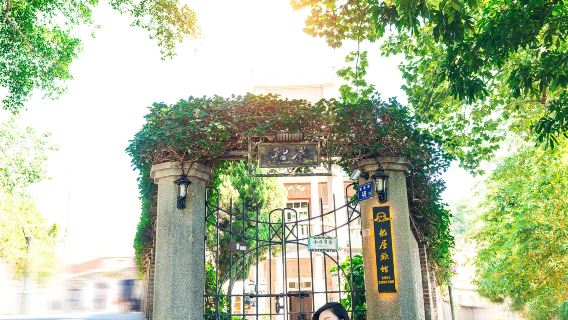
▲ Kulangsu's super popular photogenic check-in landmark, a filming location for the movie "First Time". Two sloping streets form a unique Y-shaped intersection, with century-old red-brick Western-style buildings standing in staggered formation. The retro street signs and green plant walls complement each other, naturally creating a cinematic composition. Located close to Sanqiutian Pier, it is easily accessible after disembarking. Countless visitors capture romantic moments at this photogenic corner, where both solo shots with an atmospheric vibe and couple photos turn out exceptionally well, making it an unmissable artistic check-in spot on Kulangsu. Stroll along the cobblestone paths and encounter the unique gentleness of Piano Island at the street corners.

▲ As the core attraction of the world cultural heritage site Kulangsu, the small island preserves over a thousand century-old buildings with historical charm, known as the open-air architecture museum. It gathers dozens of architectural styles, including gothic, baroque, British-style villas, Nanyang colonial buildings and southern Fujian ancient houses. Red brick arcades, carved windowsills, and vintage corridors can be seen everywhere, with numerous old overseas Chinese residences and former consulates scattered along the streets, creating a unique architectural aesthetic that blends Chinese and Western styles. Stroll along the cobblestone paths where every step offers a new view, with historic villas paired with lush greenery and sea breezes, immersing you in an artistic atmosphere. Along the way, you'll connect photogenic spots like the Most Beautiful Corner and the HSBC Bank Mansion. Walk and snap photos to unlock Kulangsu's retro charm.

▲ The bustling commercial street of Kulangsu gathers southern Fujian specialty foods, artistic shops, and century-old Nanyang shophouse buildings. Both sides of the street are lined with time-honored stores offering authentic southern Fujian flavors like oyster omelets, handmade fish balls, Ye's glutinous rice cakes, fried five-spice rolls, and peanut soup. Characteristic boutiques renovated from old colonial houses are scattered throughout, with retro signs paired with bougainvillea, blending local vibrancy with an artistic atmosphere. Take a leisurely break here during your visit, savor specialty snacks, pick unique souvenirs, and experience the lively street life of the piano island. It's a must-visit spot for exploring and dining on Kulangsu.

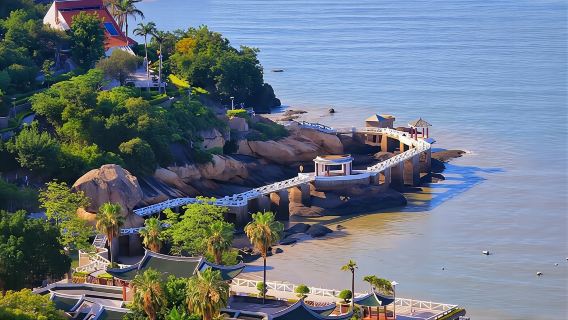
▲ Built in 1913, it was originally the private garden of patriotic overseas Chinese Lin Erjia and is a highly representative coastal garden on Kulangsu, listed as part of the modern architectural ensemble of the UNESCO World Heritage site. The garden ingeniously employs the landscaping techniques of "hiding the sea and complementing the mountain." Upon entering, the vast ocean remains unseen until passing through the moon gate, where the boundless blue sea suddenly comes into view, realizing the concept of "the garden on the sea, the sea in the garden." The garden is divided into the "sea-hiding" section and the "mountain-complementing" section. The iconic Forty-four Bridge extends over the waves into the sea, offering a splendid vantage point for sunset views. The garden houses China's renowned piano museum, featuring over a hundred rare antique pianos, with scheduled performances where melodies blend with the ocean waves, perfectly capturing the essence of the "Piano Island." Additionally, the Twelve Cave Heaven rockery maze provides playful twists and turns through winding grottoes. The fusion of Chinese and Western pavilions, towers, azure seas, and lush trees creates a harmonious

▲ Located in the Tingtao Pavilion of Shuzhuang Garden, it is China's thematic piano museum and a landmark cultural venue on Kulangsu, the "Piano Island." The collection comprises over a hundred Western antique pianos from the 18th to 20th centuries, donated by patriotic overseas Chinese Mr. Hu Youyi, sourced from countries like Britain, France, Germany, and Austria. The museum houses rare treasures such as gilded pianos, early square pianos, hand-cranked pianos, double-layer eight-pedal antique pianos, and self-playing pianos, with intricately carved bodies embodying centuries of artistic history. The venue features scheduled performance sessions, where melodious piano notes blend with the ocean waves outside, perfectly capturing the island's unique romance. Strolling through the exhibition halls, visitors can closely explore the evolution of pianos and immerse themselves in Kulangsu's rich musical heritage.

▲ One of the larger natural beaches on Kulangsu, adjacent to Shuzhuang Garden, this coastal area is also known as "Golden Belt Water." The fine, soft sand and gentle waves create an open vista, with the Xiamen city skyline and twin towers visible in the distance, backed by Sunlight Rock—a perfect harmony of mountain and sea. Stroll along the shore to the sound of waves, wade barefoot, or relax and take photos on the rocks. It's also a popular spot to watch the sunset, as dusk paints the sea in golden hues, amplifying the ambiance. After visiting Shuzhuang Garden, stop by to unwind in the sea breeze and soak in the unique coastal romance of this piano island.
▲ The landmark highest point of Kulangsu, with an altitude of 92.7 m, is often described as "a trip to Kulangsu is incomplete without visiting Sunlight Rock." Originally named Huang Rock, legend has it that Zheng Chenggong ascended this site and split the character "Huang" to name it Sunlight Rock. The attraction is built around a massive natural granite rock and is part of the core view of Kulangsu, a UNESCO World Heritage Site. Climb up the stone steps and admire Ming and Qing dynasty cliff inscriptions such as "Gulang Cave Heaven" and "First Rock of Lujiang" along the way. Midway up the mountain sits Sunlight Rock Temple, crowned by a natural giant boulder and also known as "A Single Tile," where Master Hongyi once secluded himself for spiritual practice. Pass through the ancient summer retreat cave to experience the coolness of the rock cavern. Climb to the top of Tianfeng Terrace for a 360° open view, overlooking the entire red-roofed international architectural complex on Kulangsu, with distant views of the Lujiang sea, Xiamen Twin Towers and the urban coastline, where mountains, the old city and the blue sea converge

▲ The earliest church built on Kulangsu, this neoclassical revival-style architecture is also a landmark representing the international architectural heritage of Kulangsu and is listed as a world cultural heritage element. Constructed in 1863 through joint funding by multiple foreign churches, it was renamed Union Church after its reconstruction in 1911. The pale yellow walls, paired with four grand Roman columns and a triangular pediment, exude simplicity and grandeur with a European ambiance. This was where Lin Yutang held his wedding, carrying a romantic century-old tale. The spacious stone steps and retro colonnade make excellent photo spots, attracting many travelers to capture artistic portraits and wedding photos here. Escape the crowded urban bustle, stroll through the tranquil atmosphere steeped in centuries-old architecture, and effortlessly capture high-quality photos with the texture of a European town.

▲ Built in 1898, it is a well-preserved 19th-century foreign consulate building on Kulangsu, featuring a typical colonial veranda style. Its exposed red brick exterior is paired with a double-layer continuous semicircular arcade, blending Victorian architectural aesthetics. Constructed by Chinese craftsmen, it is a representative structure of the international architectural exhibition complex. This site witnessed the modern diplomatic history of Kulangsu, where the 1902 Xiamen Kulangsu public land boundary charter was signed. The architectural complex includes the main building and a rear Japanese-style police station building, with thick red brick walls full of historical texture. Adjacent to the Union Church and within walking distance to the Most Beautiful Corner, the route offers smooth passage. The retro red brick arcades and the Western-style building exteriors surrounded by greenery create a highly atmospheric setting, perfect for shooting vintage artistic photos and deeply exploring the century-old history of Kulangsu's international community.