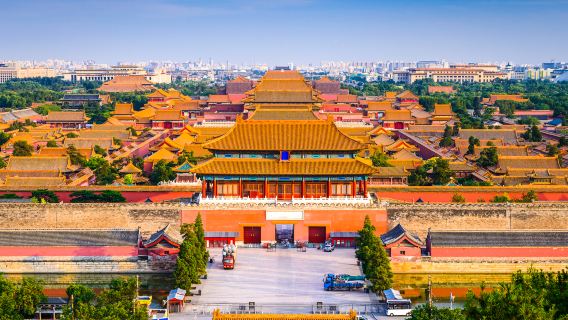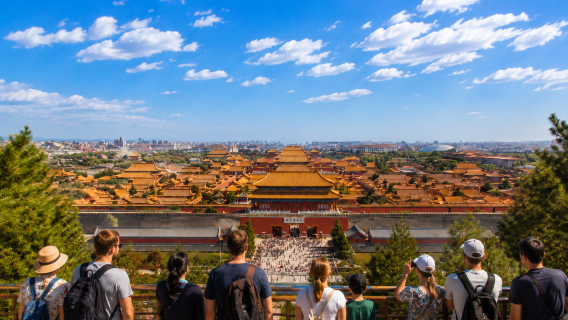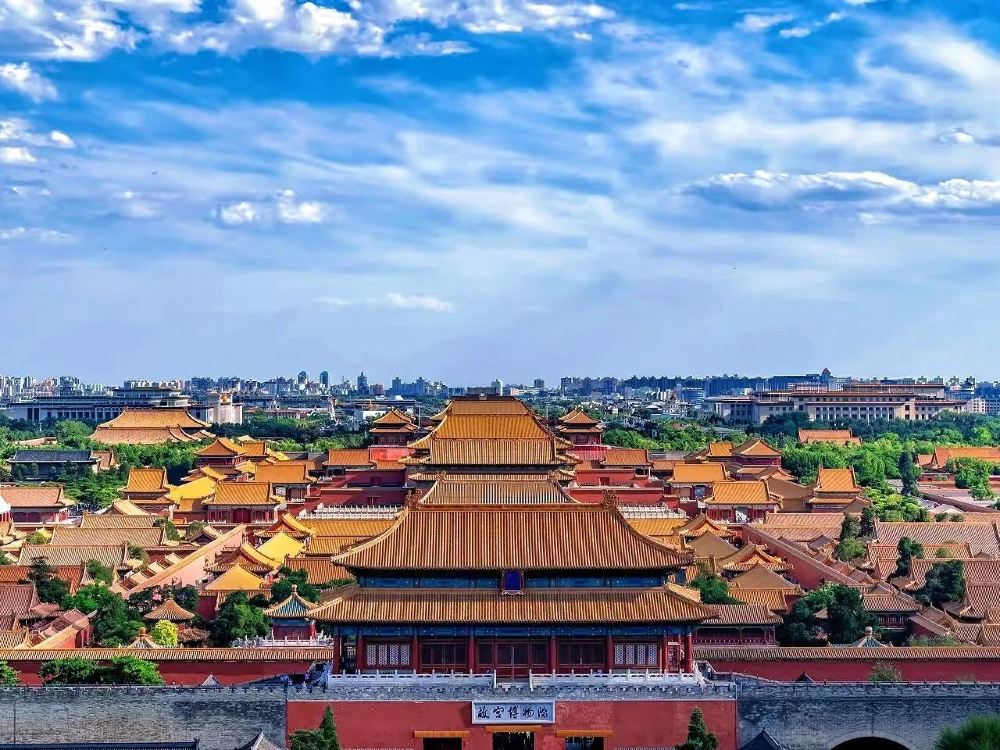
▲ A panoramic view of the Forbidden City under blue skies and white clouds. Red walls, yellow tiles, and white marble balustrades—three colors that establish the visual foundation of this imperial city: red for joy, yellow for supremacy, white for purity, all arranged according to the Five Elements and ritual system. The roofs of the Forbidden City use almost no nails; everything is joined by mortise and tenon, standing firm through centuries of wind, rain, and earthquakes. Only by understanding the order of this sea of golden roofs can one truly appreciate the pinnacle of ancient Chinese architecture.
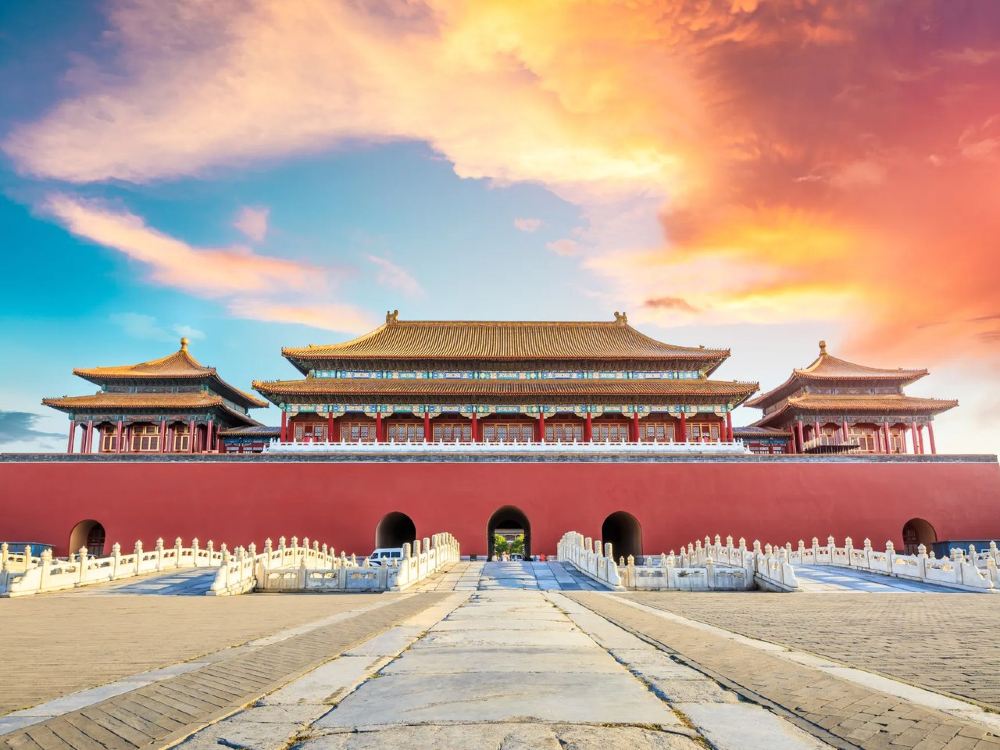
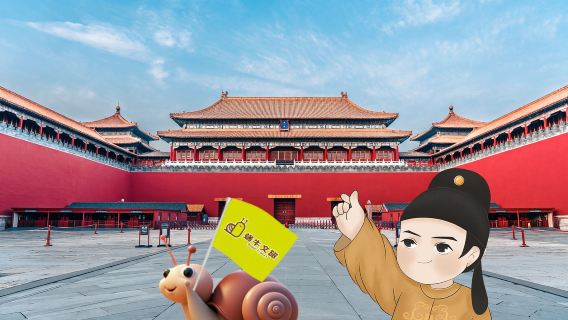
▲ The Meridian Gate is the main entrance to the Forbidden City. Its towering platform and the Five-Phoenix Tower with its soaring eaves face south at the center, aligned with the zi (north) and wu (south) meridians, which is how it got the name "Meridian Gate." At sunset, when the glow of evening clouds fills the sky, the red walls and golden tiles seem to burn together with the heavens—this is exactly the scene captured in the phrase "rosy clouds fly over the Five-Phoenix Tower." A folk legend claims that "criminals were dragged out the Meridian Gate for beheading," but no such thing ever happened—floggings were carried out here during the Ming dynasty, but executions never took place at this spot. It's a worthwhile bit of "rehabilitation" to hear before touring the Forbidden City.
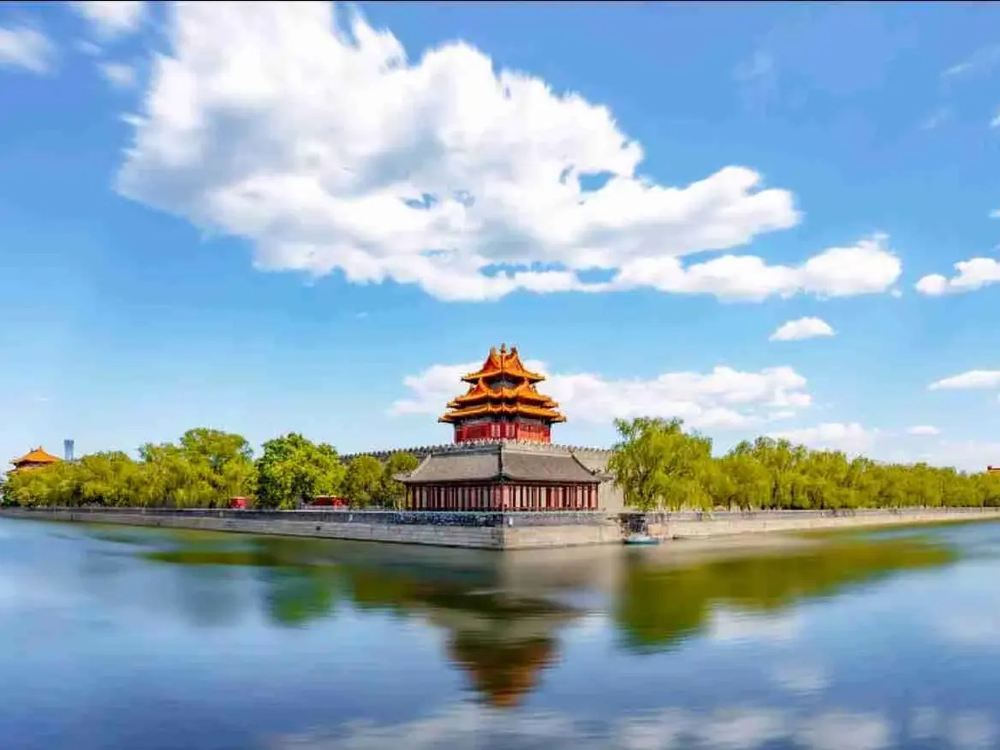
▲ The Corner Towers of the Forbidden City stand at each of its four corners, each with nine beams, 18 pillars, and 72 ridges—an intricate structure like a crown woven from mortise-and-tenon joints. At dawn and dusk, the moat's surface turns mirror-like, and the towers' reflections sway gently with the ripples, making this the most photographed corner of the Forbidden City in its 600-year history. At sunrise, golden light gilds the rooftops; at sunset, rosy clouds dye the eaves. Rain or shine, it remains the most photogenic feature of this imperial city.
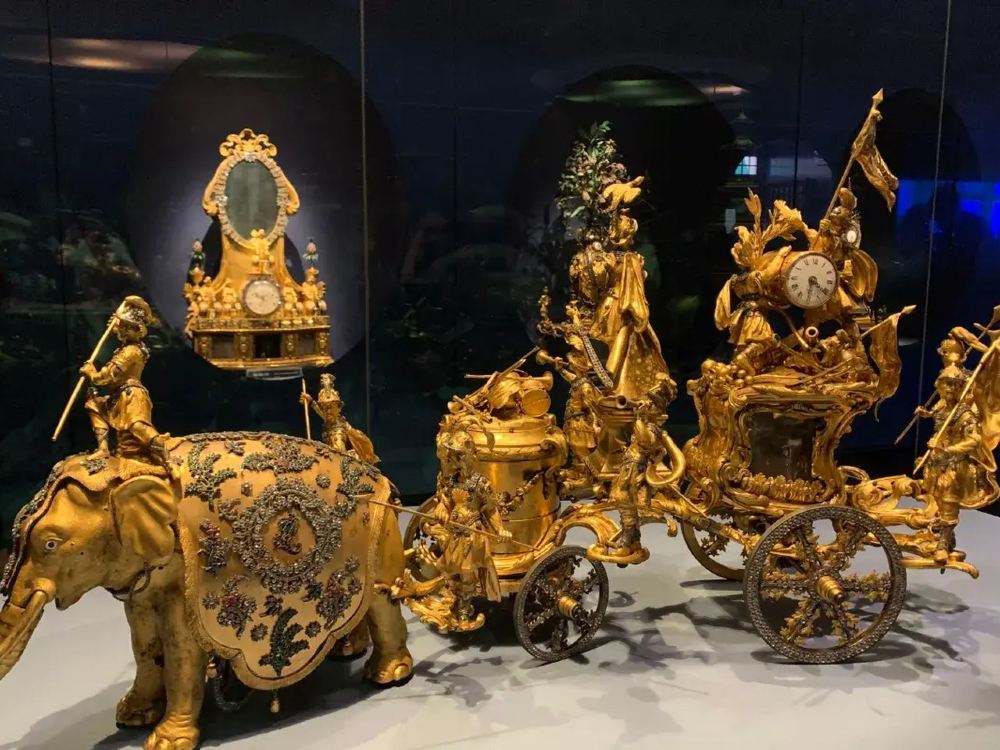
▲ Clock and Watch Gallery collection: Gilt elephant clock. The Qing dynasty court's fascination with Western clocks and watches bordered on obsession. During the Kangxi and Qianlong reigns, timepieces poured into the palace from Guangzhou, Suzhou, England, France, and Switzerland, becoming costly playthings on the emperor's desk. This gilt elephant clock is fully gilded and inlaid with gems and floral ornaments. A tower rests on the elephant's back, with the clock dial concealed within. On the hour, music plays and figures rotate—a splendid meeting of Chinese and Western craftsmanship within the Forbidden City.
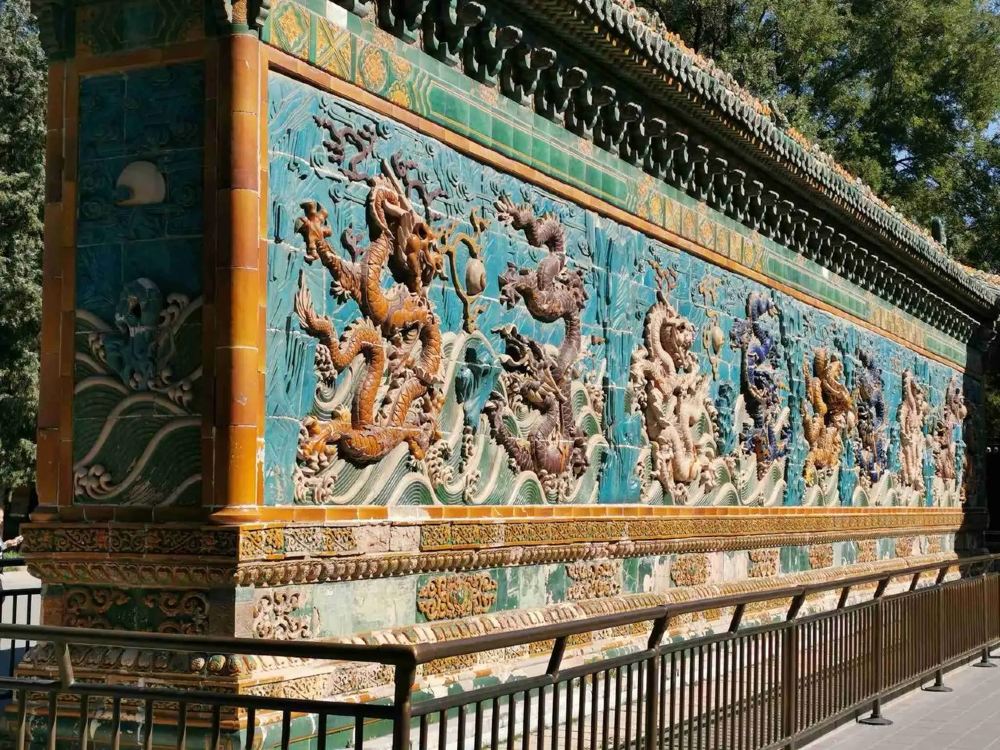
▲ Nine-Dragon Wall, the glazed screen wall in front of the Imperial Ultimate Gate in the Forbidden City, was built in the 38th year of the Qianlong reign. 270 glazed components form 9 giant dragons. The central yellow dragon holds its head high in the middle, while the blue, white, and purple dragons on either side leap among the waves and cliffs. Look closely, and the third white dragon from the east hides a secret in its belly—a "wood in place of glaze" substitution. Legend has it that one piece broke during firing, so the craftsmen patched it overnight with nanmu wood and paint, fooling the emperor's inspection and leaving behind a 600-year-old tale.
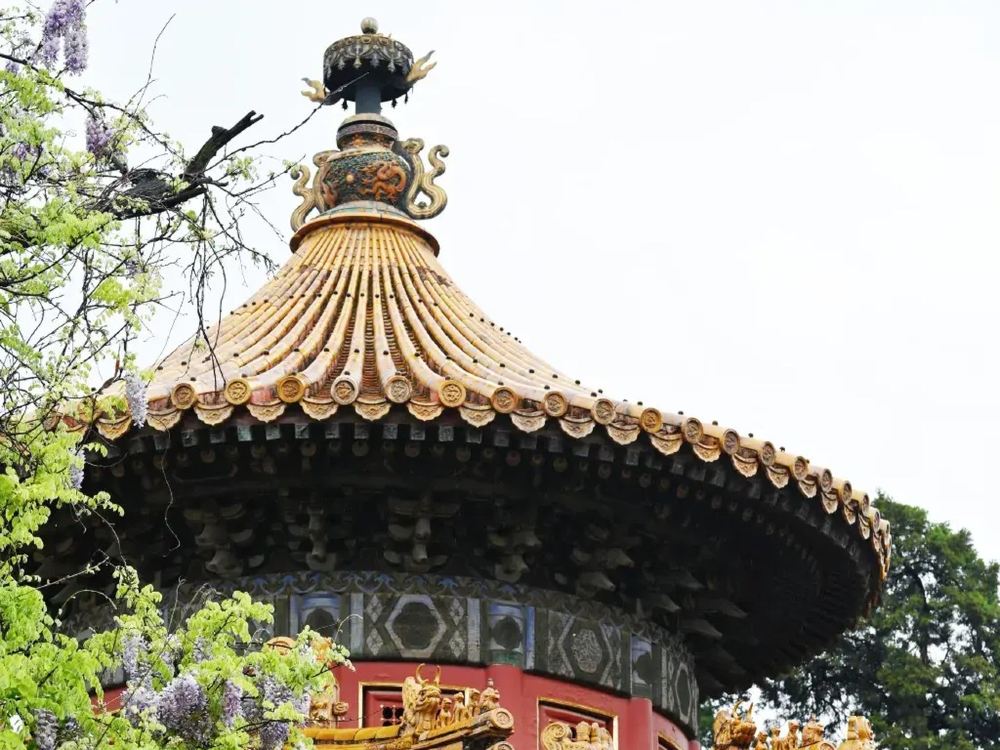
▲ Wanchun Pavilion in the Imperial Garden is a touch of spring at the northernmost end of the Forbidden City's central axis. The pavilion's round top and square base echo the ancient belief that "heaven is round and earth is square." Its gilded finial gleams, mythical beasts line up along the eaves, and in spring, wisteria drapes in bloom and peonies unfurl, framing the vermilion structure. This was once a place for Ming and Qing emperors and empresses to admire flowers and rest. Today, visitors pass through, and when they look up, they can still glimpse the refinement of 600 years ago.
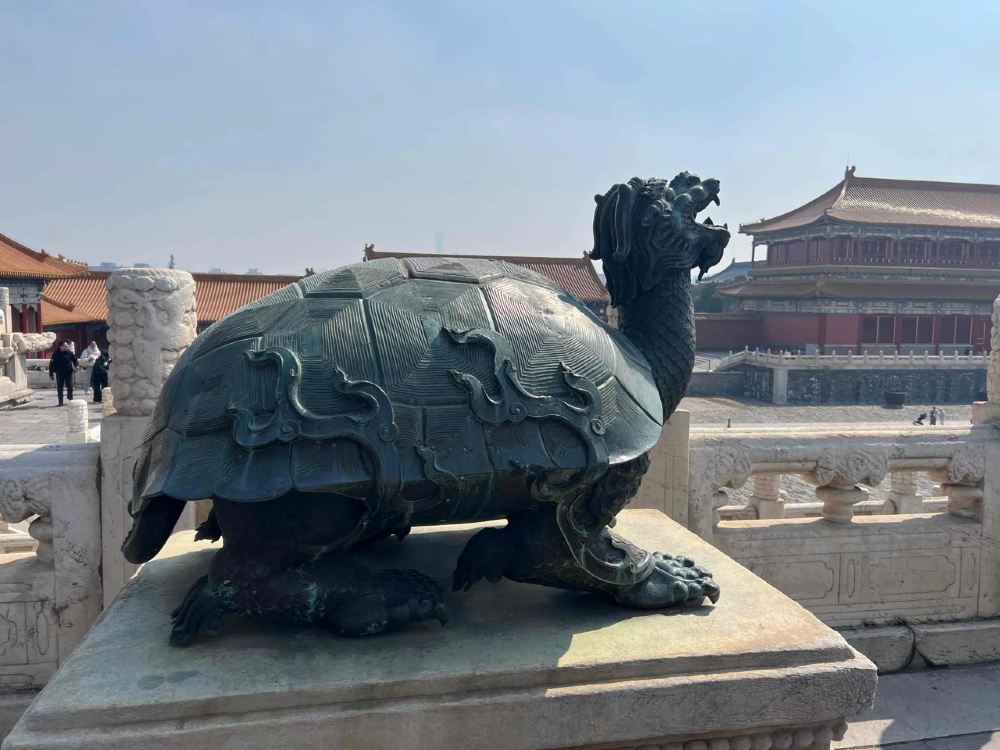
▲ The bronze turtle in front of the Hall of Supreme Harmony stands on one side of the marble terrace, facing the bronze crane on the other—both serve as the "auspicious representatives" among the hall's furnishings. Incense smoke curls from the turtle's mouth, rising like immortal vapor—during grand ceremonies, the entire Hall of Supreme Harmony square was shrouded in fragrant mist, as if a heavenly palace. The turtle symbolizes enduring sovereignty, longevity, and good fortune, and its dragon-headed, turtle-bodied form adds even greater majesty—a masterpiece of metalwork in the Forbidden City.
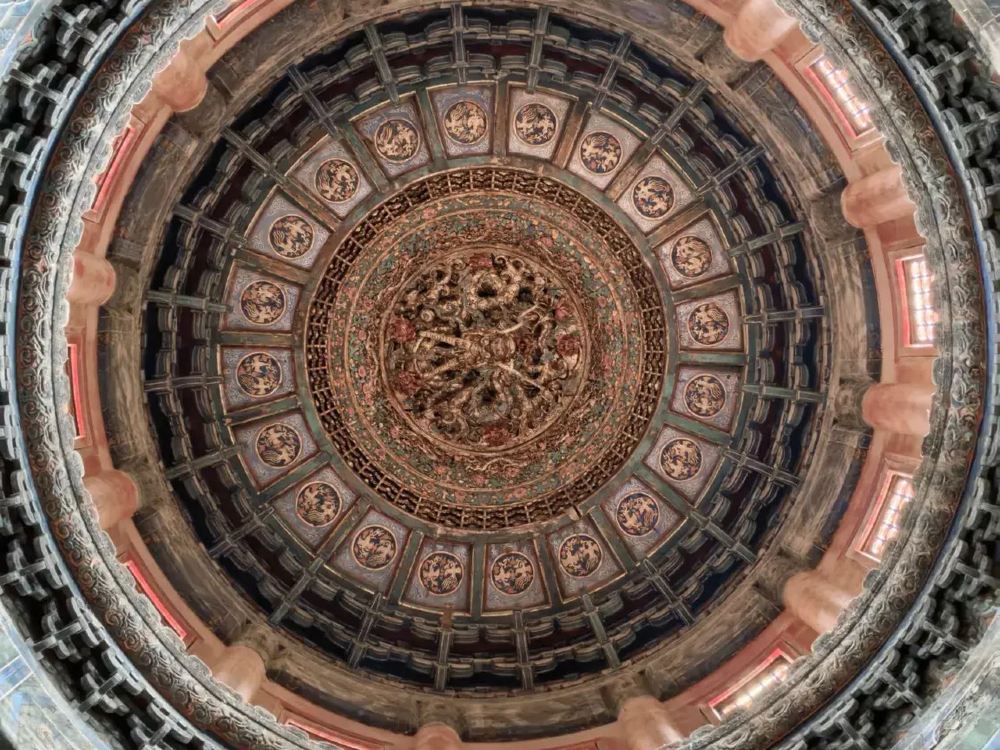
▲ Look up—this is the true "ceiling art" of ancient rooftops: the zaojing, or coffered ceiling. Layer upon layer of dougong brackets converge upward like an inverted celestial vault, with a coiled dragon at the center bowing its head to hold a pearl in its mouth, all held together by mortise-and-tenon joints without a single nail or rivet. Since the Han Dynasty, the zaojing has been a symbol of fire prevention, and only halls of the highest rank could feature one. Most visitors here focus on the furnishings at eye level, but those in the know look up first, saving this glance for the craftsmen of 600 years ago.
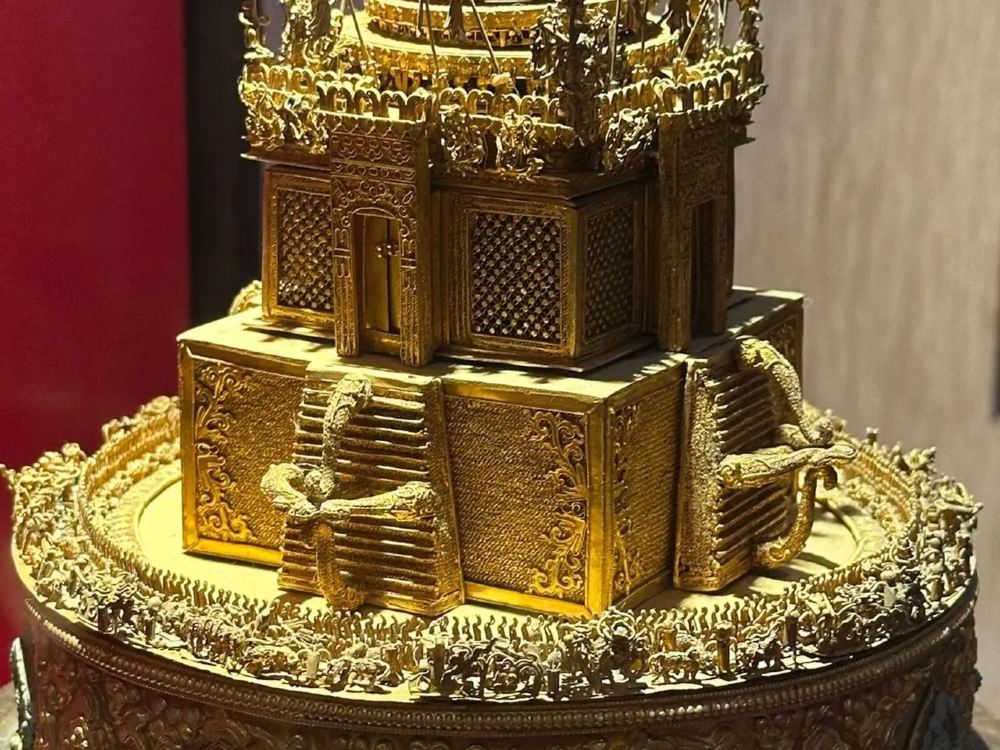
▲ Treasure Gallery collection: a gold stupa inlaid with jewels. The entire body is engraved and gilded, adorned with turquoise and coral inlays, and every small figure encircling the base is rendered in exquisite detail. The Qing court devoutly followed Tibetan Buddhism, and such gold stupas were mostly enshrined in Buddhist halls—a manifestation of laying "true gold and silver" before the Buddha. Through the display case glass, you can see the repoussé patterns on the gold surface shimmering under the light—the handiwork of craftsmen from the Imperial Workshops 200 years ago.
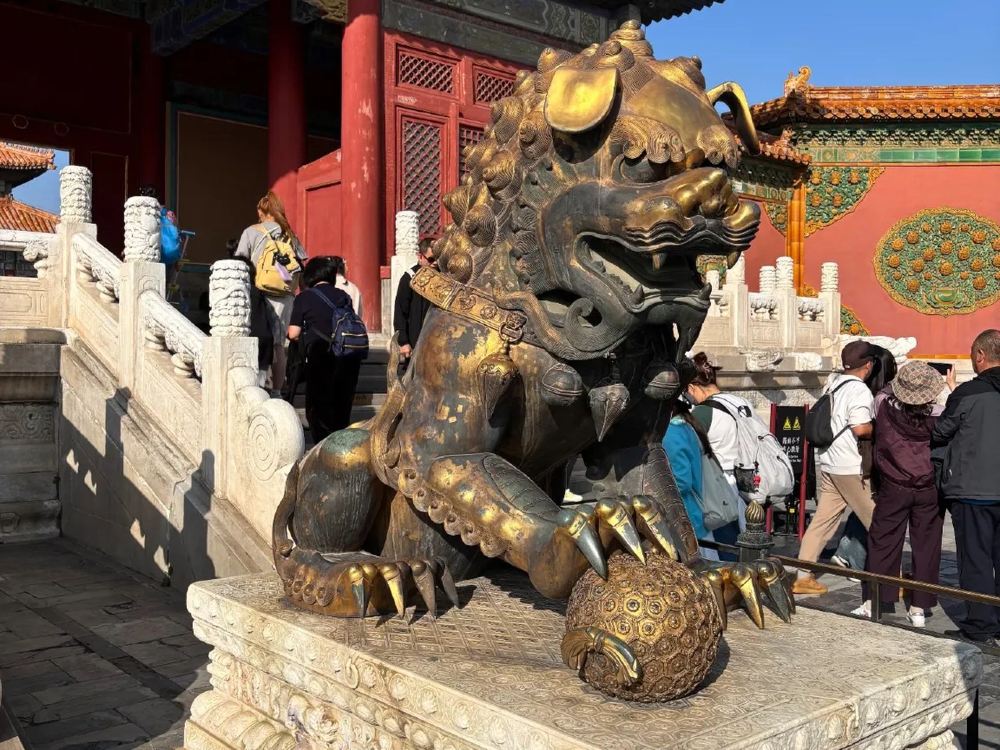
▲ The gilded bronze lions in front of the Gate of Heavenly Purity are the pair in the Forbidden City with drooping ears. With lowered ears and downcast brows, they symbolize that the imperial harem must not interfere in state affairs and that gossip within the palace walls stays behind closed doors. The lions' manes curl like cloud motifs, bells and tassels hang around their necks, and their front paws rest on embroidered balls. The gilding, weathered by years of wind and rain, has developed a mottled patina of age. Only after seeing the imposing stone lions in front of the Hall of Supreme Harmony can you truly appreciate, upon encountering this pair of "eyes-shut, ears-closed" bronze lions, that every auspicious beast in the imperial city is there to "lay down the rules."
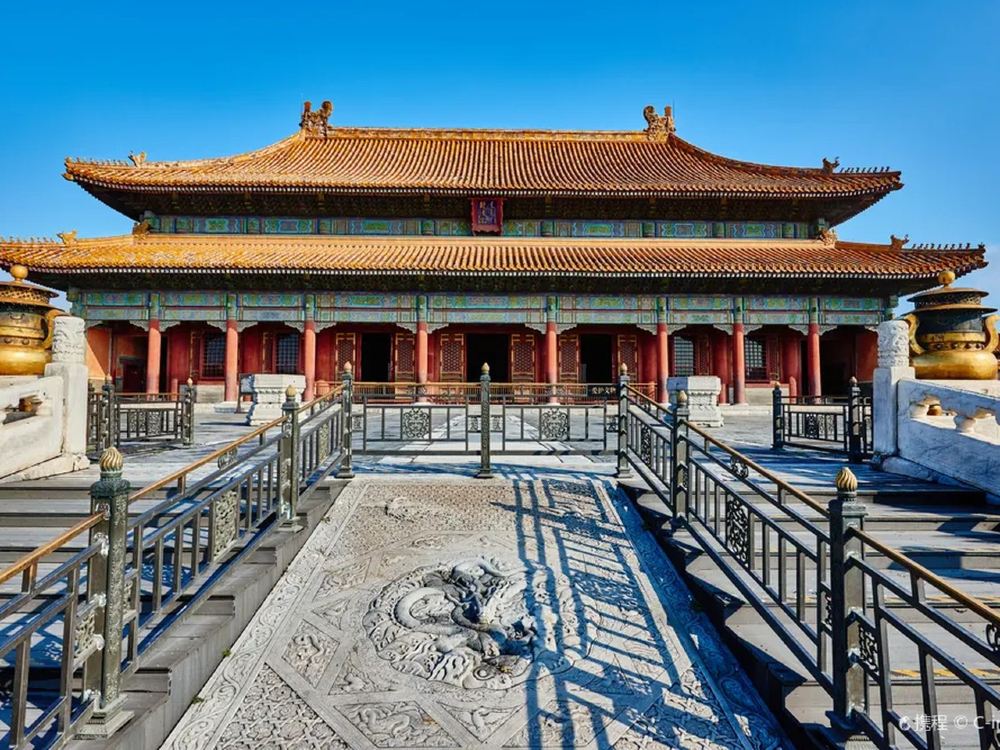
▲ The Hall of Preserving Harmony, the last of the three great halls of the Forbidden City's outer court, features a double-eaved hip-and-gable roof covered in yellow glazed tiles. Behind the hall, between the steps, lies a giant cloud-and-dragon stone carving weighing over 200 tons, sculpted from a single block of bluestone, with nine giant dragons writhing among drifting clouds—the finest stone carving in the Forbidden City. In the Qing dynasty, the imperial examination was held here, and the dreams of scholars across the land to "make the golden list" all began in this great hall. In front of the hall, the bronze vats, the stone-carved imperial ramp, and the blue sky complement each other, making this a photogenic stop along the central axis.