




▲ The Mutianyu Great Wall is the quintessence of the Ming Dynasty Great Wall. This section of the wall connects to Gubeikou to the east and Juyong Pass to the west, and has served as a vital military stronghold guarding the capital region since ancient times. It features views such as the Main Gate Tower, the Big Corner Tower, and the Eagle Flying Upside Down. The wall body remains intact, well reflecting the ancient charm of the Great Wall, and possesses profound historical value and considerable cultural value.

▲ The Summer Palace, an imperial garden from China's Qing Dynasty, was originally named the Garden of Clear Ripples. Located at No. 19 Xinjian Gongmen Road, Haidian District, in the western suburbs of Beijing, it is a vast natural landscape garden built around Kunming Lake and Longevity Hill, modeled after the scenery of Hangzhou's West Lake. Incorporating design techniques and artistic concepts from Jiangnan-style gardens, it stands as one of the most well-preserved imperial palace gardens and is renowned as the "Museum of Royal Gardens."
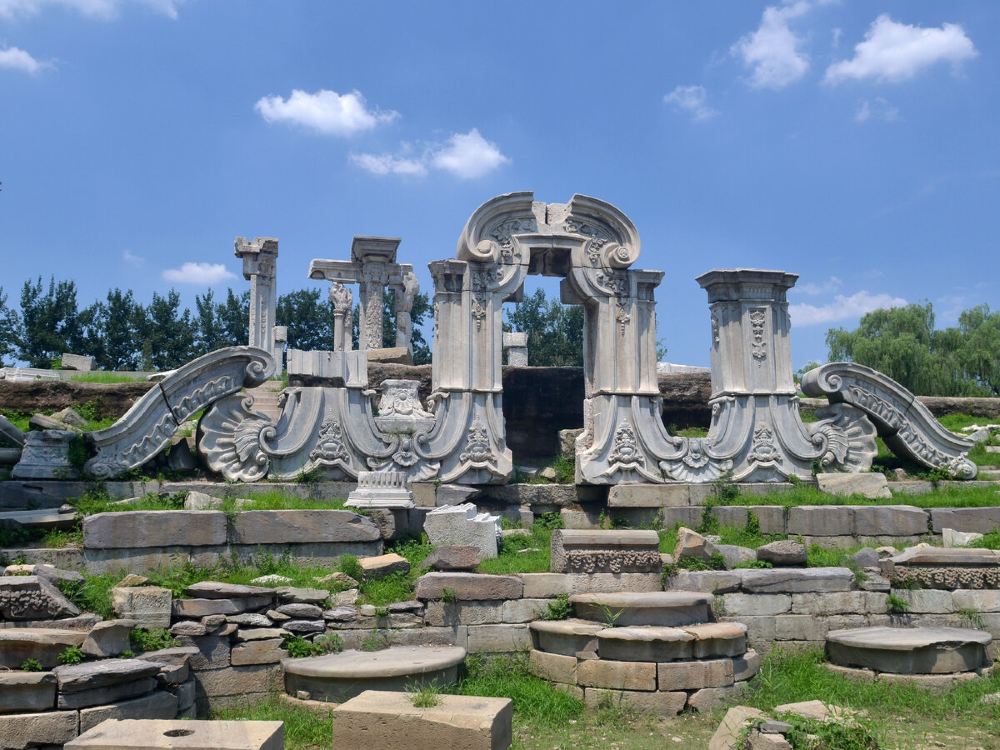
▲ Yuanmingyuan Park was once a royal garden that took 150 years to build and blended Chinese and Western styles, known as the "Garden of Gardens." In 1860, the Anglo-French forces burned it down, and many treasures were lost overseas. The broken bridge, stone pillars, and dry waterworks are highly photogenic in the setting sun, with red walls and yellow leaves, lake reflections and pagoda silhouettes, making it a quiet spot with a naturally "elegant gray" aesthetic for photography. The "Western Mansions" in the park were designed by Giuseppe Castiglione, a missionary who came to China at the order of Emperor Qianlong, and are the surviving remains of a European-style palace fountain complex in China—Baroque columns paired with the ingenuity of Chinese craftsmen, a unique blend of East and West.