


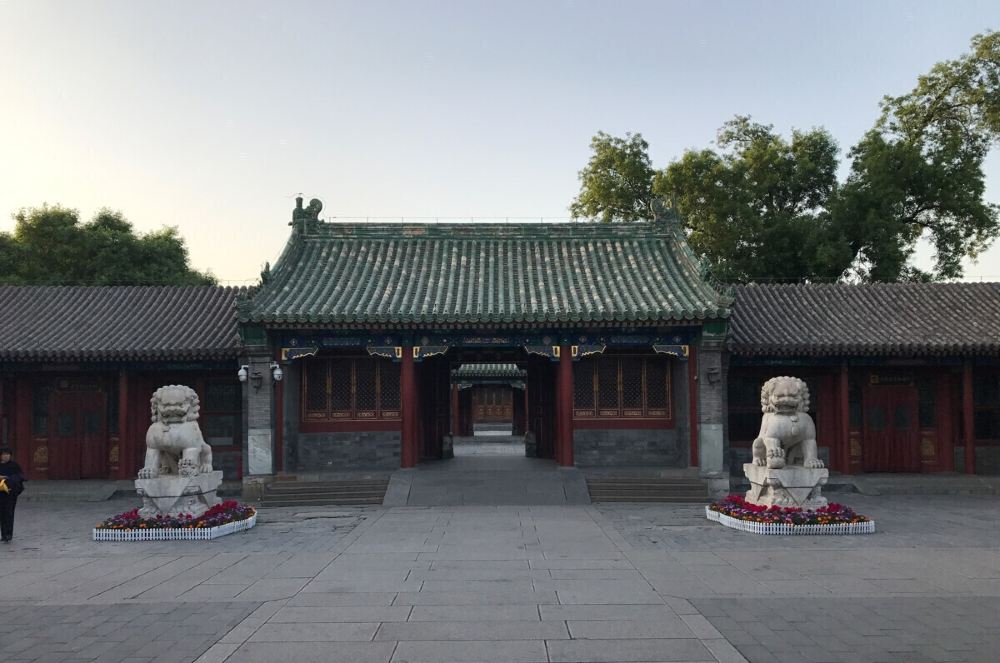
▲ Palace gate In front of the gate is a pair of stone lions: the male lion on the east side rests a paw on an embroidered ball, while the female lion on the west side holds a cub beneath her paw. On the vermilion gate are nine rows horizontally and seven columns vertically of golden door nails — the standard for a prince's residence, a number that could be neither more nor less. Here, rank is visible and countable. During the Qianlong era, this was the residence of Heshen. In the fourth year of Jiaqing, Heshen was ordered to commit suicide, and the residence was granted to Prince Qing, Yonglin. In the first year of Xianfeng, it was bestowed upon Prince Gong, Yixin, and from then on it was called Prince Kung's Palace Museum. The entire compound consists of three parallel routes and five successive courtyards: the central route was used for ceremonial purposes, while the east and west routes were residential.
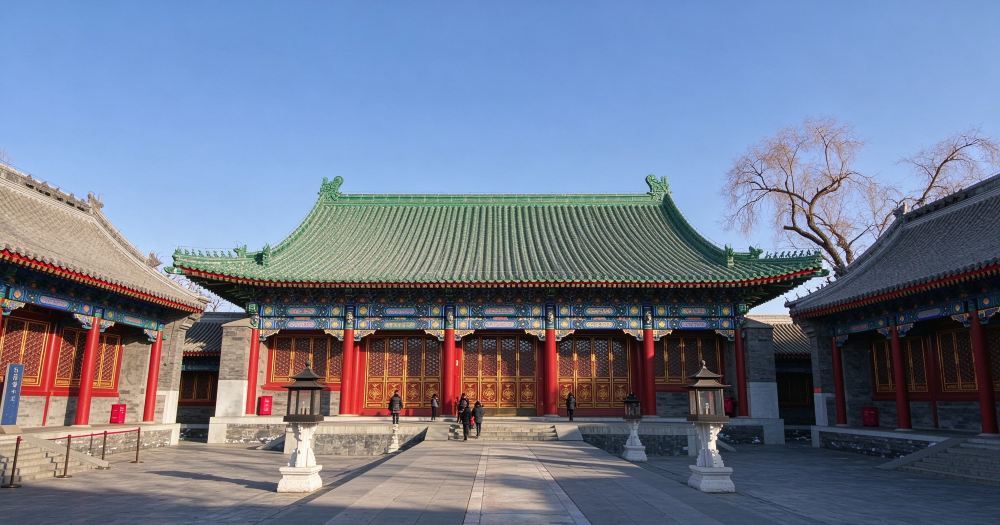
▲ The Yin'an Hall is the main hall of the princely residence, featuring a single-eaved hip-and-gable roof, five bays in width, covered with green glazed tiles, and seven roof beasts on the descending ridges.
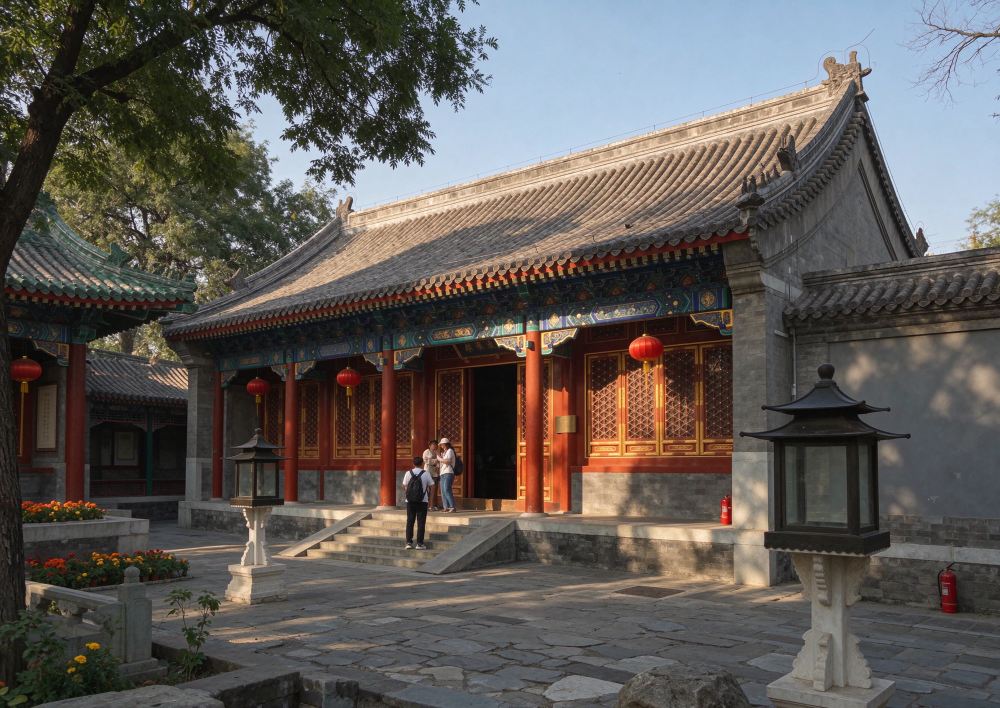
▲ Jiale Hall is located behind the main hall on the central axis, with a plaque inscribed "Jiale Tang" hanging above.
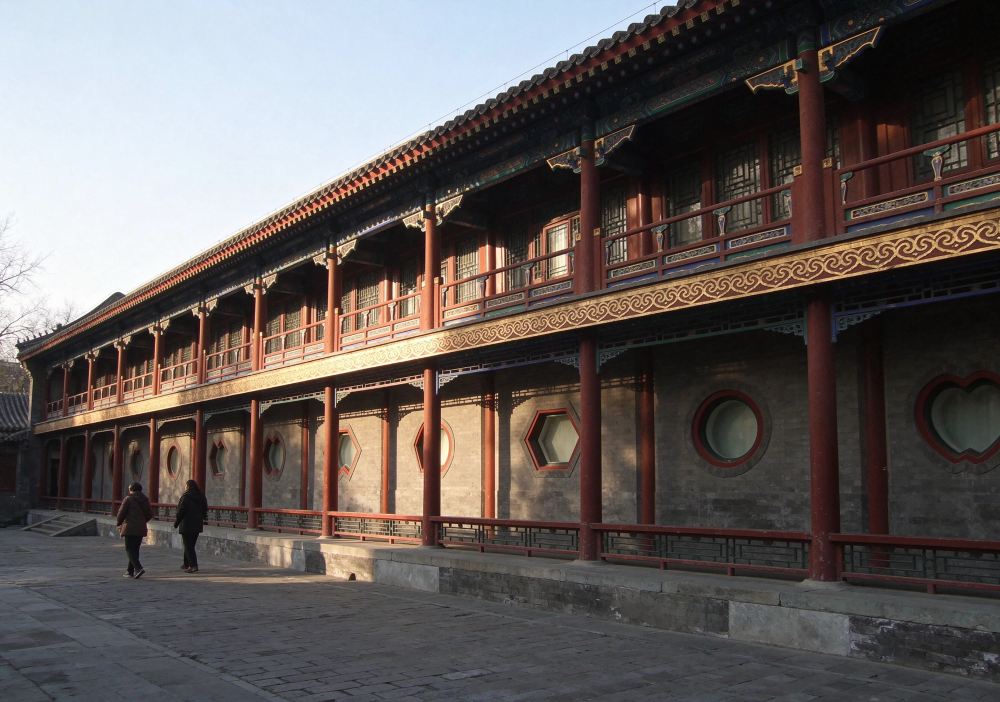
▲ Rear building At the deepest part of the residence lies a two-story long building, stretching over 150 m from east to west, with a total of 108 rooms. Folk calls it the "Houzhao Building." This name itself has interesting origins: one explanation is that it conveys the idea of "fullness leading to overflow," while another is that it avoids the taboo of the number of rooms in the Forbidden City.
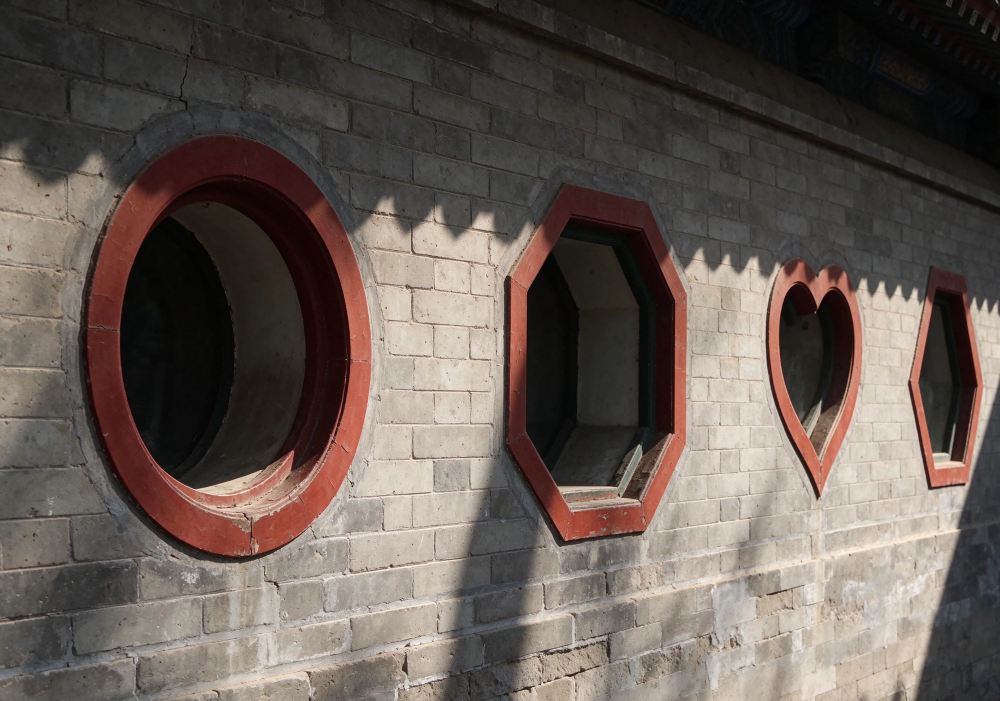
▲ Close-up view of the rear building
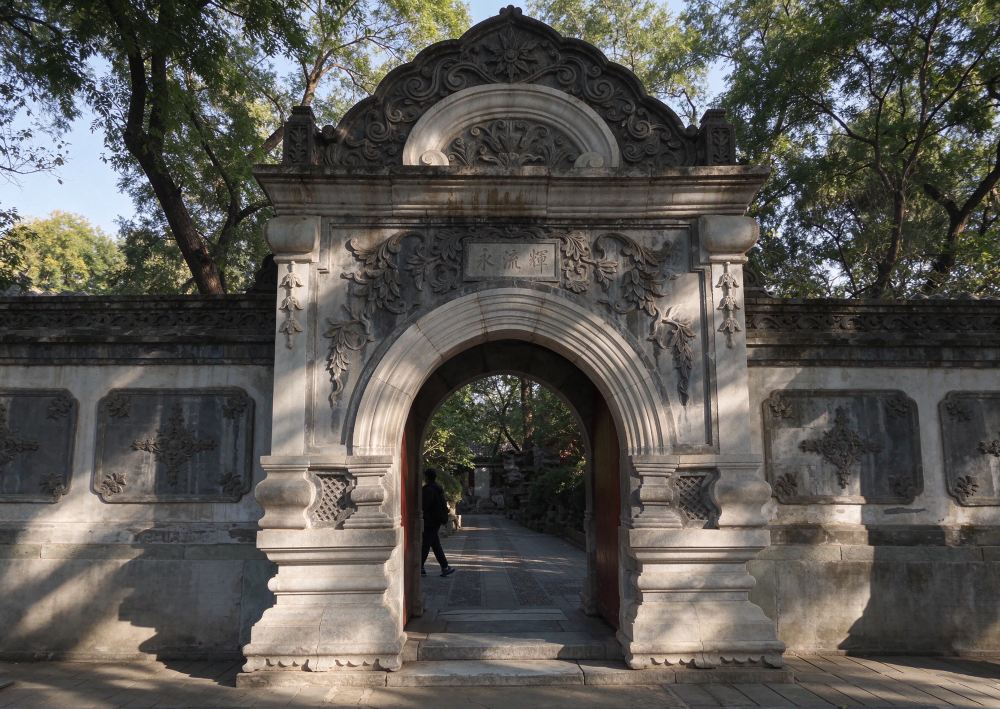
▲ Western-style gate: a mix at the garden entrance Past the rear-loft building is the garden. Its main entrance is a Western-style archway carved from white marble, modeled after the designs found in the Western Mansions area of the Old Summer Palace. After that complex was destroyed by the Anglo-French forces, this gate became a rare surviving example and is one of the three wonders of Prince Kung's Palace Museum.
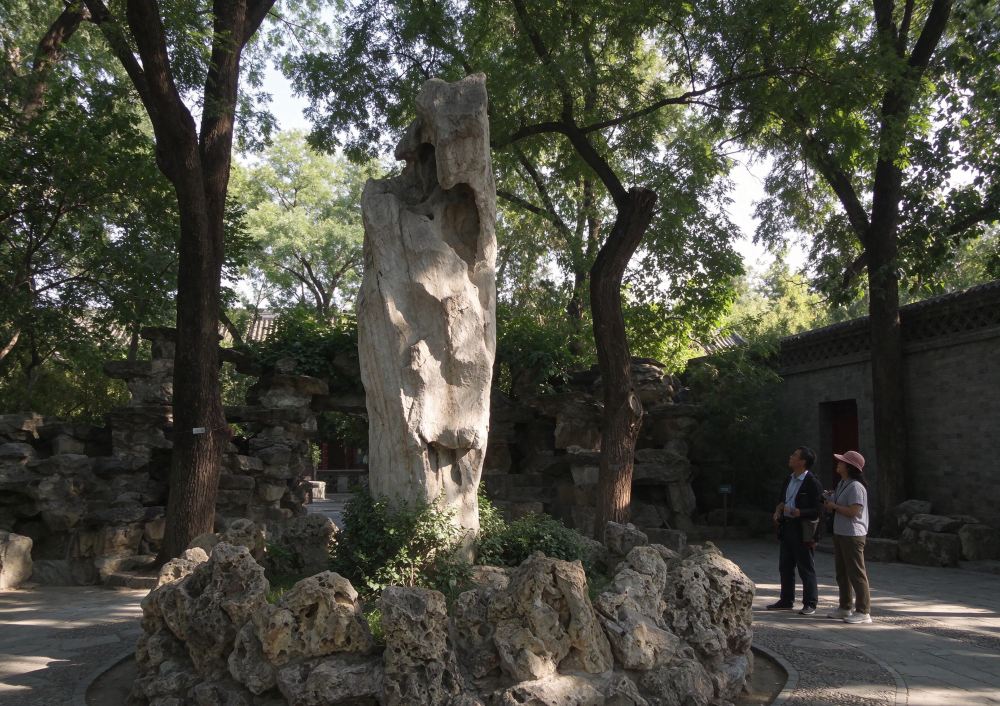
▲ Dule Peak: One rock, two interpretations Upon entering, a 5-meter-tall North Taihu stone stands directly ahead, named Dule Peak. Its practical function is as a spirit wall and screen, blocking the line of sight so that the garden scenery is not fully visible at a glance. The stone itself is full of holes and ravines, and after weathering it resembles both water eddies and clouds. Its shape can be read in two ways: from one side it looks like a carp, and from the other it looks like a woman holding an infant. During Heshen's time, it was known as the "Guanyin Bringing Children Stone." Yixin inscribed "Dule Peak," taking the meaning of cultivating one's own virtue in isolation, and also echoing the allusion of Sima Guang building the Dule Garden.
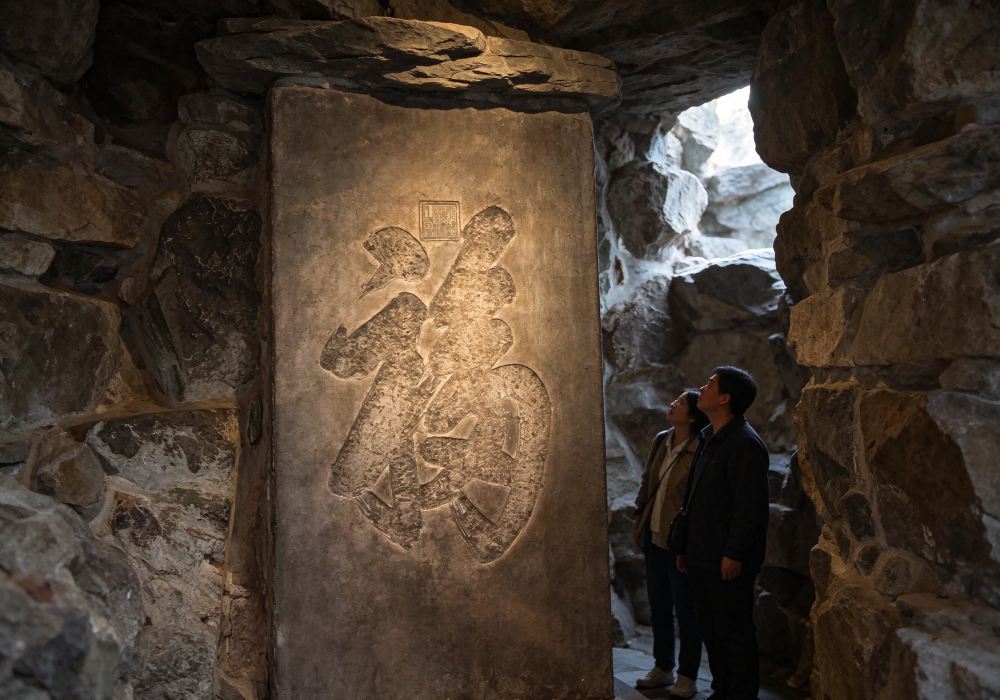
▲ Fu Stele The Fu Stele is hidden in the Secret Cloud Cave of the garden's rockery. The stele stands 7.9 m tall, extending from the cave floor all the way to the top of the rockery. The character was written by Emperor Kangxi himself and bears the imprint of the imperial seal. Kangxi was a skilled calligrapher but rarely inscribed characters, which makes this stele particularly prized. It is one of the three wonders of Prince Kung's Palace Museum.
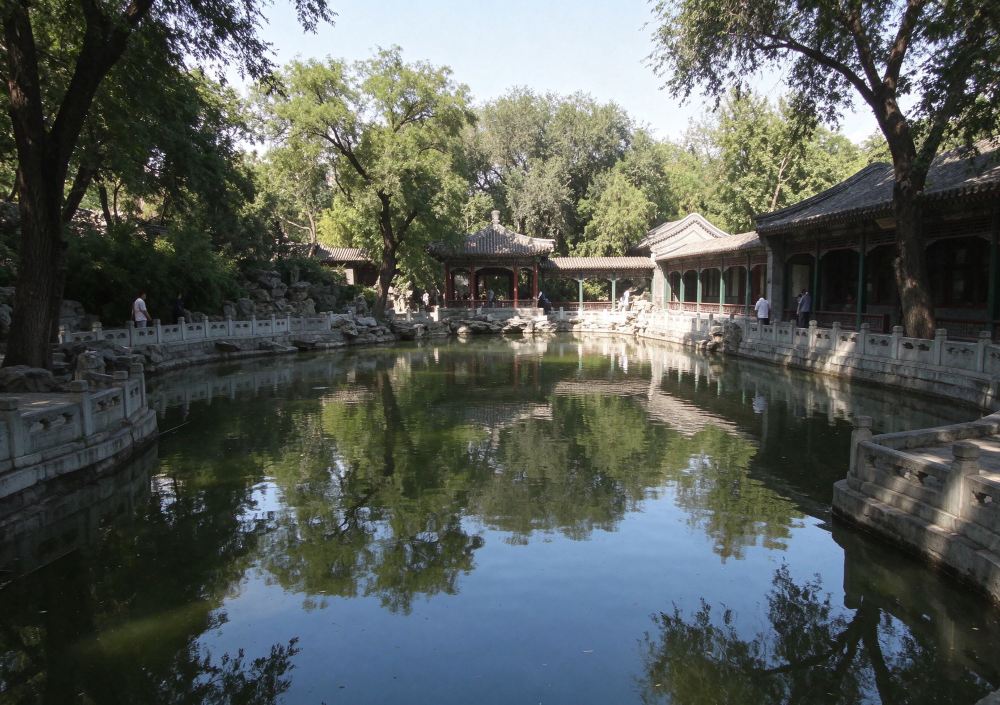
▲ Garden: Bat Pond, Grand Theater The garden is called Cuijin Garden, and the water surface is the Bat Pond; the shape of the pond takes the meaning of a bat, a homophone for "fortune." Rockeries, winding corridors, and ponds are interspersed along the way—this is the place where silver is turned into scenery, and also where the princely mansion spent its daily leisure. The Grand Theater is a fully enclosed wooden theater: when opera is performed on stage, the sound gathers below, and even the last row can hear clearly. This building is the pinnacle of extravagance: hiring opera troupes, maintaining the garden, and hosting hall gatherings—this is how the money was ultimately spent.