UK Arrival Card: ETA, Entry Requirements & Customs Guide

Traveling is already stressful enough. I’ve been to the UK myself and gone through this process, and the biggest thing I’ve learned is that the logistics matter. Knowing what you need to get into a country where you’re not a citizen saves you a lot of headaches. If you’re planning a trip to London or anywhere else in the UK, here’s what you need to know before you fly.
Flights to the UK
New York to London
Los Angeles to London
Chicago to London
Boston to London
See all flights


What Is a UK Arrival Card? Understanding the Basics
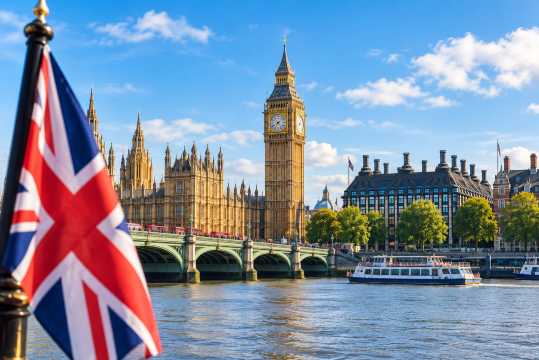
The old UK arrival card, usually called the landing card, was a paper form that certain international passengers filled out before entering the UK. It asked for the basics: your name, nationality, passport details, and why you were visiting. You'd hand it to an immigration officer when you got there. The UK got rid of it on May 20, 2019, when it dropped the requirement for non-European Economic Area passengers. These days, Americans coming over for a short vacation don't fill out an arrival card. What you need is a valid passport and, in most cases, an approved UK ETA. Just don't think of the ETA as a digital version of the old card. It's actually permission to travel to the UK, and you get it before you leave instead of filling something out at the airport.
UK ETA: The New Entry Requirement for American Travelers

The UK's Electronic Travel Authorisation is part of its digital border system. It allows eligible visitors to receive permission to travel without applying for a traditional visitor visa. The program began rolling out in 2023, initially covering Qatar. It expanded to other Gulf countries and then to additional visa-exempt nationalities. Americans became eligible and required to use the system for travel beginning January 8, 2025, with European nationals following in April 2025.
If you're an American visiting London, Edinburgh, Manchester, or another UK destination for a short trip, you'll generally need an ETA before traveling.
An ETA is linked electronically to your passport, so you won't receive a physical card or sticker. It doesn't guarantee entry, however. UK Border Force still determines whether you're admitted when you arrive.
Who Needs a UK ETA? Nationalities and Eligibility
The ETA requirement applies mainly to eligible visitors who can travel to the UK without getting a visa in advance.
That includes:
- Nationals of the United States, Canada, Australia, New Zealand, Japan, South Korea, Singapore, and numerous European countries
- Eligible Gulf Cooperation Council nationalities.
- Most EU and EFTA nationals also require an ETA for short visits, with Irish citizens exempt.
For American tourists, the rule is straightforward: if you're visiting the UK for a short vacation using your U.S. passport and don't already hold qualifying UK immigration permission, you generally need an ETA.
Children need their own ETAs, too. A parent's authorization doesn't cover the entire family. Because eligibility depends on nationality and immigration status, use the government's ETA eligibility guidance before booking.
Who Is Exempt From the UK ETA?
Not everyone needs an ETA.
Common exemptions include:
- British and Irish citizens
- People who already have valid UK visas or immigration permission
- Travelers with specific immigration or diplomatic arrangements
- Some British nationality categories, including British Overseas Territories citizens, are also exempt
Travelers who remain airside while connecting through certain UK airports currently benefit from an exemption, provided they don't pass through UK border control.
Another exception affects those people who legally live in Ireland and travel to the UK from Ireland, Guernsey, Jersey, or the Isle of Man. Specific eligibility conditions apply, so be sure to check on that before you go. Dual British-American citizens should pay special attention. If you hold British citizenship, you can't simply use an ETA as though you were only an American visitor. You may need to demonstrate your British citizenship using the appropriate documentation.
Stay Connected With Trip.com!
See all attractions
 487780 booked







How to Apply for a UK ETA: Step-by-Step Guide
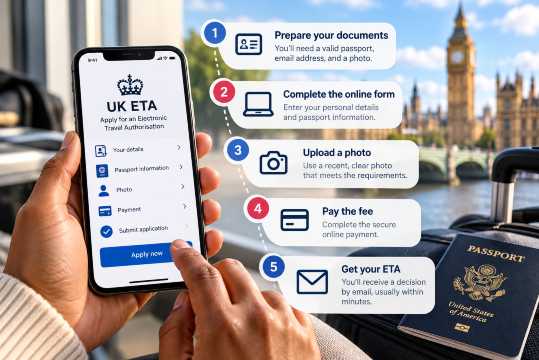
Speaking from personal experience, applying for a UK ETA is pretty easy, and you can do the whole process online without visiting an embassy. The government offers two official application methods: the UK ETA mobile app and the GOV.UK application website.
I'd use one of those official options rather than a third-party service. Some websites charge additional processing fees, but they can't obtain a faster government decision. I also almost got duped by one of these sites because I didn't just go through the official channel.
After putting in all of my family's information, the total was $200+ for all of us. Thankfully, I checked to see how much it should cost because I'd remember seeing that it was free. Once I realized I was being charged these admin fees, I quickly just went through the app and got the approved decision within a few minutes.
Here's how to apply:
- Open the official UK ETA app or government application website.
- Have the passport you'll use for your trip ready.
- Enter your personal details and contact information.
- Scan or photograph your passport as instructed.
- Provide a facial photograph and complete any required identity checks.
- Answer the eligibility and background questions.
- Pay the application fee.
- Wait for the decision, which is normally sent by email.
Once approved, most people find that you don't need to print the approval email, although keeping a copy on your phone can be helpful for your own records.
If your UK ETA application is denied, don't panic. A refusal doesn't mean you're banned from the UK. A person who is refused an ETA has not been refused permission to enter the UK, but they will need to apply for a visa if they still want to come. Start by reading the email you get with the decision. If the problem was a simple mistake, like a typo in your passport number or a bad photo, you can start a fresh application with the corrected details. There's no waiting period before you can reapply.
But if the refusal came from something you can't fix, like past immigration issues or a criminal record, applying again with the same information will likely get the same answer. In that case, a Standard Visitor Visa is the better route, since it lets you submit supporting documents and explain your situation. Whichever you pick, be honest on every form. Keep the refusal email too, so your later applications stay consistent.
Information Required for Your UK ETA Application
Before starting, gather your passport, an email address you can access, and a payment method. The application requires passport information and an image of the applicant's face. When using the mobile app, you may also be prompted to scan the passport chip and complete a facial scan, depending on the applicant's age and the device. You'll also answer questions relating to your background and eligibility.
Parents can apply for their children, but each child needs an individual authorization. If you're completing an application for someone who isn't physically with you, the government directs you to use the online application method.
UK ETA Cost, Validity, and What It Allows
The current official UK ETA application fee is £20 per person. An approved ETA normally remains valid for two years or until the passport used for the application expires, whichever comes first.
You can use it for multiple eligible trips during that period. For most American tourists, an ETA permits travel for visits of up to six months for purposes such as tourism, visiting family or friends, certain business activities, and eligible short-term study.
There are also limited permitted paid engagements and other specific categories, subject to their own conditions. You cannot use an ETA to move permanently to the UK, take ordinary employment without the appropriate permission, or remain indefinitely through repeated visits. If you replace your passport, you'll need a new ETA.
UK Entry Requirements for US Citizens: What to Expect at the Border
Arriving in the UK is usually straightforward when you have the correct documentation. After your flight lands, you'll follow signs for passport control. Depending on your airport, age, passport type, and immigration circumstances, you may be able to use an automated ePassport gate. Otherwise, you'll speak with a Border Force officer. Your passport and ETA are checked as part of the entry process, but an ETA alone doesn't guarantee admission.
Using eGates at UK Airports: -Fast Track Entry for Americans
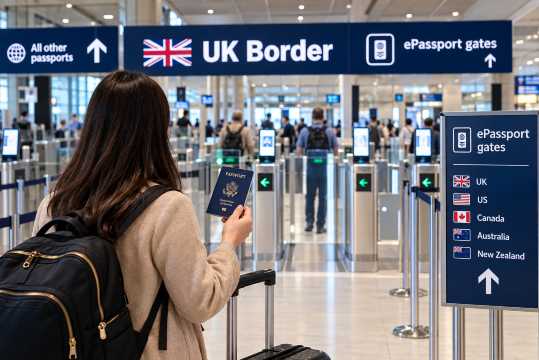
American citizens with eligible biometric passports can generally use ePassport gates at major UK airports, including Heathrow, Gatwick, Manchester, and Edinburgh. Travelers must normally be at least 10 years old to use the gates. Children aged 10 through 17 must be accompanied by an adult.
The gates scan your passport and compare your face with the biometric photograph stored in the passport. If the system can't complete the check, you'll be directed to an immigration officer. Non-biometric passports aren't eligible for eGate processing, and travelers entering under certain immigration categories may need to speak with an officer even if their passport is eligible.
Common Questions UK Border Force Officers May Ask Americans
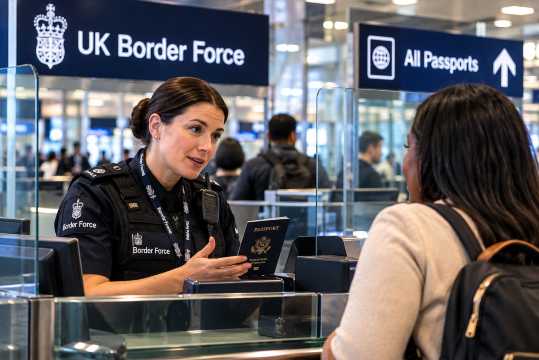
If you speak with an immigration officer, don't be surprised if they ask a few questions about your visit.
- They might want to know why you're traveling, how long you intend to stay, where you're staying, and whether you have enough money to support yourself during the trip.
- They may also ask about your return or onward travel plans.
For example, if you're spending five days in London, a simple explanation of your itinerary and accommodation arrangements is generally sufficient.
It's sensible to keep your hotel reservation, return flight details, and relevant financial information accessible in case you're asked to provide evidence. You don't necessarily need printed bank statements for an ordinary tourist visit, but you should be able to demonstrate that you meet the visitor requirements if questioned.
Traveling to the UK with Children: Special Entry Requirements
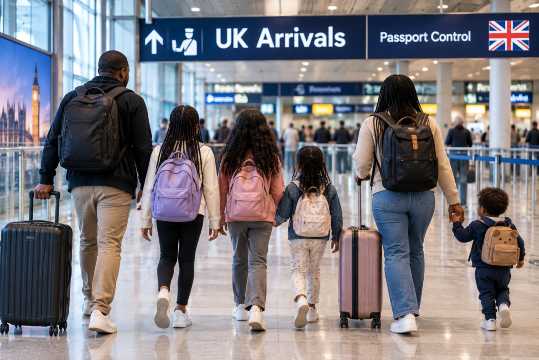
If you're traveling to the UK with children, remember that every child who requires an ETA needs their own authorization. Children also need valid passports. Border officers may ask about your relationship to a child, especially when you're traveling alone with them or have different surnames.
I'd recommend carrying a birth certificate or another document that establishes your relationship. If you're traveling without the child's other parent or legal guardian, written permission can also help explain the arrangements. Adoption or guardianship documents may be relevant in some circumstances. A notarized consent letter isn't a universal UK entry requirement for every child traveling with one parent, but having appropriate documentation can prevent unnecessary complications.
London
Edinburgh
Manchester
Glasgow
See all attractions

















What to Declare at UK Customs: Items and Allowances
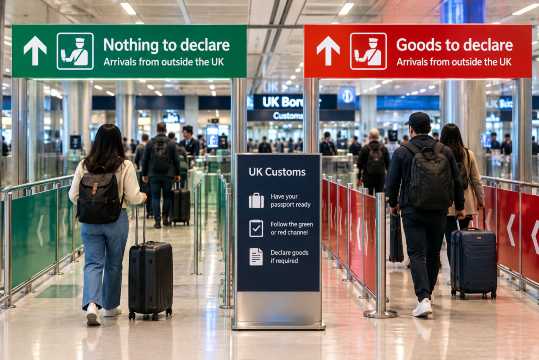
After clearing passport control and collecting your luggage, you'll pass through customs. Most visitors carrying ordinary personal belongings won't need to make a declaration. However, there are limits on certain goods you can bring into the country without paying tax or duty. The allowances also depend on whether you're arriving in Great Britain or Northern Ireland.
UK Duty-Free Allowances for Travelers From the US
For travelers arriving in England, Scotland, or Wales from the United States, the standard personal allowances include:
Category | Allowance |
|---|---|
Beer and cider | 42 liters |
Wine, still or sparkling | 18 liters |
Spirits over 22% ABV | 4 liters |
Other qualifying alcoholic drinks up to 22% ABV | 9 liters |
Cigarettes | 200 |
Cigars | 50 |
Tobacco | 250 grams |
Other goods, including gifts | £390 |
- The spirits and lower-strength alcoholic drink allowances are alternatives, although the government permits proportional combinations.
- Tobacco allowances also have alternative categories and can be combined proportionally.
- For other goods, the allowance falls to £270 if you're arriving by private plane or boat. It isn't the standard allowance for commercial airline passengers.
Travelers under 17 don't receive personal allowances for alcohol or tobacco. If you exceed an allowance, you generally owe duty and tax on the entire amount in that category, not merely the excess.
The UK also has separate rules for cash declarations. Travelers entering Great Britain must generally declare cash of £10,000 or more, or the equivalent in another currency. At airports, the green channel is for travelers with nothing to declare. The red channel is for goods requiring a declaration, although some declarations can be completed online before arrival.
Banned and Restricted Items: What You Cannot Bring Into the UK
Certain items are prohibited or restricted regardless of whether they fall within your duty-free allowance.
- Examples include controlled drugs, prohibited weapons, certain firearms, counterfeit goods, and protected animal or plant products.
- Food restrictions can also surprise travelers. Depending on the product and country of origin, bringing meat, dairy products, plants, or certain animal products into Great Britain may be prohibited or subject to special conditions.
- Prescription medication is another area where it's smart to check the rules before departure, particularly if you're carrying controlled medicines.
You may need supporting documentation or permission for some items. If you're uncertain whether something is allowed, check before packing it rather than waiting until you reach customs.
Transiting Through UK Airports: Do You Need a UK Arrival Card or ETA?
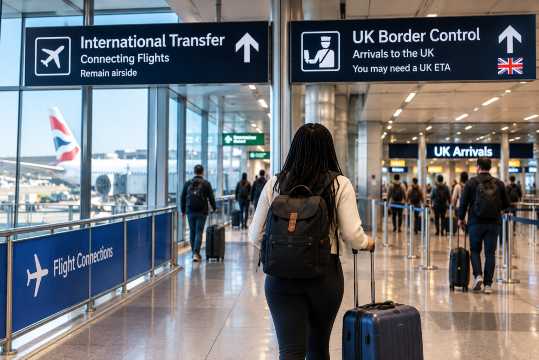
If you're connecting through London Heathrow or another UK airport on your way to a different country, the requirements depend on whether you pass through UK border control.
- An airside transit means you remain within the airport's international transit area without entering the UK through immigration.
- A landside transit means you pass through UK border control, perhaps because you need to collect luggage, change airports, or check in again.
Under the current temporary airside transit exemption, eligible passengers who remain airside don't need a UK ETA.
However, American travelers who must enter the UK during a connection generally need an ETA unless another exemption applies. Airside transit isn't available for every airport, airline, or itinerary. Some connections require travelers to pass through immigration even when they're only changing flights. Before booking separate tickets or a long connection, check with your airline whether you'll need to collect your luggage and clear border control.
See all attractions


UK ETA vs. UK Visa: What's the Difference?
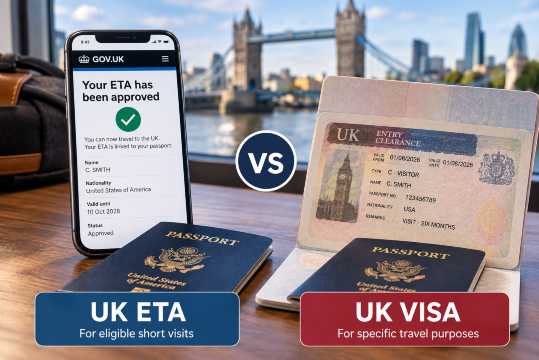
The main difference is the type of travel permission each document provides. An ETA is designed for eligible travelers who don't normally need a visa for short visits. A visa is required for many other immigration purposes and for travelers who aren't eligible to enter under the ETA system. Here's a quick comparison:
Feature | UK ETA | UK Visa |
|---|---|---|
Intended use | Eligible short visits | Specific immigration categories |
Typical American tourist | Usually required | Usually unnecessary |
Length of stay | Generally up to six months per visit | Depends on visa category |
Application process | App or online | Depends on visa type |
Employment | Limited permitted activities only | Depends on visa conditions |
Long-term residence | Not permitted | Possible with qualifying visa |
For example, an American visiting London for a week generally needs an ETA rather than a visitor visa. But someone planning to move to the UK for a job, enroll in a long-term academic program, or join family members may need a specific visa. If you're unsure which permission applies, use the government's 'Check if you need a UK visa' tool.
Practical Tips for a Smooth UK Entry Experience
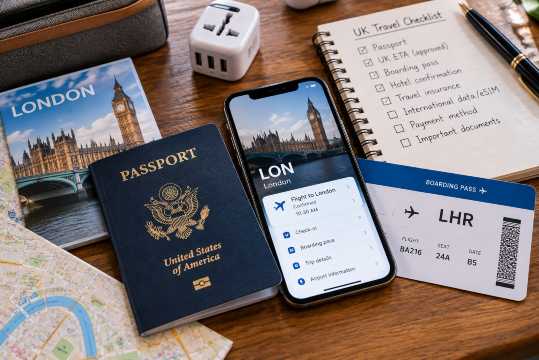
International travel is much easier when your documents are organized before you reach the airport.
I prefer having essential information saved on my phone, with backup copies available in case the battery dies or the internet connection isn't working.
Here's what I'd do before traveling to the UK:
- Apply for your ETA early. Don't wait until you're checking in for your flight. Allow at least three working days, and more time if your application needs additional review.
- Check your passport. Make sure you're traveling with the same passport linked to your approved ETA.
- Confirm everyone's documentation. If you're traveling as a family, verify that every child has the required passport and ETA.
- Save your hotel details. Keep the address and booking confirmation accessible without an internet connection.
- Keep your return travel information handy. Border officers may ask about your plans.
- Review customs allowances. Check the rules before packing restricted foods, medications, or high-value purchases.
- Arrange mobile data. An international roaming plan or UK travel eSIM can help you access transportation directions and hotel information after landing.
One more suggestion: if you're visiting London, think about how you'll get from the airport to your accommodation before you arrive. Heathrow, Gatwick, Stansted, and Luton serve different parts of the London area, and the easiest transfer depends on where you're staying.
Hotels in the UK
London
Edinburgh
Manchester
Glasgow
See All Hotels

























FAQs About the UK Arrival Card
-
Do Americans need to fill out a UK Arrival Card?
-
How much does a UK ETA cost in 2026?
-
How long does a UK ETA last?
-
Do children need a UK ETA?
-
Do I need a UK ETA if I'm only changing planes at Heathrow?
Disclaimer: This article has been provided by an individual contributor or third party platform. If there is any discrepancy regarding the copyright, please contact us directly and we will delete the content immediately.
Trending Searches
-
Air travel guide
-
Latest flight deals
-
Top Flight + Hotel Packages
-
Getting around
-
eSIM/SIM card
- Hotel Deals
- How to Get to the Canton Fair
- Chongqing Metro Map
- Takkyubin Luggage Forwarding
- Treehouse Hotel in China
- US Halloween Theme Park Events 2026
- Korea Arrival Card
- Canada Arrival Card
- Taiwan Arrival Card
- Halloween
- Shanghai Restaurant
- Google Maps Not Working in China
- Mexico Arrival Card
- Chongqing Railway Station
- Singapore Arrival Card
- Bangkok Airport Rail Link
- UK Arrival Card
- Chengdu Layover
- Germany Esport Events in Sep 2026
- Latin Events in San Rafael 2026
- Mountain Biking Events in Northumberland County 2026
- Reggae Events in Newcastle upon Tyne
- Portland Dragon Boat Festival Events in Sep
- Westwood Mountain Biking Events in Sep
- Brooklyn Dragon Boat Festival Events in Sep
- Folk Events in Gemeinde Pfaffenschlag bei Waidhofen an der Thaya
- Coryell County Obstacles Events in Sep
- Latin Events in Salt Lake County
- Volleyball Events in Crestwood 2026
- Jewelry Events in Massillon
- Takkyubin Luggage Forwarding
- Treehouse Hotel in China
- Taiwan Arrival Card
- Chengdu Layover
- Hotel Deals
- US Halloween Theme Park Events 2026
- Beijing Day Tours
- Shanghai Day Tours
- Chongqing Day Tours
- Pattaya Day Tours
- Shenzhen Activities
- Shanghai Activities
- Hong Kong Activities
- Chongqing Activities
- Beijing Activities