International Carry-On Size Guide: Standard Dimensions, Airline Rules & Packing Tips

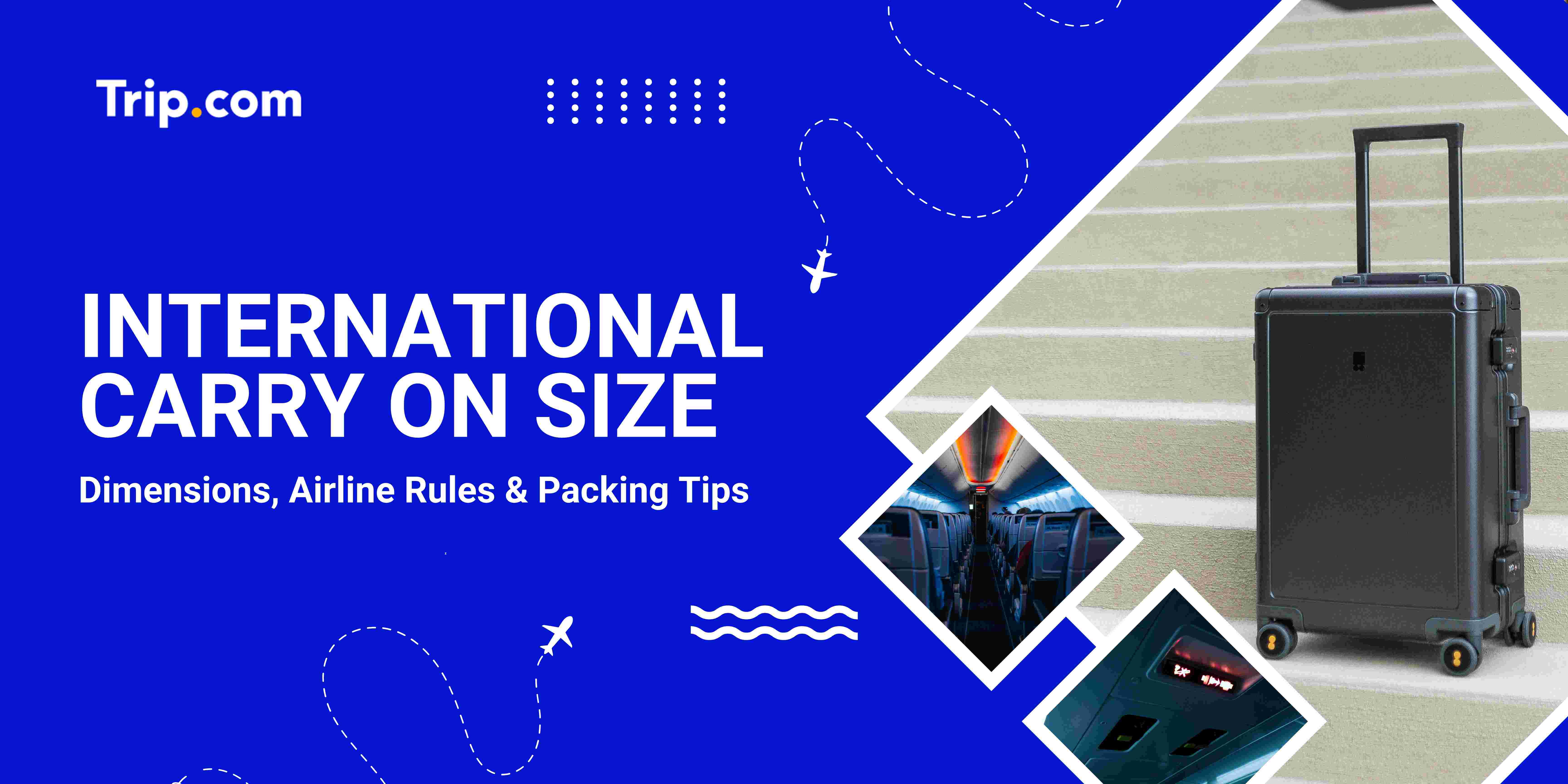
International carry-on size might give you the perception that there is one global standard for this. However, it is more like a cluster of similar rules where airlines differ in dimensions and weight limits. For a lot of people, the big shock isn't the size of the bag, but weight restrictions implemented on international flights.
To Shanghai
To Bangkok
To Tokyo
See all flights


International Carry-On Size and Weight
Although the size varies, having a carry on with this size is pretty safe:
- Target size (including wheels/handles):
- 21-21.5 x 14 x 9 in
- ≈ 55 x 35 x 23 cm
- Target weight:
- Keep it under 8-9 kg (17-20 lb) for economy
This parameter fits most U.S. domestic limits (22 x 14 x 9 in). It fits many international airline limits around 55 x 35-40 x 20-23 cm. It falls within 7-10 kg weight limit which is common outside the United States.
U.S. vs. International Carry-On Size
Feature | Many US airlines | Many non-US / international airlines |
Typical max size (carry-on) | ~ 22 x 14 x 9 in (56 x 36 x 23 cm) | ~ 55 x 35–40 x 20–23 cm |
Sizes | Lufthansa: 55 x 40 x 23 cm, same with a lot of other airlines | |
Weight limit | Often no formal weight limit for carry-on only (must lift it yourself) | Commonly 7–10 kg (15–22 lb) in economy; higher in premium cabins |
What they check | Mostly size & number of items, sometimes visual checks | Size and weight, often weighed at check-in or gate |
How to Messure Your International Carry-On?
This may be common sense but carry-on size is not the interior packing space but the exterior.
Stand it upright and measure:
- Height: floor to the highest point (often the top handle or wheels)
- Width: side-to-side at the widest point
- Depth: front-to-back including any bulging pockets
IATA (International Air Travel Association) says carry on dimensions should include wheels, handles and side pockets; major airlines like American and United say the same in their baggage rules. If the manufacturer claims 55 cm in height but that’s just the shell, you might find it’s closer to 57-58 cm.
What Is the Size for International Personal Item?
Most airlines allow:
- 1 main cabin bag which is stored in the overhead compartment
- 1 personal item stored under the seat, such as a laptop bag, small backpack, or a handbag
Size for a personal item is roughly:
- 15-17 x 10-13 x 6-8 inches
- 40-43 x 25-33 x 15-20 cm
Always be aware of the exact dimensions for personal items. Some might say as long as it fits under the seat it's good to go. However, in Europe and on budget airline, oversized personal items are seen as paid cabin bags, so it is always good to keep these small.

What Is the Weight Limit for International Carry-On?
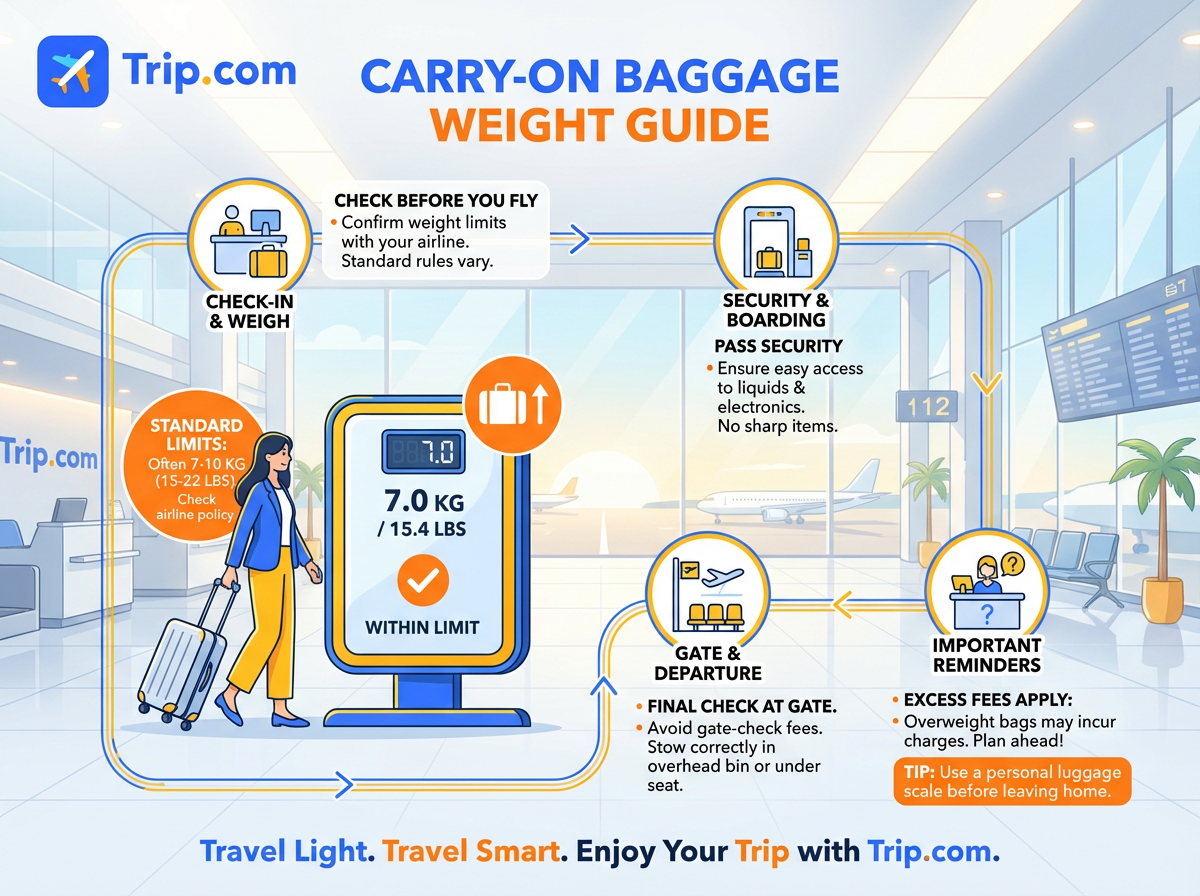
Many travelers only pay attention to the size of the carry-ons but on many international carriers, weight is just as important.
Here are some airline rule examples
- Some European and Asian airlines economy carry on is at 7kg (15-18 lb).
- Other airlines allow more, especially in premium cabins.
Bags are usually weighed
- At check in for international flights
- At a dedicated measuring station
- At the gate, particularly on busy or full flights
Advice
- If your bag is overweight or obviously oversized, you may be forced to check it (with or without a fee), even if it fits earlier in the trip on a domestic airline.
- If you’re flying economy internationally, pack your main cabin bag to stay around 7 kg (17 lb) unless your airline clearly allows more.
Useful Tips
These are the situations that most often cause drama at the gate:
1. Mixed airlines on one itinerary
If you fly a U.S. carrier to Europe and a European carrier within Europe, you must pack to go with the strictest set of rules.
2. Small aircraft and regional routes
On smaller planes, some bags may be too big for the overhead bin. Airlines often check roller bags at the gate and return them by the plane on arrival.
3. Low cost carriers
Budget airlines may:
- Use smaller cabin size limits
- Charge extra for standard carry-ons and only include a small under seat item
- Weigh both your cabin bag and personal item together
4. Duty free bags
Some airlines count duty free purchases as part of your cabin allowance. When overhead space is tight, extra bags (including duty free) are often the first to be checked.
Search Top 10 U.S. Hotels
See All Hotels
 NO.1
NO.1






Packing Checklist for International Carry-on
1. Choosing Your Carry-on
- Your main bag should be around 21-21.5 x 14 x 9 in (55 x 35 x 23 cm)
- Soft or slightly flexible case if you’re worried about fit
- Light empty weight
2. Measure the external size including wheels/handles
- Weighed fully packed (aim under 8-9 kg/17-20 lb for economy)
3. Packing Your Carry-on
- Wear your heaviest shoes and jacket on the plane
- Keep dense items (chargers, power banks, toiletries) organized
- Use packing cubes to have everything in order
- Keep valuables with you in case your cabin bag is checked
4. Carry On Reminders
- Know your airline’s exact size & weight limits in advance
- If possible, board earlier (status, credit card, or paid priority) to improve chances of overhead space
See all attractions





FAQs about International Carry-on
-
What is the standard international carry-on size?
-
Is international carry-on size smaller than US domestic?
-
What weight is allowed for international carry-on?
-
What size carry-on should I buy if I travel internationally a lot?
-
Does my personal item count as a second carry-on?
Disclaimer: This article has been provided by an individual contributor or third party platform. If there is any discrepancy regarding the copyright, please contact us directly and we will delete the content immediately.
Trending Searches
-
Air travel guide
-
Latest flight deals
-
Getting around
-
eSIM/SIM card
- China eSIM
- eSIM Hong Kong
- Best VPN in China
- eSIM Vietnam
- eSIM Europe
- American Airlines Check in Time
- Trip.com Cheap Time Period
- How Big Can a Carry-on Be for United Airlines
- SHIBUYA SKY Ticket
- Do you need a passport to go to Puerto Rico
- US Fedural Holidays
- Chengdu Panda
- The Bund Shanghai
- Things To Do in Guangzhou
- Shanghai Disneyland Early Entry