Canada Arrival Card: Requirements and How to Apply

By Nancy
October 20, 2026
The Canada Arrival Card helps travelers understand customs requirements before entering Canada. Learn how to declare goods and prepare for arrival.
Flights to Vancouver
Hotels in Canada
Things To Do In Canada
See all flights


 NO.1











Understanding the Canada Arrival Card
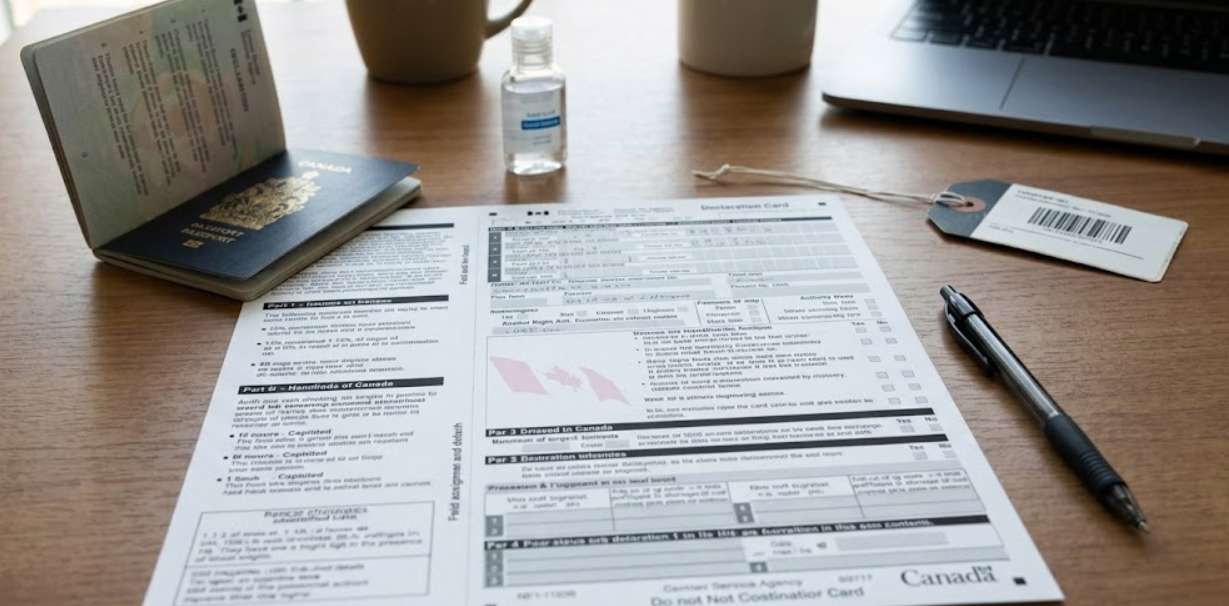
The term Canada Arrival Card often refers to the customs declaration travelers complete when entering Canada. The Canada Border Services Agency (CBSA) administers the process and checks travelers and the goods they bring into the country.
The official electronic option is called the Advance CBSA Declaration. Available through the official ArriveCAN service, it allows eligible air travelers to submit their customs and immigration answers up to 72 hours before arriving in Canada.
What Should Foreign Travelers Know Before Arriving?
The online declaration is optional, but it saves time; the digital self-service lets you complete it from anywhere. It also allows travelers to submit as a group.
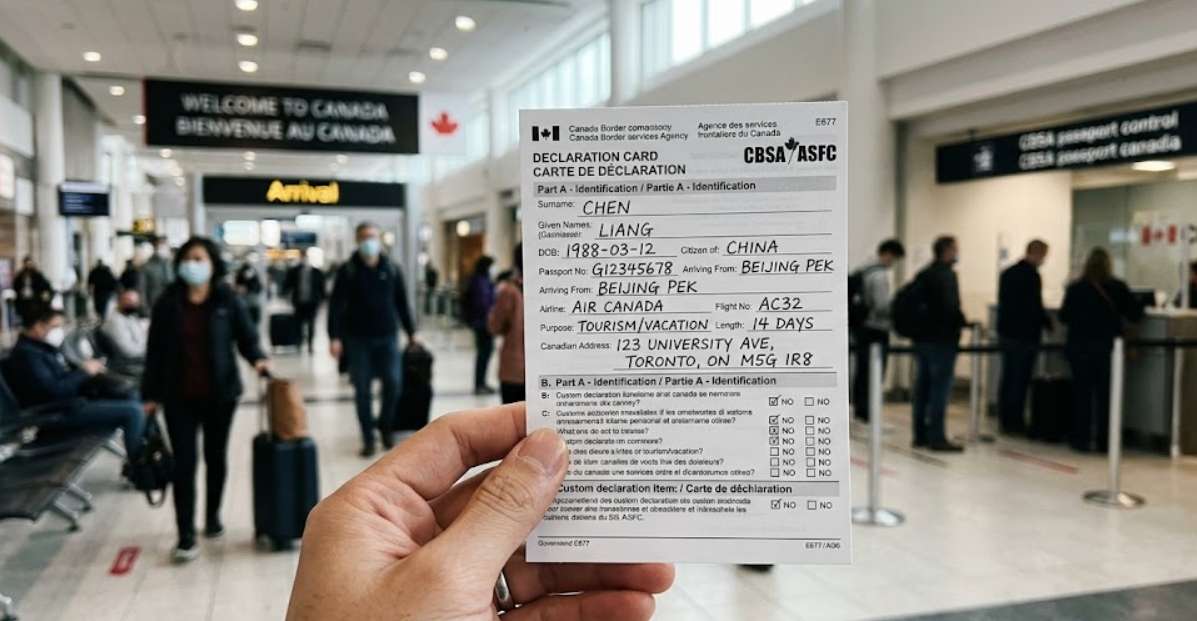
Eligible travelers arriving at participating airports can submit it before their flight, while others can complete the declaration at their port of entry. Depending on the airport, this may involve an electronic kiosk, an eGate, or a paper declaration card.
A customs declaration is separate from your permission to enter Canada. Completing it doesn't replace a visitor visa or an Electronic Travel Authorization (eTA). You have to double-check which travel documents are required before departure.
Do You Need to Complete a Canada Arrival Card?
Travelers must comply with Canada's customs declaration requirements, but you don't have to submit the optional Advance CBSA Declaration online before every trip. The process you follow depends on how you're entering Canada and which facilities are available at your arrival point.
Your situation | What to do |
Flying into Canada through a participating airport | You can submit the Advance CBSA Declaration within 72 hours before arrival. |
Arriving at an airport with a primary inspection kiosk or eGate | Follow the airport signs and complete your declaration there if you haven't submitted it in advance. |
Arriving at an airport that uses paper declaration cards | Complete the card provided by your airline or at the airport, as instructed. |
Entering by land or sea | Follow the reporting and declaration procedure at your port of entry. The Advance CBSA Declaration isn't a universal form for all travel methods. |
Preferring not to use ArriveCAN | Complete your declaration using the process available when you arrive. |
More guidance on eGates and kiosks can be found on the official CBSA website. Facilities vary, and not every airport offers the same options.
How to Complete the Canada Arrival Card Online

If you're flying into a participating airport and are eligible to use the service, the Advance CBSA Declaration can help you prepare your answers before reaching the border. The service is free and available through the ArriveCAN mobile app or website.
Step 1: Open the official ArriveCAN service
First, visit the Government of Canada's ArriveCAN declaration page. Sign in or create an account, then follow the prompts.
Use the official government service rather than an unfamiliar third-party website offering paid form assistance.
Step 2: Enter your travel document details
Confirm the requested information from your passport or Canadian permanent resident card. If you are a foreign visitor traveling on a passport, enter your passport details accurately and use the same travel document when you arrive.
Ensure that your name and document information are all correct before continuing.
Step 3: Answer the declaration questions
Provide the requested travel, customs, and immigration information. Questions may cover the purpose of your visit and goods you're bringing into Canada, including food, plants, animal products, commercial goods, and currency or monetary instruments.
Read each question carefully, and if you're uncertain whether something must be declared, consult the CBSA's official guidance before submitting your answers.
Step 4: Submit within 72 hours of arrival
Submit your Advance CBSA Declaration within the 72-hour window before arriving in Canada. After you submit successfully, a confirmation screen should appear, and you'll receive an email with a reference number.
Keep the confirmation accessible, but remember that it isn't a visa, an eTA, or a guarantee of admission.
Step 5: Finalize your declaration at the airport
When you arrive, follow the signs to a primary inspection kiosk or eGate where available. Scan your travel document, review your saved answers, make any necessary corrections, and submit your final declaration.
Take the resulting receipt to a border services officer as instructed. You may be asked additional questions or directed to another inspection area.
Important: If you don't confirm your advance declaration at a kiosk or eGate within 72 hours of submitting it, it expires, and you'll need to submit a new one. If your flight is delayed or your trip is postponed, check the declaration status and follow CBSA instructions.
The CBSA features a dedicated guide to completing the card.
See all attractions



What Information Do You Need for the Canada Arrival Card?
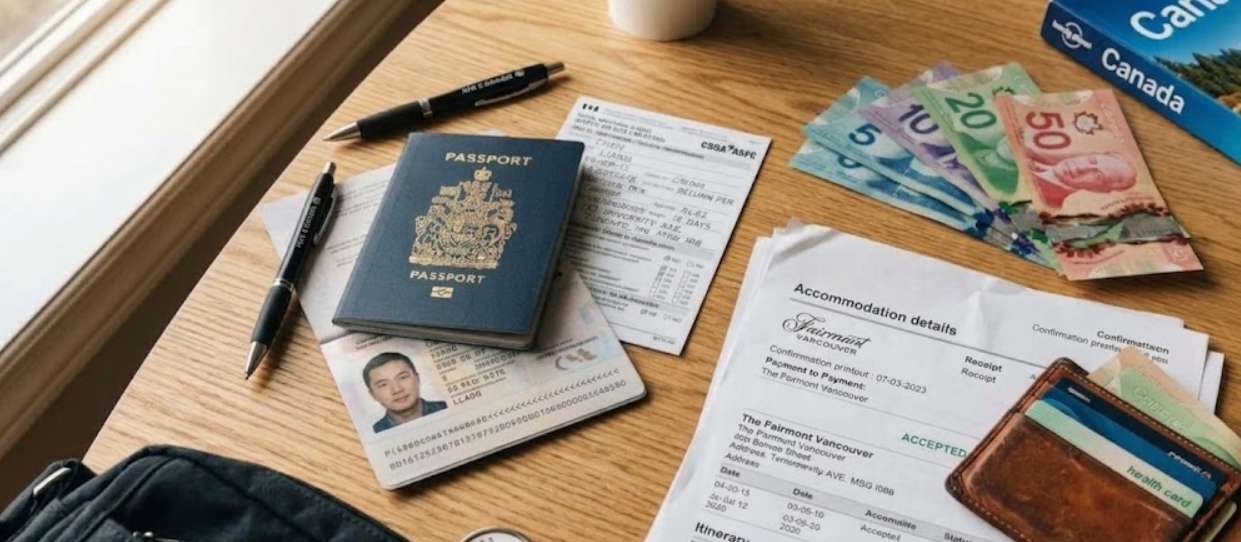
Prepare the following information before completing your declaration. The exact questions depend on your circumstances and how you declare.
- Travel document: Have your passport or other accepted document ready.
- Travel details: Know your arrival method, flight or other transport details, and where you're arriving from.
- Purpose and duration of your visit: Be prepared to explain why you're visiting (tourism, business, study, or another reason) and how long you plan to stay.
- Accommodation details: Keep your first accommodation address handy in case an officer asks where you'll be staying.
- Goods you're bringing: Consider purchases, gifts, commercial goods, and food, plant, or animal products in your luggage.
- Currency and monetary instruments: Check whether you're carrying a combined value of CAN$10,000 or more that must be reported.
The CBSA Declaration Card (E311) includes questions about travelers, their journeys, and the goods they bring into Canada. The paper card lets you list up to four people living at the same address, but each traveler remains responsible for their own declaration.
What Should You Declare When Entering Canada?
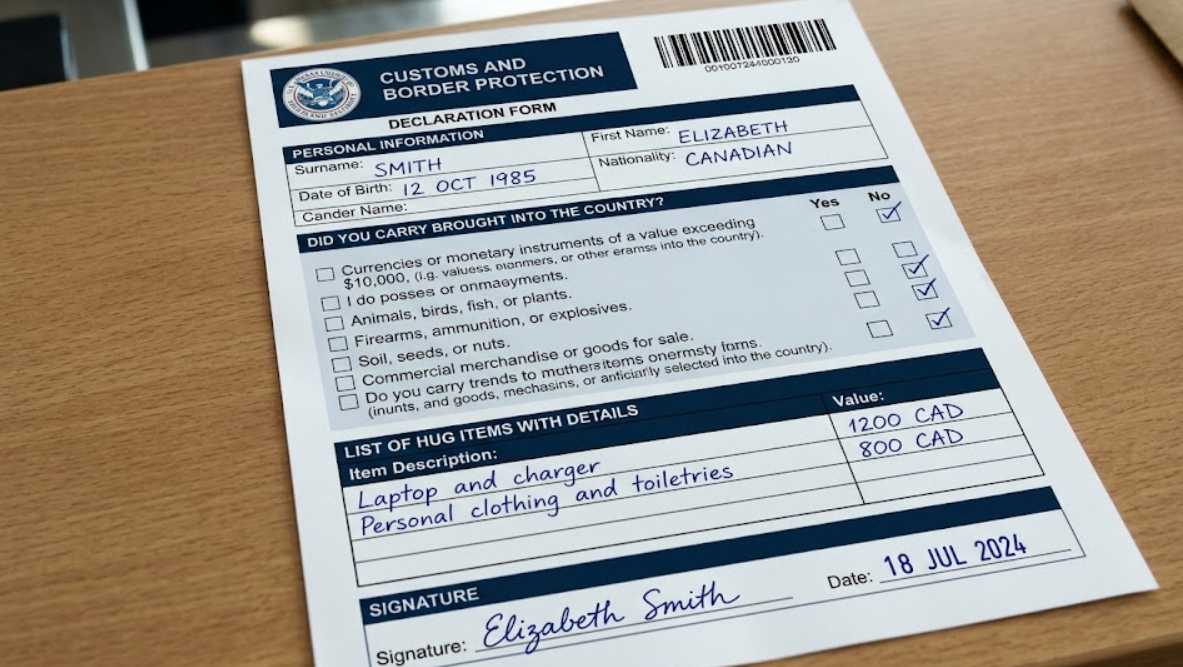
Canada's customs declaration helps border officials determine whether goods can enter the country and whether duties, taxes, permits, or inspections may apply. Declaring an item doesn't automatically mean it will be prohibited.
Food, plants, and animal products
Canada restricts certain food, plant, and animal products to protect agriculture, wildlife, and the environment. Declare these products when required, even if they're packaged or intended for personal use.
Don't assume that snacks containing meat, fresh fruit, seeds, dairy products, or homemade food are permitted simply because they're for your own consumption. The rules depend on the product, its origin, and other circumstances.
Cash and monetary instruments
You must report currency and monetary instruments totaling CAN$10,000 or more when entering Canada. The threshold applies to the combined value in Canadian or foreign currency and qualifying instruments, such as checks, money orders, and bank drafts.
There isn't a general ban on bringing this amount into the country. However, you must report it correctly. Depending on how you arrive, you can report it through your Advance Declaration, a declaration card (if provided), an airport kiosk, or a verbal declaration to a border services officer.
Gifts, purchases, and commercial goods
Be prepared to declare gifts and purchases you're bringing into Canada. If you're carrying business-related items, such as product samples, tools, or equipment, you may need to identify them as commercial goods, even if you don't intend to resell them.
Whether duties or taxes apply depends on the goods and how you import them. Check CBSA's official guidance before traveling, especially if you're bringing expensive purchases or work equipment.
Cannabis and other restricted items
Bringing cannabis across Canada's border is illegal without a permit or exemption authorized by Health Canada. This applies even if cannabis is legal in your home country or where you live in Canada. Don't carry cannabis products across the border unless you have confirmed that a specific legal authorization applies to your situation.
Important note: Weapons, certain medicines, and other goods may also be prohibited or controlled. Check the relevant import rules before packing these items.
Car Rentals
Car Rental Promo Code - 8% Off
New User Enjoy up to 8% Off
TRIPCAR8
Do You Need a Visa, eTA,0 or Just the Canada Arrival Card

The customs declaration and your immigration documents serve different purposes. Check each requirement separately before departure.
Document or process | Purpose | When it's required |
Canada Arrival Card or customs declaration | Reports relevant travel details and goods you're bringing into Canada | You must comply with customs declaration requirements; the online advance option is optional. |
Visitor visa | Allows eligible travelers to travel to Canada and seek entry under the applicable conditions | Required for travelers whose nationality and circumstances fall under Canada's visa rules. |
Electronic Travel Authorization (eTA) | Authorizes eligible visa-exempt foreign nationals to travel to Canada by air | Required for eligible travelers who need an eTA, subject to applicable exceptions. |
Passport | Establishes your identity and nationality for international travel | Generally required for foreign visitors, subject to specific exceptions. |
Most foreign nationals need either a visitor visa or an eTA, not both. The document you need depends on your citizenship, travel method, and circumstances. An eTA is generally associated with air travel, while visa requirements may apply when entering by air, land, or sea.
Note: You can’t assume that completing ArriveCAN gives you automatic permission to board a flight or enter Canada.

Casa Loma
4.5/5
55 reviewsIt was a lovely place, even though it required a bit of walking after using public transport. I heard there was a Japanese guide, but unfortunately, the QR code didn't have Japanese.


Niagara Falls
4.8/5
199 reviewsA once in a lifetime experience! The boat is a must do for tourists wanting the full experience of the falls. We went on an October thursday. Wait times in october is virtually non-existent. Boats board every 15 mins. The voucher is easy to use just present the pdf of the voucher and you're good to go. Some of the passengers where regular rubber shoes but we came prepared with rainboots. Booking here was cheaper for us than through the official platform.

Banff National Park
4.9/5
85 reviewsBanff National Park is a breathtaking destination where turquoise lakes, towering mountains, peaceful forests, and dramatic landscapes create an unforgettable experience. The scenery feels almost unreal, especially around the crystal-clear lakes surrounded by snow-capped peaks. Scenic roads, hiking trails, waterfalls, and quiet viewpoints offer countless opportunities to enjoy nature and capture beautiful photographs. In autumn, golden larch trees and colorful foliage add an extra layer of magic to the landscape. Whether you love hiking, photography, wildlife, or simply peaceful mountain views, Banff has something special to offer. It’s truly a dream destination for anyone who wants to experience Canada’s spectacular natural beauty.
Mistakes to Avoid When Completing the Canada Arrival Card

A few checks before departure can prevent problems during the declaration process.
- Using an unofficial website: ArriveCAN's Advance CBSA Declaration is free. Avoid third-party services that charge unnecessary processing fees.
- Submitting outside the permitted window: Complete your advance declaration within 72 hours before arrival.
- Forgetting to finalize your answers: You must confirm the declaration at the appropriate kiosk or eGate after landing.
- Leaving out goods that require reporting: Review the questions carefully, especially those about food, commercial goods, and currency.
- Assuming every airport has the same facilities: Check the process available at your arrival airport.
- Giving inaccurate information: Correct mistakes when possible and tell a border services officer if you're unsure how to amend an answer.
🔥[Discount] Canada Hotel Recommendations
Hotels in Vancouver
Hotels in Montreal
Hotels in Torronto
Hotels in Ottawa
See All Hotels
























FAQ About the Canada Arrival Card
-
Is the Canada Arrival Card free?
-
Can I complete the Canada Arrival Card on my phone?
-
Can I complete one declaration for my family?
-
What if I don't have internet access?
-
Do children need to be included in the declaration?
-
What happens if I make a mistake on my declaration?
-
Does completing the Canada Arrival Card guarantee entry?
Disclaimer: This article has been provided by an individual contributor or third party platform. If there is any discrepancy regarding the copyright, please contact us directly and we will delete the content immediately.
Trending Searches
-
Air travel guide
-
Latest flight deals
-
Top Flight + Hotel Packages
-
Getting around
-
eSIM/SIM card
- Hotel Deals
- How to Get to the Canton Fair
- Chongqing Metro Map
- Takkyubin Luggage Forwarding
- Treehouse Hotel in China
- US Halloween Theme Park Events 2026
- Korea Arrival Card
- Canada Arrival Card
- Taiwan Arrival Card
- Halloween
- Shanghai Restaurant
- Google Maps Not Working in China
- Mexico Arrival Card
- Chongqing Railway Station
- Singapore Arrival Card
- Bangkok Airport Rail Link
- UK Arrival Card
- Chengdu Layover
- Thanksgiving Events in Brooklyn
- Folk Events in Plainville 2026
- Toronto Mountain Biking Events in Jul
- Gaspe Pop Events in Sep
- Oldbury Walking Events in Sep
- Obstacles Events in Denver 2026
- Latin Events in Albuquerque 2026
- Ottawa Weightlifting Events in Aug
- Volleyball Events in Travis County 2026
- North Lawrence Camps Events in Jul
- Municipality of Vladimirci Cheer Events in Oct
- Türkiye Esport Events in Aug 2026
- Takkyubin Luggage Forwarding
- Treehouse Hotel in China
- Taiwan Arrival Card
- Chengdu Layover
- Hotel Deals
- US Halloween Theme Park Events 2026
- Beijing Day Tours
- Tokyo Day Tours
- Shanghai Day Tours
- Chongqing Day Tours
- Pattaya Day Tours
- Shenzhen Activities
- Shanghai Activities
- Chongqing Activities
- Beijing Activities