


China Public Holidays: Dates, Long Weekends & Travel Tips
By Lily
April 16, 2026
Planning a trip to China in 2026? Whether you’re visiting family, exploring the Great Wall, or scheduling business meetings, understanding China’s public holidays can make a huge difference.
The country’s festive rhythm is unique — full of ancient traditions, massive travel waves, and a few “make-up workdays” you’ll want to know about. Here’s everything you should know before booking tickets or setting appointments.
China currently has seven official public holidays. In 2026, several of these breaks are structured to create longer weekends, spanning festivities from New Year’s Day through National Day Golden Week.
These holidays set the rhythm for the country’s travel and business calendar—train tickets sell out fast, cities empty as families head home, and tourist attractions can feel either buzzing or blissfully quiet, depending on when you go.
Public Holiday
Date
Day Off
Day
Duration
New Year's Day
Jan 1
Jan 1
Thursday
1
Spring Festival (Chinese New Year)
Feb 17
Feb 16-23
Monday to Monday
8
Qingming Festival
Apr 5
Apr 4-6
Saturday-Monday
3
Labor Day
May 1
May 1-5
Friday-Tuesday
5
Dragon Boat Festival
June 19
June 19-21
Friday-Sunday
3
Mid-Autumn Festival
Sep 25
Sep 25-27
Friday-Sunday
3
National Day
Oct 1
Oct 1-7
Thursday to Wednesday
7
Understanding China's Holiday Rules
“Golden Weeks”—The Spring Festival (Chinese New Year) and National Day holidays typically span an entire week. These are prime travel seasons when most factories, schools, and offices shut down.
Make-Up Workdays — To create these long breaks, China often swaps weekends and weekdays. So, after a holiday week, people might work on a Saturday or Sunday.
Official Announcements — The State Council officially confirms the next year's holiday schedule toward the end of the prior year (usually in December).
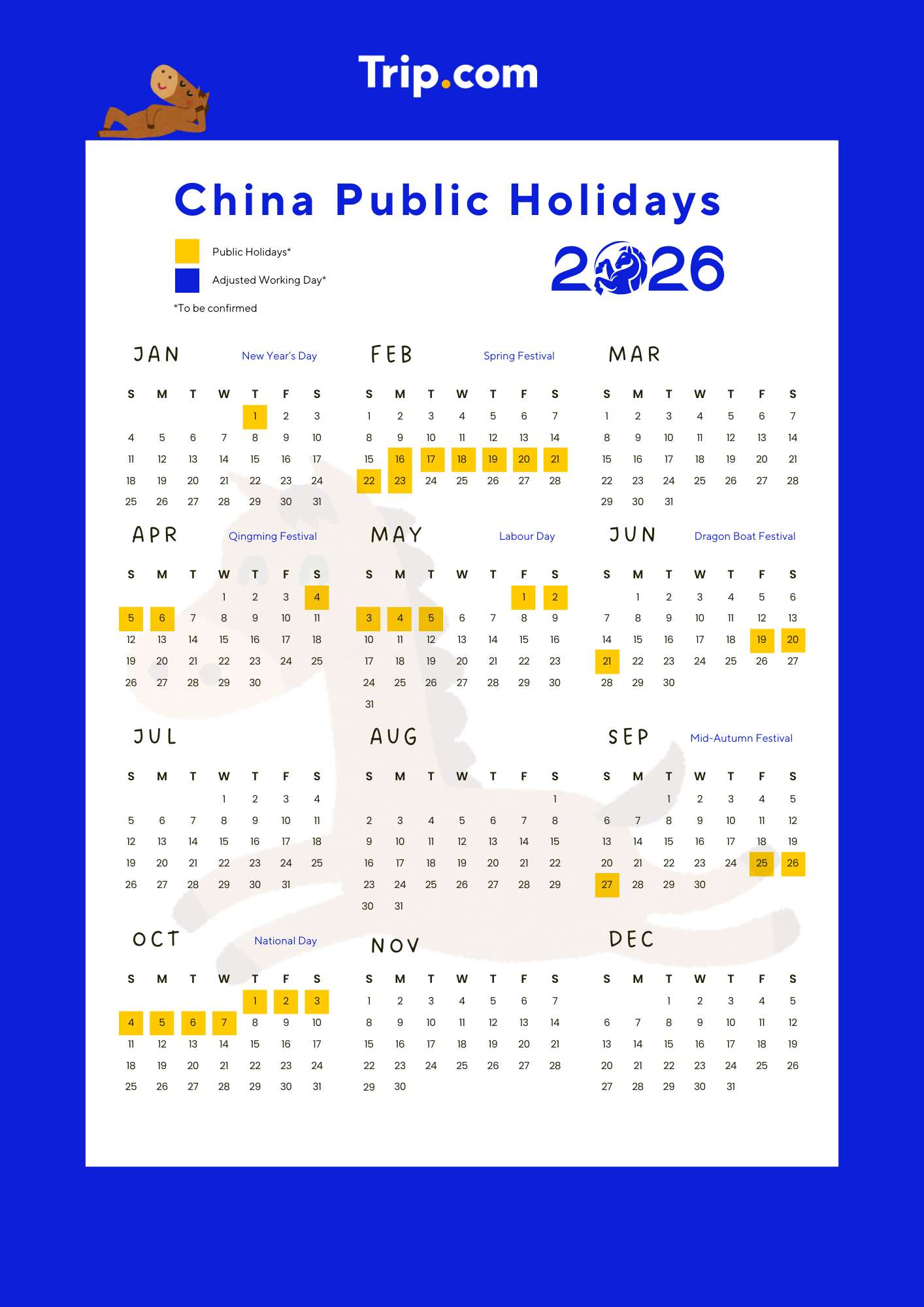
Stay organized and plan your travels with our China Public Holidays 2026 calendar. This easy-to-read guide shows all the key dates at a glance, helping you book trips in advance and make the most of your holidays.
International New Year celebrations, easy getaways. Notice: Light crowds—it's a great time for quick city visits or meetings.
Spring Festival (Chinese New Year)
Chinese new year - NCAB Group
The biggest family holiday—a week-long break when many factories and offices close. Notice: It's the year's peak travel period—book early; expect 1–2 weeks of supplier shutdowns.
Closes out the Chinese New Year season—lantern shows and night markets. Notice: Evening crowds spike—great for cultural experiences; limited business activity at night.
Qingming (Tomb-Sweeping Day)
Honoring ancestors; spring outings. Notice: Travel is moderate; some small shops and family-run businesses may close.
Labor Day (May Day)
Leisure travel and shopping promos—often extended by swapping workdays. Notice: Domestic travel is in a busy period—trains and hotels fill up fast; confirm any weekend make-up work.
Family reunion, mooncakes, evening lanterns. Notice: Parks and waterfronts are crowded in the evenings; some businesses close for the day.
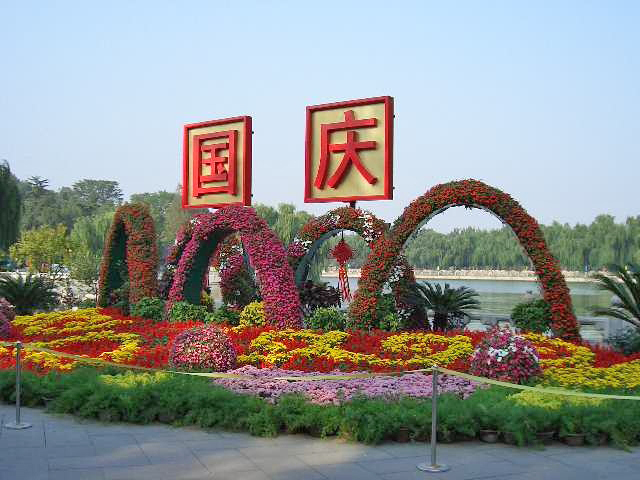
National Day Golden Week
A week-long holiday—and a surge in domestic tourism. Notice: It's the year's second peak—expect sold-out trains and hotels; most factories and offices will be closed.
Public holidays in China - Wikipedia
Chongyang (Double Ninth)
Respect for elders; hiking and chrysanthemum viewing. Notice: Light travel; minimal business disruption.
Quick tips: For travel, steer clear of CNY and Golden Week if you prefer smaller crowds. For business, build in buffers around CNY and National Day, confirm workday swaps, and lock in logistics (rail/air/hotels) early.
✅ Need internet in China? Get a China eSIM card to quickly access services like Instagram/YouTube/WhatsApp—no VPN needed! (Many foreign apps are blocked in China 😱)
✅Book early during Chinese New Year and National Day weeks — train and flight tickets sell out fast.
✅Entry Requirements & Visas: Always check the latest permitted stay length and conditions before you book—rules can change. Start with notices from your nearest Chinese mission or recent government updates.
✅ Transport Matters: Holiday train tickets sell out fast. Use Trip.com to book early; be flexible with departure stations and times. For in-city rides, Didi works in most big cities.
✅Avoid factory shutdowns if you’re sourcing products or conducting business; many operations pause for up to two weeks during the Spring Festival.
✅Travel smart — visit major attractions just before or after holidays to enjoy smaller crowds.
✅ Stay connected: A China SIM/eSIM (or roaming eSIM) keeps maps, translations, and tickets at your fingertips. Foreign eSIMs usually work, while local tourist eSIM options are limited—roaming eSIMs can also help you access blocked sites. If you plan to use a VPN, be aware it’s a legal gray area—use at your own risk.
✅ Pack for the season—China’s weather varies greatly; February in northern China can be freezing, while southern cities like Guangzhou stay mild.
24/240 China Visa-Free Transit: US citizens can enjoy a 240-hour (10-day) visa-free transit when traveling through 24 Chinese provinces, provided they hold a confirmed onward ticket to a third country or region.
China Plug & Power: China plug uses Type A/C/F (220V). Bring a Type A/C adapter (US plugs sometimes work, but bring a universal adapter for safety).
Internet Access in China: You need a China VPN for Google/Ins/YT/X, etc. But you can also use a China eSIM with built-in access to overseas apps!
China Map App: I love to use Gaode Map (English supported) or Baidu Map (limited English) for real-time transit and traffic. Or you can still use Google Maps in China, but some data may be outdated.
China Transport App: Use DiDi (China's Uber) for English address input and cashless payment. I recommend using the DiDi mini-program in Alipay for more convenience.
China Payment App: Use Alipay or WeChat Pay (link foreign cards before arrival).
When will China’s official 2026 holiday notice be released?
Usually in December 2025 by the State Council. Treat all advance calendars as tentative until then.
Which are the biggest peak periods?
Spring Festival (Chinese New Year) and National Day Golden Week (Oct 1–7). These are the year’s two mega-peaks for travel and closures.
Will Mid-Autumn overlap with National Day in 2026?
No. Mid-Autumn is Sep 25, 2026; National Day week starts Oct 1.
What are “make-up workdays”?
To create long breaks, China often swaps weekends with weekdays. You might work on a Saturday/Sunday before/after a holiday week. Confirm schedules with partners.
Are shops, restaurants, and attractions open during holidays?
Tourist spots usually stay open (often crowded); office/industry closures are common on major holidays. Small, family-run shops may close for Qingming and Mid-Autumn.
Disclaimer: This article has been provided by an individual contributor or third party platform. If there is any discrepancy regarding the copyright, please contact us directly and we will delete the content immediately.
Hey, I'm Lily from Chengdu. I'll constantly post my travel blogs here. I focus on sharing insights from living tips, transfer tricks, to how to get the best price for your international flights & hotels. You'll get the quick & valuable hints for your journey in the future. Stay tuned! Love u all!